Below-knee amputation (BKA), or transtibial amputation, is a life-altering surgical procedure performed to remove a diseased or nonviable limb below the knee joint. It is commonly necessitated by conditions such as peripheral arterial disease (PAD), diabetes mellitus, trauma, or malignancy. Proper coding of this procedure using CPT code 27880 is crucial for accurate billing and reimbursement.
This comprehensive guide explores the medical, surgical, and coding aspects of BKA, providing healthcare professionals, coders, and students with an in-depth understanding of the procedure. We will cover surgical techniques, CPT coding nuances, reimbursement challenges, and emerging advancements in prosthetics.
CPT Code for Below-Knee Amputation
2. Understanding Below-Knee Amputation (BKA)
Definition and Medical Necessity
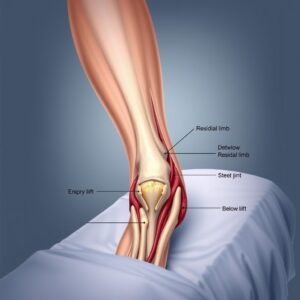
A below-knee amputation involves the surgical removal of the leg below the knee while preserving the knee joint, allowing for better mobility with a prosthetic limb compared to above-knee amputations.
Common Indications for BKA
The primary reasons for BKA include:
-
Peripheral Artery Disease (PAD): Leading cause due to poor blood circulation.
-
Diabetes-Related Complications: Non-healing ulcers, gangrene, or osteomyelitis.
-
Trauma: Severe crush injuries or burns.
-
Tumors: Bone or soft tissue malignancies.
3. CPT Coding for Below-Knee Amputation
Primary CPT Codes
| CPT Code | Description |
|---|---|
| 27880 | Below-knee amputation (transtibial), initial procedure |
| 27881 | BKA with revision and reattachment (e.g., for failed initial amputation) |
Modifiers and Associated Codes
-
Modifier -LT / -RT: Indicates left or right limb.
-
Modifier -22: Increased procedural complexity.
-
ICD-10 Codes: E11.51 (Diabetic gangrene), I70.262 (Atherosclerosis with gangrene).
4. Surgical Procedure: Step-by-Step Breakdown
Preoperative Assessment
-
Vascular Evaluation: Doppler ultrasound or angiography.
-
Nutritional Status: Albumin levels >3.0 g/dL improve healing.
Surgical Techniques
-
Guillotine Amputation: Immediate removal without flap closure (rare, used in infections).
-
Flap Closure (Standard BKA): Posterior myocutaneous flap for better padding.
Postoperative Care
-
Pain Management: Nerve blocks or epidural analgesia.
-
Physical Therapy: Early mobilization to prevent contractures.
5. Clinical Considerations and Complications
Risk Factors
-
Poor Wound Healing: Smoking, malnutrition.
-
Infection: Requires IV antibiotics or revision.
Common Complications
| Complication | Management |
|---|---|
| Phantom Limb Pain | Gabapentin, mirror therapy |
| Stump Ulceration | Proper prosthetic fitting |
6. Billing and Reimbursement Guidelines
-
Medicare Allowable: ~$1,200 for CPT 27880 (varies by region).
-
Documentation Requirements: Operative note must detail technique and medical necessity.
7. Comparative Analysis: BKA vs. Above-Knee Amputation (AKA)
| Factor | BKA | AKA |
|---|---|---|
| Mobility | Higher (retains knee) | Lower |
| Rehab Time | Shorter | Longer |
8. Advances in BKA Techniques and Prosthetics
-
Osseointegration: Direct bone-prosthetic attachment.
-
Bionic Limbs: AI-driven prosthetics for natural movement.
9. Case Studies
-
Case 1: Diabetic patient with successful BKA and prosthetic adaptation.
-
Case 2: Trauma-induced BKA with complications.
10. Conclusion
Below-knee amputation (CPT 27880) is a critical procedure for limb salvage in vascular and diabetic patients. Proper coding, surgical technique, and postoperative care optimize outcomes. Advances in prosthetics continue to improve patient mobility and quality of life.
11. FAQs
Q1: What is the recovery time after BKA?
A: Typically 6-12 weeks, depending on rehabilitation.
Q2: Can a BKA patient walk normally?
A: Yes, with a well-fitted prosthetic and physical therapy.
Q3: What are the alternatives to BKA?
A: Limb salvage procedures, but amputation may be unavoidable in advanced disease.