Conjunctivitis, commonly known as “pink eye,” is often dismissed as a minor, self-limiting ailment. In the public consciousness, it conjures images of itchy, red eyes, quarantine from school or work, and a quick course of antibiotic drops. However, for medical professionals, healthcare administrators, and medical coders, conjunctivitis represents a far more complex challenge. It is not a single disease but a spectrum of conditions with diverse causes—viral, bacterial, allergic, toxic—each with distinct clinical presentations, treatments, and implications for patient and public health. This complexity is precisely why the International Classification of Diseases, 10th Revision, Clinical Modification (ICD-10-CM) dedicates an intricate system of codes to capture its many forms.
Accurate ICD-10 coding for conjunctivitis is far from a mundane administrative task. It is a critical bridge between clinical care and the ecosystem of modern healthcare. A correctly assigned code ensures appropriate reimbursement, fuels vital public health surveillance, contributes to valuable clinical research, and creates a precise legal record of the patient’s condition. An incorrect or vague code, on the other hand, can lead to claim denials, skewed health data, and an incomplete patient story. This comprehensive guide is designed to demystify the ICD-10 codes for conjunctivitis. We will journey from the basic anatomy of the eye to the nuanced hierarchy of the ICD-10 system, providing you with the knowledge and confidence to code this common condition with expert-level precision. Whether you are a medical coder, a student, a healthcare provider, or an administrator, understanding these details is essential for navigating the demands of accurate medical documentation.
ICD-10 Codes for Conjunctivitis
2. Understanding Conjunctivitis: A Clinical Primer
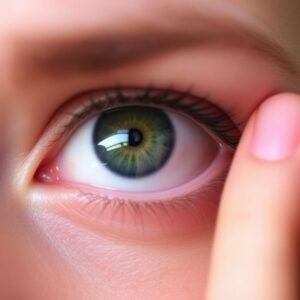
Before delving into codes, one must first understand the clinical entity they are describing. Conjunctivitis is an inflammation or infection of the conjunctiva, the thin, transparent membrane that lines the inner surface of the eyelid and covers the white part of the eyeball (the sclera).
Anatomy of the Conjunctiva
The conjunctiva is composed of two main parts:
-
Palpebral Conjunctiva: The portion that lines the eyelids.
-
Bulbar Conjunctiva: The portion that covers the sclera.
Its primary functions are to keep the front surface of the eye moist and lubricated by producing mucus and tears, and to provide a barrier against microbes and foreign objects. When this tissue becomes inflamed, its small blood vessels dilate and become more prominent, giving the eye the characteristic “pink” or red appearance.
The Pathophysiology of Inflammation
The inflammatory response in conjunctivitis can be triggered by various agents:
-
Infectious Agents: Viruses (e.g., adenovirus) or bacteria (e.g., Staphylococcus aureus, Haemophilus influenzae) directly invade the tissue.
-
Allergens: Pollen, dust mites, or pet dander trigger an IgE-mediated hypersensitivity reaction, causing the release of histamine.
-
Irritants: Chemicals, smoke, or foreign bodies cause direct physical damage.
-
Systemic Diseases: Conditions like rheumatoid arthritis or Kawasaki disease can manifest with conjunctival inflammation.
Common Etiologies: Viral, Bacterial, Allergic, and More
The cause of conjunctivitis dictates its symptoms, contagiousness, and treatment.
-
Viral Conjunctivitis: The most common cause. It is highly contagious, often associated with upper respiratory infections. Symptoms include watery discharge, itching, and photophobia. It is typically self-limiting.
-
Bacterial Conjunctivitis: Characterized by a thick, purulent (pus-like) or mucopurulent discharge that can cause the eyelids to stick together, especially in the morning. It is also contagious and often treated with antibiotic eye drops.
-
Allergic Conjunctivitis: Caused by allergens. The hallmark symptom is intense itching, along with tearing, redness, and often eyelid swelling. It is not contagious and is managed with antihistamines and allergen avoidance.
-
Giant Papillary Conjunctivitis (GPC): A specific type related to the presence of a foreign body, such as a contact lens.
3. The World of ICD-10-CM: A System for Specificity
What is ICD-10-CM and Why Does it Matter?
The ICD-10-CM is the standardized system used in the United States to classify and code all diagnoses, symptoms, and procedures recorded in conjunction with hospital care. It is a critical tool for:
-
Billing and Reimbursement: Insurance companies require specific ICD-10 codes to justify medical services and process payments.
-
Epidemiology and Public Health: Tracking disease incidence and prevalence, identifying outbreaks, and allocating health resources.
-
Clinical Research: Grouping patients by condition for studies and analyzing treatment outcomes.
-
Healthcare Analytics: Informing quality improvement initiatives and strategic planning.
The Structure of an ICD-10 Code: A Hierarchical Approach
ICD-10 codes are alphanumeric and can be anywhere from three to seven characters long. Each character adds a layer of specificity.
-
Chapter: The first character is a letter representing a broad chapter (e.g., H for “Diseases of the Eye and Adnexa”).
-
Category: The first three characters (e.g., H10) represent the general category of the disease.
-
Subcategory: Characters after the decimal point provide more detail about the etiology, anatomic site, or severity (e.g., H10.0 for Mucopurulent Conjunctivitis).
-
Laterality: The final character often specifies which eye is affected.
-
1 for the right eye
-
2 for the left eye
-
3 for bilateral involvement
-
9 for unspecified laterality (used only if the documentation does not specify right, left, or bilateral).
-
4. Navigating the ICD-10-CM Chapter Guide: Diseases of the Eye and Adnexa (H00-H59)
Conjunctivitis codes are primarily found in Chapter 7. The main category for conjunctivitis is H10 – Conjunctivitis.
The Critical Distinction: Laterality
One of the most significant advances in ICD-10 over its predecessor (ICD-9) is the mandatory specification of laterality. Coders must pay close attention to the medical record to determine if the condition affects the right eye, left eye, or both. Using an unspecified laterality code (e.g., H10.9) is generally non-compliant if the documentation clearly states “right,” “left,” or “bilateral.”
5. A Deep Dive into Specific Conjunctivitis Codes
This section provides a detailed examination of each code within the H10 category.
H10.0 – Mucopurulent Conjunctivitis
This code is used for conjunctivitis characterized by a mucopurulent discharge—a combination of mucus and pus. This is the classic presentation of many common bacterial infections.
-
Clinical Presentation: Thick, yellow-green discharge, redness, gritty sensation, eyelids stuck together upon waking.
-
Coding Note: This code is often appropriate for bacterial conjunctivitis when a more specific organism is not identified. However, if the documentation specifies a type of bacterial conjunctivitis that has its own code elsewhere (e.g., ophthalmia neonatorum), that code takes precedence.
-
Complete Codes:
-
H10.01 Mucopurulent conjunctivitis, right eye
-
H10.02 Mucopurulent conjunctivitis, left eye
-
H10.03 Mucopurulent conjunctivitis, bilateral
-
H10.09 Mucopurulent conjunctivitis, unspecified eye
-
H10.1 – Acute Atopic Conjunctivitis
This code is reserved for acute allergic conjunctivitis, particularly the atopic type, which is often associated with a personal or family history of allergies (atopy).
-
Clinical Presentation: Intense itching is the primary symptom, along with tearing, redness, and swelling of the conjunctiva (chemosis). It is often seasonal.
-
Coding Note: “Acute” distinguishes it from chronic allergic conditions. If the documentation simply says “allergic conjunctivitis,” H10.1 is typically the correct choice.
-
Complete Codes:
-
H10.10 Acute atopic conjunctivitis, unspecified eye
-
H10.11 Acute atopic conjunctivitis, right eye
-
H10.12 Acute atopic conjunctivitis, left eye
-
H10.13 Acute atopic conjunctivitis, bilateral
-
H10.2 – Other Acute Conjunctivitis
This is a catch-all category for other types of acute conjunctivitis not specified elsewhere.
-
Clinical Presentation: Acute redness, discharge, and irritation that does not fit the classic mucopurulent or atopic descriptions.
-
Coding Note: This code can be used for acute conjunctivitis where the type is not specified (e.g., the provider documents “acute conjunctivitis” without further detail). It is also used for specific acute types like chemical conjunctivitis (from irritants) if not classified elsewhere.
-
Complete Codes:
-
H10.21 Other acute conjunctivitis, right eye
-
H10.22 Other acute conjunctivitis, left eye
-
H10.23 Other acute conjunctivitis, bilateral
-
H10.29 Other acute conjunctivitis, unspecified eye
-
H10.3 – Unspecified Acute Conjunctivitis
This code should be used sparingly. It is for cases where the documentation only states “acute conjunctivitis” without any detail on the type, and the coder cannot make a reasonable inference.
-
Coding Note: The official coding guideline is to avoid unspecified codes whenever possible. If the documentation provides any clue (e.g., “acute infectious conjunctivitis”), the coder should use a more specific code (H10.0- or even a code from category B30). H10.3- is a last resort.
H10.4 – Chronic Conjunctivitis
This code is for conjunctivitis that persists for a long duration, typically four weeks or more.
-
Clinical Presentation: Persistent redness, burning, foreign body sensation. The discharge may be less pronounced than in acute cases.
-
Coding Note: The cause of chronic conjunctivitis can be diverse, including chronic infection, blepharitis, or environmental irritants. Unless a more specific chronic type is documented (e.g., chronic allergic conjunctivitis), H10.4- is used.
-
Complete Codes:
-
H10.40 Chronic conjunctivitis, unspecified eye
-
H10.41 Chronic conjunctivitis, right eye
-
H10.42 Chronic conjunctivitis, left eye
-
H10.43 Chronic conjunctivitis, bilateral
-
H10.5 – Blepharoconjunctivitis
This code is used when the inflammation involves both the conjunctiva and the eyelids (blepharitis).
-
Clinical Presentation: Symptoms of conjunctivitis (redness, discharge) combined with eyelid symptoms (crusting, scaling, redness along the eyelid margins).
-
Coding Note: This is a more specific code than H10.9 when both structures are inflamed. If the documentation only mentions conjunctivitis, even if blepharitis is commonly associated, the coder cannot assume and should use a standard conjunctivitis code.
-
Complete Codes:
-
H10.50 Blepharoconjunctivitis, unspecified eye
-
H10.51 Blepharoconjunctivitis, right eye
-
H10.52 Blepharoconjunctivitis, left eye
-
H10.53 Blepharoconjunctivitis, bilateral
-
H10.8 – Other Conjunctivitis
This category is for specific, less common forms of conjunctivitis that are not represented by other codes in the H10 block.
-
Examples: Pseudomembranous conjunctivitis, ligneous conjunctivitis.
-
Coding Note: Use this code only when the documentation explicitly names one of these specific types.
H10.9 – Unspecified Conjunctivitis
This is the least specific code in the category and should be used only when the medical record provides no information about the type (acute, chronic, mucopurulent, etc.) or laterality of the conjunctivitis.
-
Coding Note: H10.9 is strongly discouraged. Providers should be educated to document the type and laterality. Coders should query the provider if the information is missing but necessary for accurate coding.
-
Complete Code: H10.9 Unspecified conjunctivitis, unspecified eye.
6. Beyond H10: Conjunctivitis in Other Chapters
The H10 category does not contain all conjunctivitis codes. Certain specific etiologies are coded elsewhere in the ICD-10-CM manual. This is a common source of coding errors.
Viral Conjunctivitis under B30
Certain viral conjunctivitis types have their own codes in Chapter 1: Certain Infectious and Parasitic Diseases (A00-B99).
-
B30.0 – Keratoconjunctivitis due to adenovirus: Used for more severe adenoviral infections that also involve the cornea (e.g., Epidemic Keratoconjunctivitis – EKC).
-
B30.1 – Conjunctivitis due to adenovirus: Used for adenoviral conjunctivitis without significant corneal involvement.
-
B30.2 – Viral pharyngoconjunctivitis: Used when conjunctivitis presents with pharyngitis (sore throat), a classic adenoviral syndrome.
-
Coding Note: These codes take precedence over codes from H10. If the provider diagnoses “viral conjunctivitis” or “adenoviral conjunctivitis,” the coder must use a code from B30, not H10.0 or H10.2. Herpetic conjunctivitis is coded to B00.5.
Ophthalmia Neonatorum (P39.1)
This is a specific and serious form of conjunctivitis in newborns, usually caused by infection acquired during birth (e.g., Neisseria gonorrhoeae or Chlamydia trachomatis).
-
Coding Note: This code is found in Chapter 16: Conditions Originating in the Perinatal Period (P00-P96). It is mandatory for conjunctivitis in a newborn, overriding any codes from H10.
Keratoconjunctivitis (H16.2-)
When the inflammation involves both the conjunctiva and cornea significantly, codes from the keratoconjunctivitis category (H16.2) may be more appropriate than simple conjunctivitis codes. Examples include Sicca keratoconjunctivitis (dry eye syndrome – H16.22-) and Vernal keratoconjunctivitis (a severe allergic form – H16.24-).
Conjunctivitis in Systemic Diseases
Conjunctivitis can be a manifestation of a systemic disease. In such cases, the code for the systemic condition is primary.
-
Example 1: A patient with Reiter’s syndrome (M02.3-) may present with conjunctivitis. Code M02.3- is the first-listed diagnosis.
-
Example 2: Conjunctivitis in Kawasaki disease (M30.3) is coded as part of the Kawasaki disease diagnosis.
7. The Art of Clinical Correlation: From Diagnosis to Accurate Code
Accurate coding is a collaborative effort between the healthcare provider and the coder.
Documenting the Key Elements: The Provider’s Role
The provider’s documentation must be clear and detailed. Key phrases include:
-
Type: “Acute bacterial,” “Chronic allergic,” “Viral,” “Mucopurulent.”
-
Laterality: “Right eye,” “Left eye,” “Bilateral.”
-
Etiology (if known): “Adenoviral,” “Staphylococcal,” “Due to contact lens overwear.”
-
Specific Conditions: “Ophthalmia neonatorum,” “Epidemic keratoconjunctivitis (EKC).”
Interpreting the Medical Record: The Coder’s Role
The coder must act as a detective, carefully reading the entire record (chief complaint, history of present illness, physical exam, assessment/plan) to find clues that lead to the most specific code.
-
Inference: If the provider documents “patient presents with thick green discharge and crusted eyelids,” the coder can confidently assign H10.0- (Mucopurulent conjunctivitis) even if the word “mucopurulent” isn’t used.
-
Querying: If the documentation is unclear or contradictory, the coder should initiate a formal query to the provider for clarification.
8. Common Coding Pitfalls and How to Avoid Them
-
Pitfall: Misidentifying Laterality.
-
Example: Coding H10.9 when the note says “redness in both eyes.”
-
Solution: Always scan the document for “right,” “left,” or “bilateral.” The correct code for the example would be H10.XX3 (where XX represents the specific type of conjunctivitis).
-
-
Pitfall: Confusing Acute vs. Chronic.
-
Example: Using H10.4- (Chronic) for a condition the patient has had for only three days.
-
Solution: Note the duration of symptoms. “Acute” typically refers to a short, severe course, while “chronic” implies persistence (often >4 weeks).
-
-
Pitfall: Overlooking More Specific Codes.
-
Example: Coding “viral conjunctivitis” as H10.2- instead of B30.1.
-
Solution: Always check the Alphabetic Index first. Look up “Conjunctivitis, viral” which will direct you to “see Conjunctivitis, acute, viral” and then to the codes under B30.
-
-
Pitfall: Defaulting to “Unspecified.”
-
Example: Routinely using H10.9 for any conjunctivitis without trying to find a more specific code.
-
Solution: Follow the official coding guidelines which state to code to the highest level of specificity. Using unspecified codes can lead to claim denials.
-
9. Case Studies: Applying ICD-10 Codes in Real-World Scenarios
Case Study 1: The Child with Sticky Eyelids
-
Presentation: A 7-year-old boy is brought in by his mother. He woke up with his right eye “glued shut” with yellow-green discharge. The left eye is slightly red but has no discharge.
-
Provider Documentation: “Acute bacterial conjunctivitis, right eye. Left eye mildly injected but likely early involvement. Prescribed antibiotic drops.”
-
Coding Analysis: The key terms are “acute bacterial” and the description of discharge points to “mucopurulent.” Laterality is primarily right eye.
-
Correct ICD-10 Code: H10.01 (Mucopurulent conjunctivitis, right eye). Even though bilateral spread is suspected, the documentation specifies the current diagnosed condition is the right eye.
Case Study 2: The Teenager with Seasonal Itching
-
Presentation: A 16-year-old female presents in spring with intensely itchy, watery, red eyes. She has a history of seasonal allergies and hay fever.
-
Provider Documentation: “Acute allergic conjunctivitis, bilateral, consistent with seasonal allergies.”
-
Coding Analysis: “Acute allergic” maps directly to “Acute atopic conjunctivitis.” The condition is bilateral.
-
Correct ICD-10 Code: H10.13 (Acute atopic conjunctivitis, bilateral).
Case Study 3: The Adult with a Painful Red Eye and Blisters
-
Presentation: A 45-year-old man has a painful, red left eye. On examination, the provider notes small vesicles (blisters) on the skin of the eyelid and on the conjunctiva.
-
Provider Documentation: “Herpetic keratoconjunctivitis, left eye.”
-
Coding Analysis: This is a specific viral infection caused by the herpes simplex virus. It is coded in Chapter 1, not under H10.
-
Correct ICD-10 Code: B00.52 (Herpes simplex keratoconjunctivitis). Note: Laterality is not a component of this code.
Case Study 4: The Newborn with Eye Discharge
-
Presentation: A 5-day-old infant has purulent discharge from both eyes.
-
Provider Documentation: “Ophthalmia neonatorum, rule out gonococcal and chlamydial infection.”
-
Coding Analysis: Conjunctivitis in a newborn is always coded as ophthalmia neonatorum, regardless of the suspected organism.
-
Correct ICD-10 Code: P39.1 (Neonatal conjunctivitis and dacryocystitis).
10. The Importance of Accurate Coding: Clinical, Financial, and Public Health Impacts
Precise ICD-10 coding for conjunctivitis is not an academic exercise; it has real-world consequences.
-
Clinical Care: Accurate codes create a precise history for the patient, which is crucial for future care. For example, a code for herpetic conjunctivitis (B00.5) alerts future providers to a recurrent condition.
-
Financial Health: Insurance payers audit claims rigorously. An incorrect or insufficiently specific code is a common reason for claim denial or delay, directly impacting a practice’s revenue cycle.
-
Public Health Surveillance: Accurate coding of infectious conjunctivitis (e.g., adenovirus B30.1) helps public health officials track and contain outbreaks, especially in settings like schools and workplaces.
11. FAQs: Frequently Asked Questions about ICD-10 and Conjunctivitis
Q1: What is the default ICD-10 code for conjunctivitis?
There is no “default” code. The correct code is determined by the provider’s documentation. However, if the documentation is truly non-specific (e.g., only “conjunctivitis”), the coder would be forced to use H10.9 – Unspecified conjunctivitis. This should be avoided through better documentation.
Q2: How do I code for “pink eye”?
“Pink eye” is a lay term. The coder must review the medical record to see what clinical diagnosis the provider assigned. If the provider uses only the term “pink eye,” a query may be necessary to determine the type (viral, bacterial, etc.).
Q3: What is the difference between H10.2 and H10.3?
H10.2 (Other acute conjunctivitis) is used when the type of acute conjunctivitis is specified but doesn’t have its own code (e.g., “chemical conjunctivitis”). H10.3 (Unspecified acute conjunctivitis) is used when the documentation only states “acute conjunctivitis” without any further detail on the type. H10.2 is more specific than H10.3.
Q4: When should I use a code from Chapter 1 (B00-B34) for viral conjunctivitis instead of a code from H10?
Always. If the provider diagnoses a specific viral agent (e.g., adenovirus, herpes simplex), you must use the code from Chapter 1 (B30.- or B00.5). Codes from H10 are for non-specific infectious conjunctivitis or non-infectious types.
Q5: Can I code both conjunctivitis and blepharitis if both are documented?
If the provider documents both conditions separately, you can code both. However, if the provider documents blepharoconjunctivitis, you should code only H10.5-, as this single code represents the combined inflammation of both structures.
12. Conclusion: The Power of Precision
Navigating the ICD-10 coding system for conjunctivitis requires a meticulous understanding of both clinical medicine and coding guidelines. The transition from a simple “pink eye” diagnosis to a precise alphanumeric code is a critical process that underpins effective patient care, ensures proper reimbursement, and supports public health intelligence. By mastering the hierarchy of codes within category H10 and knowing when to look beyond it to chapters like Chapter 1, medical coders and providers can work in tandem to ensure that every case of conjunctivitis is documented with the accuracy and specificity that modern healthcare demands.
13. Additional Resources
-
CDC ICD-10-CM Official Guidelines for Coding and Reporting: The definitive source for coding rules and conventions.
-
American Health Information Management Association (AHIMA): Offers educational resources, articles, and certifications for medical coders.
-
American Academy of Professional Coders (AAPC): A leading organization for medical coding training, certification, and networking.
-
National Center for Biotechnology Information (NCBI) Bookshelf: Provides free access to medical textbooks like The Wills Eye Manual, which offers detailed clinical descriptions of eye diseases.
Date: September 26, 2025
Author: The Health Information Team
Disclaimer: This article is intended for informational and educational purposes only. It is not a substitute for professional medical advice, diagnosis, or treatment provided by a qualified healthcare provider or certified medical coder. Always consult with a healthcare professional for any health concerns and rely on the most current, official ICD-10-CM coding guidelines for accurate billing and reimbursement.