If you’re dealing with older medical records, insurance forms, or historical health data, you might encounter the term “ICD-9 code for asthma.” While this coding system has been replaced, understanding it remains crucial for interpreting past medical information, resolving billing discrepancies, and appreciating the evolution of medical classification.
This guide will serve as your definitive resource for all things related to asthma in the ICD-9-CM system. We’ll explore the specific codes, their structure, and why they were phased out in favor of the modern ICD-10. Our goal is to provide clarity and depth, transforming you from a curious searcher into an informed reader.
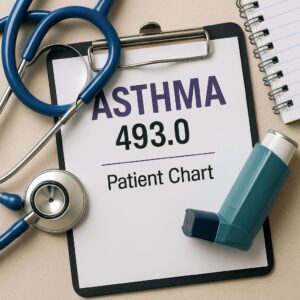
ICD-9 Code for Asthma
Table of Contents
ToggleThe Foundation: What Was ICD-9-CM?
Before we dive into the specific codes for asthma, let’s establish what ICD-9-CM was and why it matters today.
The International Classification of Diseases, 9th Revision, Clinical Modification (ICD-9-CM) was the standard system used in the United States to code and classify diagnoses, symptoms, and procedures for medical billing and statistical tracking. It was in use from 1979 until its official retirement on October 1, 2015.
Think of it as a vast, detailed dictionary for diseases. Every possible health condition was assigned a unique numeric code. These codes allowed healthcare providers, insurance companies, and public health agencies to speak a common, precise language. The “Clinical Modification” (CM) part meant it was tailored specifically for use in U.S. healthcare settings.
“ICD-9-CM was the backbone of health data for over three decades. It shaped how we tracked disease prevalence, allocated resources, and understood the health of the nation during that period,” notes a health information management expert.
While ICD-9 is now historical, its legacy lives on in millions of existing patient charts and archived databases. For anyone conducting longitudinal studies or handling records from before 2015, fluency in ICD-9 is still necessary.
The Transition to ICD-10: A Necessary Evolution
The shift from ICD-9 to ICD-10-CM wasn’t merely an update; it was a revolution in medical coding. ICD-9 had simply run out of space and specificity. Its structure could not accommodate new diseases, modern procedures, or the detailed clinical data required in 21st-century medicine.
The limitations of the old system became a primary driver for change. ICD-10 offers a dramatic increase in detail and granularity, which you will clearly see when we later compare the coding for asthma between the two systems.
Decoding Asthma in the ICD-9-CM System
In ICD-9-CM, asthma was categorized under Diseases of the Respiratory System. The core code series for asthma was 493.
This parent code, 493, was always followed by a decimal point and an additional digit (0-9) to specify the type or status of the asthma. This is a key characteristic of ICD-9: the codes are purely numeric and typically 3 to 5 digits long.
Here is the complete breakdown of asthma codes as they existed in ICD-9-CM:
Primary ICD-9 Codes for Asthma (493.xx)
| ICD-9 Code | Code Description | Clinical Scenario & Notes |
|---|---|---|
| 493.0 | Extrinsic Asthma | Used for allergic asthma, often triggered by known allergens like pollen, dust mites, or pet dander. Implies an external, identifiable cause. |
| 493.1 | Intrinsic Asthma | Used for non-allergic asthma. Triggers are often internal, such as stress, exercise, cold air, or respiratory infections. No specific external allergen is identified. |
| 493.2 | Chronic Obstructive Asthma | This was a critical code for patients with long-standing asthma that resulted in a chronic obstructive component. It blurred the lines with COPD, a distinction clarified in ICD-10. |
| 493.9 | Asthma, Unspecified | The most commonly used code when the specific type of asthma (extrinsic/intrinsic) was not documented or determined in the patient encounter. |
| 493.8 | Other Forms of Asthma | A catch-all for types that didn’t fit the above, such as “exercise-induced bronchospasm” if not specified elsewhere. |
Important Note for Readers: If you are looking at a current medical bill or a diagnosis after October 2015, these codes are obsolete. Healthcare providers in the U.S. are required to use ICD-10-CM. This historical guide is for understanding past records, educational purposes, or research.
Fifth-Digit Subclassifications: Adding Crucial Detail
A vital feature of ICD-9-CM coding for asthma was the mandatory fifth digit. This digit provided essential information about the patient’s status during the encounter. It was added to the base code (e.g., 493.0 became 493.00 or 493.01).
This fifth digit added a layer of clinical context crucial for billing and care analysis.
The Fifth-Digit Code Table for 493.x
| Fifth Digit | Description | Use Case Example |
|---|---|---|
| .x0 | Unspecified | Asthma, not otherwise specified regarding activity. Used when the record doesn’t state if it was an acute attack. |
| .x1 | With Status Asthmaticus | A life-threatening, prolonged severe asthma attack unresponsive to standard treatment. This was a critical designation. |
| .x2 | With Acute Exacerbation | The patient is experiencing a worsening of their chronic asthma symptoms, requiring medical intervention. |
| .x9 | Without Mention of Status Asthmaticus or Exacerbation | The patient has asthma, but the current encounter is for routine care, follow-up, or a condition unrelated to an active attack. |
Putting It All Together: Real-World ICD-9 Code Examples
Let’s see how these codes worked in practice:
-
A patient sees their doctor for a yearly check-up. They have a known history of allergic asthma but are currently symptom-free.
-
ICD-9 Code: 493.09
-
Breakdown: 493.0 (Extrinsic Asthma) + .9 (Without mention of status asthmaticus or exacerbation).
-
-
A child is brought to the ER with severe shortness of breath and wheezing after visiting a home with cats. They have a known cat allergy.
-
ICD-9 Code: 493.01
-
Breakdown: 493.0 (Extrinsic Asthma) + .1 (With status asthmaticus – if it meets the criteria) OR 493.02 (With acute exacerbation).
-
-
An adult is admitted to the hospital for pneumonia. Their medical history lists “chronic asthma,” but the type is not specified in the old chart.
-
ICD-9 Code: 493.90
-
Breakdown: 493.9 (Asthma, unspecified) + .0 (Unspecified).
-
This structure, while logical, had significant limitations. The broad categories like “extrinsic” and “intrinsic” were often clinically vague, and the system offered no way to code for severity or specific triggers beyond the main category.
The Critical Shift: From ICD-9 to ICD-10 for Asthma
The transition to ICD-10-CM resolved many of the frustrations inherent in the old system. The coding for asthma became vastly more specific, moving from a handful of codes to over two dozen. This specificity improves patient care, research accuracy, and reimbursement precision.
The most significant change is in the code structure itself. ICD-10 codes are alphanumeric, starting with a letter. All asthma codes now fall under J45.
Comparative Analysis: ICD-9 vs. ICD-10 for Asthma
The table below highlights the dramatic evolution in detail and clinical relevance.
| Aspect | ICD-9-CM (493.xx) | ICD-10-CM (J45.xxx) | Implication of the Change |
|---|---|---|---|
| Code Structure | Purely numeric (3-5 digits) | Alphanumeric (J45.xxx, up to 6 characters) | Allows for a vastly expanded code set. |
| Primary Categories | Extrinsic, Intrinsic, Chronic Obstructive, Unspecified. | Mild intermittent, Mild persistent, Moderate persistent, Severe persistent, Other, Unspecified. | Major Shift: Moves from cause-based (often guesswork) to severity-based classification, aligning with modern NIH treatment guidelines. |
| Specificity | Low. Could not specify triggers or severity levels. | Very High. Can denote specific types (exercise-induced, cough-variant), and severity. | Enables precise tracking of patient populations and outcomes for specific asthma phenotypes. |
| Exacerbation Coding | Handled by a generic 5th digit (.x1, .x2). | Integrated into the severity hierarchy (e.g., J45.901 for unspecified asthma with exacerbation). | More clearly links the type of asthma with its current state. |
| Number of Codes | Approximately 15 possible combinations. | Over 25 individual codes. | Reflects the complex, heterogeneous nature of asthma as a disease. |
Why the Change Matters for Patients and Providers
This isn’t just a bureaucratic update. The granularity of ICD-10 creates a ripple effect of benefits:
-
Better Patient Care: A code like J45.42 (Moderate persistent asthma with acute exacerbation) immediately tells a new clinician more about the patient’s baseline health and current crisis than 493.92 ever could.
-
Improved Public Health Tracking: Health agencies can now identify trends not just in “asthma,” but in severe persistent asthma in specific age groups or geographic regions, leading to more targeted interventions.
-
Accurate Reimbursement: Care for a patient with mild intermittent asthma is less resource-intensive than for one with severe persistent disease. ICD-10 allows for billing that more accurately reflects the complexity of care provided.
Navigating Historical Records and Modern Needs
If your task is to find or interpret an ICD-9 code for asthma today, you are likely in one of these scenarios:
-
Reviewing Old Medical Charts: Understanding the code helps you grasp the patient’s historical diagnosis level of detail available at the time.
-
Researching Historical Data: For studies comparing asthma prevalence or outcomes before and after 2015, you must understand the coding differences to interpret the data correctly.
-
Resolving an Old Insurance Claim: Disputes on bills from before October 2015 will reference ICD-9 codes.
For any current medical coding, billing, or diagnosis, you must use ICD-10-CM. Using an ICD-9 code on a current claim will result in immediate rejection.
Step-by-Step: How to Find the Correct Historical Code
If you need to determine what an ICD-9 code for a past asthma encounter should have been, follow this logic:
-
Identify the Type: Was it described as allergic, seasonal, childhood-onset (often extrinsic)? Or was it triggered by colds, exercise, or stress (often intrinsic)? If unclear, it defaults to “unspecified.”
-
Determine the Status: Was the visit for a severe attack (status asthmaticus), a bad flare-up (acute exacerbation), or routine management?
-
Combine the Codes: Use the tables in this guide to select the correct 3- or 4-digit base code and the appropriate fifth digit.
Common Questions and Confusions Clarified
In working with historical asthma codes, several points often cause confusion.
What about “COPD with an asthmatic component” in ICD-9?
This was a major point of ambiguity. ICD-9 had a code, 493.2 (Chronic obstructive asthma), which was sometimes used for what is now called Asthma-COPD Overlap (ACO). In ICD-10, this is more clearly differentiated with specific codes for various types of COPD (J44.xx) and a clearer distinction for asthma.
Why are there so many codes in ICD-10? Is it overly complex?
While the number of codes increased, the logic is more clinically intuitive. It aligns with how doctors already classify and treat asthma—by severity and control. The specificity reduces ambiguity, which in the long run streamlines accurate documentation.
Can I use an ICD-9 to ICD-10 converter?
Yes, for general guidance. Many online tools and books offer “crosswalks” or “GEMs” (General Equivalence Mappings). However, these are not always one-to-one matches. The increased specificity of ICD-10 often requires a clinical judgment that a simple converter cannot make. For example, the old code 493.90 (Asthma, unspecified) could map to several ICD-10 codes (J45.909, J45.998, etc.) depending on the patient’s documented status. The medical coder must review the full documentation to choose correctly.
The Importance of Accurate Documentation: A Lasting Lesson
The journey from ICD-9 to ICD-10 underscores one eternal truth in healthcare: the quality of the code is only as good as the quality of the clinical documentation.
In the ICD-9 era, a doctor’s note that simply said “asthma” led to the generic 493.90 code. In the ICD-10 world, that same note would result in an unspecified code, potentially affecting the perceived quality of care and reimbursement. Now, documentation must include details on:
-
Severity (mild, moderate, severe)
-
Control (intermittent, persistent)
-
Current state (exacerbation, status asthmaticus)
-
Specific type (exercise-induced, etc.)
This push for specificity, driven by the evolution from ICD-9 to ICD-10, ultimately creates a richer, more useful patient record that benefits everyone involved in the care journey.
FAQ: Frequently Asked Questions
Q: What is the most common ICD-9 code for asthma?
A: The most commonly used ICD-9 code for asthma was 493.90 (Asthma, unspecified, unspecified). This was often a default when the specific type and current status were not detailed in the medical record.
Q: Can I use ICD-9 codes for a new diagnosis today?
A: No. As of October 1, 2015, all healthcare providers covered by the Health Insurance Portability and Accountability Act (HIPAA) in the United States are required to use ICD-10-CM for diagnosis coding. Using ICD-9 will result in claim denials.
Q: My old medical bill from 2014 lists code 493.01. What does that mean?
A: This code translates to Extrinsic Asthma with Status Asthmaticus. It indicates you were treated for a severe, life-threatening asthma attack that was likely triggered by an identified allergen.
Q: How do I convert an old ICD-9 asthma code to ICD-10?
A: You must consult an official ICD-9 to ICD-10 crosswalk, but more importantly, you need the original clinical documentation. Due to increased specificity, one ICD-9 code often maps to multiple ICD-10 codes. A coder or clinician must choose the most accurate one based on the full patient details from that encounter.
Q: Why did the code system change?
A: ICD-9 was outdated, ran out of space for new codes, and lacked the clinical detail needed for modern medicine, research, and value-based care. ICD-10 provides the granularity required for better patient care, public health tracking, and accurate reimbursement.
Conclusion
Navigating the historical ICD-9 code for asthma requires understanding its 493.xx framework, where a fifth digit detailed the encounter’s acuity. While now obsolete for current care, these codes are keys to unlocking decades of medical history and data. The transition to ICD-10-CM’s J45.xxx series marked a pivotal shift towards severity-based classification, offering unprecedented specificity that enhances treatment, research, and health outcomes for individuals living with asthma today.
Additional Resource
For authoritative information on current asthma classification and guidelines, we recommend visiting the National Heart, Lung, and Blood Institute (NHLBI) Asthma Guidelines page. This resource provides the clinical foundation upon which modern ICD-10 coding for asthma is built: NHLBI Asthma Guidelines (Note: This is a real-world resource for current clinical information.)
Disclaimer: This article is intended for informational and educational purposes only. It is based on historical coding guidelines and does not constitute medical or coding advice. For current diagnosis coding, always consult the latest official ICD-10-CM guidelines and code sets published by the Centers for Medicare & Medicaid Services (CMS) and the National Center for Health Statistics (NCHS). Always rely on a certified professional coder for specific billing and coding decisions.