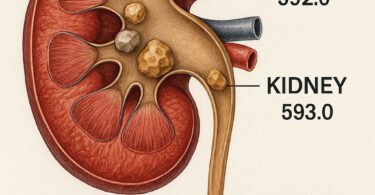
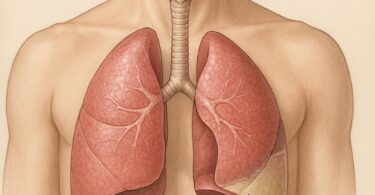
If you’re navigating medical billing, clinical documentation, or historical health records, you might need to understand the ICD-9 code for chest pain. While the healthcare world has transitioned to ICD-10, knowledge of ICD-9 remains crucial for dealing with older records, certain insurance claims, and understanding the foundation of modern coding.
This guide will provide you with a clear, thorough, and reliable explanation. We’ll dive deep into the specific code, its clinical nuances, and why precision in coding is so vital. Whether you’re a medical professional, a billing specialist, a student, or a patient researching an old bill, this article is your definitive resource.
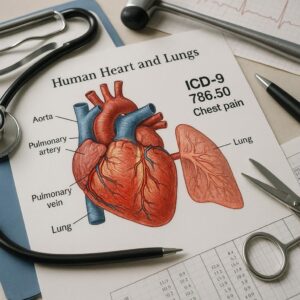
ICD-9 Code for Chest Pain
Table of Contents
ToggleUnderstanding the ICD-9 Coding System
Before we get to the specific code, let’s set the stage. The International Classification of Diseases, 9th Revision, Clinical Modification (ICD-9-CM) was the standard diagnostic coding system used in the United States from 1979 until October 1, 2015. Its primary purposes were to:
-
Translate medical diagnoses and procedures into universal alphanumeric codes.
-
Enable efficient storage and retrieval of health information for research and epidemiology.
-
Support medical billing and insurance reimbursement by providing a standardized “language.”
Think of it as a massive, detailed dictionary for diseases and health problems. Every possible condition had a corresponding code, allowing for consistency across hospitals, clinics, and insurance companies nationwide.
The Transition from ICD-9 to ICD-10
On October 1, 2015, the U.S. officially adopted ICD-10-CM, a vastly more detailed and complex system. This transition was significant. ICD-9 contained around 13,000 codes, while ICD-10 exploded to over 68,000. This allowed for much greater specificity in describing a patient’s condition, including laterality (right vs. left), cause, and severity.
Why does ICD-9 still matter?
-
Historical Records: All patient records and billing prior to October 2015 use ICD-9 codes.
-
Ongoing Claims: Some older insurance claims or disability cases referencing a pre-2015 date of service will rely on ICD-9.
-
Foundational Knowledge: Understanding ICD-9 helps clarify the logic and structure that ICD-10 expanded upon.
The Primary ICD-9 Code for Chest Pain: 786.50
In the ICD-9-CM system, the general and most commonly used code for chest pain is 786.50 – Chest pain, unspecified.
This code is found in Chapter 16: Symptoms, Signs, and Ill-Defined Conditions. This chapter is reserved for complaints or problems that are not yet attributed to a specific diagnosed disease. “Chest pain” is a symptom, not a final diagnosis.
Breaking Down the Code Structure
-
786: Represents the category “Symptoms involving respiratory system and other chest symptoms.”
-
.5: Further specifies “Chest pain.”
-
.50: The most non-specific designation, meaning “unspecified.”
Important Note: The use of “unspecified” is critical. It indicates that the clinician has not yet determined the precise nature or cause of the chest pain (e.g., cardiac, musculoskeletal, gastrointestinal). It is a placeholder used for initial encounters or when a definitive diagnosis cannot be made.
Specific Subcategories of Chest Pain in ICD-9
The beauty (and complexity) of medical coding lies in the details. While 786.50 is the catch-all, ICD-9 provided more specific codes for chest pain when the provider could be more descriptive. This specificity was crucial for guiding treatment and ensuring appropriate billing.
Here is a comparative table of the key ICD-9 codes related to chest pain:
| ICD-9 Code | Code Description | Clinical Context & When to Use |
|---|---|---|
| 786.50 | Chest pain, unspecified | Default code when the type or origin of pain is not specified. Used for initial evaluations. |
| 786.51 | Precordial pain | Pain localized specifically to the area over the heart (the precordium). Often used when a cardiac origin is suspected but not confirmed. |
| 786.52 | Painful respiration | Pain that occurs specifically with breathing in or out. Strongly suggests a pleural (lung lining) or musculoskeletal (e.g., costochondritis) cause. |
| 786.59 | Other chest pain | A catch-all for other described chest pains that don’t fit the above categories. Examples include: • Pleurodynia (intercostal muscle pain, often viral). • Substernal pain (pain behind the breastbone). • Non-cardiac chest pain. |
Why Specificity Matters in Coding
Using a more specific code like 786.52 (painful respiration) instead of 786.50 (unspecified) paints a clearer clinical picture. It:
-
Guides Care: Suggests to other healthcare providers the likely nature of the problem.
-
Improves Data: Helps public health officials track the prevalence of specific types of chest complaints.
-
Supports Billing: More specific codes can sometimes align better with the level of medical decision-making required, supporting the legitimacy of the claim.
As Dr. Eleanor Vance, a veteran medical coder, notes: “The difference between 786.50 and 786.52 isn’t just a digit. In a patient’s chart, it tells the story of whether they were clutching their chest in a worrying way or wincing with every breath. That detail matters for everyone downstream, from the cardiologist to the biller.”
Clinical Assessment and Differential Diagnosis
Coding doesn’t happen in a vacuum. The code assigned is a direct reflection of the clinician’s assessment. Chest pain is one of medicine’s most critical symptoms because its causes range from benign to life-threatening.
The Provider’s Diagnostic Journey
When a patient presents with chest pain, a provider must act like a detective. The code used reflects their findings at that moment in time. Their assessment involves:
-
A Detailed History: Where exactly is the pain? What does it feel like (sharp, pressure, burning)? Does it radiate to the arm or jaw? What makes it better or worse?
-
Physical Examination: Listening to the heart and lungs, checking for tender spots on the chest wall, assessing vital signs.
-
Diagnostic Tests: These may include an EKG, chest X-ray, or blood tests (like troponin to check for heart muscle damage).
Common Causes of Chest Pain and Their Typical Codes
While the final diagnosis (like “myocardial infarction”) would get its own unique ICD-9 code outside the 786.5x series, the symptom code is often used first. Here’s how common causes often map to initial coding:
-
Musculoskeletal (e.g., Costochondritis): Often coded as 786.52 (Painful respiration) or 786.59, as the pain is typically reproducible by pressing on the chest and worsens with movement.
-
Gastrointestinal (e.g., GERD): Often starts as 786.50 but is quickly replaced by a code like 530.81 (Gastroesophageal reflux disease) once confirmed. The chest pain from GERD is often described as burning (heartburn).
-
Pulmonary (e.g., Pleurisy, Pulmonary Embolism): Frequently coded as 786.52 (Painful respiration) due to the sharp, breath-related pain.
-
Cardiac (e.g., Angina, Myocardial Infarction): Often initially coded as 786.51 (Precordial pain) or 786.50 in the emergency setting before cardiac enzymes or other confirmatory tests return. The final diagnosis would then be coded with a more specific cardiac code (e.g., 410.xx for acute myocardial infarction).
A Crucial Reader Note: *This mapping is for educational illustration. The actual ICD-9 code assigned must always be based on the physician’s documented clinical assessment in the medical record, not on a presumed diagnosis.*
The Critical Link: Medical Documentation and Coding Accuracy
The accuracy of the ICD-9 code hinges entirely on the quality of the medical documentation. The coder’s golden rule is: “If it isn’t documented, it didn’t happen.”
How Documentation Drives the Code
A coder reviewing a chart looks for specific keywords documented by the physician or provider:
-
“Chest pain, unspecified” → Leads directly to 786.50.
-
“Patient reports sharp pain over the left precordium” → Supports the use of 786.51.
-
“Pain is exacerbated by deep inspiration” → Clearly points to 786.52.
Vague documentation forces the coder to default to the unspecified code, which can have downstream effects. Clear, precise documentation ensures the code accurately reflects the patient’s condition and the complexity of the care provided.
Consequences of Incorrect Coding
Using the wrong ICD-9 code for chest pain is not a simple clerical error. It can lead to:
-
Claim Denials or Delays: If the code doesn’t support the medical necessity of tests or treatments performed (e.g., an expensive cardiac workup billed under a simple 786.50 without supporting documentation of cardiac risk factors), the insurance company may deny payment.
-
Skewed Health Data: Inaccurate coding distorts the data used for public health research, disease tracking, and hospital resource planning.
-
Legal and Compliance Risks: Inconsistent or fraudulent coding can lead to audits, fines, and legal penalties.
Transitioning to ICD-10: What Changed for Chest Pain?
The transition to ICD-10-CM brought a monumental increase in specificity for coding chest pain. The single “unspecified” code 786.50 was replaced by a more logical and detailed set of codes.
The Primary ICD-10-CM Code: R07.9
The equivalent general code in ICD-10 is R07.9 – Chest pain, unspecified. However, ICD-10 provides many more options right from the start.
A Comparison of Coding Specificity
| Aspect | ICD-9-CM (Limited Options) | ICD-10-CM (Detailed Options) |
|---|---|---|
| Primary Codes | 786.50, 786.51, 786.52, 786.59 | R07.9 (Unspecified), R07.1 (Chest pain on breathing), R07.2 (Precordial pain), R07.81 (Pleurodynia), R07.82 (Intercostal pain), R07.89 (Other chest pain) |
| Laterality | Not specified. | Can be specified for some types of pain (e.g., codes can indicate right-sided, left-sided, or bilateral, though not for all chest pain types). |
| Cause | Implied only in description (e.g., “painful respiration”). | More directly linked through additional codes and greater detail in the descriptors themselves. |
| Number of Codes | ~4 main codes in the 786.5x series. | Dozens of more precise combinations for chest and chest wall pain. |
This level of detail in ICD-10 allows for a much richer and more accurate representation of the patient’s condition in the electronic health record.
Practical Guide: How to Find and Use the Correct Code
For professionals or curious individuals dealing with an old record, here is a step-by-step approach.
Step-by-Step Coding Process (Retrospective)
-
Locate the Physician’s Note: Find the “History of Present Illness” and “Assessment” sections.
-
Identify the Key Descriptors: Look for phrases describing the chest pain’s location, quality, and modifying factors.
-
Match Descriptor to Code: Use an official ICD-9 code book or database to match the description to the most specific code possible.
-
Undescribed pain = 786.50
-
Pain over heart = 786.51
-
Pain with breathing = 786.52
-
Other described pain (e.g., substernal) = 786.59
-
-
Verify Sequencing: For billing, the primary reason for the visit (chest pain) should be listed as the first (primary) diagnosis code.
Helpful List: Key Documentation Phrases and Their Likely ICD-9 Code
-
“Patient complains of non-radiating chest pressure.” → 786.50 (Chest pain, unspecified)
-
“Sharp, stabbing pain in the left anterior chest, reproducible on palpation.” → 786.59 (Other chest pain) or potentially a musculoskeletal code.
-
“Describes pleuritic component; worsens with deep inspiration.” → 786.52 (Painful respiration)
-
“Precordial discomfort brought on by exertion.” → 786.51 (Precordial pain) – This would strongly suggest angina until proven otherwise.
Frequently Asked Questions (FAQ)
Q: Can I use ICD-9 codes for medical billing today?
A: No. For all healthcare services provided on or after October 1, 2015, you must use ICD-10-CM codes. ICD-9 is only for historical records or services dated before that transition.
Q: Why does my old medical bill say 786.50 instead of something more specific?
A: This was likely your initial presenting symptom. The physician may have needed to rule out emergencies first using the general code. A more definitive diagnosis (like gastritis or anxiety) may have been reached later and coded on subsequent bills.
Q: Is “chest pain” always coded in the 786.5x series?
A: Not always. If a definitive cause is diagnosed, that condition’s code takes precedence. For example, confirmed acute myocardial infarction is coded to the 410.xx series, and costochondritis is coded as 733.6. The 786.5x codes are for when the pain itself is the primary reason for the encounter.
Q: How can I as a patient ensure my codes are accurate?
A: You can’t control the coding directly, but you can provide a clear, detailed description of your symptoms to your provider. The more precise your story, the better the documentation, which leads to more accurate coding.
Q: Where can I find an official list of ICD-9 codes?
A: The Centers for Medicare & Medicaid Services (CMS) and the National Center for Health Statistics (NCHS) maintain official archives. The CDC website provides a comprehensive tool for browsing both ICD-9 and ICD-10 codes.
Conclusion
Understanding the ICD-9 code for chest pain, primarily 786.50, requires appreciating its role within a historical but foundational medical coding system. It serves as a vital signpost in a patient’s record, indicating a symptom that demands clinical investigation. The specificity of codes like 786.51 for precordial pain or 786.52 for painful respiration highlights the critical link between precise medical documentation and accurate coding. While the healthcare industry has moved to the more detailed ICD-10 system, mastery of ICD-9 principles remains essential for interpreting past records and understanding the evolution of medical data management, ultimately ensuring continuity in patient care and accurate health information.
Additional Resource
For those seeking to explore official coding guidelines and archives, the Centers for Disease Control and Prevention (CDC) ICD-9-CM Browser provides a reliable, searchable database of all historical codes. This is an invaluable tool for researchers, archivists, and medical professionals dealing with legacy data.
Disclaimer: This article is for informational and educational purposes only. It is not intended as medical advice, coding advice, or a substitute for professional guidance. Medical coding is complex and regulated. Always consult with a certified professional coder, your healthcare provider, or the official ICD code manuals for definitive coding and medical decisions. The author and publisher are not responsible for any errors, omissions, or actions taken based on the information contained herein.