If you’re researching medical codes, you’ve likely encountered the term “ICD-9 code for bipolar disorder.” Perhaps you’re reviewing an old medical record, handling an insurance claim from a prior year, or simply trying to understand the evolution of mental health diagnosis. This guide is designed for you.
The International Classification of Diseases, 9th Revision (ICD-9) was the standard diagnostic tool used in the United States from 1979 until October 1, 2015. While it has been replaced by ICD-10, its codes remain highly relevant. Millions of historical patient records, insurance filings, and clinical studies are cataloged under this system. Understanding these codes is key to navigating past medical information.
This article will serve as your definitive reference. We’ll explore the specific ICD-9 codes for different types of bipolar disorder, break down what each digit means, and provide clear comparisons to the modern ICD-10 system. Our goal is to demystify this technical subject, giving you the knowledge to interpret codes accurately and understand their place in healthcare history.
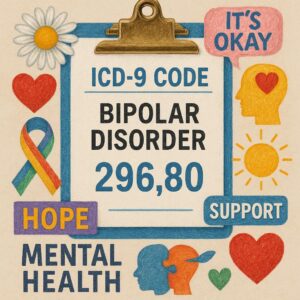
ICD-9 Code for Bipolar Disorder
Table of Contents
ToggleThe Foundation: What Was ICD-9?
Before we dive into specific codes, let’s establish what the ICD-9 system was and why it still matters today.
The ICD is a global health information standard published by the World Health Organization (WHO). Its primary purposes are to:
-
Provide a universal language for reporting diseases and health conditions.
-
Enable the systematic recording, analysis, interpretation, and comparison of mortality and morbidity data worldwide.
-
Form the basis for health insurance reimbursement and resource allocation in many countries.
The 9th Revision (ICD-9) represented a significant step in diagnostic specificity, but it was limited by its structure. Codes were mostly three to five digits long, which eventually became insufficient to describe the complexity of modern medicine. This limitation was a major driver for the transition to ICD-10, which offers a vastly expanded code set.
A Note on Timelines: “The U.S. was one of the last major industrialized nations to adopt ICD-10, finally transitioning on October 1, 2015. This decade-long delay means that a substantial portion of active patient records in the U.S. contain legacy ICD-9 codes.”
Why Knowing ICD-9 Codes Still Matters
You might wonder why we should study an “outdated” system. The reasons are practical and ongoing:
-
Historical Medical Records: Any diagnosis or treatment record prior to late 2015 will use ICD-9 codes. Understanding them is essential for interpreting a patient’s full medical history.
-
Ongoing Insurance and Legal Matters: Insurance claims, disability applications, or legal cases pertaining to events before 2015 will reference ICD-9 codes. Correct interpretation is crucial.
-
Research and Data Analysis: Longitudinal studies that track health trends over decades rely on understanding both ICD-9 and ICD-10 codes to ensure data continuity.
-
Foundational Knowledge: Understanding the evolution from ICD-9 to ICD-10 provides deeper insight into how we classify and think about mental health conditions like bipolar disorder.
Decoding the Specific ICD-9 Codes for Bipolar Disorder
In the ICD-9 system, bipolar disorder was classified under the broader category of “Psychoses” (code range 295-299). The specific codes for bipolar disorder fell under 296.0 to 296.8, with the fourth and fifth digits providing critical detail about the current episode type and severity.
The general structure was: 296 . [Episode Type] . [Severity/Specifier]
Let’s break this down in a comprehensive table.
Comprehensive Table of ICD-9 Codes for Bipolar Disorder
This table outlines all relevant ICD-9 codes, their descriptions, and their closest ICD-10 equivalents for comparison.
| ICD-9 Code | Full Code Description | Clinical Meaning & Episode Type | Approximate ICD-10-CM Equivalent |
|---|---|---|---|
| 296.0x | Bipolar I Disorder, Single Manic Episode | Used for a patient’s first and only experienced episode is manic. This was relatively rare in clinical practice, as most individuals with Bipolar I experience multiple episodes. | F31.9 (Bipolar disorder, unspecified) – Note: ICD-10 does not have a perfect single-episode equivalent, emphasizing the recurrent nature of the disorder. |
| 296.1x | Manic Disorder, Recurrent Episode | Diagnosed when a patient has a history of prior manic episodes and is currently experiencing another manic episode. | F31.1 (Bipolar disorder, current episode manic without psychotic features) or F31.2 (with psychotic features). |
| 296.2x | Major Depressive Disorder, Recurrent Episode | Important: This code was NOT for bipolar disorder. It was for recurrent major depressive disorder (unipolar depression). It’s included here because it falls in the 296 range and is a common point of confusion. | F33.x (Major depressive disorder, recurrent). |
| 296.3x | Major Depressive Disorder, Single Episode | Another code for non-bipolar, unipolar depression (single episode). | F32.x (Major depressive disorder, single episode). |
| 296.4x | Bipolar I Disorder, Most Recent Episode Manic | The patient has Bipolar I Disorder, and their most recent mood episode (current or past) was manic. The fourth digit specified severity. | F31.1x (Manic without psychosis) or F31.2x (Manic with psychosis). |
| 296.5x | Bipolar I Disorder, Most Recent Episode Depressed | The patient has Bipolar I Disorder, and their most recent mood episode (current or past) was major depressive. | F31.3 (Current episode depressed, mild/moderate) or F31.4 (severe) or F31.5 (with psychosis). |
| 296.6x | Bipolar I Disorder, Most Recent Episode Mixed | The patient experiences rapid cycling or simultaneous symptoms of both mania and depression within the same episode. | F31.6 (Bipolar disorder, current episode mixed). |
| 296.7 | Bipolar I Disorder, Most Recent Episode Unspecified | The bipolar disorder diagnosis is confirmed, but the nature of the most recent episode isn’t specified. | F31.9 (Bipolar disorder, unspecified). |
| 296.8 | Other and Atypical Bipolar Disorders | This was a catch-all for bipolar disorders that didn’t fit the classic Bipolar I mold, potentially including Bipolar II Disorder (defined by hypomania, not full mania). | F31.81 (Bipolar II disorder) or F31.89 (Other bipolar disorders). |
| 296.80 | Bipolar Disorder, Unspecified | A general code when the type of bipolar disorder was not detailed. | F31.9 (Bipolar disorder, unspecified). |
| 296.89 | Other Specified Bipolar Disorders | Used for conditions like Bipolar II Disorder. | F31.81 (Bipolar II disorder). |
| 296.9 | Unspecified Episodic Mood Disorder | A very general mood disorder code, not specific to bipolar. | F39 (Unspecified mood [affective] disorder). |
Understanding the Fourth and Fifth Digits (Severity & Specifiers)
The ‘x’ in the codes above (e.g., 296.4x) represents a fourth or fifth digit that added crucial clinical detail. This was the primary way ICD-9 attempted to capture complexity.
Common Fourth/Fifth Digits:
-
.0: Mild
-
.1: Moderate
-
.2: Severe, without mention of psychotic behavior
-
.3: Severe, specified as with psychotic behavior (e.g., delusions, hallucinations)
-
.4: In partial or unspecified remission
-
.5: In full remission
-
.6: Other (mixed features, cycling, etc.)
Real-World Coding Examples:
-
296.43: Bipolar I Disorder, most recent episode manic, severe with psychotic features.
-
296.52: Bipolar I Disorder, most recent episode depressed, severe without psychotic features.
-
296.65: Bipolar I Disorder, most recent episode mixed, in full remission.
Key Insight: “The fourth and fifth digit specifiers in ICD-9 were the precursor to the much more granular detail required in ICD-10. They forced clinicians to think not just about the diagnosis, but about its current severity and features, which directly impacted treatment planning.”
The Transition from ICD-9 to ICD-10 for Bipolar Disorder
The shift to ICD-10-CM (Clinical Modification) on October 1, 2015, was a monumental change in healthcare documentation. For bipolar disorder, the coding philosophy moved from describing the “most recent episode” to specifying the “current episode.” This provides a more immediate and accurate clinical picture.
Major Differences in Structure and Specificity
-
Code Length & Detail: ICD-10 codes are alphanumeric and can be up to 7 characters long, allowing for immense detail about episode type, severity, remission status, and the presence of anxiety or other features.
-
Episode Focus: The core of the bipolar code in ICD-10 (category F31) is built around the current state of the illness.
-
Explicit Recognition of Bipolar II: ICD-10 has a dedicated code for Bipolar II Disorder (F31.81), whereas in ICD-9 it was often lumped under the vague 296.89.
-
Additional Specifiers: ICD-10 allows for coding the presence of anxiety, rapid cycling, and other specific features, which was not systematically possible in ICD-9.
Side-by-Side Comparison: ICD-9 vs. ICD-10 Coding for a Single Patient
Let’s follow a hypothetical patient, “Alex,” to see how coding differed between the two systems.
| Clinical Scenario | ICD-9 Coding (Pre-2015) | ICD-10-CM Coding (Post-2015) | Why It’s Different & Better |
|---|---|---|---|
| Alex is hospitalized for severe mania with psychotic delusions. This is his third manic episode. | 296.13 (Manic disorder, recurrent episode, severe with psychotic features). The code captures recurrence and current severity. | F31.2 (Bipolar disorder, current episode manic severe with psychotic features). | ICD-10 is more direct: “current episode manic.” It doesn’t infer recurrence from the code itself; that context is in the medical narrative. |
| Six months later, Alex is stable on medication, with no symptoms for 4 months. | 296.45 (Bipolar I Disorder, most recent episode manic, in full remission). | F31.76 (Bipolar disorder in partial remission, most recent episode mixed). OR F31.74 (…most recent episode manic) depending on coder/clinical detail. | ICD-10 has specific codes for “in remission,” and you must still note the most recent episode type, providing a clearer longitudinal picture even in wellness. |
| Alex’s sister, Sam, has a history of major depression but now has a clear hypomanic episode. Diagnosed with Bipolar II. | 296.89 (Other specified bipolar disorders). Lacks specificity. | F31.81 (Bipolar II disorder). | This is a major improvement. ICD-10 formally recognizes Bipolar II as a distinct and common diagnosis, improving data tracking and treatment specificity. |
Practical Applications: Where You Encounter ICD-9 Codes Today
Even years after the transition, these codes are not relics. They are active components of many practical situations.
For Patients and Families
-
Understanding Old Medical Records: Your historical diagnosis paperwork will list ICD-9 codes. This guide helps you decipher what was officially documented.
-
Long-Term Disability or Insurance Claims: If your claim is based on a period of illness pre-2015, the supporting medical evidence will use ICD-9 codes. Knowing what they mean can help you ensure the documentation accurately reflects your condition.
-
Personal Health History: Compiling a thorough personal or family health history often requires translating old coded diagnoses into plain language.
For Healthcare Professionals and Medical Coders
-
Record Review and Data Migration: When reviewing a patient’s lifelong record, fluency in both ICD-9 and ICD-10 is essential for accurate understanding.
-
Handling Legacy Claims: Appeals or audits on pre-2015 claims require expert knowledge of the coding rules in effect at the time of service.
-
Research: Epidemiological research that spans the 2015 transition must account for the “break” in coding to accurately analyze trends in the diagnosis and treatment of bipolar disorder over time.
Important Notes and Common Points of Confusion
-
ICD-9 vs. DSM: Do not confuse ICD-9 with the DSM-5 (Diagnostic and Statistical Manual of Mental Disorders). The DSM is the American Psychiatric Association’s manual for diagnostic criteria. The ICD is the WHO’s system for statistical classification and coding used for billing and records. A clinician uses the DSM to make the diagnosis, then assigns an ICD code for administrative purposes.
-
The “296.2x / 296.3x” Trap: As shown in the table, codes 296.2x and 296.3x are for major depressive disorder (unipolar depression), not bipolar disorder. This is a frequent source of error when reading old charts.
-
“Unspecified” Codes Are Valid: Codes like 296.7 or 296.80 were not “bad” codes. They were necessary when specific information (e.g., most recent episode type) was not available or ascertainable. However, they provided less clinical and reimbursement value.
-
You Cannot Use ICD-9 for Current Services: As of October 1, 2015, all healthcare services provided in the U.S. must be coded with ICD-10-CM for diagnosis. Using an ICD-9 code on a current claim will result in denial.
Conclusion
Navigating the world of ICD-9 codes for bipolar disorder is more than a historical exercise; it’s a practical skill for interpreting decades of healthcare data. From the general code 296.4x for a manic episode to the specific 296.43 for severe mania with psychosis, this system formed the backbone of diagnostic recording for over 35 years. While the modern ICD-10 system, with codes like F31.12 or F31.81, offers superior detail, the legacy of ICD-9 remains locked in millions of records that inform care, insurance, and research today. Understanding this bridge between past and present coding practices empowers patients, families, and professionals to better manage the complex journey of bipolar disorder.
Frequently Asked Questions (FAQ)
Q: I found “296.40” on an old bill. What does it mean?
A: 296.40 means “Bipolar I Disorder, most recent episode manic, unspecified severity.” It indicates a diagnosis of Bipolar I where the last notable episode was manic, but the documentation did not specify if it was mild, moderate, or severe.
Q: Is there a separate ICD-9 code for Bipolar II Disorder?
A: Not explicitly. Bipolar II Disorder was typically coded under 296.89 (“Other specified bipolar disorders”). This lack of a distinct code was a known limitation of ICD-9 that was corrected in ICD-10 with code F31.81.
Q: Can a doctor use ICD-9 codes today?
A: No. For all healthcare services provided in the United States on or after October 1, 2015, the use of ICD-10-CM is mandatory for diagnosis coding. ICD-9 codes are obsolete for current treatment and billing.
Q: Why does the fifth digit sometimes indicate “in remission”? Isn’t that a good thing?
A: Yes, remission is the treatment goal. Coding a bipolar disorder diagnosis as “in full remission” (e.g., 296.45) is crucial because it tells insurers and other providers that the patient carries the diagnosis but is not currently acutely ill. This is important for justifying ongoing maintenance medication and therapy.
Q: Where can I find the official ICD-9 code set?
A: The U.S. government’s Centers for Medicare & Medicaid Services (CMS) maintains an official archive. You can find the complete ICD-9-CM code set on the CMS.gov website.
Additional Resources
-
National Institute of Mental Health (NIMH) – Bipolar Disorder: For the latest clinical information on diagnosis and treatment, visit the NIMH Bipolar Disorder page.
-
Centers for Disease Control and Prevention (CDC) – ICD-10: The CDC’s ICD-10 page provides tools and information about the current coding system. CDC ICD-10-CM.
-
American Psychiatric Association: The publishers of the DSM-5, a key resource for understanding diagnostic criteria. APA Website.
Disclaimer:
This article is for informational and educational purposes only. It is not a substitute for professional medical advice, diagnosis, or coding guidance. Always consult with a qualified healthcare provider for any questions regarding a medical condition, and rely on certified medical coders and current code sets for official billing and documentation.
Date: January 09, 2026
Author: The Health Records Guide Team