If you’re navigating old medical records, dealing with a historical insurance claim, or simply curious about medical coding, you might be searching for the ICD 9 code for bronchopneumonia. While the healthcare world has moved on to a newer coding system, understanding ICD-9 codes remains important for certain situations.
This guide will provide you with a comprehensive, clear, and reliable explanation. We’ll cover the exact code, what it meant, and why it’s essential to understand the transition to the current system. Our goal is to make this technical topic accessible and helpful for everyone, from patients to medical billing students.

ICD-9 Code for Bronchopneumonia
Table of Contents
ToggleUnderstanding ICD-9 and Its Historical Role
First, let’s break down what “ICD-9” actually means. It stands for the International Classification of Diseases, 9th Revision. For decades, this system was the universal language of diagnosis coding in the United States and many other countries. Every disease, condition, and reason for a doctor’s visit had a corresponding numeric code.
These codes were used for three primary purposes:
-
Billing and Reimbursement: Insurance companies required an ICD-9 code to process claims and determine payment.
-
Tracking and Statistics: Public health officials used these codes to monitor disease outbreaks, like the flu, and understand national health trends.
-
Medical Records: Codes provided a shorthand for documenting a patient’s diagnosis in their chart.
However, the ICD-9 system, finalized in the 1970s, eventually became outdated. It ran out of space for new diseases and lacked the detail needed for modern medicine. This led to the monumental shift to ICD-10 on October 1, 2015.
The Specific ICD-9 Code for Bronchopneumonia
So, what was the ICD 9 code for bronchopneumonia? The direct answer is:
ICD-9-CM Code 485
In the ICD-9-CM (Clinical Modification) used in the U.S., this code was defined as “Bronchopneumonia, organism unspecified.”
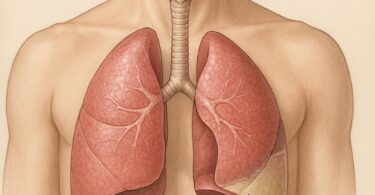
This is a crucial point. Code 485 was used when the physician diagnosed bronchopneumonia but did not identify the specific causative agent (like a particular bacteria or virus) through testing. Bronchopneumonia itself is a type of pneumonia that causes patchy inflammation in the lobes of the lung, often starting in the bronchioles.
It’s helpful to see how this code related to other similar conditions in the ICD-9 system. The following table provides context:
| ICD-9 Code | Diagnosis Name | Clinical Context |
|---|---|---|
| 485 | Bronchopneumonia, organism unspecified | The core code for a clinical diagnosis of bronchopneumonia without a specified cause. |
| 481 | Pneumococcal pneumonia | Used when the cause was confirmed as Streptococcus pneumoniae. |
| 482.9 | Bacterial pneumonia, unspecified | For bacterial pneumonia where the type of bacteria is unknown. |
| 486 | Pneumonia, organism unspecified | A broader term for pneumonia that isn’t specified as bronchopneumonia. |
| 466.0 | Acute bronchitis | Inflammation of the bronchial tubes only, not the lung air sacs. |
As you can see, medical coding is all about specificity. The difference between code 485 and code 486 was subtle but meaningful to clinicians and coders.
The Critical Transition from ICD-9 to ICD-10
This is the most important part of this guide. While you may need code 485 for historical purposes, it is no longer used for any current medical, billing, or reporting purposes in the United States. Since October 1, 2015, everyone—from hospitals to private clinics—must use ICD-10-CM codes.
The shift to ICD-10 was like moving from a detailed street map to a live, interactive GPS. The new system has vastly more codes (around 68,000 compared to ICD-9’s 13,000) and requires much greater detail.
Why Did the Code System Change?
A leading health information management professional once explained the shift: *”ICD-9 was running on fumes. We were creating new codes by adding decimals and symbols because we had simply run out of logical numbers. ICD-10 isn’t just an update; it’s a transformation that allows for precise tracking of patient conditions, modern procedures, and ultimately, better healthcare data.”*
This change was necessary for:
-
Improved Patient Care: More detailed codes lead to better tracking of complications and outcomes.
-
Advanced Public Health Tracking: Allows for precise monitoring of emerging diseases and treatment effectiveness.
-
Accurate Reimbursement: Ensures payments match the true complexity of a patient’s condition.
Mapping the Old to the New: From ICD-9 485 to ICD-10
If a case of bronchopneumonia from 2014 was coded as 485, how would it be coded today? There is no direct one-to-one match because ICD-10 requires specification of the causative organism.
The old, unspecified code 485 translates to a range of possibilities in ICD-10. The correct code now depends entirely on what the doctor identifies as the cause.
Here is a practical guide to the most common ICD-10 codes that replace the old ICD-9 code for bronchopneumonia:
| If the Cause is… | Then the ICD-10-CM Code is… | And the Full Description is… |
|---|---|---|
| Unknown or Unspecified | J18.0 | Bronchopneumonia, unspecified organism |
| Influenza virus | J09.X1, J10.00, J11.00 | Pneumonia due to identified/influenza virus |
| Streptococcus pneumoniae | J13 | Pneumonia due to Streptococcus pneumoniae |
| Haemophilus influenzae | J14 | Pneumonia due to Haemophilus influenzae |
| Other specified bacteria | J15.XX | Bacterial pneumonia, not elsewhere classified |
| Respiratory Syncytial Virus (RSV) | J12.1 | Respiratory syncytial virus pneumonia |
Important Note for Readers: This table is for educational purposes. Only a qualified medical coder or healthcare provider can assign the correct ICD-10 code based on the complete clinical documentation. The choice depends heavily on lab results, physician notes, and official coding guidelines.
What This Means for You
-
For Patients: If you’re reviewing an old medical bill or record from before 2015 and see “485,” you now know it meant bronchopneumonia. For any current diagnosis, your records and bills will use a much longer, more specific code from the ICD-10 list (like J18.0 or J13).
-
For Medical Billing Students: Understanding the mapping from ICD-9 to ICD-10 is a fantastic exercise in coding specificity. Always remember that the physician’s documentation is the source of truth.
-
For Healthcare Professionals: This transition underscores the importance of detailed documentation. Stating “bronchopneumonia” alone is no longer sufficient for coding. Notes should indicate the likely etiology (e.g., “consistent with viral bronchopneumonia”) or reference pending lab tests.
Beyond the Code: Understanding Bronchopneumonia
While our focus is on the code, it’s helpful to understand the condition it describes.
Bronchopneumonia is an infection that causes inflammation in the alveoli (air sacs) of the lungs, often patchy and distributed. It commonly begins as a bronchitis infection that spreads deeper into the lungs.
Common symptoms include:
-
Productive cough (often with greenish or yellow mucus)
-
Fever and chills
-
Shortness of breath or rapid breathing
-
Fatigue
-
Chest pain that worsens with coughing or deep breaths
Typical causes involve:
-
Bacteria (e.g., S. pneumoniae, H. influenzae)
-
Viruses (e.g., Influenza, RSV)
-
Fungi (less common, usually in immunocompromised individuals)
Treatment is directed at the cause—antibiotics for bacterial cases, rest and supportive care for viral cases. Prevention through vaccination (like the flu shot and pneumococcal vaccine) and good hand hygiene is key.
Conclusion
The search for the ICD 9 code for bronchopneumonia leads to the historical code 485, a relic of a less-specific era in medical coding. Its true importance today lies in understanding the evolution to ICD-10, a system that demands precise documentation for better patient care, accurate billing, and advanced disease tracking. Whether you’re deciphering an old record or learning modern coding, the journey from 485 to codes like J18.0 tells the story of medicine’s push for greater clarity and detail.
Frequently Asked Questions (FAQ)
Q: Can I still use ICD-9 code 485 on a medical claim today?
A: No. For any services provided on or after October 1, 2015, the use of ICD-9 codes is prohibited for billing purposes in the United States. Claims submitted with ICD-9 codes will be rejected.
Q: I have an old record with code 485. What is the equivalent ICD-10 code?
A: There is no perfect equivalent. The closest general code is J18.0 (Bronchopneumonia, unspecified organism). However, if the old record later specified a cause, a different, more specific ICD-10 code would be used.
Q: Why is ICD-10 so much more complicated than ICD-9?
A: The complexity is intentional and beneficial. The extra characters in an ICD-10 code can specify laterality (left vs. right), the type of encounter (initial vs. follow-up), and detailed etiology. This creates a richer data set for healthcare research and quality improvement.
Q: Where can I find the official, current ICD-10 codes?
A: The U.S. government’s Centers for Medicare & Medicaid Services (CMS) and the National Center for Health Statistics (NCHS) are the official sources. They publish the full ICD-10-CM code set annually.
Additional Resources
For the most authoritative and up-to-date information on ICD-10 codes, including the complete official guidelines and code sets, please visit the Centers for Disease Control and Prevention (CDC) ICD-10 page: https://www.cdc.gov/nchs/icd/icd-10-cm.htm
Disclaimer: This article is for informational and educational purposes only. It is not a substitute for professional medical coding advice, clinical guidance, or treatment. Medical coding is complex and regulated; always consult the official ICD-10-CM guidelines and a certified medical coder for accurate code assignment. The information reflects knowledge as of the stated date and may be subject to change.
Date: January 11, 2026
Author: The Web Health Archives Team