If you’re navigating medical records, insurance forms, or historical health data, you might find yourself searching for the ICD-9 code for endometrial cancer. While the healthcare world has transitioned to a newer coding system, understanding these older codes remains crucial for interpreting past medical information.
This article serves as your definitive, reader-friendly guide. We’ll demystify the specific ICD-9 code, explain its context, and connect it to the modern coding system used today. More importantly, we’ll go beyond the numbers to provide a clear, supportive overview of endometrial cancer itself—covering its types, diagnosis, and treatment—because your health journey is about much more than a code.
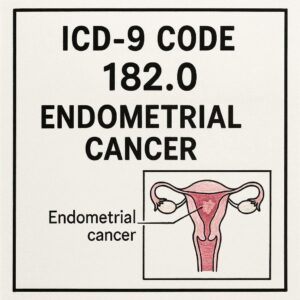
ICD-9 Code 182.0 for Endometrial Cancer
Understanding ICD-9 and Its Historical Role
First, let’s clarify what ICD-9 is and why you might still encounter it.
ICD-9-CM (International Classification of Diseases, 9th Revision, Clinical Modification) was the standard system used in the United States to classify and code all diagnoses, symptoms, and procedures for billing, tracking, and statistical purposes. It was in use from 1979 until September 30, 2015.
On October 1, 2015, the U.S. healthcare system officially switched to ICD-10-CM, a much more detailed and modern system. However, any medical records, insurance claims, or research data pertaining to events before this date would use ICD-9 codes.
Key Note for Readers: If you are dealing with a current diagnosis, treatment, or insurance claim, your healthcare providers will be using ICD-10 codes. The information on ICD-9 is primarily for historical understanding or for processing older records.
The Specific ICD-9 Code for Endometrial Cancer
The direct answer to the search query is:
The ICD-9 code for malignant neoplasm of the body of the uterus, which primarily refers to endometrial cancer, is 182.0.
Let’s break down what this code signifies:
-
182: This represents “Malignant neoplasm of the body of uterus.” The “body of the uterus” is the main, upper part of the uterus, as distinct from the cervix. -
.0: This fourth digit further specifies the location as the “Corpus uteri, except isthmus.” The corpus uteri is the body of the uterus, and the isthmus is the lower, narrow part leading to the cervix. Endometrial cancer originates in the inner lining (endometrium) of the corpus uteri.
What Was Included and Excluded Under Code 182.0?
In the ICD-9 system, 182.0 was a broad category. It typically included:
-
Carcinoma of the endometrium (the most common type)
-
Adenocarcinoma of the uterine body
-
Malignant tumors arising from the glandular cells of the endometrium
It explicitly excluded cancers of the:
-
Uterine isthmus (coded as
182.1) -
Uterine cervix (coded in the
180.xseries)
From ICD-9 to ICD-10: The Modern Coding Landscape
The transition to ICD-10 brought a significant increase in specificity. Where ICD-9 had one primary code for endometrial cancer (182.0), ICD-10 offers multiple codes that provide detailed information about the cancer’s behavior and histology (cell type).
Here is a comparative table showing the mapping from the old ICD-9 code to the current ICD-10 codes:
Table: Transition from ICD-9 to ICD-10 for Endometrial Cancer
| ICD-9 Code (Historical) | ICD-10-CM Code (Current) | Description & Specificity |
|---|---|---|
| 182.0 | C54.1 | Malignant neoplasm of endometrium. This is the most direct equivalent. |
| C54.2 | Malignant neoplasm of myometrium (muscle layer of the uterus). | |
| C54.3 | Malignant neoplasm of fundus uteri (the top portion of the uterus). | |
| C54.8 | Malignant neoplasm of overlapping sites of the corpus uteri. | |
| C54.9 | Malignant neoplasm of corpus uteri, unspecified. | |
| C55 | Malignant neoplasm of uterus, part unspecified (used when the exact site is not documented). |
Why This Specificity Matters: The detailed ICD-10 codes allow for better tracking of cancer subtypes, treatment outcomes, and epidemiological research. They provide a clearer picture for your care team and for national health statistics.
A Closer Look at Endometrial Cancer: Beyond the Code
Understanding the code is helpful, but understanding the condition is vital. Here’s a comprehensive yet clear overview of endometrial cancer.
What is Endometrial Cancer?
Endometrial cancer develops in the endometrium, the inner lining of the uterus. It is the most common gynecologic cancer in the United States and many developed countries. Most cases are diagnosed at an early stage because abnormal vaginal bleeding often prompts early medical attention.
Types and Histologies
Not all endometrial cancers are the same. The histology (microscopic cell type) is a critical factor in determining prognosis and treatment.
Main Types:
-
Endometrioid Adenocarcinoma (Type I): Accounts for 80-90% of cases. These cancers are often linked to excess estrogen, are typically lower grade, and have a more favorable prognosis.
-
Non-Endometrioid Carcinomas (Type II): These are more aggressive and include:
-
Serous carcinoma
-
Clear cell carcinoma
-
Carcinosarcoma (also known as malignant mixed Müllerian tumor)
-
Common Types of Endometrial Cancer
| Type | Frequency | Typical Characteristics | Association |
|---|---|---|---|
| Endometrioid Adenocarcinoma | ~85% | Often hormone-driven (estrogen), lower grade, better prognosis. | Obesity, unopposed estrogen, PCOS. |
| Uterine Serous Carcinoma | ~10% | Aggressive, higher grade, can spread early. | Older age, less linked to estrogen. |
| Clear Cell Carcinoma | ~4% | Aggressive, higher grade. | Older age. |
| Carcinosarcoma | <5% | Very aggressive, contains both cancerous epithelial and connective tissue cells. | Older age, prior pelvic radiation. |
Recognizing the Symptoms and Signs
Early detection is key. Be aware of the following symptoms, especially if you are postmenopausal:
-
Abnormal Vaginal Bleeding: This is the cardinal symptom.
-
Postmenopausal: Any bleeding or spotting.
-
Premenopausal: Unusually heavy periods, bleeding between periods, or bleeding after sex.
-
-
Abnormal Vaginal Discharge (watery or blood-tinged).
-
Pelvic Pain or Pressure.
-
Pain During Intercourse.
-
Unintended Weight Loss.
Important Note: Any postmenopausal bleeding should be evaluated by a healthcare provider immediately. It is not normal and requires investigation to rule out endometrial cancer.
Diagnosis and Staging: The Path from Symptom to Code
The diagnostic journey is what leads to the assignment of a specific ICD code. Here’s a typical pathway:
-
Medical History and Pelvic Exam: Your doctor will discuss your symptoms, risk factors, and perform a physical exam.
-
Transvaginal Ultrasound: This imaging test measures the thickness of the endometrium. A thick lining in a postmenopausal woman is a red flag.
-
Endometrial Biopsy: The cornerstone of diagnosis. A thin tube is inserted through the cervix to suction a small sample of the endometrial tissue. This is often done in the office.
-
Dilation and Curettage (D&C): If the biopsy is inconclusive, this minor surgical procedure allows for a more thorough sampling of the endometrium.
-
Pathology Report: The tissue sample is analyzed by a pathologist. This report confirms the cancer, identifies its type and grade, and provides the information needed for the precise ICD-10 code.
-
Staging Workup: If cancer is confirmed, imaging tests (CT, MRI, PET scan) may be used to determine if the cancer has spread. This leads to a clinical stage.
Standard Treatment Pathways
Treatment is highly personalized and depends on the cancer’s stage, type, grade, and the patient’s overall health.
-
Surgery: The primary treatment for most stages.
-
Total Hysterectomy with Bilateral Salpingo-Oophorectomy: Removal of the uterus, cervix, both fallopian tubes, and both ovaries.
-
Sentinel Lymph Node Biopsy / Lymphadenectomy: Removal of key lymph nodes to check for spread.
-
-
Radiation Therapy: Used after surgery (adjuvant) to destroy any remaining cancer cells, or as primary therapy for patients who cannot have surgery.
-
Chemotherapy: Often used for more advanced stages (III/IV) or aggressive histologies (like serous carcinoma).
-
Hormone Therapy: Used for advanced or recurrent cancers that are hormone receptor-positive (e.g., using progesterone).
-
Targeted Therapy & Immunotherapy: Newer drugs that target specific pathways in cancer cells (e.g., mTOR inhibitors, tyrosine kinase inhibitors) or boost the immune system to fight cancer (e.g., checkpoint inhibitors for cancers with specific genetic profiles like MSI-H/dMMR).
Conclusion
The historical ICD-9 code 182.0 provides a snapshot of how endometrial cancer was classified for decades, representing “malignant neoplasm of the corpus uteri.” Today, the modern, detailed ICD-10 system (e.g., C54.1) offers greater precision for diagnosis and care. Understanding these codes is part of navigating your health records, but the true focus remains on awareness of symptoms, pursuing timely diagnosis, and accessing the personalized, multi-modal treatments that offer hope and healing to those affected by this disease.
Frequently Asked Questions (FAQ)
Q1: I saw code 182.0 on an old medical bill from 2010. What does it mean?
A1: It means you were diagnosed with or treated for a malignant cancer of the body of the uterus (endometrial cancer) at that time. This was the standard ICD-9 code for that condition.
Q2: What is the CURRENT ICD-10 code my doctor would use for endometrial cancer?
A2: The most common and direct code is C54.1 (Malignant neoplasm of endometrium). However, your specific code may vary slightly based on the exact location and cell type noted in your pathology report.
Q3: Are ICD codes important for patients to know?
A3: While you don’t need to memorize them, having a basic understanding can empower you to read your own medical bills, explain your history to new providers, and ensure the accuracy of your records. They are the language of medical administration and research.
Q4: Is uterine cancer the same as endometrial cancer?
A4: Often, yes, but technically “uterine cancer” is a broader term. Over 95% of uterine cancers start in the endometrium, so they are endometrial cancers. A small percentage start in the muscle layer (sarcoma), which has different codes and treatments.
Additional Resources
For reliable, up-to-date information and support, we recommend visiting:
-
The American Cancer Society’s detailed guide on Endometrial Cancer: https://www.cancer.org/cancer/types/endometrial-cancer.html (This link provides comprehensive information on diagnosis, treatment, support, and the latest research.)
Disclaimer: This article is for informational purposes only and is not a substitute for professional medical advice, diagnosis, or treatment. Always seek the advice of your physician or other qualified health provider with any questions you may have regarding a medical condition. Medical coding is complex and constantly updated; always rely on certified coders and current code sets for official purposes.
Date: January 18, 2026
Author: The Editorial Team at Women’s Health Insights