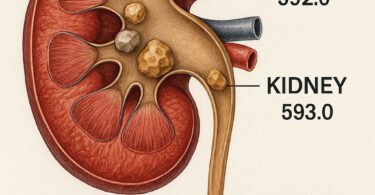
If you’re looking for medical coding information for an enlarged prostate, you’ve likely encountered the term “ICD-9.” While this coding system has been officially retired, understanding it remains crucial for deciphering older medical records, handling historical billing issues, or simply making sense of a past diagnosis. This comprehensive guide will explain everything you need to know about the ICD-9 code for an enlarged prostate, placing it in the context of modern healthcare.
We’ll explore not just the code itself, but what it means, why medical coding is essential, and how the healthcare world has moved forward. Our goal is to provide you with clear, reliable information that empowers you to navigate your health journey or professional responsibilities with confidence.

ICD-9 Code for Enlarged Prostate
Understanding Medical Coding: Why ICD Codes Matter
Before we dive into the specific code, let’s establish a foundation. ICD stands for the International Classification of Diseases. It’s a universal system managed by the World Health Organization (WHO) that assigns unique alphanumeric codes to every known disease, disorder, injury, and health condition.
Imagine a global medical language. Instead of writing “enlarged prostate” in hundreds of languages and local medical terminologies, a doctor in Tokyo, a hospital in Berlin, and an insurance company in New York can all use the same precise code. This standardization is vital for:
-
Accurate Billing and Reimbursement: Insurance companies require specific codes to process claims.
-
Tracking Public Health: Health organizations use aggregated code data to track disease rates, outbreaks, and the effectiveness of treatments.
-
Clinical Research: Researchers rely on coded data to identify patient populations for studies.
-
Maintaining Patient Records: Codes provide a concise, unambiguous summary of a patient’s health history.
As one healthcare data administrator notes:
“ICD codes are the DNA of modern healthcare data. They translate the narrative of illness into a structured format that drives everything from individual patient care to global health policy.”
The Transition from ICD-9 to ICD-10: A Significant Shift
The ICD system is periodically updated. In the United States, a major change occurred on October 1, 2015, when the healthcare system officially transitioned from ICD-9-CM (Clinical Modification) to ICD-10-CM.
This wasn’t just a simple update. ICD-10 is vastly more detailed, containing around 68,000 diagnostic codes compared to approximately 13,000 in ICD-9. This specificity allows for a much more precise description of a patient’s condition, including laterality (left, right), severity, and etiology (cause).
Key Takeaway: While ICD-9 is historically important, ICD-10 is the current standard used for all diagnosis coding and billing in the U.S. healthcare system today.
The Specific ICD-9 Code for Enlarged Prostate
The umbrella term “enlarged prostate” is clinically known as Benign Prostatic Hyperplasia (BPH). In the ICD-9-CM system, all conditions related to BPH fall under a single code block:
ICD-9-CM Code Range: 600.xx – Hyperplasia of prostate
This is the code you would have seen on medical bills, records, or insurance forms prior to October 2015. The “xx” indicates that there were further sub-codes for more specific documentation within this category.
Breakdown of ICD-9 Codes for Prostate Hyperplasia
The following table details the specific codes within the 600.xx range. This level of detail helps illustrate the limitations of ICD-9 compared to its successor.
| ICD-9-CM Code | Code Description | Clinical Scenario |
|---|---|---|
| 600.0 | Hypertrophy (benign) of prostate | The most general code for an enlarged prostate without noted obstruction or other symptoms. |
| 600.1 | Nodular prostate | Used when the enlargement is described as being in distinct nodules. |
| 600.2 | Benign localized hyperplasia of prostate | Indicates the enlargement is confined to a specific area of the prostate. |
| 600.3 | Cyst of prostate | For when a fluid-filled sac (cyst) is present, which can contribute to enlargement. |
| 600.9 | Hyperplasia of prostate, unspecified | A catch-all code used when documentation wasn’t specific enough to assign 600.0, 600.1, or 600.2. |
| 600.00 | Hypertrophy (benign) of prostate without obstruction | For BPH that is not causing urinary blockage. |
| 600.01 | Hypertrophy (benign) of prostate with obstruction | For BPH that is causing urinary blockage, a common and more symptomatic scenario. |
Important Note for Readers: If you are reviewing an old record or bill and see any code starting with 600, it refers to a non-cancerous enlargement of the prostate. This is distinct from codes for prostate cancer (which fell under the 185.xx range in ICD-9) or prostatitis (inflammation, coded in the 601.xx range).
The Modern Equivalent: ICD-10 Codes for Enlarged Prostate (BPH)
To fully understand the historical code, it’s essential to see what replaced it. ICD-10 offers a dramatic increase in specificity, which improves patient care and data accuracy.
The core ICD-10-CM code for Benign Prostatic Hyperplasia is N40.0. However, this is just the starting point. Coders must add additional digits to specify the exact nature of the condition.
ICD-10-CM Code Structure for BPH: N40.1
The code is expanded as follows:
-
N40.0 – Benign prostatic hyperplasia without lower urinary tract symptoms (LUTS)
-
N40.1 – Benign prostatic hyperplasia with lower urinary tract symptoms (LUTS)
-
N40.2 – Benign prostatic hyperplasia with urinary retention
-
N40.3 – Nodular prostate with lower urinary tract symptoms
-
And more… Further codes specify other concurrent conditions.
Comparison of Coding Specificity:
| Aspect | ICD-9-CM (600.xx) | ICD-10-CM (N40.x) |
|---|---|---|
| Number of Codes | ~8 relevant codes | Over 30 specific codes |
| Symptom Detail | Limited (e.g., “with obstruction”) | Highly detailed (e.g., “with LUTS,” “with retention,” “with hematuria”) |
| Laterality | Not specified | Not typically applicable for prostate |
| Example | 600.01 (Hypertrophy with obstruction) | N40.1 (BPH with lower urinary tract symptoms) |
This shift highlights how modern coding captures the patient’s clinical picture more accurately, which can influence treatment decisions and outcomes research.
Practical Implications: From Diagnosis to Billing
For patients, understanding this coding journey demystifies the administrative side of healthcare. Here’s how these codes flow through your care experience.
The Patient’s Journey with a BPH Code
-
Diagnosis: Your urologist performs an exam, reviews symptoms (like frequent urination, weak stream), and may order tests (PSA blood test, ultrasound). They diagnose Benign Prostatic Hyperplasia.
-
Documentation: The doctor notes the diagnosis in your medical record, specifying details like severity and presence of urinary symptoms.
-
Coding: A medical coder in the doctor’s office or hospital translates that written diagnosis into the correct ICD-10 code (e.g., N40.1).
-
Billing & Insurance: This diagnostic code is paired with procedure codes (CPT codes) for your visit, exam, or any tests on the claim sent to your insurance.
-
Adjudication: Your insurance company uses the ICD-10 code to verify that the services rendered were medically necessary for treating BPH. This determines how much they will pay.
-
Health Records: The code becomes a permanent part of your electronic health record, helping future providers quickly understand your medical history.
Common Questions and Scenarios
-
“I found an old bill with code 600.01. What does it mean?” It means you were diagnosed with an enlarged prostate that was causing an obstruction or blockage of urine flow.
-
“Why is my new bill different from my old one?” The code format changed from numeric (600.xx) to alphanumeric (N40.x) after October 2015.
-
“Can I use the ICD-9 code today?” No. For any current medical service, billing, or new record, only ICD-10 codes are valid and accepted.
Beyond the Code: Living with an Enlarged Prostate
While coding is a technical necessity, the real focus is on managing your health. A diagnosis of BPH is common—affecting about half of men in their 50s and up to 90% in their 70s and 80s.
Symptoms to Discuss with Your Doctor
If you are researching these codes due to personal concerns, be aware of common BPH symptoms:
-
Frequent or urgent need to urinate
-
Increased frequency of urination at night (nocturia)
-
Difficulty starting urination
-
Weak urine stream or a stream that stops and starts
-
Dribbling at the end of urination
-
Inability to fully empty the bladder
A Vital Reminder: These symptoms can also be caused by other conditions, including prostate cancer. It is essential to see a healthcare provider for a proper evaluation and diagnosis. Do not self-diagnose based on online research alone.
Treatment Pathways
Treatment depends on symptom severity and can include:
-
Lifestyle Changes: Reducing fluid intake before bed, avoiding caffeine and alcohol.
-
Medications: Alpha-blockers (e.g., tamsulosin) to relax prostate muscles; 5-alpha reductase inhibitors (e.g., finasteride) to shrink the prostate.
-
Minimally Invasive Procedures: Therapies like Rezūm (steam therapy), UroLift, or laser treatments to reduce obstruction.
-
Surgery: Transurethral resection of the prostate (TURP) remains the gold standard surgical treatment for significant cases.
Conclusion
The search for the “ICD-9 code for enlarged prostate” leads to the historical code range 600.xx, with 600.01 being a commonly used specification for obstructive symptoms. This system served a critical role in healthcare for decades but was replaced by the more precise ICD-10-CM code set (N40.x) in 2015. Understanding these codes empowers patients to navigate their medical records and appreciate the infrastructure behind their care. Ultimately, a BPH diagnosis, while impactful, is a manageable condition, and effective communication with your healthcare team—a process aided by these precise diagnostic codes—is the first step toward effective treatment.
Frequently Asked Questions (FAQ)
Q: Can I still use ICD-9 codes for billing?
A: No. As of October 1, 2015, all healthcare providers in the United States are required to use ICD-10-CM codes for diagnosis coding on insurance claims and medical records. Using ICD-9 would result in claim denials.
Q: I have an old medical record with just “600.0” on it. Is that enough information?
A: For historical context, yes, it confirms a diagnosis of benign prostate enlargement. However, by today’s standards (ICD-10), that level of detail is considered insufficient as it doesn’t specify the presence or absence of symptoms, which guides treatment.
Q: Is the ICD-9 code for prostate cancer similar?
A: No. In ICD-9, malignant neoplasm (cancer) of the prostate had its own distinct code range: 185.xx. This clear separation between benign (600.xx) and malignant (185.xx) conditions is a fundamental aspect of medical coding.
Q: Where can I find the official, current ICD-10 code lists?
A: The authoritative source is the Centers for Medicare & Medicaid Services (CMS) website, which publishes the official ICD-10-CM guidelines and code tables. The World Health Organization (WHO) also maintains the international foundation of the ICD system.
Additional Resources
For further reliable information on Benign Prostatic Hyperplasia, its symptoms, and treatments, we recommend visiting the patient education section of the American Urological Association (AUA) Foundation:
Visit the AUA Foundation Urology Care Site
Disclaimer: This article is for informational purposes only and is not a substitute for professional medical advice, diagnosis, or treatment. Always seek the advice of your physician or other qualified health provider with any questions you may have regarding a medical condition. Medical coding guidelines are complex and subject to change; always refer to the latest official coding manuals and payer policies for definitive guidance.