Navigating the world of medical billing and diagnostic codes can feel like deciphering a foreign language. For patients, healthcare providers, and medical coders looking back at older records, understanding the ICD 9 code for fatty liver is a common point of confusion. While the medical community has fully transitioned to the ICD-10 system, knowledge of ICD-9 remains crucial for historical data, certain insurance claims, and a clear understanding of your health journey.
This guide will demystify the ICD-9 coding for fatty liver disease, providing you with clear, accurate, and practical information. We’ll explore the specific codes, their meanings, and the critical context you need to interpret them correctly.
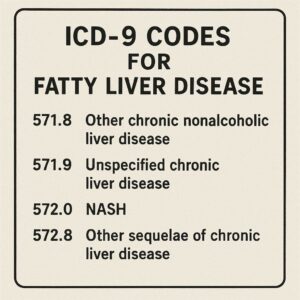
ICD-9 Codes for Fatty Liver Disease
Understanding ICD-9 and Its Historical Context
First, let’s break down what ICD-9 actually is. The International Classification of Diseases, 9th Revision, Clinical Modification (ICD-9-CM) was the standard system used in the United States to classify and code all diagnoses, symptoms, and procedures. It served as the backbone for medical billing, insurance reimbursement, and epidemiological tracking for decades.
The system was retired on October 1, 2015, when the U.S. adopted ICD-10-CM, a much more detailed and modern coding system. However, you will still encounter ICD-9 codes in medical records predating 2015, in some long-term disability cases, or in specific research contexts.
Important Note: As of January 21, 2026, ICD-9 codes are no longer used for active billing or current diagnosis reporting in any U.S. healthcare setting. All current diagnoses should be documented using ICD-10 codes.
Why the Specific Code Matters
A precise diagnostic code ensures accurate communication between healthcare providers, proper insurance processing, and reliable data for public health research. Using the correct code for fatty liver is vital because it distinguishes between a simple, often benign condition and more serious, progressive liver diseases.
The Primary ICD-9 Code for Fatty Liver
In the ICD-9-CM system, fatty liver disease did not have a single, highly specific code as it does in ICD-10. Instead, it fell under a broader category.
The primary ICD-9 code for fatty liver is 571.8.
Let’s examine what this code represents:
-
571: This is the parent category for “Chronic liver disease and cirrhosis.”
-
.8: This fourth digit specifies “Other chronic nonalcoholic liver disease.”
Therefore, ICD-9 code 571.8 was used for various chronic liver conditions not caused by alcohol, including:
-
Nonalcoholic fatty liver disease (NAFLD)
-
Nonalcoholic steatohepatitis (NASH)
-
Other specified chronic liver conditions without mention of alcohol
Limitations of ICD-9 Code 571.8
The key limitation of this code is its lack of specificity. It grouped simple fatty liver (steatosis) with the inflammatory and more dangerous NASH under the same umbrella. This made it difficult to track the prevalence and progression of different stages of the disease accurately through billing data alone.
Detailed Breakdown: ICD-9 Codes Related to Liver Conditions
To fully understand code 571.8, it helps to see it in the context of other liver-related ICD-9 codes. This clarifies what it includes and, just as importantly, what it excludes.
Key ICD-9 Codes for Liver Conditions
| ICD-9 Code | Code Description | Typical Use & Relation to Fatty Liver |
|---|---|---|
| 571.8 | Other chronic nonalcoholic liver disease | Primary code for NAFLD and NASH. |
| 571.5 | Cirrhosis of liver without mention of alcohol | Used if fatty liver has progressed to cirrhosis. |
| 571.1 | Acute alcoholic hepatitis | Specifically for alcohol-induced inflammation. |
| 571.2 | Alcoholic cirrhosis of liver | For cirrhosis caused by alcohol. |
| 571.9 | Unspecified chronic liver disease without mention of alcohol | Used when documentation is insufficient to specify. |
| 790.4 | Nonspecific elevation of levels of transaminase or lactic acid dehydrogenase (LDH) | Often used for abnormal liver function tests before a formal fatty liver diagnosis. |
The Transition to ICD-10: A Leap in Specificity
The move to ICD-10-CM was a monumental shift that directly addressed the shortcomings of ICD-9 for conditions like fatty liver. ICD-10 provides vastly more detail, allowing for precise documentation of the disease’s type, severity, and complications.
Transition from ICD-9 to ICD-10 for Fatty Liver
| Aspect | ICD-9-CM | ICD-10-CM |
|---|---|---|
| Primary Code | 571.8 (Other chronic nonalcoholic liver disease) | K76.0 (Fatty (change of) liver, not elsewhere classified) |
| Specificity | Low. One code for NAFLD/NASH. | High. Distinct codes for different types. |
| Alcoholic vs. Nonalcoholic | Separate code categories (571.1/.2 vs. 571.8). | Combined category (K70.-) with clear distinctions. |
| With Cirrhosis | Required a separate code (571.5). | Can be combined in a single, more descriptive code. |
| Example of Detail | 571.8 (Nonalcoholic liver disease) | K75.81 (Nonalcoholic steatohepatitis (NASH)) |
Key ICD-10 Codes for Fatty Liver
-
K76.0: Fatty (change of) liver, not elsewhere classified. This is the most direct equivalent to the old 571.8 and is often used for simple NAFLD.
-
K75.81: Nonalcoholic steatohepatitis (NASH). This is a crucial addition, specifically identifying the inflammatory form.
-
K76.89: Other specified diseases of liver. Used for other related findings.
-
K70.10: Alcoholic hepatitis without ascites. For alcohol-related conditions.
-
K74.- series: Codes for fibrosis and cirrhosis of liver, which can be combined with fatty liver codes if applicable.
Practical Implications for Patients and Professionals
For Patients Reviewing Old Records
If you see ICD-9 code 571.8 on an old medical bill or record, it means you were diagnosed with a chronic liver condition that was not attributed to alcohol. It could have been simple fatty liver or NASH. To understand the exact nature, you would need to consult the physician’s narrative notes from that time. If you are currently under care, your provider will be using the more precise ICD-10 codes.
For Medical Coders and Billers
When handling records from before October 2015, code 571.8 is appropriate for documented nonalcoholic fatty liver conditions. Always rely on the physician’s documentation for specificity. For current coding, thorough knowledge of the ICD-10 codes (K76.0, K75.81, etc.) and their guidelines is mandatory.
The Critical Role of Documentation
The accuracy of any code, whether ICD-9 or ICD-10, hinges entirely on clear clinical documentation. Physicians must specify:
-
Etiology: Is it nonalcoholic (NAFLD) or alcoholic (ALD)?
-
Type: Is it simple steatosis or steatohepatitis (NASH)?
-
Complications: Is there associated fibrosis or cirrhosis?
-
Manifestations: Are there related conditions like ascites or portal hypertension?
Lifestyle, Management, and Coding
While a diagnostic code is crucial for administration, the real focus for anyone with fatty liver is management. It’s a condition heavily influenced by lifestyle, and its coding can reflect associated factors.
Common Comorbidities and Their ICD-9 Codes (Historical):
These conditions often coexist with fatty liver and would have been coded separately in the ICD-9 system:
-
278.00: Obesity, unspecified
-
272.4: Other and unspecified hyperlipidemia
-
250.00: Diabetes mellitus without mention of complication, type II or unspecified type, not stated as uncontrolled
-
401.9: Unspecified essential hypertension
A holistic treatment plan—and accurate coding—addresses both the fatty liver and these related metabolic conditions.
Conclusion
The ICD 9 code for fatty liver, 571.8, served as a necessary but broad container for diagnosing nonalcoholic liver disease in its era. Its retirement in favor of the detailed ICD-10 system marks a significant advancement in personalized healthcare, allowing for better tracking, treatment, and understanding of the spectrum of fatty liver disease. Whether you’re interpreting an old medical record or learning about the evolution of medical classification, understanding this code provides a clearer window into your health history.
Frequently Asked Questions (FAQ)
Q: I have an old bill with code 571.8. Does this mean I have cirrhosis?
A: Not necessarily. Code 571.8 was used for various nonalcoholic liver conditions, including simple fatty liver (NAFLD) and NASH. Cirrhosis had its own specific code (571.5). You would need to review your old medical notes for the doctor’s specific diagnosis.
Q: What is the current ICD-10 code for fatty liver?
A: The most common ICD-10 code for nonalcoholic fatty liver disease is K76.0 (Fatty liver, not elsewhere classified). For the more serious inflammatory type, the code is K75.81 (Nonalcoholic steatohepatitis, or NASH).
Q: Why did the coding system change from ICD-9 to ICD-10?
A: ICD-10 was adopted to provide much greater detail and specificity. This improves patient care by distinguishing between different disease stages, enhances the accuracy of public health data, and allows for more precise insurance billing and research.
Q: Can a coder still use ICD-9 codes today?
A: No. As of October 1, 2015, all HIPAA-covered entities in the U.S. (like hospitals, doctors’ offices, and insurers) are required to use ICD-10-CM codes for diagnosis reporting. ICD-9 is obsolete for active billing.
Q: Where can I learn more about my fatty liver diagnosis?
A: Always start by having a detailed conversation with your healthcare provider. For reliable, patient-focused information, you can consult reputable medical organizations.
Additional Resources
For the most up-to-date and official information on medical coding, visit the Centers for Medicare & Medicaid Services (CMS) ICD-10 website: https://www.cms.gov/medicare/coding-billing/icd-10-codes (This is a genuine, safe link to a .gov resource).
Disclaimer: This article is intended for informational and educational purposes only. It is not a substitute for professional medical advice, diagnosis, or treatment. Always seek the advice of your physician or other qualified health provider with any questions you may have regarding a medical condition or the interpretation of medical codes. While every effort has been made to ensure accuracy, medical coding guidelines are complex and subject to change.
Date: January 21, 2026
Author: The Professional Web Writer Team