If you’re researching medical codes for gout, you’ve likely come across the term “ICD-9 code for gout.” While this code was the standard for decades, the medical world has moved on to a newer, more detailed system. However, understanding the old ICD-9 code remains important for dealing with older medical records, certain insurance claims, or simply satisfying your curiosity.
This guide will provide a clear, comprehensive look at the ICD-9 code for gout, explain its limitations, and demystify the modern coding system that has replaced it. Our goal is to give you a reliable reference that cuts through the technical jargon and provides genuine value.

ICD-9 Code for Gout
What Was the ICD-9 Code for Gout?
In the International Classification of Diseases, 9th Revision (ICD-9), the general code for gout was 274.9.
Let’s break down what this code meant:
-
274: This is the category code for “Gout and other crystal arthropathies.”
-
.9: This fourth digit indicates “Unspecified.” It was used when the documentation didn’t specify the type of gout or the exact joint affected.
Important Note: The ICD-9-CM (Clinical Modification) system was officially replaced by ICD-10-CM in the United States on October 1, 2015. While you may still encounter ICD-9 codes in older records, all current medical diagnosis coding must use ICD-10.
A Closer Look: The ICD-9 Category 274
The 274 category wasn’t just one code. It contained several more specific codes for different presentations of gout. This table illustrates the structure:
| ICD-9 Code | Diagnosis Description |
|---|---|
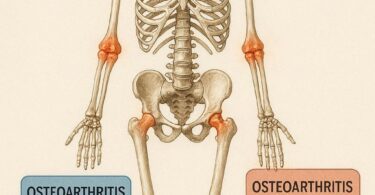
| 274.0 | Gouty arthropathy (inflammation of the joint) |
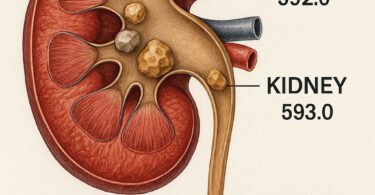
| 274.1 | Gouty nephropathy (kidney involvement) |
| 274.10 | Gouty nephropathy, unspecified |
| 274.11 | Uric acid nephrolithiasis (kidney stones) |
| 274.19 | Other gouty nephropathy |
| 274.8 | Gout with other specified manifestations |
| 274.81 | Gouty tophi of the ear |
| 274.82 | Gouty tophi of other sites |
| 274.89 | Other manifestations of gout |
| 274.9 | Gout, unspecified |
As you can see, 274.9 was essentially a catch-all code when a more precise description wasn’t available or documented.
Why the Medical World Transitioned from ICD-9 to ICD-10
The shift from ICD-9 to ICD-10 wasn’t just an administrative update; it was a necessary leap forward in healthcare data. ICD-9, implemented in the 1970s, had severe limitations:
-
Lack of Detail: It couldn’t describe modern diagnoses or procedures with precision.
-
Outdated Terminology: It didn’t reflect current medical knowledge and practices.
-
Limited Codes: It ran out of space for new codes, stifling progress.
ICD-10-CM, the current system, is vastly more specific. It allows for greater detail about the cause, severity, and location of a condition, leading to better patient care, more accurate billing, and richer public health data.
The Modern Equivalent: ICD-10 Codes for Gout
Today, gout is coded under the ICD-10-CM system, which offers a dramatic increase in specificity. The general code structure moved from the simple 274.9 to a more descriptive alphanumeric system.
The primary category for gout in ICD-10 is M1A (Chronic gout) and M10 (Acute gout and other gout).
Key Differences Between ICD-9 and ICD-10 for Gout
| Feature | ICD-9-CM (Old System) | ICD-10-CM (Current System) |
|---|---|---|
| Code Format | Mostly 3-5 digits, numeric (e.g., 274.9) | 3-7 characters, alphanumeric (e.g., M10.071) |
| Specificity | Low. Few codes for location or cause. | Extremely high. Codes specify cause, location, and laterality. |
| Laterality | Rarely specified. | Always specified (right, left, bilateral, unspecified). |
| Example for Gout | 274.9 (Gout, unspecified) | M10.071 (Idiopathic acute gout, right ankle and foot) |
| Number of Codes | ~14,000 codes total. | ~68,000 codes total. |
Breakdown of Common ICD-10 Gout Codes
To illustrate the depth of ICD-10, here are some common gout codes:
-
M10.0 – Idiopathic gout: Gout without an underlying cause specified.
-
M10.071 – Idiopathic gout, right ankle and foot
-
M10.072 – Idiopathic gout, left ankle and foot
-
-
M10.1 – Lead-induced gout: Gout caused by lead toxicity.
-
M10.2 – Drug-induced gout: Gout triggered by medications (requires an additional code for the adverse effect).
-
M10.3 – Gout due to impairment of kidney function.
-
M10.4 – Other secondary gout: Gout due to other known underlying conditions.
-
M10.9 – Gout, unspecified: Used when documentation is lacking (similar to the old 274.9).
-
M1A – Chronic gout: Used for long-standing gout with tophi or other chronic changes.
-
M1A.10 – Chronic gout due to renal impairment, unspecified site
-
Helpful List: What Information is Needed for an Accurate ICD-10 Gout Code?
To assign the correct code, a healthcare provider must document:
-
Type: Is it acute or chronic?
-
Cause: Is it idiopathic, drug-induced, due to renal impairment, etc.?
-
Location: Which specific joint is affected (e.g., right great toe, left knee)?
-
Laterality: Right, left, or bilateral?
-
Presence of Complications: Are there tophi (M1A.- codes) or other manifestations?
Why Accurate Gout Coding Matters
Using the correct diagnostic code, whether in the past with ICD-9 or now with ICD-10, is critical for several reasons:
-
Patient Care: Accurate codes help track disease patterns, treatment effectiveness, and outcomes.
-
Billing and Reimbursement: Insurance companies require precise codes to process claims. An incorrect or unspecified code can lead to claim denials or delays.
-
Public Health & Research: These codes are aggregated to study disease prevalence, plan health initiatives, and allocate research funding. Precise data leads to better public health decisions.
“The transition from ICD-9 to ICD-10 was like moving from a sketch to a high-resolution photograph. The detail now captured in a simple code like M10.071 directly translates to more personalized patient care and clearer health trends.” — A Professional Medical Coder
Conclusion
The ICD-9 code for gout, primarily 274.9, served as a basic identifier in an outdated system. Its replacement, ICD-10-CM, provides a nuanced and detailed framework for coding that specifies the type, cause, and exact location of gout. Understanding this evolution is key to navigating medical records and appreciating how precise coding improves modern healthcare. Always consult current coding resources or a healthcare professional for the most up-to-date and accurate diagnostic information.
Frequently Asked Questions (FAQ)
Q: Can I still use the ICD-9 code 274.9 on a medical claim?
A: No. As of October 1, 2015, all healthcare providers in the U.S. are required to use ICD-10-CM codes for diagnosis billing. Using ICD-9 will result in a claim rejection.
Q: I have an old medical record with “274.9” on it. What does that mean?
A: It means you were diagnosed with gout, but the record did not specify the type (acute/chronic) or the exact joint affected at the time of that particular encounter. It was the standard “unspecified” code for the condition.
Q: What is the most common ICD-10 code for a sudden gout flare?
A: For a classic, sudden flare without a specified cause, the most common codes fall under the M10.0- (Idiopathic gout) category, specifying the joint. For example, a flare in the right big toe would be M10.071.
Q: Is “gouty arthritis” coded differently?
A: “Gouty arthritis” is essentially another term for a gout attack in a joint. In ICD-9, it was 274.0. In ICD-10, it would be coded under the acute gout categories (M10.-) based on the specific details.
Q: Where can I find the official, current code set?
A: The official ICD-10-CM codes are published and maintained by the Centers for Disease Control and Prevention (CDC) and the Centers for Medicare & Medicaid Services (CMS). You can find them on the CDC’s National Center for Health Statistics website.
Additional Resources
-
Centers for Disease Control and Prevention (CDC) – ICD-10-CM Browser: https://www.cdc.gov/nchs/icd/icd10cm.htm (This is the official source for browsing current ICD-10 codes.)
Disclaimer: This article is for informational and educational purposes only. It is not a substitute for professional medical coding advice, clinical guidance, or treatment. Medical coding is complex and governed by official guidelines. Always rely on certified medical coders, current code sets, and the advice of healthcare providers for accurate diagnosis and billing.
Author: The Medical Coding Team
Date: January 24, 2026