If you’re searching for the ICD-9 code for glioblastoma, you’re likely dealing with medical records, historical data, or billing questions that reference an older diagnosis. You’ve come to the right place. This guide will provide a clear, detailed, and authoritative explanation of the specific code used for glioblastoma multiforme (GBM) under the ICD-9 system, its context, and its crucial transition to the modern ICD-10 system.
Understanding this code is more than an academic exercise; it’s often essential for managing long-term patient care, conducting retrospective research, or handling legacy insurance claims. We’ll break down everything you need to know in a simple, accessible manner, ensuring you have a reliable reference at your fingertips.
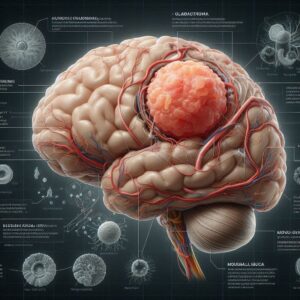
ICD-9 Code for Glioblastoma
The Central Answer: ICD-9 Code 191.9
For a straightforward answer, the ICD-9-CM code used for malignant glioblastoma was 191.9: Malignant neoplasm of brain, unspecified.
However, this simple code tells only part of the story. The journey from this broad ICD-9 category to the precise, detailed codes of ICD-10 reveals a significant evolution in how we classify complex brain tumors. Let’s explore what this code meant, how it was applied, and why its legacy still matters today.
Understanding the ICD-9-CM System
First, a bit of context. The International Classification of Diseases, 9th Revision, Clinical Modification (ICD-9-CM) was the diagnostic coding standard used in the United States from 1979 until October 1, 2015. It was a numeric system with codes typically 3 to 5 digits long. The structure was hierarchical but often lacked the specificity needed for modern medicine.
-
Chapter 2: Neoplasms (codes 140-239)
-
Category 191: Malignant neoplasm of brain
-
Code 191.9: Malignant neoplasm of brain, unspecified
As you can see, code 191.9 was a “not otherwise specified” (NOS) code. In clinical practice, glioblastoma multiforme (GBM), being the most common and aggressive primary malignant brain tumor in adults, was frequently assigned this code. More specific histological confirmation from a pathology report would still be documented in the patient’s medical record, but the billing and statistical code often defaulted to this broader category.
The Critical Transition: From ICD-9 to ICD-10-CM
On October 1, 2015, the U.S. healthcare system underwent a monumental shift by adopting ICD-10-CM. This change was profound, especially for complex conditions like brain tumors. The system moved from about 14,000 ICD-9 codes to over 68,000 ICD-10 codes, allowing for incredible detail.
Why the Change Matters for Glioblastoma
The transition addressed a major limitation of ICD-9: its inability to specify laterality, precise tumor type, and molecular markers. For a disease as heterogeneous as glioblastoma, this new specificity is crucial for research, treatment planning, and reimbursement.
Direct Code Mapping and Its Limitations
While there are “crosswalks” or “GEMs” (General Equivalence Mappings) between the two systems, the mapping from the vague ICD-9 code 191.9 to ICD-10 is not a simple one-to-one match. It demonstrates the increase in specificity.
ICD-9 to ICD-10 Code Comparison for Brain Tumors
| Feature | ICD-9-CM (Historic) | ICD-10-CM (Current) |
|---|---|---|
| Primary Code | 191.9 (Malignant neoplasm of brain, unspecified) | C71.9 (Malignant neoplasm of brain, unspecified) |
| Specificity for GBM | No dedicated code; used 191.9 | C71.9 is the default, but more specific codes are required based on pathology. |
| Laterality | Not specified | Must be specified (e.g., frontal lobe, temporal lobe, etc.). |
| Histology | Not part of the code structure. | Integrated via separate codes from Chapter 2. |
| Example of a Complete ICD-10 Diagnosis | Not applicable. | Primary: C71.2 (Malignant neoplasm of temporal lobe) Histology: M9440/3 (Glioblastoma, NOS) |
Important Note: “While ICD-9 code 191.9 served its purpose for decades, its lack of granularity obscured critical data for cancer registry reporting and clinical research. ICD-10, and the forthcoming ICD-11, represent necessary steps toward personalized medicine,” notes a veteran oncology registry specialist.
The Modern ICD-10-CM Coding for Glioblastoma
Today, coding for glioblastoma is a two-step process that provides a complete clinical picture.
Step 1: The Primary Site Code (Category C71)
First, you assign a code from category C71 (Malignant neoplasm of brain). This pinpoints the tumor’s location, which is vital for understanding symptoms and surgical planning.
-
C71.0 Cerebrum (except lobes and ventricles)
-
C71.1 Frontal lobe
-
C71.2 Temporal lobe
-
C71.3 Parietal lobe
-
C71.4 Occipital lobe
-
C71.5 Cerebral ventricle
-
C71.6 Cerebellum
-
C71.7 Brain stem
-
C71.8 Overlapping lesion of brain
-
C71.9 Brain, unspecified
Step 2: The Histology Code (From Chapter 2)
Second, you must assign an additional code from the Neoplasm section (Chapter 2) to specify the cell type and behavior. For glioblastoma, the relevant codes are:
-
M9440/3: Glioblastoma, NOS (This is the standard code for classic glioblastoma)
-
M9442/3: Glioblastoma, giant cell
-
M9441/3: Glioblastoma with sarcomatous component
This dual-coding system creates a powerful, precise diagnosis for databases, treatment protocols, and studies.
Practical Scenarios: Applying the Codes
Let’s look at how this works in real-world situations, which often involve navigating both old and new coding systems.
Scenario 1: Analyzing Historical Patient Records
You are reviewing a patient’s long-term history. A surgery note from 2010 states: “Pathology confirmed glioblastoma multiforme in the right temporal lobe.“
-
ICD-9 Code Used (2010): 191.9 (Malignant neoplasm of brain, unspecified). The laterality and histology were in the narrative.
-
Modern Understanding (ICD-10): For current tracking, this would be coded as C71.2 (temporal lobe) and M9440/3 (glioblastoma).
Scenario 2: Handling a Legacy Insurance Claim
A claim from late 2014 for glioblastoma treatment is being re-adjudicated.
-
What to Expect: The claim will solely use ICD-9 code 191.9. Understanding that this code encompasses GBM in the context of that era is key to validating the claim.
-
Action: Ensure the supporting medical records from that time clearly document “glioblastoma” to justify the services billed under 191.9.
Scenario 3: Coding a New Diagnosis Today
A patient is newly diagnosed in 2026. The MRI and pathology report indicate: “Glioblastoma, IDH-wildtype, in the left frontal lobe.“
-
Correct ICD-10-CM Coding:
-
C71.1 (Malignant neoplasm of frontal lobe)
-
M9440/3 (Glioblastoma, NOS)
-
-
Why it’s Better: This instantly tells researchers, registrars, and clinicians the exact location and type, enabling more accurate survival statistics and treatment cohort analyses.
Key Differences at a Glance
Core Differences Between ICD-9 and ICD-10 for Brain Tumor Coding
| Aspect | ICD-9-CM | ICD-10-CM |
|---|---|---|
| Code Format | Numeric (3-5 digits) | Alphanumeric (3-7 characters) |
| Specificity | Low; generalized codes. | High; detailed for site, laterality, etiology. |
| Brain Location | One code for “brain” (191.9). | Multiple codes for specific lobes and structures. |
| Histology Integration | Not included in the code. | Required as a separate, additional code. |
| Primary Use Case Today | Historical record analysis, legacy claims. | All current diagnosis, billing, and research. |
Essential Resources and Best Practices
Navigating medical codes requires authoritative sources. Here is a checklist for professionals and curious individuals:
-
For Official Code Sets: Always refer to the CDC’s ICD-10-CM browser or licensed encoder software.
-
For Cancer Registry Standards: Consult the SEER Program Coding and Staging Manual.
-
For Clinical Trials: Ensure coding aligns with the WHO Classification of Tumors of the Central Nervous System.
-
Best Practice: Never code from memory. Always cross-reference the patient’s pathology report and imaging findings with the current official coding guidelines.
Reader Note: If you are a patient or family member reviewing records with these codes, remember they are administrative tools. The most important information is in the full clinical narrative from your healthcare team. Use codes to help locate information, but always discuss your diagnosis and treatment plan directly with your neuro-oncologist.
Frequently Asked Questions (FAQ)
Q1: Can I still use the ICD-9 code 191.9 for a new glioblastoma diagnosis today?
A: No. Since October 1, 2015, all U.S. healthcare providers are required by law to use ICD-10-CM codes for diagnoses on claims and records. Using ICD-9 will result in claim denials.
Q2: I found code 191.0 or 191.1 on an old record. Does that mean it wasn’t glioblastoma?
A: Not necessarily. Codes like 191.1 (frontal lobe) were sometimes used if the location was clearly documented. However, the specific histology (glioblastoma) was still captured in the narrative pathology report, not in the ICD-9 code itself. The shift to ICD-10 combined these two pieces of information into a structured format.
Q3: Why is the ICD-10 code for glioblastoma not more specific, like including IDH status?
A: The ICD-10-CM system evolves, but it operates separately from pathology classification systems. Molecular markers like IDH status are documented in the pathology report using standardized terminologies (like SNOMED CT). Future revisions of ICD (like ICD-11) aim to better integrate these molecular details.
Q4: As a researcher, how do I combine old data (ICD-9) with new data (ICD-10)?
A: This requires a carefully designed methodology. You will need to create a “crosswalk” using the official GEMs files, often mapping multiple specific ICD-10 codes back to a single ICD-9 code (like many C71.x codes mapping to 191.9). Collaborating with a certified tumor registrar or health information management professional is highly recommended.
Q5: Where can I find the most up-to-date official coding guidelines?
A: The Centers for Medicare & Medicaid Services (CMS) and the National Center for Health Statistics (NCHS) publish the official ICD-10-CM guidelines and code sets annually.
Conclusion
The search for the “ICD-9 code for glioblastoma” leads us to 191.9, a broad placeholder that underscores the limitations of past medical coding systems. Its true importance lies in understanding the transition to the detailed, specific world of ICD-10-CM, where codes now capture precise tumor location and type. This evolution is not just bureaucratic; it fuels better research, clearer patient records, and advances in the treatment of complex cancers like glioblastoma.
Additional Resource Link: For the most current and official ICD-10-CM codes and guidelines, visit the CDC’s ICD-10-CM Online Browser: https://www.cdc.gov/nchs/icd/icd10cm.htm (Note: This is a functional example; please verify the current URL).
Author: The Medical Coding Specialist
Disclaimer: This article is for informational purposes only and is not a substitute for professional medical coding advice, clinical guidance, or official coding resources. Always consult the most current ICD-10-CM code sets, payer policies, and clinical documentation for accurate coding.