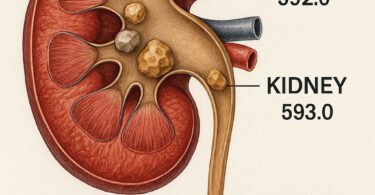
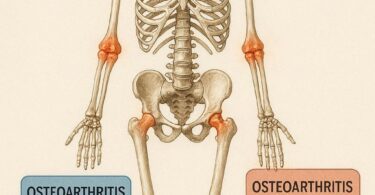
If you’re navigating medical records, handling billing, or conducting research on historical health data, you’ve likely encountered the need to understand the ICD-9 code for hyperuricemia. While the healthcare world has fully transitioned to ICD-10, knowledge of the older ICD-9 system remains crucial for interpreting past records and understanding the evolution of medical classification.
This guide will provide a deep, clear, and practical exploration of ICD-9 code 790.6, its context, and its modern equivalent. We’ll break down everything from the code’s structure to its clinical implications, ensuring you have a reliable reference.
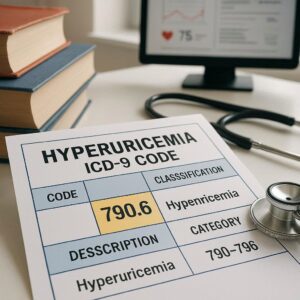
ICD-9 Code for Hyperuricemia
Understanding the ICD-9 Coding System
Before we dive into the specific code, let’s set the stage. The International Classification of Diseases, 9th Revision, Clinical Modification (ICD-9-CM) was the standard diagnostic coding system used in the United States from 1979 until October 1, 2015. Its primary purposes were to:
-
-
-
Standardize Diagnosis Reporting: Create a common language for diseases, symptoms, and health problems.
-
Facilitate Billing and Reimbursement: Enable healthcare providers to bill insurance companies accurately.
-
Support Epidemiological Research: Track the incidence and prevalence of diseases across populations.
-
-
The system was numeric, with codes typically 3 to 5 digits long. The first three digits represented the core category of the disease, with additional digits providing more specificity about the etiology, anatomical site, or severity.
The Specific Code: ICD-9 790.6 for Hyperuricemia
Within this system, elevated uric acid in the blood was classified under a broad chapter for symptoms and ill-defined conditions.
ICD-9-CM Code: 790.6
-
-
-
Category: Symptoms, signs, and ill-defined conditions
-
Subcategory: 790 – Nonspecific findings on examination of blood
-
Full Code: 790.6 – Hyperuricemia
-
-
As a 4-digit code, 790.6 did not have further subclassifications or a fifth digit in the ICD-9-CM system. It served as a catch-all for a laboratory finding of high uric acid without specifying a cause or associated condition.
Clinical Context: What is Hyperuricemia?
Hyperuricemia is not a disease itself but a biochemical abnormality. It is defined by a serum urate level greater than 6.8 mg/dL (approximately 400 µmol/L), which is the point at which uric acid can crystallize out of solution under physiological conditions.
Uric acid is the end product of purine metabolism. Levels can rise due to:
-
-
-
Increased Production: From dietary sources (red meat, seafood, alcohol) or endogenous overproduction (e.g., certain cancers, genetic disorders like Lesch-Nyhan syndrome).
-
Decreased Excretion: The majority of cases are due to the kidneys’ inability to excrete enough uric acid. This can be influenced by genetics, medications (diuretics, cyclosporine), and conditions like chronic kidney disease.
-
-
The primary clinical significance of hyperuricemia is its role as the central risk factor for gout, a painful form of inflammatory arthritis caused by the deposition of monosodium urate crystals in joints. However, it’s crucial to note:
“Not everyone with hyperuricemia develops gout, and not every gout flare occurs at a serum urate level above 6.8 mg/dL. The code 790.6 simply identifies the lab anomaly, not the clinical syndrome.” – A common teaching point in rheumatology.
Hyperuricemia has also been associated with other conditions, including kidney stones (urate nephrolithiasis) and may be a marker for cardiovascular and metabolic diseases.
How ICD-9 790.6 Was Used in Practice
In the ICD-9 era, a provider would assign code 790.6 based on a laboratory report indicating an elevated serum uric acid level. Its use was straightforward but limited in specificity.
Common Clinical Scenarios:
-
-
-
Asymptomatic Finding: A patient has routine blood work that reveals high uric acid, but they have no symptoms of gout or kidney stones.
-
Pre-Gout or Risk Assessment: In a patient with risk factors (family history, metabolic syndrome), the code documented the biochemical risk.
-
Monitoring: Tracking the uric acid level in a patient known to have hyperuricemia or during treatment.
-
-
Limitations of ICD-9 790.6:
The main drawback was its lack of granularity. It did not indicate:
-
-
-
Whether the hyperuricemia was causing symptoms.
-
If it was linked to an underlying disease (e.g., chronic kidney disease, psoriasis).
-
If it was drug-induced.
-
Its severity level.
-
-
This lack of detail was a significant driver for the development of the more nuanced ICD-10 system.
The Transition from ICD-9 to ICD-10-CM
On October 1, 2015, the U.S. mandated the switch from ICD-9-CM to ICD-10-CM. This was not a simple update but a massive expansion in detail and specificity.
Key Differences Between the Systems:
| Feature | ICD-9-CM (790.6) | ICD-10-CM (E79.0) |
|---|---|---|
| Code Format | Numeric, 3-5 digits | Alphanumeric, 3-7 characters |
| Specificity | Low. One code for all hyperuricemia. | High. Allows specification of underlying cause. |
| Code Location | “Symptoms” chapter | “Endocrine, nutritional, and metabolic diseases” chapter |
| Clinical Detail | None | Can be extended with additional characters for etiology. |
This transition moved hyperuricemia from being considered a “nonspecific finding” to a classified metabolic disorder.
The Modern Equivalent: ICD-10-CM Code E79.0
In ICD-10-CM, hyperuricemia is found in Chapter 4: Endocrine, nutritional, and metabolic diseases.
ICD-10-CM Code: E79.0 – Hyperuricemia without signs of inflammatory arthritis and tophaceous disease
This is the direct equivalent of the old ICD-9 790.6. It is used for asymptomatic hyperuricemia. The full code description explicitly states it is for cases without gouty arthritis or tophi (urate crystal deposits under the skin).
Important Note for Coders: ICD-10 offers more specific codes for hyperuricemia with clinical manifestations. For example:
-
-
-
M1A.- and M10.-: These code families are for various types of gout (e.g., idiopathic, lead-induced, drug-induced). These codes take precedence over E79.0 when a diagnosis of gout is established.
-
Coding Rule: If a patient has both hyperuricemia and gout, you code the gout (M1A.- or M10.-). Code E79.0 is not used additionally in that scenario unless documenting the asymptomatic state separately.
-
-
Why Knowledge of ICD-9 790.6 Still Matters
You might wonder why we’re discussing a retired code. Here are several practical reasons:
-
-
-
Historical Data Analysis: Researchers analyzing health trends, outcomes, or epidemiological studies that span pre- and post-2015 data must understand how conditions were coded in both systems to ensure accurate comparisons.
-
Medical Record Review: Legal cases, disability determinations, or retrospective chart reviews for patients with long-standing conditions (like chronic gout) will contain records coded in ICD-9.
-
Understanding Coding Evolution: Grasping the limitations of ICD-9 highlights the advantages of ICD-10 and prepares you for the eventual transition to ICD-11, emphasizing the need for precise clinical documentation.
-
Educational Foundation: Learning the logic of medical coding often starts with understanding simpler systems before tackling the complexity of ICD-10.
-
-
Practical Implications for Documentation and Billing (Historical Context)
In the ICD-9 era, clear documentation was still essential, though the code itself was simple.
Best Practices for Documentation (Then and Now):
-
-
-
State the Finding Clearly: “Serum uric acid elevated at 8.2 mg/dL.”
-
Note Symptoms or Lack Thereof: “Patient reports no joint pain, swelling, or redness. No history of kidney stones.” This would support the use of 790.6 (and now E79.0).
-
Document Potential Causes: “Hyperuricemia, likely related to hydrochlorothiazide therapy.” (In ICD-10, this could lead to a more specific code).
-
Link to Underlying Conditions: “Hyperuricemia in the setting of chronic kidney disease, stage 3.”
-
-
Helpful List: Common Conditions Associated with Hyperuricemia
When reviewing an old chart with code 790.6, look for documentation of these related conditions, which would have their own ICD-9 codes:
-
-
-
Gout (ICD-9 274.xx)
-
Chronic Kidney Disease (ICD-9 585.x)
-
Metabolic Syndrome
-
Psoriasis (ICD-9 696.1)
-
Hematological malignancies (e.g., leukemia, lymphoma)
-
Lead poisoning (ICD-9 984.9)
-
-
Comparative Table: ICD-9 vs. ICD-10 for Uric Acid Disorders
| Clinical Scenario | ICD-9-CM Code | ICD-10-CM Code | Reasoning |
|---|---|---|---|
| Asymptomatic high uric acid on lab work | 790.6 – Hyperuricemia | E79.0 – Hyperuricemia w/o signs of arthritis/tophi | The lab finding itself, no symptoms. |
| Acute gout attack in the big toe | 274.01 – Acute gouty arthropathy | M10.071 – Idiopathic gout, right ankle and foot | ICD-10 specifies laterality and foot location. |
| Chronic tophaceous gout | 274.02 – Chronic gouty arthropathy with tophus | M1A.0710 – Chronic gout due to renal impairment, right ankle/foot, without tophus | ICD-10 specifies cause (renal impairment), laterality, and tophus status. |
| Hyperuricemia due to diuretic use | 790.6 + E code for adverse drug effect | E79.0 + T50.2X5A (Adv eff of diuretics) | ICD-9 used supplementary E codes; ICD-10 integrates causality more seamlessly. |
Conclusion
The ICD-9 code for hyperuricemia, 790.6, was a simple but non-specific marker for an elevated serum uric acid level. Its transition to ICD-10-CM code E79.0 reflects modern medicine’s demand for greater detail, moving the condition to the metabolic disease chapter and distinguishing asymptomatic hyperuricemia from active gout. Understanding this code and its context is key to interpreting historical medical data and appreciating the evolution of precise diagnostic coding that improves patient care, research, and healthcare administration.
Frequently Asked Questions (FAQ)
Q1: Can I still use ICD-9 code 790.6 for billing today?
A: No. As of October 1, 2015, all HIPAA-covered entities (healthcare providers, insurers) in the U.S. are required to use ICD-10-CM for diagnosis coding. Using ICD-9 will result in claim denials.
Q2: I see code 790.6 on an old lab report from 2010. What does it tell me?
A: It tells you that at that time, this patient had a laboratory-confirmed elevated uric acid level. To understand the clinical context, you would need to consult the accompanying physician’s notes to see if it was asymptomatic, linked to gout, or related to another condition.
Q3: What is the most important thing a clinician should document when diagnosing hyperuricemia?
A: The most critical distinction is whether the patient has symptoms of gout (acute joint pain, swelling, redness) or evidence of tophi. This single piece of information determines whether you code asymptomatic hyperuricemia (E79.0) or a form of gout (M10.- or M1A.-).
Q4: Is there an ICD-11 code for hyperuricemia?
A: Yes. The World Health Organization’s ICD-11 has been implemented in some countries. In ICD-11, hyperuricemia is coded as 5C90.0. The structure continues to evolve for greater specificity, though the U.S. continues to use ICD-10-CM.
Additional Resources
For the most authoritative and up-to-date information, always refer to the official code sets:
-
-
Centers for Disease Control and Prevention (CDC) ICD-10-CM Browser: https://www.cdc.gov/nchs/icd/icd10cm.htm (This allows you to search for current codes like E79.0).
-
American Medical Association (AMA) CPT & ICD-10 Resources: https://www.ama-assn.org/
-
Author: The Medical Coding Team
Date: January 29, 2026
Disclaimer: This article is for informational purposes only and is not a substitute for professional medical coding advice, clinical guidance, or the latest official coding manuals. Always consult current ICD-10-CM code sets and payer-specific guidelines for accurate billing and documentation.