If you’re searching for the “ICD-9 code for J90,” you’ve likely encountered a modern medical code and need to bridge it to an older system. This is a common situation for medical coders, billers, students, and even patients reviewing old records. The search itself reveals a key point of confusion: J90 is not an ICD-9 code.
J90 belongs to the ICD-10-CM system, the current international standard for diagnosing and classifying diseases. The quest for its ICD-9 equivalent is crucial for understanding historical data, dealing with legacy systems, or processing older insurance claims.
In this comprehensive guide, we will demystify the code J90, explore its precise ICD-9 counterpart, and explain why this distinction is so important in the world of healthcare documentation. We’ll move beyond a simple code translation to provide you with a deep, practical understanding of pleural effusion coding.
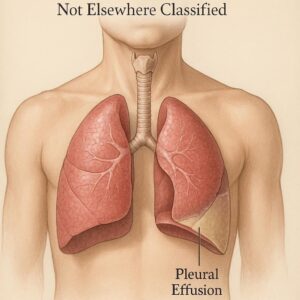
ICD-9 Code for J90
Understanding the Coding Systems: ICD-9 vs. ICD-10
Before we dive into the specific codes, it’s essential to understand the two different coding languages we’re discussing. Think of it as the difference between an old and a new edition of a dictionary—the core concepts are similar, but the new one is vastly more detailed and specific.
What Was ICD-9-CM?
The International Classification of Diseases, 9th Revision, Clinical Modification (ICD-9-CM) was the diagnostic coding standard used in the United States from 1979 until September 30, 2015.
-
Structure: Codes were mostly 3-5 characters long, beginning with either a number or a letter (E or V codes).
-
Specificity: It offered limited specificity. Codes often grouped several related conditions together.
-
Example: A code for “chest pain” might not distinguish between cardiac and muscular origins as clearly.
What Is ICD-10-CM?
The International Classification of Diseases, 10th Revision, Clinical Modification (ICD-10-CM) replaced ICD-9-CM on October 1, 2015. This was not a simple update but a massive expansion.
-
Structure: Codes are 3-7 characters long, always starting with a letter.
-
Specificity: It provides extraordinary detail, allowing for precise documentation of laterality (left, right), etiology (cause), severity, and other clinical factors.
-
Example: Instead of one code for a fractured wrist, ICD-10 has specific codes for which bone, which part of the bone, which wrist, and the type of fracture.
Why the Transition Matters: The shift to ICD-10 was driven by the need for better data to track public health, improve patient care, and ensure accurate reimbursement. The increased specificity reduces ambiguity and errors in medical billing and records.
Decoding J90: Pleural Effusion in ICD-10
Let’s start with the code you searched for: J90.
In ICD-10-CM, J90 is the code for Pleural effusion, not elsewhere classified.
What is a Pleural Effusion?
It is an abnormal accumulation of fluid in the pleural space—the thin cavity between the layers of tissue (pleura) that line the lungs and the inside of the chest wall. This buildup can compress the lung, causing symptoms like shortness of breath, chest pain, and coughing.
The phrase “not elsewhere classified” (NEC) is critical. It means this code is used only when the pleural effusion is not specifically described by another, more precise code in the ICD-10 system. J90 is a fallback or unspecified code.
Important Note on ICD-10 Specificity:
ICD-10 strongly discourages using unspecified codes when more information is available. For J90, coders must first check the medical documentation for a specified cause. The coding note under J90 instructs: “Code first the underlying condition, if known.” This leads us to a more detailed family of codes.
Common ICD-10 Codes Related to Pleural Effusion
While J90 exists, most pleural effusions are coded with more specificity. Here is a comparative table showing the level of detail ICD-10 provides:
| ICD-10 Code | Code Description | Clinical Context & Specificity |
|---|---|---|
| J90 | Pleural effusion, not elsewhere classified | Used only when the cause is unknown or not specified (e.g., “pleural effusion” with no further detail). |
| J91.8 | Pleural effusion in other conditions classified elsewhere | This is often the correct code. Used when the effusion is caused by a disease listed in another chapter of ICD-10 (e.g., due to lung cancer, heart failure, rheumatoid arthritis). The underlying disease is coded first. |
| J94.2 | Hemothorax | Specifies that the pleural fluid is blood. |
| J94.0 | Chylous effusion | Specifies that the pleural fluid is lymph (chyle), often due to thoracic duct injury. |
| J86.9 | Pyothorax without fistula | Specifies an empyema—a collection of pus in the pleural space, a severe infection. |
| R09.1 | Pleurisy | This is for inflammation of the pleura (which can cause pain), not necessarily fluid accumulation. |
As you can see, a simple diagnosis of “pleural effusion” in ICD-10 requires careful analysis of the medical record to select the most accurate code.
The Direct Answer: ICD-9 Code for J90
Now, we translate this concept back to ICD-9-CM. The direct equivalent to ICD-10’s J90 (Pleural effusion, NEC) in the old system is:
ICD-9-CM Code: 511.9
Description: Unspecified pleural effusion.
Similarities and Differences:
-
Similarity: Both 511.9 and J90 serve as the “unspecified” bucket for pleural effusion when a more specific cause isn’t documented.
-
Key Difference: The structure. ICD-9’s 511.9 is part of a smaller chapter on diseases of the respiratory system. ICD-10’s J90 is part of a much larger, more granular block of codes (J90-J94) dedicated specifically to “Other diseases of pleura.”
The Broader Picture: ICD-9 Codes for Pleural Effusion
Just like ICD-10, ICD-9 had more specific codes that were often used instead of 511.9. Understanding these gives a complete picture of how the condition was historically classified.
| ICD-9 Code | Code Description | Corresponding General Concept in ICD-10 |
|---|---|---|
| 511.9 | Unspecified pleural effusion | J90 (Pleural effusion, NEC) |
| 511.81 | Malignant pleural effusion | J91.0 (Malignant pleural effusion) |
| 511.89 | Other specified forms of effusion | A catch-all for specified types not having their own code (e.g., transudative effusion). Maps to various specific J91.8- codes. |
| 510.9 | Empyema without fistula | J86.9 (Pyothorax without fistula) |
| 511.0 | Pleurisy without mention of effusion | R09.1 (Pleurisy) |
Quotation from a Medical Coding Professional: “The transition from ICD-9’s 511.9 to ICD-10’s J90 series is a perfect example of why we changed systems. In ICD-9, we had maybe five codes for all pleural conditions. Now in ICD-10, we have over two dozen. It forces—and allows for—much clearer clinical documentation, which is better for everyone: the provider, the payer, and ultimately the patient.”
Why Accurate Code Translation Matters: Real-World Implications
You might wonder why getting this translation right is such a big deal. It’s not just an academic exercise. Accurate code mapping has tangible effects across healthcare.
1. For Medical Billing and Reimbursement
Insurance companies process claims based on diagnostic codes. Using an incorrect or outdated code can lead to:
-
Claim Denials: An ICD-9 code submitted for a date of service after October 2015 will be automatically rejected.
-
Delayed Payments: If an older record with ICD-9 code 511.9 needs to be referenced for a current claim, misunderstanding its meaning can cause processing delays.
-
Audit Risks: Using an unspecified code (like J90 or 511.9) when a more specific code is warranted can be a red flag during audits, as it may indicate poor documentation.
2. For Patient Care and Medical Records
-
Continuity of Care: A patient’s lifelong health record may span both coding eras. A doctor reviewing an old diagnosis of “511.9” needs to know it translates to an unspecified pleural effusion to understand the patient’s medical history accurately.
-
Clinical Research and Epidemiology: Researchers tracking the incidence of pleural effusions over time must be able to map old and new codes correctly. A study looking at data from 2010 and 2020 must account for the code change to draw valid conclusions.
3. For Healthcare Administration and Public Health
-
Data Integrity: Health organizations analyze coded data for resource planning, outbreak tracking, and quality improvement. Consistent coding across time ensures this data is reliable.
-
Compliance: Healthcare providers are legally required to use the correct coding system (ICD-10-CM for current services). Knowingly using ICD-9 for current services would be a compliance violation.
Navigating the Transition: A Practical Guide for Professionals
If you are handling medical records that cross the October 2015 boundary, here is a step-by-step approach.
Step 1: Identify the Date of Service.
This is the most critical filter.
-
Service Date BEFORE Oct 1, 2015: Use ICD-9-CM. The relevant code will be in the 511.xx series, most likely 511.9.
-
Service Date ON or AFTER Oct 1, 2015: Use ICD-10-CM. The relevant code will be in the J90-J94 series.
Step 2: Analyze the Documentation.
Don’t just look for the phrase “pleural effusion.” Scour the medical record for modifiers:
-
What is the cause? (e.g., “due to congestive heart failure,” “malignant,” “post-operative”)
-
What is the type of fluid? (e.g., “serous,” “bloody,” “chylous”)
-
Is it an infection/empyema?
-
What is the laterality? (ICD-10 requires left, right, or bilateral for many codes).
Step 3: Select the Most Specific Code.
-
In ICD-9: If the cause is specified (e.g., malignant), use 511.81. If it’s just “pleural effusion,” use 511.9.
-
In ICD-10: This requires more diligence. Use the Alphabetic Index. Look up “Effusion, pleura” and follow the indentations based on the documentation. Never default to J90 without checking for a more specific option first.
Step 4: For Historical Analysis, Use a Crosswalk.
When comparing data sets, use a General Equivalence Mappings (GEMs) file or a trusted coding resource. The official mapping for ICD-9 511.9 is ICD-10 J90. Remember, these are “approximate” equivalents, as ICD-10 is more detailed.
Helpful Lists: Common Causes of Pleural Effusion
Understanding the causes helps explain why coding requires such specificity. Here are common etiologies, grouped by type of fluid:
Transudative Effusions (Fluid leaks due to pressure imbalances):
-
Congestive Heart Failure (Most common cause)
-
Liver Cirrhosis
-
Nephrotic Syndrome
-
Pulmonary Embolism
Exudative Effusions (Fluid leaks due to inflamed or damaged blood vessels):
-
Pneumonia (Parapneumonic effusion)
-
Lung Cancer or Metastatic Cancer (Malignant effusion)
-
Tuberculosis
-
Pulmonary Embolism (can be either transudative or exudative)
-
Autoimmune Diseases (e.g., Rheumatoid Arthritis, Lupus)
Other Types:
-
Hemothorax (Blood): Trauma, surgery, cancer.
-
Chylothorax (Lymph): Trauma, surgery, lymphoma.
-
Empyema (Pus): Complication of pneumonia, surgery, or infection.
Important Note for Readers: This article provides educational information for understanding medical coding. It is not a substitute for professional coding advice, current code books, or clinical guidance. Always use the latest official ICD-10-CM code set and guidelines from the Centers for Medicare & Medicaid Services (CMS) and the National Center for Health Statistics (NCHS) for all real-world coding tasks. When in doubt, consult a certified professional coder (CPC).
Conclusion
The search for the “ICD-9 code for J90” highlights the essential transition in medical diagnostics from ICD-9 to ICD-10. J90 is an ICD-10 code for unspecified pleural effusion, whose direct predecessor is ICD-9 code 511.9. However, the true takeaway is the vast increase in specificity offered by the modern ICD-10 system, which uses a detailed array of codes (like J91.8) to capture the precise cause and nature of the condition. Understanding this mapping is crucial for accurate billing, clear medical records, and reliable health data analysis across time.
Frequently Asked Questions (FAQ)
Q1: Can I still use ICD-9 code 511.9 today?
A: No. For any medical service performed on or after October 1, 2015, you must use ICD-10-CM codes. Using ICD-9 codes for current services will result in claim denials.
Q2: I have an old medical record that just says “pleural effusion” and uses code 511.9. What is the best ICD-10 code to use if I need to update it?
A: Without any additional context from the old record, the most direct translation is J90 (Pleural effusion, not elsewhere classified). However, if you have access to more clinical details from that time (e.g., progress notes), you should use them to try and find a more specific ICD-10 code.
Q3: What is the most common specific ICD-10 code for pleural effusion, since J90 is unspecified?
A: J91.8 (Pleural effusion in conditions classified elsewhere) is extremely common because most effusions have a known cause (like heart failure or cancer). The underlying condition (e.g., I50.9 for heart failure) is coded first, followed by J91.8.
Q4: Are there free resources to look up ICD-9 to ICD-10 mappings?
A: Yes. The Centers for Medicare & Medicaid Services (CMS) provides the General Equivalence Mappings (GEMs) files on their website. Additionally, the CDC hosts a comprehensive ICD-10-CM browser tool.
Additional Resources
-
Official ICD-10-CM Browser (CDC): https://www.cdc.gov/nchs/icd/icd10cm.htm – The primary source for looking up current codes and guidelines.
-
CMS ICD-10 Website: https://www.cms.gov/medicare/coding-billing/icd-10-codes – Provides official updates, resources, and the GEMs files.
-
American Health Information Management Association (AHIMA): https://www.ahima.org/ – A leading professional organization for medical coders, offering education and best practices.
Disclaimer: The information contained in this article is for educational and informational purposes only and is not intended as medical or coding advice. Always consult the latest official coding manuals, guidelines, and a qualified healthcare professional for specific diagnoses, treatment, and coding decisions.
Author: The Web Health Writer Team
Date: FEBRUARY 05, 2026