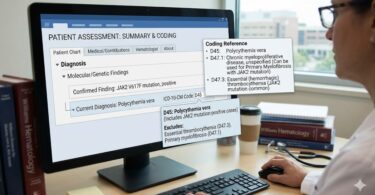
If you have ever looked at a lab order for a Basic Metabolic Panel (BMP) and wondered which ICD-10 code to attach, you are not alone. Many medical coders, billing specialists, and even clinicians find this confusing. The short answer? There is no single ICD-10 code called “BMP.” That is because BMP is a test, not a diagnosis.
In this guide, we will walk you through everything you need to know. You will learn how to correctly link a BMP to the right diagnosis codes. We will cover common conditions like kidney disease, diabetes, and electrolyte imbalances. By the end, you will feel confident choosing accurate codes for reimbursement and compliance.
Let us clear up the confusion together.

icd-10 code bmp
What Is a BMP? A Quick Refresher
Before we talk about codes, let us quickly review what a Basic Metabolic Panel actually measures. A BMP is a common blood test. It gives doctors a snapshot of your body’s metabolism. It typically includes eight specific measurements:
-
Glucose – Blood sugar levels.
-
Calcium – Bone and nerve health.
-
Sodium, Potassium, CO2 (bicarbonate), Chloride – Electrolytes and acid-base balance.
-
BUN (Blood Urea Nitrogen) and Creatinine – Kidney function.
Important note: A BMP does not include liver tests (those are in a CMP, or Comprehensive Metabolic Panel). A BMP also does not include magnesium or phosphorus.
Why Do Doctors Order a BMP?
Doctors order BMPs for many reasons. Some of the most common include:
-
Routine health checkups.
-
Monitoring chronic conditions like high blood pressure or diabetes.
-
Evaluating kidney function before prescribing certain medications.
-
Checking for dehydration or electrolyte problems.
-
Emergency room evaluations for vomiting, diarrhea, or confusion.
Because the BMP is a test, the ICD-10 code you use must describe why the test was needed. In other words, you code the medical reason, not the lab panel itself.
Why There Is No Single “ICD-10 Code BMP”
Let us address the main keyword directly. You will not find an ICD-10-CM code labeled “BMP” in any official coding manual. ICD-10-CM codes represent diseases, injuries, symptoms, or other health conditions. They do not represent laboratory tests.
Think of it this way: You would not code for “X-ray.” You would code for the reason the X-ray was taken, such as a broken arm or chest pain. The same logic applies to a BMP. You need to code the diagnosis that justifies performing the test.
Example:
-
Incorrect: Z01.89 (encounter for other specified examination) used alone without a reason.
-
Correct: E11.9 (Type 2 diabetes mellitus without complications) for a diabetic patient needing glucose monitoring.
So, when someone searches for “ICD-10 code BMP,” what they really need is a list of diagnosis codes that support ordering a BMP. That is exactly what we will provide next.
Common ICD-10 Codes Used with a BMP
Based on real-world medical billing data, these are the most frequently used ICD-10 codes that pair with a Basic Metabolic Panel. Each code represents a valid medical reason for the test.
H2: Kidney and Urinary Disorders
Kidney function is a core part of the BMP (BUN and creatinine). These codes are very common.
| ICD-10 Code | Diagnosis | Why BMP Is Needed |
|---|---|---|
| N18.9 | Chronic kidney disease, unspecified | Monitor creatinine and GFR trends |
| N17.9 | Acute kidney failure, unspecified | Assess sudden decline in kidney function |
| N19 | Unspecified kidney failure | Initial evaluation of renal issues |
| N28.9 | Disorder of kidney and ureter, unspecified | General renal assessment |
H2: Endocrine, Nutritional, and Metabolic Diseases
Glucose and electrolyte levels fall under this category. This is where diabetes codes live.
| ICD-10 Code | Diagnosis | Why BMP Is Needed |
|---|---|---|
| E11.9 | Type 2 diabetes mellitus without complications | Routine glucose monitoring |
| E10.9 | Type 1 diabetes mellitus without complications | Check glucose and kidney function |
| E87.6 | Hypokalemia | Low potassium levels on BMP |
| E87.5 | Hyperkalemia | High potassium levels |
| E86.0 | Dehydration | Assess electrolytes and kidney status |
H2: Symptoms, Signs, and Abnormal Clinical Findings (Chapter 18)
Sometimes a definitive diagnosis is not yet known. In these cases, coders can use symptom codes. However, payers often prefer a more specific diagnosis if available.
| ICD-10 Code | Diagnosis | Why BMP Is Needed |
|---|---|---|
| R63.8 | Other symptoms and signs concerning food and fluid intake | Rule out electrolyte issues |
| R53.83 | Other fatigue | Check for underlying metabolic cause |
| R11.2 | Nausea with vomiting, unspecified | Assess dehydration and electrolytes |
| R34 | Anuria and oliguria | Evaluate kidney function |
| R79.89 | Other specified abnormal findings of blood chemistry | Non-specific metabolic finding |
Pro tip: Symptom codes are acceptable for initial visits. But for chronic disease management (e.g., diabetes check every three months), always use the chronic disease code.
How to Choose the Correct ICD-10 Code for a BMP
Choosing the right code is not difficult if you follow a simple process. Here is a step-by-step method you can use today.
Step 1: Review the Medical Record
Never guess. Look at the doctor’s note. Find the reason for the test. It might be written as “assessment,” “plan,” or “indication for labs.”
Step 2: Identify the Primary Diagnosis
What is the main condition being managed or evaluated? If a patient has both diabetes and chronic kidney disease, the reason for the BMP might be to check kidney function (N18.9) rather than glucose (E11.9). Code the primary reason.
Step 3: Check Medical Necessity
Medicare and private insurers require medical necessity. That means the diagnosis must reasonably support the test. For example, a BMP is not medically necessary for a simple cold (J00). But it is necessary for monitoring a patient on diuretics (I10, hypertension).
Step 4: Apply the Correct Code from the Alphabetic Index
Look up the diagnosis in the ICD-10-CM Alphabetic Index first. Then verify the code in the Tabular List.
Step 5: Add Secondary Codes if Needed
If a patient has multiple conditions, list the primary diagnosis first. Then add others as secondary. For example:
-
Primary: N18.9 (Chronic kidney disease)
-
Secondary: I10 (Hypertension)
Example Case Study
Patient chart: A 65-year-old woman with type 2 diabetes (E11.9) comes in for a routine follow-up. She also has well-controlled high blood pressure (I10). The doctor orders a BMP to check her glucose and kidney function.
Correct coding:
-
E11.9 – Type 2 diabetes mellitus without complications (primary)
-
I10 – Essential (primary) hypertension (secondary)
Why not N18.9? Because the chart does not document kidney disease. The BMP is checking kidney function as a screening for a known diabetic patient. That is appropriate for E11.9.
The Difference Between BMP and CMP in Coding
Many people confuse BMP with CMP (Comprehensive Metabolic Panel). The difference matters for coding. A CMP includes everything in a BMP plus liver tests (ALP, ALT, AST, bilirubin, and total protein).
Here is a quick comparison:
| Feature | BMP | CMP |
|---|---|---|
| Number of tests | 8 | 14 |
| Includes glucose, BUN, creatinine | Yes | Yes |
| Includes electrolytes | Yes | Yes |
| Includes liver function tests | No | Yes |
| Common diagnoses | Dehydration, diabetes, AKI | Liver disease, malnutrition, alcohol use |
| Typical ICD-10 codes | E11.9, E86.0, N17.9 | K70.0, K76.89, E44.0 |
Important note: Never code a BMP as a CMP just to get a higher reimbursement. That is fraud. Use the test that matches the medical necessity.
Billing and Reimbursement Tips for BMPs
Let’s talk about the business side. You can have the right diagnosis code, but if you miss a few details, the claim may be denied.
H3: CPT Code for BMP
First, remember that the ICD-10 code goes on the claim form (Box 21 for CMS-1500). The CPT (procedure) code for a BMP is 80048. That code represents the lab test itself. The ICD-10 code justifies why 80048 was performed.
H3: Medical Necessity Policies
Many local Medicare contractors publish Local Coverage Determinations (LCDs) for BMPs. They list acceptable diagnosis codes. Common allowed diagnoses include:
-
Diabetes (E08–E13)
-
Hypertension (I10–I15)
-
Chronic kidney disease (N18)
-
Electrolyte disorders (E87.0–E87.8)
-
Symptoms like fatigue (R53.83) or vomiting (R11.2)
Check your specific MAC’s LCD before billing.
H3: Avoid These Denial Triggers
-
Mismatched codes: Do not use a code for a liver disease (K76.9) with a BMP. The BMP does not test liver function.
-
Unspecified codes overuse: While N18.9 is fine in many cases, using R69 (illness, unspecified) repeatedly will raise red flags.
-
Lack of documentation: If the doctor does not write the medical reason for the BMP, ask for an addendum.
Quote from a real billing manager:
“Most BMP denials happen because coders use a symptom code when a chronic disease code exists. Always look back six months in the chart.” — Sarah T., CPC, outpatient coding supervisor.
List of Valid Diagnoses for BMP (By Body System)
To make your job easier, here is a clean, organized list of ICD-10 codes that are almost always accepted for BMP testing. Use this as a quick reference.
Cardiovascular System
-
I10 – Essential hypertension
-
I11.9 – Hypertensive heart disease without heart failure
-
I50.9 – Heart failure, unspecified (to check electrolytes, especially on diuretics)
Endocrine System
-
E11.9 – Type 2 diabetes (the most common BMP code)
-
E10.9 – Type 1 diabetes
-
E13.9 – Other specified diabetes mellitus
-
E03.9 – Hypothyroidism, unspecified (BMP may be ordered before starting thyroid meds)
Genitourinary System
-
N18.9 – Chronic kidney disease, unspecified
-
N17.9 – Acute kidney failure
-
N20.0 – Calculus of kidney (kidney stone) – check calcium and kidney function
Digestive System
-
K52.9 – Noninfective gastroenteritis and colitis, unspecified (check electrolytes after diarrhea)
-
K31.84 – Gastroparesis (common in diabetics, needs glucose monitoring)
Symptoms
-
R53.83 – Other fatigue
-
R11.2 – Nausea with vomiting
-
R63.8 – Other symptoms of fluid intake (e.g., excessive thirst)
What About Z Codes? Can You Use a Z Code for a BMP?
Z codes describe encounters for reasons other than an illness or injury. Some Z codes are perfectly acceptable with a BMP. Others are not.
Acceptable Z codes for BMP:
-
Z13.9 – Encounter for screening, unspecified (only for truly asymptomatic screening, rare in adults)
-
Z00.00 – Encounter for general adult medical exam without abnormal findings (annual physical)
-
Z01.411 – Encounter for pre-procedural examination (e.g., before surgery)
Unacceptable Z codes for BMP:
-
Z23 – Encounter for immunization (no relation to BMP)
-
Z76.1 – Encounter for health supervision of foundling (not relevant)
Important caution: Many commercial payers will deny a BMP with a Z code unless the patient has a specific risk factor (e.g., Z13.9 for diabetes screening with a family history of diabetes, documented separately). When in doubt, use a symptom or chronic condition code.
Regional Considerations (USA Only)
ICD-10-CM is the standard in the United States. This guide applies to all 50 states. However, specific Medicaid plans or commercial insurers may have unique coverage lists. Always verify with the payer.
Medicare Advantage plans sometimes follow different rules than traditional Medicare. If you are a coder for a hospital outpatient lab, follow the OPPS (Outpatient Prospective Payment System) guidelines. For physician offices, follow the Medicare Physician Fee Schedule.
Common Coding Mistakes and How to Avoid Them
Let’s look at real-world errors. Avoid these and your claims will have a higher success rate.
Mistake #1: Coding the Lab Result, Not the Diagnosis
Wrong: E87.6 (Hypokalemia) because the BMP showed low potassium.
Problem: If the patient was asymptomatic and the low potassium was an incidental finding, you still code the reason the doctor ordered the BMP. That reason might be “vomiting” (R11.2). The low potassium is a finding, not necessarily the diagnosis of that visit.
Better: Ask the doctor to document the clinical assessment.
Mistake #2: Using “R” Codes for Chronic Conditions
Wrong: Using R53.83 (fatigue) for a diabetic patient on the third quarterly BMP.
Problem: The patient has a known chronic condition (diabetes). The fatigue code does not justify ongoing diabetes monitoring.
Better: E11.9 (type 2 diabetes).
Mistake #3: Missing the Link Between Diagnosis and Test
Wrong: K76.9 (liver disease) paired with CPT 80048 (BMP).
Problem: Liver disease requires a CMP (80053), not a BMP. The insurer will question why liver markers were not checked.
Better: Use a CMP or change the diagnosis to one that a BMP supports.
A Note on Specific Clinical Scenarios
Let’s walk through some common patient stories. This will help you see how to apply the codes in real life.
Scenario 1: The Routine Diabetic Follow-Up
A 58-year-old man with type 2 diabetes (E11.9) comes in for a three-month check. His A1c is stable. The doctor orders a BMP to check glucose and kidney function.
Code: E11.9 (primary). No other code needed.
Scenario 2: The Dehydrated Child
A 9-year-old girl has vomiting and diarrhea for two days. She is tired but has no fever. The ER doctor orders a BMP to check electrolytes and kidney function.
Code: R11.2 (nausea with vomiting) and R19.7 (diarrhea, unspecified). Some coders prefer E86.0 (dehydration) if documented.
Scenario 3: Pre-Surgical Clearance
A 72-year-old woman is scheduled for knee replacement surgery. Her primary care orders a BMP as part of routine pre-op labs. She has no known kidney disease or diabetes.
Code: Z01.811 (encounter for pre-procedural examination). Some payers may require a secondary code for any chronic condition (e.g., I10 if she has hypertension).
The Future of BMP Coding
ICD-11 is coming (though the US has not adopted it yet). In ICD-11, laboratory coding will remain similar: you code the diagnosis, not the test. The same principles we discussed here will apply. So, learning this now will serve you well for years.
For now, ICD-10-CM remains the standard. The 2025 updates (released October 1, 2024) did not add any BMP-specific codes. The guidelines for using lab codes with diagnoses have not changed.
Additional Resources for Coders and Clinicians
You do not have to memorize all of this. Keep these resources handy.
-
CMS Lab Coverage – Search for “BMP LCD” on the CMS Coverage Database.
-
ICD-10-CM Official Guidelines for Coding and Reporting – Free PDF from the CDC.
-
Your local MAC’s website – Find the list of covered diagnosis codes for 80048.
-
American Academy of Professional Coders (AAPC) – Great forums for real-world coding questions.
Recommended external link:
CMS Basic Metabolic Panel Local Coverage Article (example – search for your state) – Use this official government resource to find payer-specific covered diagnosis lists.
Frequently Asked Questions (FAQ)
1. Is there a specific ICD-10 code for a BMP?
No. BMP is a lab test, not a diagnosis. You must code the medical reason for ordering the test.
2. What is the most common diagnosis code used with a BMP?
E11.9 (Type 2 diabetes mellitus without complications) is by far the most common.
3. Can I use a symptom code like fatigue (R53.83) for a BMP?
Yes, but only if the doctor documents fatigue as the reason for the test, and no chronic disease explains it. For repeat testing, a chronic code is better.
4. What is the difference between BMP and CMP in coding terms?
BMP (CPT 80048) covers glucose, calcium, electrolytes, and kidney function. CMP (CPT 80053) adds liver tests. Use the diagnosis that matches the test ordered.
5. Can I bill a BMP with a Z code for a routine physical?
Yes, Z00.00 is acceptable for a routine annual exam. However, some insurers may require a secondary code if a specific risk factor exists.
6. What happens if I use the wrong ICD-10 code for a BMP?
The claim may be denied. You can appeal with corrected documentation, but it delays payment.
7. Do I need a modifier with CPT 80048?
Usually no. Only use modifiers like -25 (significant, separately identifiable E/M service) if the same provider does an exam and orders the BMP on the same day.
8. Where can I find an official list of ICD-10 codes for BMP?
Check your local Medicare Administrative Contractor’s (MAC) Local Coverage Determination (LCD) for CPT 80048.
Conclusion
There is no single ICD-10 code for a BMP because you code the medical reason for the test, not the test itself. Common valid codes include E11.9 for diabetes, N18.9 for kidney disease, and R11.2 for vomiting leading to dehydration. Always document the clinical necessity in the chart and verify payer-specific LCDs to ensure clean claims and proper reimbursement.
Disclaimer: This article is for educational purposes only. Coding guidelines and payer policies change. Always consult the current year’s ICD-10-CM official guidelines and your specific payer’s medical policy before submitting claims.