Navigating the world of medical coding often feels like learning a foreign language. For clinicians, office managers, and billing specialists, the difference between a paid claim and a denial often rests on a single, alphanumeric string. When dealing with a common injectable medication like diphenhydramine hydrochloride, the specificity of the code matters immensely. You are not just looking for any antihistamine code; you require the precise designation for the 25 mg dosage.
This guide serves as your complete reference point. We will move beyond the surface-level code search and explore the structural logic behind the Healthcare Common Procedure Coding System (HCPCS). We clarify the billing unit confusion, discuss Medicare administrative contractor nuances, and provide a realistic workflow for clean claims. By centering our discussion on the precise phrase hcpcs code for diphenhydramine 25 mg, we build a resource that answers the administrative question while teaching the foundational principles required to avoid denials.
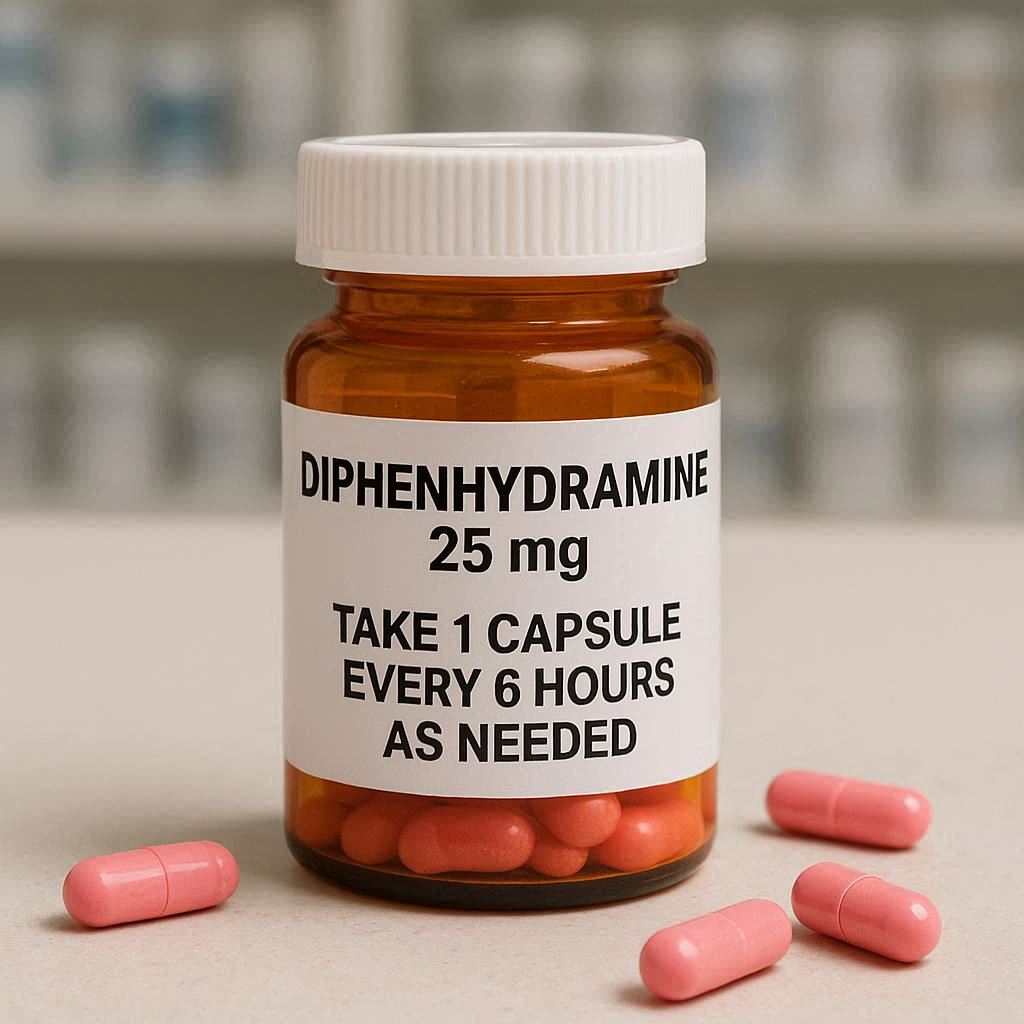
Let us examine the chemical reality first. Diphenhydramine is an ethanolamine derivative that functions as a competitive antagonist at H1 histamine receptors. In a clinical setting, providers administer it intramuscularly or intravenously for acute allergic reactions, anaphylaxis adjunct therapy, dystonic reactions, and preoperative sedation. Because it arrives in a vial as a ready-to-use solution, the billing process falls under the umbrella of “non-oral” drug administration. This distinction immediately pushes us away from pharmacy NDC billing and firmly into the realm of HCPCS Level II J-codes.
Understanding HCPCS Level II for Drug Billing
The Healthcare Common Procedure Coding System splits into two distinct levels. Level I consists of the CPT codes maintained by the American Medical Association, covering procedures and evaluation and management services. Level II, standardized by the Centers for Medicare & Medicaid Services, identifies products, supplies, and services not included in Level I. This includes ambulance services, durable medical equipment, prosthetics, orthotics, and critically, injectable drugs.
When you submit a claim for an injection administered in an office, emergency department, or infusion suite, the payer requires a two-part representation. The CPT code describes the act of placing the needle and delivering the substance. The HCPCS J-code details exactly what substance entered the patient’s body and in what quantity. Without the correct J-code, the payer cannot process the cost of the medication itself.
What Are J-Codes?
J-codes represent a subset of HCPCS Level II dedicated to drugs administered through routes other than oral ingestion. The “J” prefix originally signaled a distinction related to injectables, though the category now technically includes some inhalation and infusion solutions.
These codes operate on a per-unit or per-dose basis. The narrative description attached to a J-code dictates the billing unit. You might encounter a code that describes “per 10 mg,” “per 50 mg,” or simply “per dose.” The billing unit is the single most frequent source of claim errors. A service line might show one unit when the code descriptor demands a multiple thereof, or vice versa. Mastering this relationship forms the bedrock of accurate billing.
The unique nature of diphenhydramine makes it particularly instructive. It exists in the medical coding ecosystem as a widely available, inexpensive generic medication. Yet because it requires a prescription and professional administration in certain settings, it carries its own distinct HCPCS identifier. The fact that it appears in a low-cost, low-unit setting means that mistakes with multiplication often result in claims that are ridiculously overpaid or unjustly denied.
The Primary Code: J1200
The direct answer you need is unambiguous. The specific hcpcs code for diphenhydramine 25 mg is J1200. The Centers for Medicare & Medicaid Services maintains this code with the official descriptor: “Injection, diphenhydramine HCl, up to 50 mg.”
At first glance, a reader might object. Why would the code for a 25 mg dosage read “up to 50 mg”? The explanation lies in the code descriptor’s billing unit logic. The Healthcare Common Procedure Coding System often groups doses into a single administrative unit to account for variable prescribing patterns. The phrase “up to 50 mg” means that a single unit of J1200 covers any administered dose from 1 mg through 50 mg.
For your specific scenario, a provider draws 25 mg into a syringe and administers it to the patient. This amount fits entirely within the “up to 50 mg” threshold. Therefore, the billing unit reported on the claim form should be “1.” Reporting a unit of “25” or “0.5” would be a fundamental misunderstanding of how the code is structured. A single unit of J1200 reimburses the practice for the entire 25 mg administered.
This is the perfect example of why reading the full, long descriptor of a code is non-negotiable. A cursory glance at a code search tool might mistakenly lead a biller to divide 25 by 50 and attempt to bill 0.5 units. Most electronic claims clearinghouses and payer systems reject fractional units for drug codes outright. The correct action remains simple: one full unit of J1200.
Breaking Down the Code Descriptor
Let us parse the words carefully. “Injection” tells us the formulation is a parenteral solution, not a tablet or capsule. “Diphenhydramine HCl” specifies the exact chemical salt. “Up to 50 mg” defines the billing increment. This language differs significantly from codes that state “per 10 mg.” A per-unit dosing code would require you to calculate the number of 10 mg increments in the administered dose. With J1200, the threshold system eliminates arithmetic. If the dose is 10 mg, you bill one unit. If it is 25 mg, you bill one unit. If it is 45 mg, you bill one unit.
Only when the total administered dose exceeds 50 mg do you begin to increment the units. For example, a provider treating a severe acute dystonic reaction might order 75 mg of intravenous diphenhydramine. The 75 mg total exceeds the initial 50 mg cap by 25 mg. That additional portion falls again within the “up to 50 mg” window. The appropriate billing for 75 mg becomes two units of J1200. The logic operates on buckets of 50 mg, not a per-milligram scale.
A biller should maintain a simple flowchart near their workstation. Ask the first question: Was the drug administered via injection or infusion? If yes, proceed. Second: What is the total administered dose in milligrams? Third: Divide the total dose by 50. If the result is 1 or less, bill 1 unit. If the result is 1.1 to 2, bill 2 units. Always round up to the next whole number. This systematic approach eliminates guesswork.
Billing and Reimbursement Landscape
Medicare Administrative Contractors (MACs) publish fee schedules that attach a dollar value to each unit of a HCPCS code. Because diphenhydramine is a long-standing generic medication, the allowable amount for one unit of J1200 tends to be modest, often hovering in a range that reflects average sales price plus a small add-on percentage. However, the low reimbursement floor does not make the code optional. Omitting it under the assumption that the cost is negligible can trigger a line-item rejection that cascades into full claim delays.
Commercial payers follow similar frameworks, though their fee schedules may derive from usual and customary charges, percentile-based benchmarks, or contractual agreements. Some payers bundle the cost of low-expense injectables into the payment for the administration service, a policy often found in managed care contracts. The biller must review the provider’s contract to determine if separate reporting of J1200 is permitted or required. Submitting a J-code against a bundled service might cause a line-item denial, but this denial is administrative rather than clinical. It does not indicate that the patient did not receive the drug.
Billing J1200 on an institutional claim (UB-04) follows a different logic. Hospitals often report charges using revenue codes such as 0250 for pharmacy or 0636 for drugs requiring specific identification. The J-code appears alongside the revenue code in the form locator designated for HCPCS. The unit threshold logic remains identical: one unit for up to 50 mg. The payment mechanism, however, shifts to the Outpatient Prospective Payment System, where the drug might be packaged into an Ambulatory Payment Classification depending on encounter-level triggers. Understanding your billing environment—professional claim versus institutional claim—profoundly affects how the line item is adjudicated.
Payer-Specific Considerations
Variation among payers introduces friction into an otherwise straightforward code. A practice in Michigan might bill J1200 daily without incident, while a counterpart in Texas occasionally encounters requests for the National Drug Code in addition to the HCPCS. When a payer requests an NDC, the biller must translate the specific vial or syringe used into an 11-digit numeric sequence. For diphenhydramine hydrochloride injection, a commonly reported NDC is 63323-0664-27, though multiple manufacturers exist. The NDC requirement exists on the claim’s loop 2410 for professional electronic submissions, distinct from the HCPCS line.
Some state Medicaid programs adopt unique code modifications. They might require a modifier to indicate the drug was medically necessary for a diagnosis outside the standard allergy sphere. A provider administering diphenhydramine for a dystonic reaction might need to append a specific modifier, ensuring the claim passes medical necessity edits. Checking your state’s Medicaid provider manual for pharmacy and injectable billing policies prevents these administrative roadblocks.
A table comparing billing logic based on payer type can crystallize these differences:
| Payer Category | Typical Billing Unit Logic | NDC Required | Modifier Considerations |
|---|---|---|---|
| Medicare (MAC) | 1 unit for up to 50 mg | Not typically on professional claims | None for standard use |
| Commercial | 1 unit for up to 50 mg | Plan-specific; increasingly common | Some require distinct modifiers for non-allergy diagnoses |
| State Medicaid | 1 unit for up to 50 mg | Frequently required | May require family planning or EPSDT modifiers if applicable |
| Workers’ Compensation | 1 unit for up to 50 mg | Rarely, unless state-mandated | Documentation must link to compensable injury |
Note: Always verify payer-specific medical policies before submitting. This table represents generalized patterns and may not reflect a specific plan’s current guidelines.
Documentation Requirements to Support J1200
Clean claims begin with clean documentation. The medical record must directly support the service line appearing on the claim form. For J1200, the provider’s note should clearly state the drug name, the dose in milligrams, and the route of administration. A simple line reading “Diphenhydramine 25 mg IV given” suffices from a clinical standpoint, but for billing robustness, additional detail offers protection during an audit.
The dose should be unmistakably legible. If the provider handwrites “25 mg,” the biller must be able to interpret it without guesswork. A scribbled “25” that looks like “75” leads to over-coding or under-coding. A clear, preferably typed or dictated notation eliminates this risk. The time of administration and the anatomical site for intramuscular injections add context that supports the medical necessity. For example, a patient presenting with urticaria who receives diphenhydramine 25 mg intramuscularly in the left deltoid at 14:22 has a complete narrative of care.
Providers who administer diphenhydramine as part of a standing order or pre-printed protocol should ensure the protocol identifies the standard dose and the circumstances under which a nurse may administer it. Standing orders for contrast reaction prophylaxis in radiology departments often involve diphenhydramine. The protocol might state “administer diphenhydramine 25 mg IV over 2 minutes if patient develops mild urticaria without respiratory compromise.” The nurse’s note then documents that the protocol was activated, the dose given, and the outcome. The biller attaches J1200 to the corresponding encounter. The link between the protocol, the nurse’s administration note, and the claim is auditable and defensible.
Medical Necessity and Diagnosis Coding
Payers process J1200 against the diagnosis codes appearing on the claim. ICD-10-CM codes that support medical necessity for diphenhydramine injection include, but are not limited to:
- T78.3XXA: Angioneurotic edema, initial encounter
- L50.0: Allergic urticaria
- L50.1: Idiopathic urticaria
- T78.2XXA: Anaphylactic reaction, initial encounter (when used as adjunct)
- G24.0: Drug-induced acute dystonia
- R21: Rash and other nonspecific skin eruption
The primary diagnosis on the claim should reflect the condition prompting the injection. If a patient arrives with severe pruritus due to an allergic reaction, L50.0 may take the top spot. If the condition is a dystonic reaction to an antiemetic, G24.0 leads. The diagnosis tells the payer’s automated system: this drug was medically reasonable and necessary for this patient at this time. A mismatch, such as billing J1200 with a primary diagnosis of essential hypertension, raises a red flag. Such a claim will likely deny for lack of medical necessity unless the record clearly explains an off-label but acceptable use.
Common Billing Errors and How to Avoid Them
The relative simplicity of J1200 invites complacency. Billers often assume the code is so straightforward that errors are impossible. This assumption is dangerous. The most common errors fall into predictable categories.
Error One: Billing fractional units. A biller calculates that 25 mg represents half of 50 mg and submits 0.5 units. The claim rejects or suspends because the unit field expects a whole number. The correction requires retraining on the “up to” language in the HCPCS descriptor.
Error Two: Billing for the vial instead of the administered amount. A nurse wastes a portion of a single-use vial and documents that a 50 mg vial was opened. The biller submits two units of J1200 because the vial contained 50 mg and they mistakenly apply a per-25-mg billing logic. The administered dose was 25 mg, so only one unit is billable. The wastage, while clinically appropriate and documented, does not convert into billable units for a single patient under most payer rules.
Error Three: Duplicate coding with oral diphenhydramine. A patient receives an injection in the office and a prescription for oral capsules to take at home. The biller attempts to bill the oral medication on the same claim using a HCPCS code intended for outpatient prescription billing, or worse, a second J-code line. Only the injectable administered in the office, coded as J1200, belongs on the professional claim. The oral prescription is a separate transaction in the pharmacy benefit channel.
Error Four: Omitting the NDC when contractually required. A commercial payer adjudicates the claim but denies the J1200 line for “missing NDC.” The biller resubmits with the NDC in the correct electronic field. Delaying the NDC entry causes unnecessary follow-up work. A practice should pre-load the most commonly used NDCs into their billing software to auto-populate claims.
A quick-reference list for clean J1200 submission:
- Verify total administered dose in mg.
- Divide by 50, rounding up for units.
- Enter whole number units only.
- Link to a medically necessary diagnosis in the primary position.
- Attach NDC if payer enrollment or contract requires it.
- Ensure the administration CPT code (e.g., 96372) also appears for the injection service.
A thorough pre-claim scrubber that flags fractional units and NDC omissions can automate much of this error prevention.
The Broader Context of Allergy and Anaphylaxis Management
Diphenhydramine injection does not exist in a therapeutic vacuum. Clinicians use it alongside other agents in emergency protocols. In the context of anaphylaxis, epinephrine remains the first-line agent, coded as J0171 (injection, epinephrine, 0.1 mg). Diphenhydramine serves as an adjunctive H1 blocker, often co-administered with an H2 blocker such as famotidine (coded as J1602 for famotidine injection, per 10 mg). A patient experiencing a severe systemic reaction might therefore have a claim that includes J0171, J1200, and J1602, along with the intravenous push or infusion administration codes.
Understanding these coding relationships strengthens the biller’s ability to detect medical necessity edits. If a claim includes J1200 as a standalone drug for a diagnosis of anaphylaxis, the payer’s logic might question the absence of epinephrine. While not every case requires all three medications, the clinical scenario should dictate the coding, and the coding must align with the documented treatment plan. The biller should never add an epinephrine code just to bypass an edit, but they should query the provider if the record indicates anaphylaxis and no epinephrine was given, ensuring that the documentation explains the clinical reasoning.
Same-Day Infusions and Observation Services
Patients receiving outpatient chemotherapy infusions often have standing orders for pre-medications, including diphenhydramine. In the hospital-based infusion center, multiple J-codes populate the same claim. J1200 appears alongside antiemetics such as J1100 (dexamethasone) and J1626 (granisetron). The administration codes for chemotherapy and hydration create a layered hierarchy of services.
For patients placed in observation status following an acute allergic reaction, the encounter includes a timed observation service and multiple drug administrations. J1200 for the initial diphenhydramine injection represents one line among a complex set of charges. The observation status itself triggers a distinct billing framework, and the J-code contributes to the overall payment calculation under composite APC groups. The biller must maintain the integrity of the J-code unit even when the larger claim undergoes grouping logic that might obscure individual line-item payments.
Auditing and Compliance Perspectives
An auditor reviewing a sample of claims with J1200 will apply a standard set of criteria. They will check the medical record for a clear order, a clear administration note, and a legible signature. They will verify that the unit billed matches the unit document. They will compare the date of service on the claim to the date in the record. They will review the diagnosis pointer to ensure the J1200 line connects to a diagnosis that supports medical necessity.
In one scenario, an auditor might find a claim with two units of J1200. The record shows “Diphenhydramine 50 mg IV.” The auditor will determine that two units is incorrect because 50 mg fits entirely within one unit of “up to 50 mg.” The practice would face a recoupment request for the overpayment on the second unit, plus potential extrapolation if the error appears systemic. This seems minor but reveals a fundamental misunderstanding of the code descriptor that a provider must correct immediately.
Another audit finding involves illegible signatures or missing administration times. While these are documentation deficiencies rather than coding errors per se, they render the claim unsupportable. A payer can deny the entire line if the record does not contain sufficient evidence that the service occurred. The correction lies not with the billing office but with the clinical staff, who must treat documentation with the same rigor as the injection itself.
A compliance officer should periodically pull a report of all J1200 claims and manually spot-check the corresponding records. A sample of 30 claims might reveal patterns: a single provider consistently ordering 25 mg, or a particular nurse consistently documenting with perfect clarity. Identifying and celebrating accurate documentation encourages a culture where coding compliance becomes a shared value rather than a bureaucratic nuisance.
The Transition from Hospital to Office Settings
More allergy and immunology practices now administer subcutaneous immunotherapy and manage acute reactions in the office rather than referring patients to the emergency department. This shift makes J1200 billing more common in a professional office setting. An allergist who administers a cluster immunotherapy shot might have a protocol to give diphenhydramine 25 mg orally before the injections. If a mild systemic reaction occurs despite the oral pre-medication, the allergist might choose to administer diphenhydramine intramuscularly from the office emergency kit. The billing for this intramuscular dose follows the identical J1200 logic.
Office managers must maintain an accurate inventory of the diphenhydramine vials, tracking lot numbers and expiration dates. The billing record’s NDC must correspond to the actual product used. If the office switches manufacturers due to a supply shortage, the biller must update the NDC in the practice management system. A mismatch between the administered vial’s lot number and the billed NDC creates an audit trail that, while rarely flagged, still represents a compliance gap.
The cost of a single-dose vial of diphenhydramine is minimal. Some practices opt not to bill J1200 at all for commercially insured patients, absorbing the cost as a courtesy. While this practice avoids potential line-item denials, it creates inconsistent claims data and may violate payer contracts requiring the reporting of all services provided. A better approach involves billing the code correctly and adjusting the charge at the time of payment posting if the practice chooses to write off the small amount.
Comparative Analysis: J1200 and Similar Antihistamine Codes
A broader view of HCPCS antihistamine codes helps contextualize J1200. Hydroxyzine hydrochloride for intramuscular injection uses code J3410, with a descriptor “injection, hydroxyzine HCl, up to 25 mg.” Note the parallel structure with J1200. The billing unit threshold is 25 mg rather than 50 mg, but the “up to” language creates the same whole-unit logic. Promethazine injection falls under J2550, “injection, promethazine HCl, up to 50 mg.” A biller handling multiple anti-allergy agents must memorize these subtle differences in the denominator. A dangerous error involves confusing J1200’s 50 mg cap with J3410’s 25 mg cap and incorrectly doubling or halving the units for the wrong drug.
A comparative table clarifies the different dosage thresholds:
| HCPCS Code | Drug | Descriptor Threshold | Unit if 25 mg Given |
|---|---|---|---|
| J1200 | Diphenhydramine HCl | Up to 50 mg | 1 unit |
| J3410 | Hydroxyzine HCl | Up to 25 mg | 1 unit |
| J2550 | Promethazine HCl | Up to 50 mg | 1 unit |
| J1100 | Dexamethasone sodium phosphate | 1 mg | 25 units (if 25 mg) |
*Dexamethasone illustrates a strictly per-1 mg code, contrasting sharply with the “up to” logic of the antihistamine codes. The biller must calculate units by multiplying the administered mg by the per-mg billing unit.*
The takeaway from this comparison remains consistent: never assume. Read the descriptor for every code every time, especially if you have not billed it recently. A single mistake on a high-volume drug creates a significant compliance exposure.
Integrating J1200 into Practice Workflows
A well-designed practice workflow eliminates the friction between clinical care and billing. When a nurse administers diphenhydramine, a standardized charge capture tool—whether paper or electronic—should prompt the nurse to document the drug name, dose, route, site, and time. The tool should automatically populate a charge for J1200 with a default unit of 1, waiting for the biller to verify and adjust if necessary.
Electronic health record systems with built-in charge capture often default to a “charge on administration” logic. When the nurse scans the barcode on the diphenhydramine vial, the system recognizes the NDC, maps it to J1200, and suggests a billing unit based on the scanned dose. This automation reduces the biller’s manual workload but requires periodic validation. A system mapping error could link the wrong NDC to J1200, causing systemic miscoding. The billing manager should conduct a quarterly test by scanning a known vial and tracing the charge through the system to the claim.
Manual charge entry, still prevalent in smaller offices, demands a different control. The biller receives a superbill or encounter form with a handwritten notation: “DPH 25 mg IM.” The biller translates this into a claim line for J1200, 1 unit. A second biller, or the original biller on a different day, should perform a batch review before claim submission. The batch review examines every encounter with a drug administration charge and confirms the presence of a matching drug code. Encounters with an administration CPT code but missing a J-code represent a lost revenue opportunity and a data gap.
The Future of Drug Coding and Potential Changes
The HCPCS code set undergoes quarterly updates. While J1200 has remained stable for many years, changes are possible. CMS might, in the future, alter the descriptor from “up to 50 mg” to a per-mg unit to align with average sales price methodologies. If that occurs, the billing unit logic for 25 mg would shift dramatically. A biller who codes on autopilot would continue submitting 1 unit when the new descriptor requires 25 units. The resulting reimbursement would be a tiny fraction of the expected amount, potentially going unnoticed for months and leading to significant revenue loss.
A responsible billing department subscribes to the CMS HCPCS quarterly update announcements and reviews the summary of changes for any code they routinely bill. The American Medical Association also publishes CPT changes, which might affect the administration codes paired with J1200. A change to the injection administration CPT series could alter the way the drug and the procedure are bundled or priced.
Staying current also means monitoring Local Coverage Determinations from the MAC that serves your geography. A MAC might issue an LCD that limits coverage for diphenhydramine injection to specific ICD-10 codes. A practice using J1200 broadly might suddenly face a wave of denials if their diagnoses fall outside the covered list. Early awareness of a proposed LCD allows the practice to comment during the open comment period and to prepare internally for the policy change.
Real-World Case Scenarios
Scenario One: Urgent Care Visit. A 35-year-old patient presents with widespread hives after eating shellfish. The provider orders diphenhydramine 25 mg IM. The nurse administers the injection in the right ventral gluteal site. The biller assigns CPT 99213 with modifier 25 for the evaluation, CPT 96372 for the intramuscular injection, and J1200, 1 unit for the diphenhydramine. The diagnosis linked to J1200 is L50.0 (allergic urticaria). The claim adjudicates without issue.
Scenario Two: Pre-Medication for Blood Transfusion. A patient with a history of mild allergic reactions to blood products receives diphenhydramine 25 mg IV push before a packed red blood cell transfusion in the outpatient infusion center. The encounter includes the transfusion CPT, the IV push administration code, and J1200, 1 unit. The primary diagnosis might be the anemia requiring transfusion, but the secondary diagnosis reflects the history of transfusion reaction (Z91.6). The medical necessity for diphenhydramine is supported by the history. Some MACs might scrutinize prophylactic use and require a specific diagnosis code indicating the necessity.
Scenario Three: Dystonic Reaction in the Emergency Department. A 22-year-old patient presents with torticollis and oculogyric crisis after receiving metoclopramide for nausea. The ED physician orders diphenhydramine 50 mg IV. The nurse administers the full dose. The biller submits J1200, but now the total dose is 50 mg, which still fits within 1 unit of “up to 50 mg.” The billing remains 1 unit. The diagnosis is G24.0 (drug-induced acute dystonia). The medical necessity is clear and tightly linked to the drug’s mechanism of action.
Scenario Four: Exceeding the 50 mg Threshold. A patient experiences severe laryngeal edema and receives diphenhydramine 75 mg IV in divided doses. The total administered over the encounter is 75 mg. The biller correctly bills 2 units of J1200, because 75 divided by 50 equals 1.5, which rounds up to 2. The documentation clearly states the total cumulative dose, and the record supports the second unit.
Educational Tools for Staff
Front-desk staff, medical assistants, and nurses often do not realize how their documentation choices affect the billing outcome. A short, engaging in-service session can bridge this gap. Use a real-life claim as an example. Show a redacted explanation of benefits that denied due to missing documentation. Walk through how a vague note led to the denial. Then show a clean, detailed note and the corresponding paid claim.
Create a laminated pocket card for nurses that lists the most commonly administered injectable drugs in the practice, their HCPCS codes, and the exact documentation elements required. For diphenhydramine, the card would read:
- Drug: Diphenhydramine (Benadryl)
- HCPCS: J1200
- Unit Threshold: 1 unit for up to 50 mg
- Document: “Diphenhydramine [dose] mg [IM/IV], [site], [time]”
- Example: “Diphenhydramine 25 mg IV push, left antecubital, 10:15 AM”
This card removes ambiguity. The nurse knows that writing “Benadryl given” is insufficient and that the specific dose and route are non-negotiable for the billing team. This small intervention significantly reduces the back-and-forth queries that slow down claim submission.
An annual competency assessment for billers should include a section on J-code unit calculations. Present ten scenarios with varying doses and ask the biller to assign the correct number of units. The test should include trick questions where the dose exactly matches the threshold (e.g., 50 mg) and where it exceeds it (e.g., 100 mg). The test reinforces the rounding-up rule and solidifies the mental habit of consulting the code descriptor.
Navigating Medicare Advantage and Managed Medicaid
Medicare Advantage plans and managed Medicaid organizations often adhere to the same HCPCS coding conventions as traditional fee-for-service programs but layer on additional utilization management edits. A Medicare Advantage plan might require prior authorization for diphenhydramine injection if billed in a specific place of service, even though the drug itself is inexpensive. This prior authorization requirement is not based on the drug’s cost but on a care management algorithm that flags injections in certain settings as potentially avoidable.
When facing a prior authorization denial for J1200, the biller should immediately determine whether the plan’s policy is accessible online. Often, the policy contains a list of exempt diagnoses or situations. If the patient’s scenario matches an exemption, the biller can resubmit with a note referencing the policy. If no exemption applies, the provider must decide whether to pursue a retroactive authorization or to write off the charge. In either case, the interaction highlights the need to check authorization requirements before the service whenever possible, a challenging but increasingly necessary discipline.
Managed Medicaid plans frequently adopt the state’s fee-for-service billing guidelines but with appended requirements. A plan might demand that the NDC appear not only in the designated loop but also in the narrative notes of the claim. This redundant documentation feels burdensome but is the reality of working with multiple payers. Building these requirements into a payer-specific guide within the practice management system prevents the biller from having to memorize every plan’s idiosyncrasy.
The Role of Software and Automation
Modern practice management software and clearinghouse partners offer claim scrubbing engines that detect errors before the claim reaches the payer. A well-configured scrubber will reject a claim that contains J1200 with a fractional unit. It will flag a claim that has an administration CPT code without a corresponding J-code. It will alert the biller to a missing NDC when the payer’s profile requires one.
However, software is only as good as its configuration. A practice that has not updated its payer profiles in the clearinghouse might fail to enforce NDC requirements for a new payer policy. The biller must periodically review the scrubber’s rule library and compare it against current payer policies. This review might be a monthly task assigned to a senior billing specialist.
Artificial intelligence tools are emerging that can read clinical notes and suggest appropriate HCPCS codes. For a note containing “diphenhydramine 25 mg IV,” the AI would present J1200, 1 unit for the biller’s approval. While this technology promises to reduce manual lookups, it introduces a new dependency. The biller must still understand the underlying coding rules to validate the AI’s suggestion. Blindly accepting AI-recommended codes without comprehension is a compliance risk. The optimal workflow positions the human biller as the ultimate decision-maker, informed and supported by software, but never replaced by it.
External Resources and Continuous Learning
The healthcare reimbursement environment is dynamic. The code J1200 itself may remain static, but the policies surrounding it change. Committing to continuous learning ensures that your practice does not fall behind.
The CMS website hosts the official HCPCS quarterly update files. Bookmarking the page and setting a calendar reminder for the first week of January, April, July, and October establishes a rhythm of code validation. Your MAC’s website contains local coverage articles, fee schedules, and educational events. Attending a MAC-sponsored webinar on drug billing can illuminate nuances specific to your region.
Professional organizations such as the American Academy of Professional Coders (AAPC) and the American Health Information Management Association (AHIMA) offer forums where coders discuss challenging scenarios. A search for J1200 in these forums reveals real-world questions and expert answers that often preemptively solve your own upcoming challenges. The forums create a community of practice that elevates the entire profession.
A helpful external reference for general coding knowledge is the AAPC’s HCPCS Level II code lookup, accessible at www.aapc.com/codes/. This resource provides descriptors, coding tips, and forum discussions that can clarify ambiguous situations.
Advanced Nuances: Wastage Billing
The topic of billing for wasted drug contents surfaces repeatedly with single-dose vials. A nurse opens a single-dose 50 mg vial of diphenhydramine, withdraws 25 mg for the patient, and discards the remaining 25 mg. The administered dose is 25 mg. The biller wonders whether to bill for the wasted 25 mg.
Medicare’s JW modifier policy provides the framework. The JW modifier indicates a drug or biological amount that is discarded and not administered to any patient. When billing for a drug from a single-dose container, the total dose billed should reflect the amount administered plus the amount discarded, as separate line items. The administered portion appears on one line with the J-code and the actual unit. The discarded portion appears on a second line with the same J-code, the JW modifier, and the discarded unit amount.
Applying this to diphenhydramine: the biller would submit line one with J1200, 1 unit (representing the 25 mg administered). Line two would also be J1200, 1 unit, with the JW modifier appended, representing the 25 mg discarded. Medicare expects this documentation only when the discarded amount meets or exceeds a specific billing unit. For J1200, where 1 unit equals “up to 50 mg,” the discarded 25 mg does constitute a billable unit under the JW policy.
However, this policy applies primarily to Medicare fee-for-service. Commercial payers may or may not honor the JW modifier. Some explicitly reject separate payment for wastage of low-cost drugs. Submitting the JW line without payer acceptance can lead to confusion or denial, but it remains the compliant approach for Medicare. The practice must evaluate whether the administrative effort of billing the wasted unit is offset by the minimal reimbursement.
The documentation must explicitly state the amount administered and the amount wasted. A nurse note reading “50 mg vial opened, 25 mg given, 25 mg wasted” provides the necessary support. Without this statement, the JW line lacks a foundation and cannot withstand audit.
Wrapping Up: The Essential Points
The landscape of injectable drug coding rewards precision and punishes assumption. The code J1200 is the singular, definitive hcpcs code for diphenhydramine 25 mg, and its proper application depends on understanding the “up to 50 mg” unit structure. A single unit of J1200 covers any dose of diphenhydramine HCl from 1 mg through 50 mg. The biller must resist any urge to fractionate the unit or to inflate the unit count based on vial size rather than administered amount.
Clean billing outcomes flow from clear documentation, consistent workflow habits, and a commitment to staying informed about payer policy changes. When every member of the care team—from the nurse documenting the injection to the biller keying the claim—understands their role in the coding chain, the practice minimizes denials and maximizes revenue integrity.
Frequently Asked Questions
Q: Can I bill J1200 for diphenhydramine administered orally in the office?
A: No. J1200 is explicitly for injection. Oral medications administered in an office setting are generally not billed on a professional claim using HCPCS J-codes. They might fall under a different coding pathway or be considered part of the evaluation and management service.
Q: What happens if I submit 0.5 units of J1200 for a 25 mg dose?
A: Most payer systems reject fractional units for drug codes. The claim will likely suspend or deny. The correction is to resubmit with 1 unit, as 25 mg falls entirely within the “up to 50 mg” threshold.
Q: Does Medicare require an NDC for J1200 on a professional claim?
A: Generally, Medicare does not require the NDC on professional claims (CMS-1500) for physician-administered drugs, though some MACs may have local requirements. Hospital outpatient claims often do require the NDC. Always check your MAC’s specific guidance.
Q: How do I bill if a patient receives 100 mg of diphenhydramine IV?
A: Divide 100 by 50. The result is 2. Bill 2 units of J1200. Ensure the medical record clearly documents the total cumulative dose administered.
Q: Is J1200 the same code for diphenhydramine citrate?
A: No. J1200 is specifically for diphenhydramine hydrochloride (HCl). Diphenhydramine citrate is a different salt form and would not be coded with J1200. Verify the vial’s label to confirm the exact salt before coding.
Conclusion:
The HCPCS code J1200 defines the billing pathway for injectable diphenhydramine hydrochloride with a “up to 50 mg” unit descriptor. Any administered dose between 1 mg and 50 mg, including the common 25 mg dose, translates to exactly 1 unit on the claim. Success requires reading the full code descriptor, supporting the claim with precise documentation, and adapting to payer-specific rules around NDCs and modifiers. Mastery of this single code establishes a replicable pattern for all J-code billing.
Additional Resource:
CMS HCPCS Quarterly Update: https://www.cms.gov/medicare/coding-billing/healthcare-common-procedure-system/quarterly-update