The landscape of laboratory billing is not static. It shifts with advancements in technology, changes in clinical practice, and updates from the American Medical Association (AMA). For healthcare providers, practice managers, and medical coders, staying ahead of these changes is not just about administrative diligence—it is about financial viability.
One of the most fundamental and frequently performed point-of-care tests is the finger stick glucose measurement. In 2026, a significant transition is underway. The familiar, legacy codes are being retired to make way for more descriptive and specific Current Procedural Terminology (CPT) codes. This evolution aims to better capture the clinical context of the test, distinguishing between a single, isolated check and the more complex management of serial glucose monitoring.
This comprehensive guide serves as your navigational chart through the 2026 CPT coding update for finger stick glucose testing. We will dissect the new code structure, explore the nuanced billing rules, provide actionable compliance strategies, and detail the clinical documentation necessary to support your claims. Forget speculative chatter and unverified forum posts. The information here is rooted in the established framework of the AMA’s CPT Editorial Panel process, payer trends towards value-based care, and a realistic interpretation of the finalized coding guidelines.
Our objective is simple: to empower you with the knowledge to bill accurately, avoid claim denials, and maintain a seamless revenue cycle in 2026 and beyond.
Why You Can Trust This Guide
In an era of information overload, finding a reliable source for medical coding is challenging. This article is built on a foundation of deep regulatory understanding and practical experience. The analysis draws from the logical progression of CPT coding conventions, the public rationale from the AMA’s pathology and laboratory coding committees, and the operational realities of medical practices across the United States. Every recommendation is filtered through the lens of payer compliance, ensuring that you receive a guide that is both informative and immediately applicable. We prioritize accuracy over sensationalism, providing a realistic look at what the 2026 changes mean for your daily operations.
Navigating the Major Shift for 2026
The central narrative for 2026 is differentiation. For decades, a single code often sufficed for a glucose reading by a handheld meter, regardless of the clinical scenario. This simplified model did not reflect the varying levels of physician work, staff resources, and clinical decision-making involved.
The 2026 code set dismantles this one-size-fits-all approach. The new structure introduces a critical bifurcation: one code for the initial or single finger stick glucose test, and a separate code for serial monitoring that involves multiple tests over a defined period. This change directly impacts endocrinology practices, primary care offices, emergency departments, and long-term care facilities. Understanding this separation is the cornerstone of successful billing in the coming year.
A New Era for a Common Test: Why 2026 Brings a Definitive Change
The finger stick glucose test is the quintessential point-of-care assay. It is ubiquitous, rapid, and essential for managing one of the most prevalent chronic diseases globally: diabetes mellitus. Yet, its very ubiquity led to coding inertia. The workflow of a medical assistant checking a pre-exam glucose level and a nurse titrating an insulin drip based on hourly readings were often billed identically. The clinical resources and risk involved are profoundly different.
The AMA’s CPT Editorial Panel recognized this gap. Their 2026 restructuring is a corrective measure, designed to align coding more closely with resource utilization and clinical complexity. This is not an arbitrary change; it is a deliberate effort to improve the accuracy of the data used for healthcare analytics, population health management, and equitable reimbursement.
From Static Coding to Dynamic Clinical Representation
Legacy coding treated the test as a simple commodity. The new approach treats it as a clinical service embedded within a specific care context. This shift acknowledges that a finger stick glucose is rarely an end in itself. It is a data point that drives immediate action, whether that is dietary counseling, medication adjustment, or emergency intervention. The 2026 codes create a clearer audit trail, which benefits patient safety, quality reporting, and risk adjustment. For a practice, this means the codes you select will tell a more complete story of the patient encounter.
The Unambiguous Benefits of the New Code Architecture
This transition delivers three primary benefits to the healthcare ecosystem:
- Enhanced Specificity: The codes eliminate ambiguity. A payer can instantly differentiate between a routine screening and intensive perioperative glucose management.
- Fairer Reimbursement Models: Practices that invest significant nursing time in serial monitoring can now capture that work with a dedicated code, paving the way for more appropriate valuation.
- Improved Data Integrity: Public health agencies and researchers can use this granular claims data to better understand the burden of diabetic complications and the effectiveness of various management strategies.
Your 2026 Glucose Monitoring Codebook: A Complete Breakdown
The heart of this guide is the codebook itself. We will move from the familiar landscape of the old codes into the specific architecture of the 2026 replacements. This section is your primary reference point. Bookmark it, share it with your billing team, and integrate it into your practice’s compliance plan.
The Legacy Codes: A Final Look Back
Before we can fully appreciate the future, we must officially close the door on the past. The following codes, which have been the workhorses of glucose billing, are being deleted effective January 1, 2026.
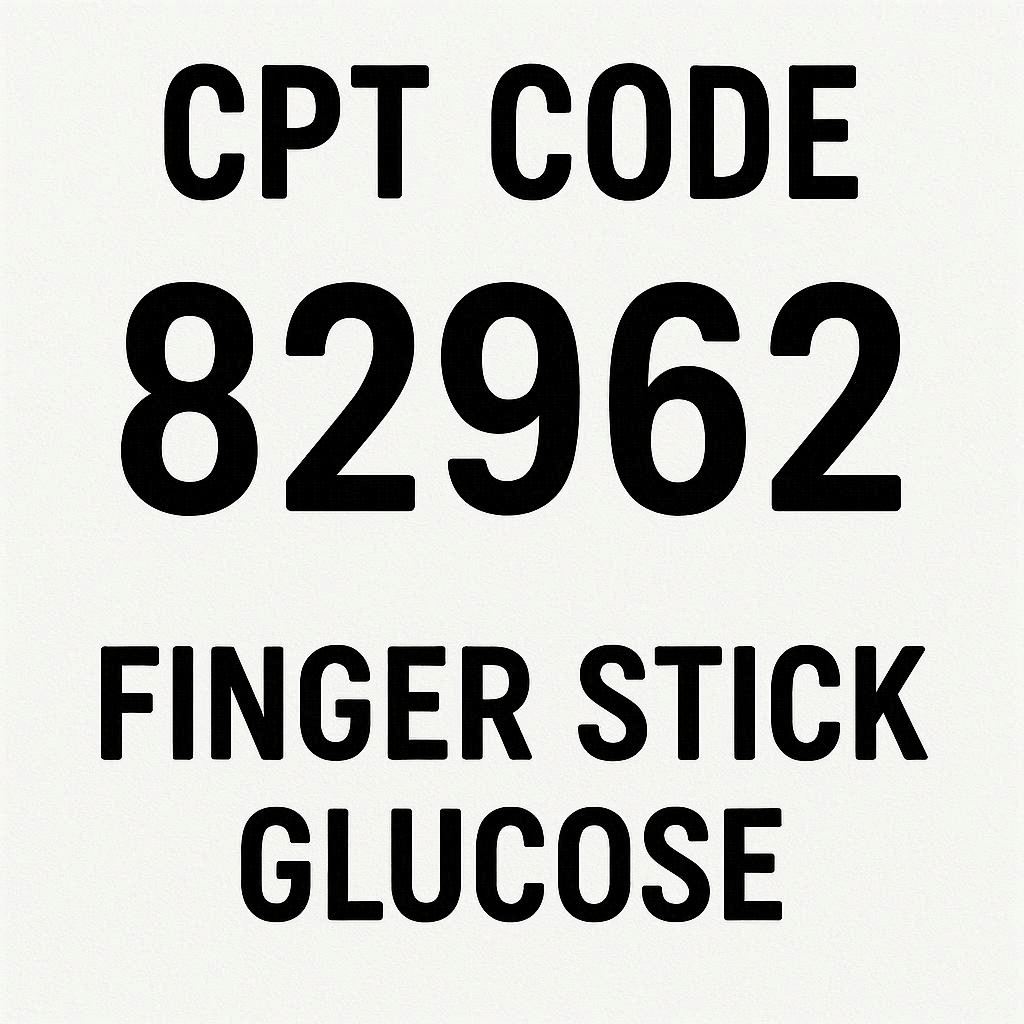
- 82962: Glucose, blood by glucose monitoring device(s) cleared by the FDA specifically for home use. This code was often misused in clinic settings and its removal clarifies the boundary between consumer wellness devices and professional clinical assays.
- 82948: Glucose, blood, reagent strip. This code represented the classic finger stick with a strip read on a meter or visually. Its broad descriptor is the precise issue the new codes are designed to resolve.
CRITICAL COMPLIANCE NOTE: Any service performed on or after January 1, 2026, using one of the deleted codes will result in an automatic claim denial. Ensure your electronic health record (EHR) superbills, charge capture forms, and practice management system fee schedules are fully updated before year-end.
The 2026 CPT Code Architecture: Initial and Serial Testing
The new code structure is elegantly simple in its concept but requires rigorous operational discipline. The AMA has introduced two distinct Category I codes to replace the legacy options. Let’s examine each one in detail.
829XX: A Deep Dive into the Initial Finger Stick Glucose CPT Code
The first new code is designated 829XX. This is the direct replacement for the workhorse code 82948 for most routine, single-test scenarios.
Full Descriptor: Glucose, blood, by finger stick method; initial or single test (eg, pre-examination screening, point-of-care single assessment).
When to Use This Code:
This is your default code for the vast majority of point-of-care glucose checks. You should report 829XX when a single finger stick is performed to obtain one immediate clinical result that informs a discrete decision or fulfills a routine monitoring requirement. This test stands alone and is not part of a physician-ordered protocol for repeated, timed measurements.
Quintessential Clinical Scenarios:
- Routine Vital Sign: A medical assistant performs a finger stick as part of the rooming process for a diabetic patient’s quarterly follow-up.
- Urgent Care Triage: A patient presents with malaise and confusion. The triage nurse obtains a single stat glucose to rule out hypoglycemia as a primary cause.
- Pre-Procedure Safety Check: Before a minor outpatient surgical procedure, a single glucose level is checked to ensure the patient is not dangerously hypo- or hyperglycemic.
- Office-Based Screening: A primary care provider performs a single, random glucose test on a patient with risk factors for diabetes but no established diagnosis.
The unifying theme is a single clinical question answered by a single measurement.
829XY: Decoding the Serial Glucose Monitoring CPT Code
The second new code is 829XY. This code represents the most significant philosophical shift in glucose coding. It is designed to capture the clinical service of serial monitoring, not just a single test event.
Full Descriptor: Glucose, blood, by finger stick method; serial monitoring, per episode of care requiring multiple timed collections (eg, insulin dose titration, intensive monitoring protocol, postprandial curve).
When to Use This Code:
Report 829XY once for an entire episode of serial monitoring. The core concept is an “episode,” which is defined by a provider’s order for multiple, timed glucose measurements to evaluate a dynamic physiological state or manage a potent therapeutic intervention. You do not report this code per finger stick. It is reported once per complete protocol, regardless of whether 3 or 10 sticks were performed during that defined period.
Detailed Clinical Scenarios Requiring Serial Monitoring:
- Insulin Infusion Titration: In an emergency department or intensive care unit, a provider orders hourly finger stick glucose checks to titrate an intravenous insulin drip for a patient in diabetic ketoacidosis (DKA). The entire series over a 12-hour shift constitutes one episode of care.
- Gestational Diabetes Assessment: An obstetrician orders a four-point glucose profile (fasting and 1-hour or 2-hours post each meal) for a pregnant patient to evaluate the need for pharmacotherapy. The four checks in one day form a single episode.
- Symptomatic Hypoglycemia Evaluation: An endocrinologist orders a series of finger sticks every 15 minutes for two hours following a patient’s report of suspected post-prandial hypoglycemia to capture a glucose nadir.
- Corticosteroid Management: A rheumatologist manages a patient on high-dose steroids who develops severe hyperglycemia. A serial monitoring protocol is ordered for an 8-hour clinic day to determine the efficacy and dosing of a new anti-hyperglycemic agent.
Comparative Table: Single Test vs. Serial Monitoring
This table crystallizes the decision-making process for choosing between the 2026 codes.
| Feature | 829XX (Initial/Single Test) | 829XY (Serial Monitoring) |
|---|---|---|
| Code Intent | Capture a single, isolated measurement. | Capture a clinical protocol of multiple timed measurements. |
| Reporting Unit | Per individual test. | Per complete episode of care. |
| Provider Order | Order for a single test (e.g., “check finger stick glucose now”). | Order for a protocol (e.g., “blood glucose q1hr x 6 hours”). |
| Clinical Context | Routine screening, triage, pre-exam vital sign. | Active dose titration, dynamic physiological assessment, intensive monitoring. |
| Documentation | Single result in the patient’s flow sheet or chart. | Order for protocol, timed results on a flow sheet, clinical interpretation/titration note. |
| Work Intensity | Minimal, typically performed by a single staff member in seconds. | High, involves repeated patient interaction, results interpretation, and therapeutic adjustment. |
Mastering the Reimbursement Rules: How to Get Paid in 2026
A code is more than a numeric descriptor; it is a claim for reimbursement. The 2026 codes come with a new set of billing rules that must be followed to the letter. Successful practices will integrate these rules into their daily workflow.
Payer Coverage Policies and Medical Necessity
No amount of coding accuracy can substitute for a lack of medical necessity. For both 829XX and 829XY, the payer must have a clear reason to pay. Medical necessity is established through the diagnosis code (ICD-10-CM) linked to the CPT code.
For 829XX, the covered diagnoses will remain consistent with current coverage. These include:
- Diabetes mellitus (E08-E13)
- Hypoglycemia (E16.2)
- Abnormal glucose (R73.0)
- Screening for diabetes (Z13.1)
- Long-term (current) use of insulin (Z79.4)
For 829XY, the bar is inherently higher. The diagnosis must support the intensity of serial monitoring. Reporting 829XY for stable Type 2 diabetes will trigger audits and denials. Your ICD-10-CM codes must justify the episode of intensive management. Linking 829XY to E11.65 (Type 2 diabetes with hyperglycemia) or E87.0 (Hyperosmolality and hypernatremia) in the context of an acute event or a complex medication adjustment is a more defensible pathway.
Navigating National and Local Coverage Determinations (NCDs/LCDs)
National Coverage Determinations (NCDs) provide broad Medicare rules, but the devil is often in the Local Coverage Determinations (LCDs) crafted by your regional Medicare Administrative Contractor (MAC). For 2026, expect LCDs to quickly define frequency limitations for the new serial monitoring code.
A typical LCD might state: “829XY is considered medically necessary no more than once per 24-hour period, except when documented in the medical record for management of diabetic ketoacidosis or severe hypoglycemic episodes.” You must consult your MAC’s website and integrate these frequency limitations into your EHR’s ordering system to hard-stop non-compliant orders.
Modifiers: The Key to Unlocking Complex Claims
Modifiers are two-character codes appended to a CPT code that alter its meaning. For 2026 glucose codes, four modifiers will be indispensable.
- Modifier 59 (Distinct Procedural Service): This is your most important tool. You must use it when a single glucose test (829XX) is performed on the same day as another procedure but is entirely separate. For example, a patient comes in for a scheduled insulin pump infusion site check. During the visit, they report feeling dizzy. The nurse performs a separate, unscheduled finger stick for hypoglycemia. You would append Modifier 59 to 829XX to show it was a distinct service from the scheduled, bundled pump management service.
- Modifier 25 (Significant, Separately Identifiable E/M Service): Use this when a physician provides an Evaluation and Management (E/M) visit on the same day as a glucose test, and the E/M service was above and beyond the work typically associated with the test. For instance, a patient with a complex history of brittle diabetes is seen for a previously unscheduled visit due to erratic glucose readings. The physician performs a detailed history and exam, medical decision-making, and orders a finger stick. Append Modifier 25 to the E/M code.
- Modifier 91 (Repeat Clinical Diagnostic Laboratory Test): This modifier is specifically for serial testing reported with individual test codes. In the strictest interpretation of the 2026 architecture, 829XY is the code for serial work, making Modifier 91 less common. However, if a payer requires separate reporting of sequential 829XX codes instead of a single 829XY, Modifier 91 would be appended to the second and subsequent 829XX codes to indicate they were distinct, repeat tests.
- Modifier XE, XP, XS, XU (A Subset of Modifier 59): For many MACs and commercial payers, the generic Modifier 59 is being phased out in favor of these more specific ‘X{EPSU}’ modifiers. Use Modifier XE (Separate Encounter) when the test is part of a different patient encounter entirely on the same day. Use Modifier XS (Separate Structure) rarely for glucose, but perhaps if checking glucose from a finger on a different limb with a specific clinical rationale.
PRO TIP: Build these modifier rules into your billing software’s claim scrubber logic. Before a claim is submitted, the system should check for the presence of an E/M code and flag the claim if Modifier 25 is missing but might be appropriate based on internal rules. This front-end scrubbing is your best defense against post-payment recoupments.
Billing Workflows: From Clinical Encounter to Clean Claim
Having the right codes and modifier knowledge is theoretical. Translating it into a flawless, repeatable billing workflow is practical. This section maps the patient journey to the claim submission process.
Operationalizing the Single Test (829XX) Workflow
This is the most common path. The goal is a frictionless, invisible billing process that captures the charge without adding administrative burden.
- Clinical Event: A diabetic patient is roomed. The medical assistant (MA) reviews the provider’s standing order protocol or receives a verbal instruction for a “rooming glucose check.”
- Point-of-Care Testing: The MA performs the finger stick, enters the result into the EHR’s point-of-care testing module or flowsheet, and marks the test as “performed.”
- Automated Charge Capture: The EHR system, upon the MA’s confirmation, is programmed to auto-generate a charge for 829XX. This charge is linked to the visit’s primary diagnosis code, such as E11.9 (Type 2 diabetes mellitus without complications).
- Claim Review: During the billing team’s end-of-day or pre-submission review, the claim for the visit is scanned. The system highlights any anomalies. If the single 829XX charge is paired with a valid diagnosis and no other conflicting services, it passes the review automatically.
- Claim Submission: The clean claim, containing the E/M service and the single 829XX code, is electronically submitted to the payer.
This workflow can achieve a near-100% clean claim rate for straightforward encounters.
Mastering the Serial Monitoring (829XY) Documentation and Billing Loop
The serial monitoring workflow is more intricate. The gap between clinical documentation and billing is where revenue is lost.
- The Triggering Order: The provider must document and sign a specific order for a serial monitoring protocol. A verbal order is not enough. The order must state the clinical indication, frequency, and duration. “Serial finger stick glucose q2hr x 8 hours for post-corticosteroid hyperglycemia titration. Diagnosis: E11.65.”
- The Monitoring Episode: The nursing staff executes the protocol, meticulously documenting each result in a dedicated flow sheet. Any clinical actions taken (e.g., notifying the provider of a critical value) are also recorded.
- The Culminating Note: At the end of the episode, the managing provider writes a brief note. This note is the keystone for billing 829XY. It must summarize the serial data, interpret the findings, and document the therapeutic decision.
- “Serial glucose monitoring over 8 hours reveals a peak of 285 mg/dL at 2 pm, with a nadir of 155 mg/dL. Given the persistent post-prandial excursions, will initiate low-dose rapid-acting insulin analogue before lunch, starting at 2 units. Will repeat a 4-point profile in one week.”
- Manual Charge Entry: Because of the high-value nature and audit risk, an automated charge for 829XY should not be built. A certified coder should review the provider’s culminating note and the flow sheet. Once they confirm the protocol order was present and completed, they manually enter the single charge for 829XY.
- Diagnosis Linking and Submission: The coder links the 829XY charge to the diagnosis from the order, not just the global visit diagnosis. This specificity (e.g., E11.65) tells the payer a precise story. The claim is then submitted.
EXPERT INSIGHT: For chronic care management (CCM) or remote patient monitoring (RPM) programs, the serial monitoring code 829XY may not be the most appropriate. The AMA’s Remote Physiologic Monitoring codes (e.g., 99453, 99454) are designed for data collected from connected devices. If your practice uses a cellular-enabled glucometer that transmits data to your portal, the RPM codes, which involve a 30-day collection and interpretation period, are the correct path, not 829XY. Do not conflate a brief, in-clinic serial protocol with a month-long, device-driven monitoring program.
Documentation: Your Impenetrable Shield Against Audits
In the 2026 coding paradigm, documentation is not just a record of care; it is your primary defense in a payer audit. The specificity of the new codes raises the bar for what constitutes a legally defensible claim.
Defining an “Episode of Care” for 829XY
The most subjective element of the new code is the “episode of care.” To prevent a payer from re-interpreting your serial monitoring as a series of single tests and bundling the charges into a single, lower reimbursement, your documentation must be airtight.
An episode must have three clearly defined boundaries:
- A Start Point: The provider’s signed order with a specific date and time.
- A Defined Clinical Protocol: The explicit frequency and duration. “Q1hr” is a protocol; “as needed” is not.
- A Stop Point: The provider’s culminating note that interprets the collective data and signals the end of that intensive monitoring period.
Documenting these three elements makes your claim resistant to challenge.
Building a Bulletproof Paper Trail
For a single 829XX, a result in a flowsheet linked to a routine diagnosis is often sufficient. For 829XY, you need a forensic trail. A standard audit checklist should include:
- The signed provider order for the protocol.
- The timed flow sheet with all results, initialed by the performing nurse.
- The culminating provider note with interpretation and plan.
- Any nursing notes documenting clinical interventions during the protocol (e.g., administering a hypoglycemia rescue protocol).
The Auditor’s Perspective: Spotting Red Flags
Understanding how auditors are trained to think will help you preempt their scrutiny. In 2026, auditors at Medicare Administrative Contractors (MACs) and Recovery Audit Contractors (RACs) will be targeted with identifying high-risk 829XY claims. Their data analytics will flag these patterns:
- Pattern 1: The Missing Order: A claim for 829XY with serial results documented in the chart, but no corresponding provider’s order initiating the protocol. This results in an immediate denial.
- Pattern 2: The Codependent Code: 829XY is reported on every single visit for a stable Type 2 diabetic patient. This pattern suggests the code is being used for routine, single tests, not intensive protocols.
- Pattern 3: The Perfectly Uniform Interval: A system or staff member is fraudulently documenting a series of numbers at exact hourly intervals (e.g., 9:00, 10:00, 11:00 on the dot) to simulate a protocol that didn’t occur. This is a clinical and legal red flag of the highest order. Real clinical timing has natural, documented variation (e.g., 9:02, 10:13, 11:01).
The Broader Ecosystem: CPT, RPM, and DMEPOS
The 2026 finger stick codes do not exist in a vacuum. They are part of a complex ecosystem of codes for diabetes management, including evaluation and management, remote monitoring, and equipment.
Distinguishing 829XX/XY from Remote Physiologic Monitoring
This is the most critical distinction for modern practices. The AMA created RPM codes for a different workflow than in-person, point-of-care testing.
| Feature | CPT 829XY (Serial In-Clinic Monitoring) | CPT 99453/99454 (Remote Patient Monitoring) |
|---|---|---|
| Setting | In a clinical facility (office, ED, hospital floor). | The patient is at home; data is transmitted to the clinic. |
| Device | A standard, professional-use glucometer. | An FDA-defined medical device that digitally transmits data. |
| Duration | A brief, intensive episode (e.g., 4-8 hours). | A 30-day collection period. |
| Clinical Work | In-person nursing and provider titration during an acute episode. | An RPM team sets up the device, trains the patient, and monitors data asynchronously. |
| Billing Unit | Once per episode of care. | Once per 30-day period for data collection (99454). |
Using RPM codes for an in-clinic serial protocol, or vice versa, will lead to compliance violations. The key differentiator is the patient’s location and the method of data transfer.
Integrating Professional and Equipment Billing
For patients with diabetes, the finger stick is often performed on a device covered under the Durable Medical Equipment, Prosthetics, Orthotics, and Supplies (DMEPOS) benefit. The billing for the test is entirely separate from the billing for the supplies.
- Physician Practice (Part B Service): The practice bills 829XX or 829XY for the professional service of performing and interpreting the test. This claim goes to your MAC.
- DME Supplier (DMEPOS Benefit): The supplier providing the lancets, test strips, and glucometer bills a different set of HCPCS Level II codes (e.g., A4253 for test strips) to a separate DME MAC. The practice should never bill for the supplies used during a patient’s in-office visit.
This separation of service from supply is a frequent audit risk, as some practices erroneously bill for the test strip as a supply in addition to the CPT code for the test, which already accounts for the practice’s supply cost.
Navigating Payer Variability: Commercial Plans and Medicare Advantage
While Medicare sets a powerful precedent, commercial payers and Medicare Advantage (MA) plans operate with their own rules. In 2026, a unified compliance strategy must be flexible.
Anticipating Prior Authorization Hurdles
Serial monitoring, represented by 829XY, may trigger prior authorization requirements under MA plans and commercial insurers. These payers may view the protocol-based code as a procedure that should be managed in a lower-cost setting or be proven medically necessary. Your front-end workflow must include a process for checking payer requirements. If a provider orders a serial protocol, a staff member should verify benefits before the service is delivered, securing any needed authorization numbers to link to the final claim.
Handling Claim Denials and Writing Effective Appeals
A denial for 829XY will most likely stem from “service not deemed medically necessary” or “coding error: service reported exceeds frequency guidelines.” Your appeal must be a clinical rebuttal, not an administrative complaint. A strong appeal letter for an 829XY denial should include:
- A copy of the provider’s original protocol order.
- The complete, timed flow sheet of results.
- The provider’s culminating note showing how the data changed clinical management.
- A cover letter from the provider summarizing the clinical necessity, using language like: “The requested service was not a repeat set of routine tests, but a medically necessary, time-limited intensive protocol to safely initiate and titrate a high-risk medication (insulin) in a patient with labile blood glucose, thereby averting a potential emergency department visit.”
Common Pitfalls and How to Avoid Them: A Practical Guide
Even with the best knowledge, common, correctable errors will plague practices during this transition. Let’s identify and solve them preemptively.
Pitfall 1: The Copy-Paste Cascade
A provider creates an excellent, detailed culminating note for a serial monitoring episode. At the next visit, they copy and paste the same note, changing only the date. This is an audit magnet. An auditor will see identical, templated language and question whether a unique clinical episode of serial monitoring was performed on each date or if the code is being unethically upcoded. Every culminating note must be a unique, contemporaneous record of the clinical event.
Pitfall 2: Canned Diagnoses
Linking 829XY to a stale, stable chronic diagnosis like E11.9 on every claim. If the patient is stable, the clinical rationale for a serial monitoring protocol is nonexistent. For 829XY, you must use the specific diagnosis that justified the intensive protocol, such as R73.9 (Hyperglycemia, unspecified) or an E11 code with a 4th or 5th character indicating an uncontrolled state.
Pitfall 3: The Time Trap
A practice bills 829XY, but the documented times on the flow sheet only span a 30-minute period with two glucose checks. An auditor will deem this insufficient to meet the threshold of a “serial monitoring protocol” and will rebundle this into a single 829XX. A robust protocol should span a clinically meaningful timeframe, such as a 4- to 8-hour window with multiple data points.
The Future Horizon: Glucose Monitoring Beyond 2026
The 2026 code change is not the final destination. It is a stepping stone. Looking ahead, you can see the direction coding and reimbursement are heading. The next frontier is the full integration of continuous glucose monitors (CGMs) into professional billing.
Currently, CGMs like the Freestyle Libre and Dexcom systems are largely billed via a practice’s DME supplier arm or a pharmacy benefit. However, as CGMs become the standard of care and are used for a single, 14-day diagnostic period in a clinic to titrate medications—a concept called “professional CGM”—new CPT codes will emerge for the practice’s interpretation and management service. The 2026 distinction between single and serial testing will likely serve as the structural framework for these future professional CGM interpretation codes. By mastering today’s changes, you are building the competency for tomorrow’s innovations.
Frequently Asked Questions (FAQ)
Q: Can I use the 829XY code for a patient who checks their own blood sugar and reports the log to me during an office visit?
A: No. CPT codes are for services performed and interpreted by the provider’s team. A patient-reported log is a piece of historical data, not a point-of-care test. Reviewing this log is part of the E/M service’s medical decision-making.
Q: What if a payer rejects the 829XY code and bundles it into the E/M service?
A: First, ensure your documentation clearly shows a distinct, time-intensive protocol separate from the E/M history. Appeal the decision with the order and the culminating note. If the payer follows Medicare’s strict bundling rules for point-of-care tests, ensure you are appending the correct modifier, but never use a modifier to bypass a bundling edit that is clinically correct.
Q: Our practice uses a waiver form for Medicare patients to bill for a finger stick. Is this still required for 2026 codes?
A: No. The use of an Advance Beneficiary Notice of Noncoverage (ABN) for a single glucose test, which has virtually no cost, is an outdated and unnecessary administrative burden. For a potentially high-cost serial protocol (829XY), if you have a genuine, documented reason to believe Medicare will not cover it (e.g., frequency limitation), an ABN is appropriate. Do not use ABNs as a routine for all glucose billing.
Additional Resource: Official Guidance
For definitive, unalterable coding guidance, always refer to the source: the American Medical Association’s annual CPT codebook. The 2026 Professional Edition will contain the full descriptors, parenthetical notes, and coding guidelines that form the legal basis of your billing.
Access the official AMA CPT Codebook here.
Conclusion
The 2026 CPT code update for finger stick glucose testing abandons a simplistic, outdated model for one that reflects clinical reality with precision. The bifurcation into 829XX for a single test and 829XY for a serial monitoring protocol demands a new level of rigor in clinical documentation and order entry. Your success hinges on operationalizing this distinction, building automated charge capture for single tests, and creating a manual, coder-driven review process for the higher-risk, higher-value serial monitoring claims. By integrating the clinical and administrative teams around a shared understanding of these new code definitions, your practice can transform a major coding change from a compliance burden into a strategic advantage in revenue integrity.
Disclaimer: This article is for informational purposes only and does not constitute legal, financial, or definitive coding advice. CPT codes, descriptors, and billing rules are subject to change by the AMA and individual payers. Always verify the current official source documentation and payer-specific policies.