Diagnostic imaging continues to evolve, and keeping pace with coding changes challenges even the most seasoned medical coders and radiology billing specialists. A common procedure that generates consistent questions is the barium esophagram, also known as a barium swallow study. Getting the reimbursement right hinges on selecting the precise Current Procedural Terminology (CPT) code. For 2026, several important nuances affect code selection, and overlooking them can trigger claim denials or compliance risks.
This article serves as your authoritative resource for the CPT code for barium esophagram in 2026. You will discover the primary codes, understand their clinical applications, review critical modifiers, and learn how to avoid common billing pitfalls. We examine everything from basic single-contrast studies to complex double-contrast evaluations with detailed comparative data. Whether you work in a hospital radiology department, a freestanding imaging center, or a physician practice, you need actionable, accurate guidance. Read on to master the 2026 updates and solidify your understanding of barium esophagram coding.
Understanding the Barium Esophagram Procedure
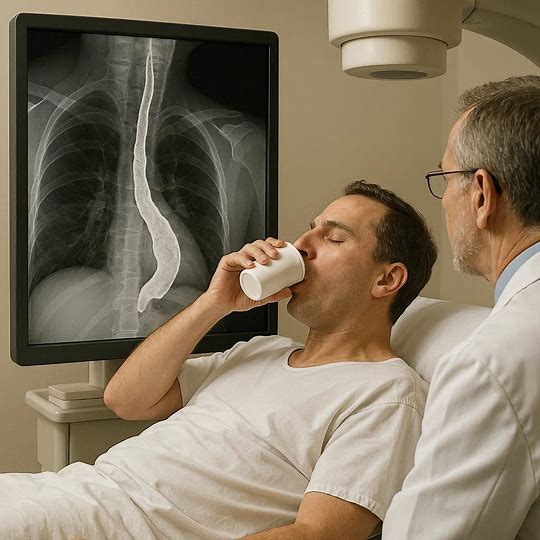
A barium esophagram represents a fluoroscopic examination of the esophagus. The patient swallows a liquid barium sulfate suspension while the radiologist observes the swallowing mechanism in real time. The barium coats the esophageal lining and allows visualization of anatomical structures, motility, and any pathological conditions. This study evaluates dysphagia, gastroesophageal reflux, hiatal hernias, strictures, rings, webs, tumors, and motility disorders.
You may hear interchangeable terms in clinical settings. Barium swallow, esophagram, and esophagography all refer to the same fundamental study. However, the specific technique the radiologist uses directly impacts code selection. Single-contrast studies use thin barium alone. Double-contrast studies introduce gas-producing crystals, effervescent granules, or carbonated beverages to distend the esophagus and provide greater mucosal detail. The ordering physician often does not specify the technique; the radiologist chooses the optimal method based on the clinical indication and patient tolerance.
Clinical Indications That Drive the Exam
Physicians order barium esophagrams for a wide range of symptoms. Dysphagia, or difficulty swallowing, stands as the most frequent reason. Odynophagia, which refers to painful swallowing, represents another critical indicator. Patients with suspected gastroesophageal reflux disease, chronic heartburn, or regurgitation often undergo this study. Other indications include unexplained weight loss with swallowing complaints, globus sensation, and evaluation of known esophageal pathology progression.
Pre-procedural evaluation before anti-reflux surgery or bariatric surgery frequently includes a barium esophagram. Surgeons need anatomical mapping. Post-operative assessment for leak detection after esophageal or gastric surgery also relies heavily on this study. In some cases, the esophagram becomes a complementary exam alongside upper endoscopy. The fluoroscopic study can sometimes detect subtle motility disturbances or small hiatal hernias that the endoscopist might miss, and vice versa.
Single-Contrast Versus Double-Contrast Technique
The distinction between single-contrast and double-contrast technique forms the backbone of CPT code selection. A single-contrast study uses only barium, either thin or thick consistency. The radiologist observes the column of barium passing through the esophagus and looks for gross anatomical defects, strictures, or large masses. This approach often works well for evaluating gross obstruction, high-grade strictures, or severely debilitated patients who cannot cooperate with the double-contrast maneuvers.
A double-contrast study achieves mucosal coating and distention simultaneously. The patient swallows gas-producing crystals or drinks a carbonated solution along with the barium. The radiologist then instructs the patient to hold their breath or perform specific maneuvers to trap the gas in the esophagus. The resulting images display exquisite mucosal detail. Tiny erosions, early cancers, subtle rings, and fine webs become visible. The double-contrast technique demands more patient cooperation and technical skill from the radiologist. In 2026, payers continue to differentiate reimbursement for these two approaches because of the additional work and diagnostic yield.
Clinical Note: Many radiologists document “air-contrast” or “effervescent” in their reports to signal a double-contrast study. Coders must look for these keywords when abstracting the correct CPT code.
Primary CPT Codes for Barium Esophagram in 2026
The American Medical Association maintains the CPT code set and publishes annual updates that take effect January 1st. For 2026, the codes for barium esophagram remain distinct and relatively stable compared to prior years. However, subtle guideline clarifications affect proper usage. The primary codes you must know include:
| CPT Code | Descriptor | Common Name | Key Features |
|---|---|---|---|
| 74220 | Radiologic examination, esophagus, single-contrast | Barium swallow, single-contrast | Single-contrast only; no gas used; evaluation of swallowing function and gross anatomy |
| 74230 | Radiologic examination, swallowing function, with cineradiography/videoradiography | Modified barium swallow with cine | Speech pathology involvement; frame-by-frame analysis; aspiration evaluation |
| 74240 | Radiologic examination, esophagus, double-contrast | Barium swallow, double-contrast (air contrast) | Effervescent agent; mucosal distention; high-resolution mucosal detail |
| 74241 | Radiologic examination, esophagus, double-contrast with supplemental single-contrast | Complete esophagram | Both techniques performed during same encounter; most comprehensive study |
| 74245 | Radiologic examination, esophagus, with contrast, and motility evaluation | Esophagram with motility | Includes evaluation of esophageal motor function; often cine or video recording |
CPT 74220: Single-Contrast Esophagram
CPT code 74220 represents the foundational barium swallow study. The radiologist administers barium and observes passage through the esophagus without gas distention. Spot films or digital captures document the findings. This code applies when the report explicitly describes a single-contrast technique without any mention of effervescent agents, air contrast, or double-contrast views.
Common indications for 74220 include evaluation of high-grade dysphagia where the patient cannot tolerate effervescent agents, assessment of esophageal obstruction, or follow-up of known large lesions. Some payers require documentation of medical necessity for why a double-contrast study was not performed when the ordering physician requested a “barium swallow” generically. Coders should review the report for phrases such as “single-contrast barium esophagram” or “barium swallow without air contrast.” If the report remains silent on the technique, query the radiologist before defaulting to 74220.
CPT 74230: Modified Barium Swallow (Cineradiography/Videoradiography)
Although CPT 74230 includes “swallowing function” in its descriptor, this study differs fundamentally from a standard esophagram. A speech-language pathologist typically performs or co-interprets this exam. The focus centers on the oral, pharyngeal, and upper esophageal phases of swallowing. The team evaluates aspiration risk, laryngeal penetration, and swallowing safety. They test various consistencies of barium and may employ compensatory maneuvers.
This code involves cineradiography or videoradiography, meaning the study is recorded and analyzed frame by frame. In 2026, proper use of 74230 requires a separate report or a clearly documented component within the radiology report that indicates formal swallowing function assessment. Do not report 74230 for a routine esophagram even if the radiologist mentions “swallowing function appeared normal” in passing. This code demands rigorous documentation of oropharyngeal swallowing assessment with therapeutic recommendations.
CPT 74240: Double-Contrast Esophagram
CPT code 74240 covers a dedicated double-contrast barium esophagram. The radiologist administers an effervescent agent to produce gas and uses dense barium for mucosal coating. This technique evaluates subtle mucosal abnormalities such as esophagitis, early Barrett’s esophagus, small ulcers, and early carcinomas. The exam requires upright and recumbent positioning, multiple obliques, and specialized breathing maneuvers.
When the report clearly states “double-contrast” or “air-contrast esophagram,” code 74240 applies. If the radiologist documents using effervescent crystals or granules, this also signals a double-contrast technique. In 2026, payers scrutinize 74240 claims to ensure the report content matches the code descriptor. A brief mention of “air was used” may not suffice; the report should detail the double-contrast views, the quality of mucosal coating, and the anatomical segments visualized. Coders should recognize that 74240 does not bundle a single-contrast component; if both techniques are documented, you need a different code.
CPT 74241: The Complete Double-Contrast Esophagram with Supplemental Single-Contrast
CPT 74241 often creates the most confusion. This code represents the most comprehensive esophagram study. The radiologist performs a double-contrast examination and also obtains dedicated single-contrast views. The single-contrast component may involve a full-column technique in the upright or prone position to evaluate esophageal caliber, distensibility, and hiatal hernia reduction. The combined approach yields maximal diagnostic information.
Coders should report 74241 only when the report explicitly documents both techniques. Look for phrases like “double-contrast esophagram with additional single-contrast views” or “complete barium esophagram including air-contrast and full-column technique.” If the report mentions only double-contrast views, you cannot bill 74241. Some radiologists routinely perform a few swallows of thin barium before the effervescent study. This alone does not justify 74241. The single-contrast component must be a deliberate, separately interpretable portion of the exam. Payers may audit these claims heavily, so documentation must be airtight.
CPT 74245: Esophagram with Motility Evaluation
CPT 74245 deserves special attention in 2026. This code includes esophageal motility assessment during the fluoroscopic study. The radiologist evaluates peristalsis, sphincter function, and esophageal clearance. Often the exam includes multiple barium swallows in the prone oblique position to assess primary peristaltic waves. Some facilities use cineradiography or rapid sequence digital recording to capture motility abnormalities.
The key distinction: CPT 74245 does not reference single or double-contrast technique. The focus is motor function. However, many motility esophagrams incorporate both single and double-contrast components. In such cases, 74245 remains the appropriate standalone code because the motility assessment defines the study. Do not report 74245 alongside 74220 or 74240. If the radiologist evaluates motility as a limited portion of a standard esophagram, and the primary purpose is mucosal evaluation, code the appropriate 74220 series code instead. The ordering diagnosis helps determine primary intent.
Important Reminder: In 2026, CMS and private payers continue to bundle certain esophageal procedures. Always check National Correct Coding Initiative (NCCI) edits before submitting claims with multiple imaging codes.
Comparative Analysis of Barium Esophagram Codes
Making the right code choice demands clear differentiation. The table below provides a side-by-side comparison to help you quickly identify the appropriate CPT for your clinical scenario.
| Feature | 74220 | 74230 | 74240 | 74241 | 74245 |
|---|---|---|---|---|---|
| Contrast Technique | Single-contrast only | Variable consistencies | Double-contrast (air) | Both double and single | Any technique, focus on motility |
| Anatomical Focus | Esophagus primarily | Oral, pharyngeal, upper esophagus | Esophageal mucosa | Complete esophagus | Esophageal motor function |
| Effervescent Agent | Not used | Not required | Required | Required for double-contrast portion | Optional |
| Cineradiography | Not typical | Required | Not typical | Not typical | Often included |
| Primary Interpreter | Radiologist | Speech pathologist + Radiologist | Radiologist | Radiologist | Radiologist |
| Patient Cooperation Level Required | Moderate | High | High | High | Moderate to High |
| Typical Time | 15-20 minutes | 30-45 minutes | 20-30 minutes | 25-35 minutes | 20-30 minutes |
| RVUs (2026 Medicare) | Lower | Moderate | Moderate | Higher | Higher |
How to Choose the Right Code: A Decision Tree
Navigating the options becomes systematic when you follow a logical flow. Ask these questions in order:
- Was the primary purpose to assess swallowing safety, aspiration risk, and oropharyngeal function with a speech pathologist involved?
- If yes: Report CPT 74230. Ensure the report documents swallowing function assessment with frame-by-frame analysis and therapeutic recommendations.
- If no: Continue to question 2.
- Did the radiologist perform an effervescent, air-contrast, or double-contrast examination?
- If yes: Continue to question 3.
- If no: The study qualifies as single-contrast. Review the report for any motility assessment beyond standard observation. If no dedicated motility component exists, report CPT 74220.
- Did the double-contrast study include dedicated supplemental single-contrast views that the radiologist separately documented?
- If yes: Report CPT 74241. The single-contrast views must be intentional, not just the initial swallow before effervescent administration.
- If no: Report CPT 74240 for a purely double-contrast study.
- Does the examination include a dedicated esophageal motility evaluation with multiple positional swallows, peristalsis assessment, or cineradiography for motility?
- If yes: Report CPT 74245, regardless of whether single or double-contrast technique was also used. Motility becomes the primary service.
- If no: Return to the appropriate code from the above decisions.
This framework resolves most coding dilemmas. When documentation remains ambiguous, query the radiologist for clarification rather than assuming. A brief addendum to the report clarifying the technique prevents costly claim denials.
Modifiers Relevant to Barium Esophagram Coding in 2026
Choosing the correct CPT code represents only half the battle. Applying the right modifiers ensures clean claims and appropriate reimbursement. The 2026 modifier landscape includes both professional and technical component designations, as well as modifiers for unique billing circumstances.
Professional Component (Modifier 26) and Technical Component (Modifier TC)
Radiology procedures bifurcate into professional interpretation and technical acquisition. When the radiologist provides only the interpretation service in a facility where they do not own the equipment, append modifier 26 to the CPT code. The hospital or imaging center bills the technical component with modifier TC. When the radiologist owns the equipment and provides both components, no modifier is needed; you bill the global service.
Example 1: A hospital-employed radiologist interprets a double-contrast esophagram performed on hospital equipment. The physician claim: 74240-26. The hospital claim: 74240-TC.
Example 2: An independent imaging center performs and interprets a complete esophagram. The center bills globally: 74241.
Modifier 59: Distinct Procedural Service
Occasionally, a provider performs a barium esophagram on the same day as another upper gastrointestinal procedure. For example, a patient may undergo an esophagram followed by an upper GI series (CPT 74246) because the clinical question extends into the stomach and duodenum. Since NCCI bundles esophagram codes into upper GI codes, you must append modifier 59 to 74220, 74240, or 74241 if the esophagram represents a truly distinct and separately indicated study.
Documentation must clearly demonstrate separate clinical necessity. The medical record should show the esophagram focused on an esophageal complaint while the upper GI addressed a different question, such as gastric ulcer follow-up. Modifier 59 serves as a payer audit trigger, so use it only when supported by distinct notes and separate orders if possible.
Modifier 52: Reduced Services
When the radiologist cannot complete the full intended study due to patient factors, modifier 52 comes into play. Suppose a patient cannot tolerate the effervescent agent during a planned double-contrast esophagram. The radiologist abandons the double-contrast attempt and performs only a single-contrast study. In this case, you could report 74240-52, indicating a reduced double-contrast study. Alternatively, some coders report 74220 since the actual exam performed matches that description. Payer guidance varies, so verify local coverage determinations.
Modifier 53: Discontinued Procedure
Modifier 53 applies when the patient cannot complete any diagnostic-quality portion of the study. If the patient aspirates immediately upon the first barium swallow and the radiologist terminates the exam for safety without obtaining any interpretable images, use modifier 53. This modifier tells the payer that the procedure started but ended prematurely due to extenuating circumstances. The reimbursement will be reduced, but the attempt remains compensable.
Critical Coding Rule: Never use modifier 53 for elective reduction of services. Modifier 53 is reserved for unexpected termination due to patient safety or medical emergency.
Global Period and Reimbursement Considerations for 2026
The Medicare Physician Fee Schedule (MPFS) assigns a global period to most radiology procedures. For barium esophagram codes, the global period is typically XXX, meaning the global concept does not apply or the service has only a professional or technical component. However, understanding the nuances prevents billing errors when esophagrams combine with evaluation and management (E/M) services.
Zero-Day Global or XXX Designation
CPT codes 74220, 74240, and 74241 carry an XXX global indicator in the 2026 MPFS. This means the global package concept, which bundles pre-procedural, intra-procedural, and post-procedural care into a single fee for a defined period, does not apply. You can bill a separately identifiable E/M service on the same day as the esophagram without a modifier if the E/M service meets the criteria for significant, separately identifiable work.
For example, a gastroenterologist sees a new patient in consultation for dysphagia. After the history and physical, the gastroenterologist orders and the radiologist performs a barium esophagram. The gastroenterologist reviews the images with the radiologist and formulates a management plan. In this scenario, the E/M consultation service is separately billable. Append modifier 25 to the E/M code to indicate it was distinct from the procedure.
Facility Versus Non-Facility Payment Rates
Barium esophagrams performed in a hospital outpatient department face different reimbursement rates compared to those in a freestanding imaging center. Under the Hospital Outpatient Prospective Payment System (OPPS), the technical component gets packaged or paid via Ambulatory Payment Classifications (APCs). In 2026, esophagram procedures typically assign to APC 5521 or similar, depending on contrast use.
In the non-facility setting, the practice receives a higher professional component because the payment also covers practice expenses like equipment, supplies, and overhead. This difference explains why independent imaging centers can sustain operations performing these studies while hospital-based radiologists rely on facility fee structure.
Prior Authorization Requirements for 2026
Many commercial payers expanded prior authorization requirements for advanced imaging in recent years. While a basic barium esophagram rarely requires pre-authorization, some plans now include fluoroscopic esophageal studies under radiology benefit management programs. UnitedHealthcare, Aetna, and Anthem policies vary by state and plan design. Always verify benefits before scheduling. Medicare typically does not require prior authorization for barium esophagrams, but local Medicare Administrative Contractors (MACs) may publish specific utilization guidelines.
Comprehensive Billing Scenarios and Case Examples
Concrete examples illuminate the coding principles. Study these scenarios to strengthen your coding accuracy for 2026 claims.
Scenario 1: Routine Double-Contrast Esophagram in a Hospital Setting
A 58-year-old female presents with six months of heartburn and intermittent solid food dysphagia. The ordering physician requests a barium swallow. The radiologist performs an air-contrast esophagram using effervescent granules. The report describes the esophageal mucosa in detail, noting no erosions, rings, or masses. The radiologist documents normal peristalsis without formal motility analysis. No single-contrast views obtained beyond the initial swallow.
Correct Coding: 74240-26 for the radiologist interpretation. The hospital bills 74240-TC.
Rationale: The exam was double-contrast only. No dedicated motility component, so 74245 does not apply. No supplemental single-contrast views, so 74241 does not apply.
Scenario 2: Complete Esophagram with Both Techniques
A 62-year-old male with known Barrett’s esophagus requires surveillance and has new dysphagia symptoms. The radiologist performs a comprehensive study. After the double-contrast views show good mucosal detail, the radiologist obtains dedicated full-column single-contrast images in the prone oblique position to evaluate esophageal distensibility and hiatal hernia reduction. The report has separate sections describing the air-contrast findings and the full-column findings.
Correct Coding: 74241-26 for the radiologist. The facility bills 74241-TC.
Rationale: The report clearly documents both techniques as deliberate, separately interpretable components. The clinical indication supports the comprehensive approach.
Scenario 3: Modified Barium Swallow with Speech Pathology
A 74-year-old male with Parkinson’s disease and recurrent pneumonia undergoes a videofluoroscopic swallowing evaluation. The speech-language pathologist administers various barium consistencies—thin liquid, nectar-thick, and pudding. The radiologist operates the fluoroscopy while the speech pathologist assesses aspiration, penetration, and response to compensatory strategies. A joint report details the findings and recommends nectar-thick liquids and a chin-tuck maneuver.
Correct Coding: 74230. Both the radiologist and speech pathologist may bill the professional component, depending on payer policies. Some payers require the speech pathologist to use their own CPT codes for the evaluation. Verify local payer rules.
Rationale: The study focused on oropharyngeal swallowing function with cineradiography. The speech pathologist performed the assessment. The joint interpretation meets criteria for 74230.
Scenario 4: Motility-Focused Esophagram
A 45-year-old female with suspected diffuse esophageal spasm undergoes an esophagram. The radiologist administers barium and observes multiple recumbent swallows. The fluoroscopy records intermittent non-peristaltic contractions and corkscrew esophagus morphology. The report provides detailed motility observations. The radiologist does not use effervescent agents because the primary question is motor function.
Correct Coding: 74245-26 for the professional component.
Rationale: The study centered on motility evaluation. Single or double-contrast technique becomes secondary to the motor assessment. 74245 is the appropriate standalone code.
Scenario 5: Discontinued Study Due to Aspiration
A 91-year-old female with severe dysphagia attempts a barium esophagram. On the first swallow of thin barium, she aspirates significantly. The radiologist immediately stops the exam. No diagnostic images of the esophagus are obtained. The radiologist documents the event and recommends a modified barium swallow under speech pathology supervision.
Correct Coding: 74220-53. Use the code for the intended procedure appended with modifier 53.
Rationale: The procedure commenced but terminated for patient safety before diagnostic images were obtained. Modifier 53 indicates a discontinued procedure.
Key Documentation Elements That Support Proper Coding
Auditors consistently identify documentation deficiencies as the leading cause of radiology coding denials. To withstand scrutiny, the radiology report must contain specific elements that justify the chosen CPT code.
Essential Report Components for Double-Contrast Studies (74240, 74241)
The radiologist should explicitly state the technique used. Phrases such as “air-contrast barium esophagram” or “double-contrast technique using effervescent crystals” remove ambiguity. The report should describe the degree of mucosal coating and distention achieved. If the esophagus did not distend adequately and the double-contrast component yielded suboptimal views, the radiologist should document this limitation.
For 74241, the report must delineate the double-contrast portion from the supplemental single-contrast views. Separate paragraphs or labeled sections work best. The indication should support the medical necessity of both techniques. For instance, “Given the history of Barrett’s surveillance and dysphagia, both air-contrast mucosal views and full-column distention views were obtained.”
Essential Report Components for Motility Studies (74245)
Documentation for 74245 must demonstrate a dedicated motility assessment beyond simple observation. The report should include the number of swallows evaluated, patient position (typically prone oblique), and specific findings about primary peristalsis, secondary contractions, and lower esophageal sphincter function. Statements like “esophageal motility evaluation reveals intact primary peristaltic wave in 5 of 5 prone swallows” provide the necessary detail.
If the radiologist uses cineradiography for motility analysis, the report should note this. Frame-by-frame review or slow-motion analysis of recorded images supports the intensity of the 74245 service.
Documentation Traps That Trigger Audits
Vague reports cause coding errors and denials. Avoid generic statements like “barium swallow performed.” This tells the coder nothing about the technique. Avoid the phrase “air contrast was used to evaluate the mucosa” without further elaboration if you intend to bill 74241; this alone does not demonstrate the separate single-contrast component.
Another trap involves “performed and interpreted by” attestations without technique descriptions. The presence of an effervescent agent on the medication administration record can support double-contrast coding, but the radiology report must still describe what the radiologist did. When coders find discrepancies between the radiologist’s report and the medication record, they should query.
Coverage Policies and Medical Necessity for 2026
Payers have refined their barium esophagram coverage criteria for 2026. Understanding these policies helps practices obtain pre-authorization and defend claim legitimacy.
Medicare Coverage Guidelines
Medicare generally considers a barium esophagram medically necessary when the patient presents with symptoms or signs that suggest esophageal pathology. Dysphagia, odynophagia, refractory reflux, suspected esophageal stricture, and evaluation of known esophageal disease all typically satisfy medical necessity. Medicare does not cover screening esophagrams in asymptomatic patients without risk factors.
Local Coverage Determinations (LCDs) from individual MACs may specify which indications they consider reasonable and necessary. For example, Noridian’s LCD for esophageal studies might differ slightly from First Coast’s. Review your MAC’s current LCD before challenging a denial. In 2026, several MACs updated their LCDs to clarify the role of barium studies versus esophageal manometry and upper endoscopy.
Commercial Payer Medical Policies
Private insurers often follow evidence-based guidelines from organizations like the American College of Radiology (ACR) and the American Gastroenterological Association (AGA). Many commercial payers consider barium esophagram a first-line test for dysphagia when endoscopy is not immediately available or contraindicated. Some plans require a trial of proton pump inhibitor therapy before approving an esophagram for reflux evaluation.
In 2026, several major carriers aligned their policies with the ACR Appropriateness Criteria. A barium esophagram earns a “usually appropriate” rating for dysphagia evaluation, solid food impaction history, and post-operative esophageal assessment. Coders and utilization review staff should reference the ACR criteria in appeal letters when payers question medical necessity.
The Radiologist’s Perspective: Why Technique Matters
Radiologists train extensively to select the optimal imaging technique for each clinical scenario. The coding system compensates them appropriately for the complexity and diagnostic yield of their chosen method. A single-contrast study is faster and requires less patient cooperation, but provides limited mucosal detail. The double-contrast study yields far superior mucosal visualization but demands technical skill and patient coordination.
The combined 74241 study represents the most time-consuming and thorough option. Radiologists who routinely perform both components on appropriate patients are delivering higher-value care and should code accordingly. Similarly, the motility study (74245) requires additional observation time and often cineradiography equipment. The reimbursement acknowledges this extra work.
Coders who understand the clinical reasoning behind technique selection become better auditors and educators. When a radiologist habitually bills 74220 despite having effervescent agents available and documented, the coder should investigate. Under-coding creates lost revenue, while over-coding invites audits. Accuracy depends on collaboration between the radiology team and the billing department.
Common Billing Errors and How to Avoid Them in 2026
Even experienced coders stumble on barium esophagram claims. Awareness of frequent errors allows you to build preventive workflows.
Error 1: Defaulting to CPT 74220
Coders who see “barium swallow” in the chart and automatically select 74220 without reading the full report commit a costly mistake. Many radiologists perform double-contrast or motility studies but the coder misses the technique details. Solution: Train coding staff to search the report for technique keywords: effervescent, air-contrast, double-contrast, motility evaluation, peristalsis assessment. Make these terms part of your coding checklist.
Error 2: Reporting CPT 74241 Without Documentation of Both Techniques
Some coders believe any esophagram that uses effervescent qualifies as 74241. This is incorrect. CPT 74241 requires both double-contrast and supplemental single-contrast. Solution: Review the report carefully. If the radiologist mentions only air-contrast views without a separate full-column component, assign 74240. Create a documentation tip sheet for radiologists explaining what constitutes a separately reportable single-contrast component.
Error 3: Confusing CPT 74230 with Standard Esophagrams
Speech pathology involvement defines 74230, not merely video recording of a standard esophagram. Coders sometimes see “videofluoroscopic” in a radiologist’s report and erroneously select 74230. Solution: Verify the presence of a speech-language pathologist report or co-signature. If absent, use the appropriate radiology esophagram code. Confirm that the exam assessed oral and pharyngeal swallowing phases with therapeutic recommendations.
Error 4: Unbundling Motility from Esophagram
Coders may try to report 74245 along with 74240 or 74241 when the radiologist evaluates motility during a double-contrast study. NCCI edits bundle these combinations. Solution: When motility is the primary focus, report 74245 alone. When mucosal evaluation is primary with incidental motility observation, report the appropriate esophagram code without 74245.
Error 5: Modifier Misapplication on Discontinued Studies
Reporting 74240-52 for a study that never began due to patient refusal is incorrect. Solution: Use modifier 53 when the procedure starts but ends prematurely. Use modifier 52 when the radiologist completes a reduced version of the intended service.
Coding Tip: Create a monthly audit process. Pull all barium esophagram claims from the prior month and cross-reference the coding with the radiology reports. This retroactive review catches patterns before payers do.
2026 Coding Updates and Regulatory Changes
Each year brings subtle shifts that affect radiology coding. For 2026, several changes and continuations deserve attention.
CPT Code Set Stability for Esophagram Codes
The AMA did not introduce new CPT codes for barium esophagram in 2026, nor did they delete existing codes. The descriptors for 74220, 74230, 74240, 74241, and 74245 remain unchanged from 2025. This stability allows coders to focus on documentation nuances rather than learning new code numbers. However, the AMA did update the introductory guidelines for the Radiology section, emphasizing that when both diagnostic and therapeutic procedures occur in the same session, coders should apply specific sequencing rules.
NCCI Edits Version 32.0
The National Correct Coding Initiative released version 32.0 effective January 1, 2026. This version maintains the longstanding edits that bundle 74220 into 74240 and 74241. You cannot report a single-contrast esophagram alongside a double-contrast study. The comprehensive code 74241 includes both components. Similarly, 74230 (modified barium swallow) remains bundled with the standard esophagram codes. The NCCI edits also confirm that 74245 (motility) is mutually exclusive with the standard esophagram codes.
Telehealth and Remote Interpretation Considerations
Although fluoroscopic esophagrams require in-person technical acquisition, the professional interpretation can occur remotely. The 2026 Medicare telehealth policies continue to recognize teleradiology as a valid service delivery model. Radiologists reading from home or a remote workstation bill the professional component as usual. No special telehealth modifier is needed for the professional component of imaging services. The technical component, however, must occur at the patient’s physical location.
Payment Rate Adjustments
The 2026 MPFS conversion factor adjusted slightly compared to 2025. While the relative value units (RVUs) for esophagram codes remained stable, the final reimbursement depends on the conversion factor and geographic practice cost indices. Practices should use their local MAC fee schedule lookup tool to obtain exact 2026 rates. Hospital outpatient rates under OPPS also changed; esophagrams generally remain in lower-paying APCs compared to cross-sectional imaging, but the comprehensive nature of 74241 commands a higher payment than 74220.
Building a Coding Compliance Program for Esophageal Studies
Healthcare organizations that perform fluoroscopic esophageal studies should implement structured compliance measures. A reactive approach leads to payer takebacks and reputational damage. A proactive compliance program identifies risks and corrects them before claims go out.
Step 1: Standardize Radiologist Report Templates
Create report templates that guide radiologists to document the specific technique used. For example, a drop-down menu in the voice recognition system can offer choices: “Single-contrast esophagram,” “Double-contrast esophagram,” “Complete esophagram (double-contrast with supplemental single-contrast),” and “Esophagram with dedicated motility evaluation.” When the radiologist selects an option, the template populates a standardized technique paragraph and a reminder to include essential details. This engineering approach reduces documentation variability and coding guesswork.
Step 2: Conduct Regular Education Sessions
Coders and radiologists should meet quarterly to review challenging cases and coding updates. These sessions foster mutual understanding. Radiologists learn what coders look for in reports, and coders learn why certain exams take longer or require specific terminology. Use real, de-identified examples from your practice. Celebrate accurately coded cases and analyze denials as learning opportunities, not punitive events.
Step 3: Perform Pre-Bill Audits on High-Risk Codes
CPT 74241 and 74245 represent higher reimbursement and, consequently, higher audit risk. Set a policy requiring a second-level review of all claims with these codes before submission. The reviewing coder confirms that documentation supports the higher-level service. If a report lacks necessary detail, return it to the radiologist for addendum before billing. This step eliminates the majority of overpayment scenarios.
Step 4: Monitor Payer Denial Trends
Track denials by payer, code, and reason. If a particular commercial payer consistently denies 74241 as not medically necessary while other payers approve it, analyze their policy. You may need to adjust your authorization workflow or prepare appeal templates specific to that payer. Share trends with the clinical team to adjust documentation patterns. A quarterly denial analysis meeting keeps everyone informed and engaged.
Step 5: Engage External Auditors
Annually, hire an external radiology coding auditor to review a random sample of esophagram claims. External reviewers bring fresh eyes and current knowledge of national benchmarks. They might identify under-coding patterns where radiologists routinely perform double-contrast studies but coders select 74220. Correcting under-coding boosts legitimate revenue without any increase in service volume.
Billing for Special Populations and Unique Scenarios
Barium esophagram coding contains nuances for specific patient groups and clinical contexts. Understanding these subtleties ensures accurate billing and appropriate reimbursement.
Pediatric Barium Esophagram
Children undergoing barium swallow studies present unique coding considerations. The same CPT codes apply (74220, 74240, etc.), but the technical challenges and safety measures differ. Pediatric patients may require immobilization devices, specialized barium preparations, and modified radiation exposure parameters. The technical component reimbursement through the hospital OPPS or freestanding center may not fully capture these additional costs, but no separate pediatric-specific CPT code exists. Facilities must absorb the added expense or negotiate separate carve-outs with commercial payers.
Radiologists performing pediatric esophagrams should document developmental considerations that affect the technique. For example, a toddler may not cooperate with effervescent agents, necessitating a single-contrast study even though a double-contrast might be medically preferable. This documentation protects the coder when reporting 74220 instead of 74240.
Geriatric and Debilitated Patients
Elderly patients with multiple comorbidities often cannot tolerate the positions and maneuvers required for optimal double-contrast studies. The radiologist must adapt and often performs a single-contrast exam. Coders should not pressure radiologists to “up-code” for these patients. The medical record should clearly state the reason for the modified technique. If the patient’s clinical condition precludes a double-contrast study, 74220 accurately reflects the service provided.
Post-Surgical Esophagram for Leak Evaluation
After esophageal resection, gastric pull-up, or bariatric surgery, surgeons frequently order a barium esophagram to evaluate for anastomotic leak before initiating oral intake. These studies often use water-soluble contrast initially (e.g., Gastrografin) followed by thin barium if no leak is seen. The CPT code set does not differentiate based on contrast agent type. The study codes based on the technique performed. If the radiologist performs single-contrast views only, report 74220. If they obtain double-contrast views (uncommon in immediate post-operative leak checks), report the appropriate code.
Critical note: When the study uses water-soluble contrast entirely and no barium, some coders question whether a “barium esophagram” code applies. The official CPT descriptors do not require barium specifically; they describe radiologic examination of the esophagus. However, verify payer preferences. Some payers expect the contrast agent to be documented. Billing based on technique rather than contrast type remains the correct approach.
Bariatric Patients: Special Considerations
Morbidly obese patients present technical challenges for esophagrams. Equipment weight limits, image quality through larger body habitus, and difficulties with positioning all affect the exam. Radiologists often adjust technique but use the same codes. Some payers require documentation of medical necessity for repeat or frequent esophagrams in bariatric patients, especially pre-operatively and post-operatively.
The Role of Artificial Intelligence and Automated Coding Tools in 2026
Technology increasingly influences radiology coding. Computer-assisted coding (CAC) and artificial intelligence (AI) tools promise greater accuracy and efficiency. However, for barium esophagram coding, human oversight remains essential.
AI-Assisted Report Analysis
Some radiology practices now deploy natural language processing (NLP) tools that scan reports and suggest CPT codes. These tools can identify keywords like “effervescent” or “double-contrast” and flag reports for 74240 or 74241. The technology reduces the likelihood of a coder overlooking technique documentation. However, AI tools struggle with nuance. A report that states “double-contrast esophagram; single-contrast view also obtained to assess distensibility” might confuse an AI model that is not trained on your specific report templates.
Human coders must validate AI suggestions. Treat AI as a screening tool that highlights reports needing attention rather than a replacement for certified coders. The responsibility for accurate code selection ultimately rests with the human coder and the billing compliance officer.
Automated Edits and Payer-Specific Rules Engines
Modern billing software incorporates payer-specific rules engines that automatically append modifiers or flag claims for review. For instance, if a coder attempts to bill 74241 and 74220 together, the system blocks the claim and alerts the coder to the NCCI edit. These automated guardrails prevent many billing errors. Invest time in customizing your billing software’s rules library for your practice’s esophagram patterns.
The Future of Fluoroscopic Coding
As AI fluoroscopy systems that automatically track and measure esophageal motility gain wider adoption, the distinction between a standard esophagram and a motility study may blur. In the future, the AMA may introduce new codes for AI-assisted quantitative motility assessment. For 2026, however, the existing codes and human judgment remain the standard. Coders should stay informed through the AMA CPT website, Radiology Business Management Association (RBMA) resources, and the American College of Radiology’s coding source.
Preparing Your Practice for Potential Audits
Audits from Medicare Recovery Audit Contractors (RACs), Unified Program Integrity Contractors (UPICs), and commercial payers target radiology services. Barium esophagram coding, particularly 74241 and 74245, receives audit attention due to the higher reimbursement. Preparing now protects your revenue.
Document Retention and Retrieval
Ensure your practice retains complete medical records, including radiology reports, orders, and medication administration records, for the required period (typically 7-10 years). Organize records so you can quickly pull all esophagram cases by CPT code, date, or referring physician. If an auditor requests 30 records for 74241 claims, a well-organized document management system allows prompt response and demonstrates professionalism.
Developing a Response Protocol
Designate an audit response team before any audit letter arrives. This team should include a lead coder, a compliance officer, and a radiologist champion. When an audit request comes, the team meets to review the scope, timeline, and response strategy. They pull records, analyze the coding against documentation, and prepare a response package. If overpayments exist, self-disclosure may reduce penalties. If the coding was correct, prepare a robust defense with references to CPT guidelines, LCDs, and clinical documentation.
Proactive Self-Auditing
Don’t wait for a payer to find your errors. Conduct a self-audit of at least 20-30 esophagram claims across different codes and radiologists. Use an independent coding consultant or have your most experienced coder conduct the review with a structured audit tool. Report findings to leadership and implement corrective actions. Document the self-audit process; demonstrating a proactive compliance program can mitigate penalties if a payer later identifies issues.
Training New Coders on Barium Esophagram Coding
Welcoming new coding staff to your organization requires a structured training program. Barium esophagram coding offers an excellent vehicle for teaching fundamental radiology coding principles, including technique differentiation, modifier use, and documentation analysis.
Week One: Anatomy and Clinical Foundations
Start with esophageal anatomy and the swallowing mechanism. Use videos of actual fluoroscopic esophagrams so new coders see the difference between single-contrast and double-contrast studies visually. Explain why a radiologist chooses one technique over another. When coders understand the clinical “why,” they recognize it in the report.
Week Two: Code Set Memorization and Guideline Review
Introduce the CPT codes, RVUs, and global periods. Review the official CPT guidelines for the radiology section. Teach the NCCI edits that affect esophageal studies. Provide a laminated quick-reference card showing the decision tree for code selection.
Week Three: Hands-On Coding with Real Cases
Provide 50 de-identified esophagram reports from your practice. Have the new coder assign codes and compare them to the correct codes. Discuss discrepancies. This exercise builds pattern recognition and confidence. Include cases with ambiguous documentation and teach the query process.
Week Four: Payer Policies and Compliance
Review your top payers’ medical policies. Discuss prior authorization procedures. Explain the audit response process. Emphasize ethical coding and the consequences of misrepresentation. New coders should understand they are the organization’s front line of compliance.
Ongoing mentorship from senior coders solidifies this training. Regular check-ins during the first six months help catch misunderstandings before they become habits.
Comparative Table: Billing Pathways by Payer Type
Different payers process esophagram claims through various pathways. Understanding these differences streamlines billing.
| Payer Category | Typical Authorization Required | Global Billing Allowed | Modifier 26/TC Distinction Required | Notes |
|---|---|---|---|---|
| Medicare Part B | No prior auth for diagnostic | Yes | Yes, when professional and technical are separate entities | Follow MPFS and NCCI; LCD applies |
| Medicare Advantage | Varies by plan | Depends on plan | Yes | Plans may follow Medicare LCD or impose additional restrictions |
| Medicaid (State) | Varies by state | Varies | Yes, often | Fee-for-service vs. managed care pathways differ |
| Commercial PPO | Often for 74241, 74245 | Yes | Depends on contract | Obtain auth for higher-paying codes |
| Commercial HMO | Frequently | Often capitated | Varies | May require referral from PCP |
| Workers’ Compensation | Usually not required | State rules apply | Depends on state | Requires separate documentation of work-relatedness |
| TRICARE | Not typically for diagnostic | Yes | Yes | Follows Medicare coding rules generally |
| VA Community Care | Required via community care network | Yes | Depends on local VA policy | Pre-approval essential |
This table reveals the diversity of billing pathways. A centralized billing team cannot apply the same rules to all claims. Payer-specific expertise is essential.
Integrating Esophagram Coding with Electronic Health Records
Modern electronic health records (EHR) and practice management systems offer features that streamline radiology coding. Leveraging these tools reduces manual effort and errors.
Structured Reporting and Discrete Data Fields
EHR systems with structured radiology reporting allow the radiologist to select the technique from a defined list. This selection becomes a discrete data field that the billing system can map directly to a CPT code. For example, when the radiologist selects “Complete esophagram (double-contrast with single-contrast supplement),” the system auto-populates 74241 on the billing side, subject to coder review. This approach eliminates free-text ambiguity.
Integrating Charge Capture at Interpretation Time
Many Picture Archiving and Communication Systems (PACS) integrate with billing platforms. When the radiologist signs the final report, they also approve or select the billing code. This contemporaneous charge capture leverages the radiologist’s memory of the exact procedure. Coders then review the charges for consistency with the report before claim submission. This two-step process combines clinical accuracy with coding expertise.
Alert Systems for Missing Documentation
Configure the EHR to trigger alerts when a radiology report lacks expected components based on the assigned CPT code. For instance, if a coder assigns 74241 but the report does not mention single-contrast views anywhere, the system flags the case for review. These proactive alerts intercept documentation gaps before the claim leaves the building.
Case Law and Regulatory Actions Relevant to Radiology Coding
Understanding enforcement actions helps coding professionals appreciate the consequences of inaccurate claims.
False Claims Act and Radiology Billing
The False Claims Act (FCA) prohibits knowingly submitting false claims to the federal government. Several high-profile cases involved radiology practices systematically up-coding imaging studies. For example, a practice that bills 74241 for every esophagram regardless of technique risks FCA liability. Settlements often involve multi-million dollar repayments and corporate integrity agreements requiring years of external monitoring.
Office of Inspector General Work Plan
The Department of Health and Human Services Office of Inspector General (OIG) periodically includes radiology services in its Work Plan. In recent years, the OIG has examined whether Medicare payments for imaging services match documentation. Barium esophagrams have not been a specific OIG focus, but general principles of documentation, medical necessity, and coding accuracy apply universally. Practices should review the annual OIG Work Plan to identify new areas of scrutiny.
Corporate Integrity Agreements
Radiology groups that settle fraud allegations often enter corporate integrity agreements (CIAs). These agreements mandate compliance programs, annual training, external audits, and reporting obligations. The cost of a CIA far exceeds the expense of a robust proactive compliance program. Wise practices invest in compliance on the front end.
Practical Tools and Checklists for Coders
Provide your coding team with practical tools that enhance accuracy and speed.
Barium Esophagram Coding Checklist
Before submitting a claim, verify these items:
- The radiology report is signed and finalized.
- The report specifies the technique (single-contrast, double-contrast, both, or motility-focused).
- If billing 74241, both double-contrast and supplemental single-contrast views are documented.
- If billing 74230, a speech pathologist performed or co-interpreted the oropharyngeal swallowing assessment.
- If billing 74245, a dedicated motility evaluation beyond standard observation is documented.
- The ordering diagnosis supports medical necessity per LCD or payer policy.
- Appropriate modifiers (26, TC, 53, 52, 59) are appended based on the billing scenario.
- NCCI edits are checked for any other same-day imaging procedures.
- Prior authorization, if required, is obtained and documented.
- The claim accurately reflects the date of service, place of service, and rendering provider NPI.
This checklist reduces oversight errors and serves as a training tool for new coders.
Quick-Reference Keyword List
Train coders to scan reports for these terms:
- Double-contrast indicators: effervescent, air-contrast, double-contrast, gas distention, carbon dioxide crystals, carbonated
- Single-contrast indicators: single-contrast, full-column, barium without gas, single barium
- Motility indicators: peristalsis evaluation, motility assessment, motor function, primary peristaltic wave, corkscrew, esophageal spasm, prone oblique swallows
- Modified barium swallow indicators: speech-language pathology, SLP, aspiration assessment, penetration, oral phase, pharyngeal phase, compensatory strategies, chin tuck
These keywords guide initial code selection but always verify against the full report context.
Looking Beyond 2026: Future Trends in Esophageal Imaging Coding
The coding landscape never stands still. Anticipating future trends helps practices prepare for changes beyond 2026.
Potential for Revised Esophageal Motility Codes
As high-resolution esophageal manometry and impedance testing become more prevalent, traditional fluoroscopic motility studies may decline. However, the barium esophagram remains valuable for anatomical correlation. Future CPT updates may refine the coding for motility evaluation, possibly separating cine-based motility from standard observation. Coders should watch for CPT editorial panel actions regarding esophageal studies.
Increased Payer Focus on Appropriateness
Payers increasingly adopt clinical decision support mechanisms that require ordering providers to consult appropriateness criteria before ordering imaging. The Protecting Access to Medicare Act (PAMA) mandates appropriate use criteria consultation for advanced imaging. While diagnostic fluoroscopy is not yet included, the trend points toward broader application. Barium esophagram ordering may eventually require appropriateness documentation through a qualified clinical decision support mechanism.
Value-Based Reimbursement and Bundled Payments
The shift from fee-for-service to value-based care may eventually affect esophagram coding. Under bundled payment models, the esophagram may become part of a larger episode of care for dysphagia or reflux disease. Coders and billing professionals should understand alternative payment models and how they affect per-claim coding. The fee-for-service CPT system remains dominant in 2026, but the industry direction is clear.
Additional Resources for Radiology Coders
Continuous learning keeps your coding skills sharp. Bookmark these resources for ongoing reference:
- American Medical Association CPT Professional Edition: The definitive source for CPT codes and guidelines. Available annually.
- American College of Radiology (ACR) Radiology Coding Source: Offers articles, webinars, and coding updates specific to radiology. www.acr.org
- Radiology Business Management Association (RBMA): Provides coding education, benchmarking data, and a community of radiology business professionals. www.rbma.org
- CMS Medicare Physician Fee Schedule Lookup Tool: Essential for verifying 2026 RVUs and payment rates for your locality.
- National Correct Coding Initiative Edits: Available on the CMS website; updated quarterly.
- Local Medicare Administrative Contractor (MAC) Websites: Your primary source for LCDs, coverage policies, and local billing guidance.
Conclusion
The CPT code for barium esophagram in 2026 requires precise differentiation among five primary codes, each representing a distinct clinical service level from single-contrast studies to comprehensive motility evaluations. Successful coding depends on meticulous documentation of technique, careful modifier application, and robust understanding of payer-specific requirements that ultimately determine claim approval and reimbursement.
Organizations that invest in coder education, radiologist collaboration, and proactive compliance auditing will navigate 2026 with confidence, avoiding the audit penalties and revenue leakage that plague unprepared practices. By treating coding accuracy as a clinical partnership rather than an administrative chore, you ensure that patients receive appropriate coverage and your practice captures every legitimate dollar for the vital diagnostic services you provide.
Frequently Asked Questions (FAQ)
1. What is the primary CPT code for a standard barium esophagram in 2026?
The primary CPT codes are 74220 for single-contrast studies and 74240 for double-contrast studies. The choice depends on whether the radiologist used effervescent gas to distend the esophagus.
2. When should I use CPT 74241 instead of 74240?
Use CPT 74241 when the radiologist performs a double-contrast esophagram and also obtains deliberate, separately documented single-contrast views. Both techniques must be clearly described in the radiology report.
3. Does CPT 74245 include contrast technique requirements?
No. CPT 74245 focuses on esophageal motility evaluation regardless of whether single or double-contrast technique is used. The report must document a dedicated motility assessment, not just casual observation.
4. Can I bill CPT 74230 if a radiologist records the esophagram on video?
Not necessarily. CPT 74230 requires formal swallowing function assessment typically performed with a speech-language pathologist. Simple video recording of a standard esophagram does not qualify.
5. What modifier should I use when a barium esophagram is discontinued due to patient safety?
Use modifier 53 to indicate a discontinued procedure. This applies when the procedure starts but cannot be completed due to circumstances threatening patient well-being.
6. Is prior authorization required for barium esophagram in 2026?
Authorization requirements vary by payer. Medicare rarely requires it, but commercial payers may require pre-authorization for higher-level codes like 74241 and 74245. Always verify benefits.
7. How does NCCI affect billing for esophagram codes?
NCCI edits bundle standard esophagram codes (74220, 74240) into comprehensive codes (74241) and bundle motility (74245) with standard esophagrams. You cannot report these combinations separately on the same date.
Additional Resource:
For the most current CPT coding guidelines and official descriptors, visit the American Medical Association website: https://www.ama-assn.org/practice-management/cpt
Disclaimer: This article provides general coding information based on publicly available 2026 CPT guidelines and Medicare policies. It does not constitute legal advice or payer-specific billing guidance. Always verify coding with official source documents and consult your organization’s compliance officer or legal counsel for specific billing questions. Coding rules and payer policies may change after publication.