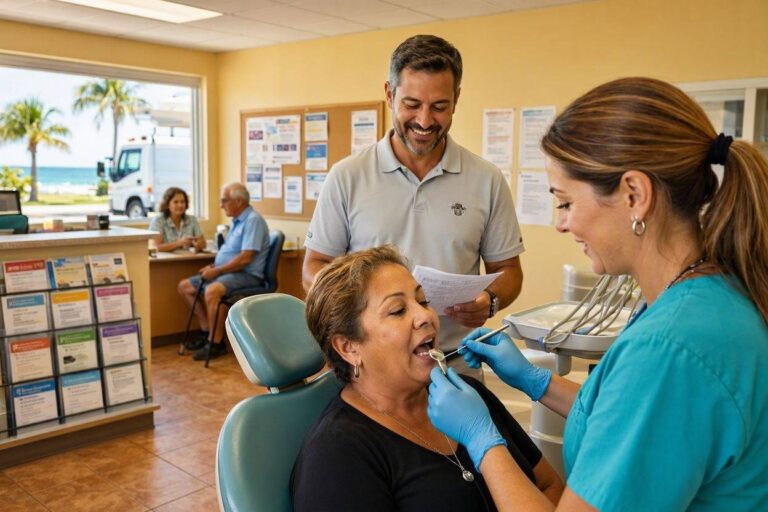
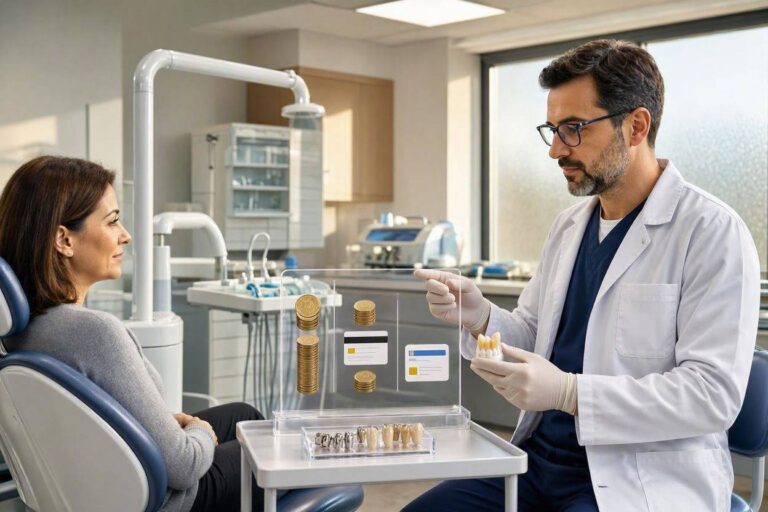
The yearly dental appointment is the cornerstone of oral health maintenance. It is a predictable, routine expense that, when managed properly, prevents far larger and more painful dental bills. But the cost of this visit varies widely based on what the appointment includes, where you live, and whether you have insurance. This guide provides an exhaustive breakdown of the true yearly dental appointment cost. We will separate the components of the recall visit, compare insured versus uninsured pricing, and reveal how the fee differs for patients with special periodontal needs. You will finish with a precise, realistic budget for your annual preventive care.

The Components of a Standard Yearly Dental Appointment
A “yearly appointment” is not a single procedure. It is a bundle of distinct services, each with its own ADA code and fee. Understanding each component allows you to read your treatment plan and bill with clarity.
The Periodic Oral Evaluation (D0120)
This is the dentist’s examination of an established patient. The dentist reviews your medical history, performs an oral cancer screening, examines each tooth for decay and fracture, evaluates existing restorations, checks the gums for signs of disease, and assesses your occlusion. This is the cognitive core of the visit. Without this exam, the cleaning and X-rays lack clinical context.
The Prophylaxis (D1110)
Commonly called a “cleaning,” a dental prophylaxis is the removal of plaque, calculus (tartar), and stain from the tooth surfaces above the gumline. The hygienist uses hand instruments and an ultrasonic scaler, then polishes the teeth with a gritty paste. This service is coded D1110 for an adult and D1120 for a child.
The Bitewing Radiographs (D0274)
Bitewing X-rays show the crowns of the upper and lower teeth in a single image, revealing decay between teeth and bone levels. A set of four bitewing films is the standard annual diagnostic image for patients with a history of cavities. The ADA code D0274 refers to four bitewing images. Some patients may only require two bitewings (D0272) if their mouth is small or their decay risk is exceptionally low.
The Fluoride Treatment (D1206 or D1208)
A professional topical fluoride varnish or gel application strengthens enamel and inhibits decay. This is a preventive service separate from the cleaning. It is most commonly covered for children, but many adult plans now include it, and uninsured adults can request it.
Cost of the Yearly Appointment Without Insurance
The following table presents the unbundled cash price for each component, along with the total bundled cost. These figures reflect national average UCR fees.
| Component | ADA Code | Cash Price Range |
|---|---|---|
| Periodic Oral Exam | D0120 | $50 – $90 |
| Adult Prophylaxis | D1110 | $100 – $180 |
| Bitewing X-Rays (4 Films) | D0274 | $60 – $100 |
| Topical Fluoride Varnish | D1206 | $25 – $50 |
| Total Yearly Appointment (Average) | $235 – $420 |
For a child’s appointment, substituting a child prophylaxis (D1120, $60 – $110) and a child exam (D0120, $45 – $80), the total ranges from $165 to $290.
The Practice Membership Plan Price
For uninsured patients, the yearly cost is substantially lower when prepaid through an in-house membership plan. A typical plan charges $300 to $400 annually and includes the exam, cleaning, bitewings, and fluoride. The plan effectively reduces the per-visit cost to the membership fee, which is often less than the unbundled UCR total. Additional restorative services receive a discount.
Cost of the Yearly Appointment With Dental Insurance
Dental insurance is designed to cover the yearly preventive appointment at 100%. This is the financial core of the 100-80-50 benefit model.
The $0 Preventive Visit
Under a standard PPO plan, a patient with in-network benefits pays zero dollars out of pocket for the periodic exam, prophylaxis, and bitewing X-rays. The plan does not apply a deductible to preventive services. The patient also does not pay a copay. The visit is fully covered. This is the most powerful incentive to maintain a dental insurance plan.
Frequency Limitations and When the Bill Appears
The insurer covers these services at a defined frequency. The standard limitation is two periodic exams and two cleanings per calendar year. Bitewing X-rays are covered once per calendar year, sometimes once every 12 or 18 months depending on the plan. A full mouth series is covered once every 36 to 60 months.
If you schedule a third cleaning in a calendar year because your gums need more attention, that third visit will not be covered at 100%. The claim will deny, or the plan will pay at a lower level, and you will receive a bill. The same principle applies if you return for bitewing X-rays six months after your last set. The frequency limitation triggers patient responsibility.
The Scaling and Root Planing Disruption
A patient with gum disease does not receive a standard prophylaxis. The appropriate treatment is scaling and root planing (SRP), followed by periodontal maintenance. A patient under periodontal maintenance (D4910) sees the hygienist three to four times per year. These appointments are not preventive; they are therapeutic. The plan covers them at 80% under the basic services tier, subject to the deductible. The yearly cost for a periodontal patient’s maintenance is:
| Component | ADA Code | Allowed Amount | Insurance Pays (80%) | Patient Pays |
|---|---|---|---|---|
| Periodontal Maintenance | D4910 | $140 – $220 | $112 – $176 | $28 – $44 per visit |
| Annual Total (4 visits) | $448 – $704 | $112 – $176 |
Note: The patient pays this amount even with excellent PPO insurance, plus the cost of any periodic exam that is billed separately.
The New Patient vs. Established Patient Distinction
A patient’s first visit to a dental office is not a “yearly appointment.” It is a comprehensive new patient appointment. The codes and fees differ.
| Component | ADA Code | Cash Price Range |
|---|---|---|
| Comprehensive Oral Exam | D0150 | $75 – $150 |
| Full Mouth Series X-Rays | D0210 | $150 – $300 |
| Adult Prophylaxis | D1110 | $100 – $180 |
| Total New Patient Visit | $325 – $630 |
Many practices bundle the comprehensive exam and X-rays into a new patient special, as discussed in the uninsured appointment guide, reducing the entry cost significantly.
Geographic Variation in Yearly Appointment Cost
The annual preventive visit cost is highly sensitive to the practice’s location.
| Region | Typical Cash Price (Exam, Cleaning, 4 BWX) |
|---|---|
| Northeast (NYC, Boston, DC) | $350 – $450 |
| West Coast (SF, LA, Seattle) | $300 – $420 |
| Southeast (Atlanta, Charlotte, Nashville) | $220 – $320 |
| Midwest (Chicago, Indianapolis, Columbus) | $200 – $300 |
| Rural and Small Town, Any Region | $180 – $260 |
A patient in rural Ohio might pay $200 for the visit, while a patient in Manhattan pays $420 for the same services. The difference is attributable entirely to practice overhead and local market rates.
The Value Proposition of the Yearly Appointment
Beyond the immediate service, the yearly appointment is a risk management tool. The dentist identifies small problems—incipient decay, cracked fillings, early gum inflammation—before they become expensive emergencies.
The Cost of Skipping a Year
A patient who skips two yearly appointments to save $500 in cash fees may develop interproximal decay that requires a two-surface composite filling ($250). If still undetected, that decay progresses to a root canal and crown ($2,800). The $500 saved on preventive care is overwhelmed by the $2,800 in restorative costs. The yearly appointment is not a discretionary luxury; it is a cost-containment device with a proven return on investment.
The Oral Cancer Screening
The periodic exam includes a visual and tactile screening for oral cancer. The dentist examines the tongue, floor of the mouth, cheeks, palate, and lymph nodes. Oral cancer detected at a localized stage has a five-year survival rate of over 80%. Late-stage detection carries a mortality rate exceeding 50%. The screening is embedded in the exam fee and has no separate line item, but its value is immeasurable.
The Yearly Appointment for the Denture Wearer
Patients with complete dentures require an annual exam even though they do not have natural teeth. The dentist examines the oral soft tissues for pathology, evaluates the fit and occlusion of the denture, and checks for bone resorption. The code is D0120, the same periodic oral exam. A prophylaxis is not billed because there are no teeth to clean. The denture patient’s yearly cost is simply the exam fee, typically $50 to $90. A denture reline or adjustment, if needed, is a separate procedure.
Conclusion
A yearly dental appointment costs an uninsured patient between $235 and $420 for the exam, cleaning, and bitewing X-rays, while an insured patient with a PPO plan typically pays $0 for this preventive bundle due to 100% coverage with no deductible. The periodontal maintenance patient faces a different cost structure, paying 20% coinsurance on three to four therapeutic visits annually. Regardless of insurance status, the yearly appointment is the most cost-effective transaction in dentistry, trading a modest, predictable fee for the early detection that prevents catastrophic restorative bills.
Frequently Asked Questions
Why does my dentist take X-rays every year? Is it necessary?
The dental profession’s guidelines recommend bitewing X-rays every 12 to 18 months for patients with a history of cavities. Decay between teeth is invisible to the naked eye and cannot be detected with an explorer. X-rays reveal this interproximal decay when it is small and restorable with a filling. Skipping yearly X-rays risks missing decay that progresses silently. A patient with consistently perfect oral health and no history of decay may be able to extend the interval to 24 months, but this decision must be made collaboratively with the dentist.
What if I have gum disease but my insurance only covers two cleanings a year?
The insurance limitation of two cleanings per year applies to the preventive prophylaxis code (D1110). The therapeutic periodontal maintenance code (D4910) is a separate procedure with a separate frequency allowance, typically four per year. The insurance covers it at 80%, not 100%, but it is covered. Your dental office must bill the correct code for your periodontal condition. If the office bills a prophylaxis for a periodontal patient, the claim may deny, and the patient receives a bill.
Can I get a cleaning without an exam to save money?
Legally and ethically, a dental hygienist cannot perform a prophylaxis without a dentist’s examination and diagnosis in most states. The exam establishes the diagnosis of a “healthy periodontium” that justifies the prophylaxis. Skipping the exam is a violation of the state dental practice act. Some states are changing this with direct access hygiene laws, but the standard of care remains the dentist-directed hygiene appointment.
Does medical insurance cover the yearly dental appointment?
No. A standard medical plan excludes routine dental care. The only exception is if the patient has a specific medical insurance rider that includes preventive dental. Some Medicare Advantage plans offer this. The vast majority of medical plans will deny a claim for a periodic oral exam and cleaning. Your dental plan is the sole payer for preventive care.
Additional Resource
The American Dental Association’s consumer website, MouthHealthy.org, provides comprehensive guidance on the recommended frequency of dental visits based on individual risk factors. This resource helps you understand why your dentist recommends the specific recall interval and which preventive services are appropriate for your health status.