Dental bonding offers one of the most affordable and accessible solutions for repairing chipped teeth, closing gaps, and improving your smile’s appearance. When you have dental insurance, the cost becomes even more manageable. However, understanding exactly what your insurance covers and what you will pay out-of-pocket requires navigating the nuances of dental plans and bonding classifications.
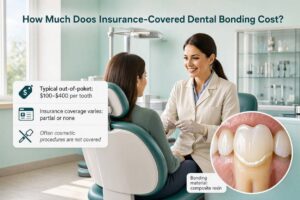
Insurance-covered dental bonding typically costs patients between $100 and $400 per tooth out-of-pocket. The total procedure cost ranges from $300 to $600 per tooth, with insurance covering 50% to 80% depending on whether the bonding addresses structural issues (restorative) or purely cosmetic concerns. Your specific coverage depends on your plan details and the reason for treatment.
Understanding Dental Bonding and Its Applications
Dental bonding involves applying a tooth-colored composite resin material to your tooth surface. The dentist shapes and hardens this material using a special light, then polishes it to match surrounding teeth. The procedure typically requires no anesthesia unless the bonding fills a cavity, and most treatments finish in a single office visit.
Cosmetic vs. Restorative Bonding
The distinction between cosmetic and restorative bonding fundamentally affects your insurance coverage. Cosmetic bonding improves appearance without addressing structural problems. Restorative bonding repairs damage or decay that compromises tooth function or health.
Cosmetic Bonding Applications:
-
Closing small gaps between teeth (diastema closure)
-
Reshaping oddly shaped or pointed teeth
-
Lengthening short teeth for improved smile aesthetics
-
Covering intrinsic stains that whitening cannot remove
Restorative Bonding Applications:
-
Repairing chipped or fractured teeth
-
Filling cavities with tooth-colored material
-
Protecting exposed tooth roots from gum recession
-
Restoring worn or eroded tooth surfaces
-
Replacing old, discolored fillings
Insurance companies almost never cover purely cosmetic procedures. They consider cosmetic treatment elective and exclude it from coverage. Restorative bonding, however, receives coverage when medically necessary to restore function or prevent further damage.
Cost Breakdown of Dental Bonding With Insurance
Understanding the numbers helps you budget effectively and avoid billing surprises. Let’s examine the typical costs for insured dental bonding.
Average Total Cost Without Insurance
Before considering insurance, you should know the baseline costs. Dental bonding costs vary by geographic location, dentist expertise, and case complexity.
| Bonding Type | Cost Per Tooth (No Insurance) |
|---|---|
| Small chip repair | $200 – $400 |
| Cavity filling (composite) | $250 – $500 |
| Gap closure (diastema) | $300 – $600 |
| Tooth reshaping | $300 – $600 |
| Full tooth coverage | $400 – $800 |
These ranges represent national averages. High-cost metropolitan areas may charge 50-100% more. Rural areas often fall on the lower end of these ranges.
How Insurance Coverage Applies to Bonding
When your bonding qualifies as restorative, dental insurance typically covers it under basic or major service categories. Most PPO plans cover composite fillings (tooth-colored bonding) at 70-80% after your deductible. Some plans limit composite coverage on back teeth, paying only amalgam rates and requiring you to cover the difference.
| Insurance Plan Type | Typical Coverage for Restorative Bonding |
|---|---|
| PPO Dental Plan | 70-80% after deductible |
| HMO/DHMO Dental Plan | Fixed copay ($25-$75) |
| Indemnity Dental Plan | 50-80% of usual customary rate |
| Discount Dental Plan | 20-40% off usual fees |
Sample Cost Calculations With Insurance
Let’s walk through realistic scenarios to show how costs play out with different plan structures.
Scenario 1: Chipped Front Tooth Repair (PPO Plan)
Total bonding cost: $400
Annual deductible (unmet): $50
Insurance coverage at 80%: $280
Your out-of-pocket cost: $120
(Calculation: $400 – $50 deductible = $350; 80% of $350 = $280 paid by insurance)
Scenario 2: Cavity Filling With Composite (PPO Plan)
Total bonding cost: $350
Annual deductible (already met): $0
Insurance coverage at 80%: $280
Your out-of-pocket cost: $70
Scenario 3: Gap Closure (Cosmetic – No Coverage)
Total bonding cost: $500
Insurance coverage: $0
Your out-of-pocket cost: $500
Scenario 4: DHMO Plan Fixed Copay
Total bonding cost: Not applicable (capitated plan)
Your fixed copay: $50
No deductible applies
“Many patients don’t realize that composite fillings on back teeth often have different coverage than front teeth. Your plan may only cover amalgam rates, leaving you with a $50-$100 difference per tooth.” — Dental Insurance Specialist, National Association of Dental Plans
Factors That Influence Your Out-of-Pocket Bonding Costs
Several variables determine your final cost beyond the basic insurance structure. Understanding these helps you anticipate expenses and make informed decisions.
Composite vs. Amalgam Coverage Limitations
Dental insurance companies typically cover composite (tooth-colored) fillings at the same rate as amalgam (silver) fillings for back teeth. If your plan pays 80% of a $150 amalgam fee but your dentist charges $300 for composite, insurance pays $120 (80% of $150), and you pay $180. This “downgrading” surprises many patients.
Front teeth almost always receive full composite coverage because amalgam is rarely used on visible teeth. If you need bonding on visible front teeth, your insurance likely covers it without downgrading.
Annual Maximum and Remaining Benefits
Dental insurance plans cap annual payouts, typically between $1,000 and $2,000. If you need multiple procedures, bonding costs may exceed your remaining benefits. Strategic timing of treatment across calendar years maximizes coverage.
A patient needing six teeth bonded at $400 each faces $2,400 in total costs. If their plan covers 80% with a $1,500 annual maximum, insurance pays $1,500 total. The patient pays $900 plus any amounts beyond the maximum. Splitting treatment across two plan years could reduce out-of-pocket costs to $480 (assuming two years of maximum coverage).
In-Network vs. Out-of-Network Dentists
Staying in-network significantly reduces your costs. In-network dentists have contracted rates with your insurance company, often 20-40% below standard fees. Out-of-network dentists set their own fees, and insurance reimburses based on “usual and customary” rates that may not match actual charges.
| Provider Status | Dentist Fee | Insurance Reimbursement | Your Cost |
|---|---|---|---|
| In-Network | $350 (contracted rate) | $280 (80%) | $70 |
| Out-of-Network | $500 (standard fee) | $280 (80% of $350 UCR*) | $220 |
*UCR = Usual, Customary, and Reasonable rate
Deductibles and Waiting Periods
Most dental plans impose waiting periods for basic and major services. Preventive care typically has no waiting period, but restorative bonding may require 3-6 months of continuous coverage before benefits apply. If you just enrolled in a new plan, verify your waiting period status before scheduling treatment.
Annual deductibles range from $25 to $100 for individuals. Family deductibles double or triple these amounts. You must pay your deductible before insurance begins covering restorative procedures.
Cosmetic Bonding: When Insurance Does Not Apply
Cosmetic bonding occupies a gray area in dental insurance. Understanding the boundaries helps you anticipate denials and explore alternatives.
Defining Medical Necessity
Insurance companies define medical necessity as treatment required to restore function, eliminate disease, or prevent further damage. Purely aesthetic improvements do not meet this threshold. However, some cosmetic procedures also serve restorative purposes.
Closing a gap that traps food and causes gum inflammation could qualify as restorative. The same gap closure performed solely for appearance would not. Your dentist’s documentation of medical necessity significantly influences coverage determinations.
Getting Cosmetic Bonding Covered
In some cases, cosmetic bonding addresses underlying functional issues. Photographs showing food impaction, X-rays revealing decay, or documentation of progressive damage strengthen medical necessity arguments. If bonding repairs a chip caused by trauma, insurance often covers it as restorative.
Your dentist can submit a narrative explaining why the bonding serves a functional purpose. Success depends on the specific circumstances and your insurance company’s policies.
Paying for Cosmetic Bonding Without Insurance
When insurance denies coverage, you have options to manage cosmetic bonding costs:
Self-Pay Strategies:
-
Dental discount plans reduce fees by 20-40%
-
Cash payment discounts (ask your dentist)
-
Payment plans through CareCredit or similar services
-
Health Savings Account (HSA) or Flexible Spending Account (FSA) funds
-
Dental school clinics offering reduced rates
Many patients combine FSA funds with discount plans to maximize savings on cosmetic procedures.
Comparing Bonding to Alternative Treatments
Bonding competes with other cosmetic and restorative treatments. Understanding cost differences helps you choose the best option for your budget and goals.
Bonding vs. Veneers
Porcelain veneers cost $800 to $2,500 per tooth versus $300 to $600 for bonding. Veneers last 10-20 years compared to 5-10 years for bonding. Insurance rarely covers either for cosmetic purposes.
| Feature | Dental Bonding | Porcelain Veneers |
|---|---|---|
| Cost per tooth | $300 – $600 | $800 – $2,500 |
| Longevity | 5-10 years | 10-20 years |
| Insurance coverage | Sometimes (restorative) | Rarely |
| Procedure visits | 1 visit | 2-3 visits |
| Tooth preparation | Minimal to none | Enamel removal required |
| Stain resistance | Moderate | Excellent |
Bonding offers a lower-cost entry point for smile improvements. Veneers provide superior aesthetics and longevity at higher initial cost.
Bonding vs. Crowns
Crowns cost $1,000 to $2,500 per tooth and cover the entire visible tooth structure. Insurance typically covers crowns at 50% when medically necessary for structural reasons. Bonding costs less but provides less protection for severely damaged teeth.
A tooth with a small chip benefits from bonding. A tooth with a large fracture or extensive decay requires a crown. Your dentist recommends the appropriate treatment based on structural needs.
Bonding vs. Orthodontics
For gap closure, bonding offers immediate results versus months of orthodontic treatment. Braces or clear aligners cost $3,000 to $7,000 but address underlying alignment issues that bonding cannot fix. Insurance sometimes covers orthodontics for children; adult coverage is less common.
If your gaps result from misaligned teeth causing bite problems, orthodontics provides a more comprehensive solution. If you have single small gaps with otherwise good alignment, bonding offers faster, more affordable results.
Finding Affordable Bonding With Insurance
Maximizing your insurance benefits requires strategic planning. These approaches help you minimize out-of-pocket expenses.
Verify Coverage Before Treatment
Request a pre-treatment estimate from your dental office. The staff submits your treatment plan to insurance for a breakdown of covered amounts and patient responsibility. This written estimate prevents billing surprises and allows you to plan financially.
Never assume coverage. Dental plans vary significantly, and what one plan covers another may exclude. A five-minute phone call to your insurance company or a pre-treatment estimate request saves potential financial stress.
Time Treatment Strategically
If you need multiple teeth bonded, consider timing treatment across calendar years. Completing some teeth in November or December and finishing in January maximizes two years of annual maximum benefits. Discuss this strategy with your dentist, who can prioritize teeth based on clinical urgency.
Some dentists offer discounts for treating multiple teeth in a single appointment. Compare the savings from appointment consolidation against the benefits of splitting treatment across plan years.
Choose In-Network Dentists
In-network dentists accept contracted rates significantly below standard fees. The savings extend beyond the insurance contribution because the base fee you split with insurance is lower. Use your insurance company’s provider directory to find in-network dentists skilled in cosmetic bonding.
A dentist’s website often shows bonding before-and-after photos. Review these to find an in-network provider whose aesthetic style matches your goals. Skill in cosmetic bonding varies among dentists, so choose carefully.
Use Tax-Advantaged Accounts
Health Savings Accounts and Flexible Spending Accounts let you pay for dental expenses with pre-tax dollars. Bonding costs, including cosmetic bonding, qualify as eligible expenses. Using these accounts effectively reduces your cost by your marginal tax rate.
A patient in the 24% tax bracket paying $500 for bonding using FSA funds effectively pays $380 after tax savings. Maximize this benefit by accurately estimating dental expenses during open enrollment.
Common Bonding Procedures and Their Insurance Coverage
Different bonding applications face different coverage determinations. Understanding each type helps you anticipate insurance responses.
Composite Fillings (Tooth-Colored Restorations)
Composite fillings represent the most commonly covered bonding procedure. Insurance treats these as basic restorative services. Coverage typically reaches 70-80% after deductible. Some plans downgrade posterior composites to amalgam rates.
Coverage Likelihood: High
Typical Out-of-Pocket: $50-$150 per filling
Dental Bonding for Chipped Teeth
Traumatic chips generally receive restorative classification and insurance coverage. The insurance company may request documentation of the trauma event. Chips from normal wear or habits like nail-biting face closer scrutiny.
Coverage Likelihood: Moderate to High
Typical Out-of-Pocket: $75-$200 per tooth
Diastema Closure (Gap Filling)
Gap closure sits firmly in the cosmetic category for most insurers. Unless the gap causes documented functional problems, expect denial of coverage. A narrow path to coverage exists if food impaction causes recurrent gum inflammation or decay.
Coverage Likelihood: Low
Typical Out-of-Pocket: $300-$600 per gap
Tooth Reshaping and Contouring
Reshaping for purely aesthetic reasons receives no coverage. Reshaping to correct a traumatic irregularity or restore normal function after damage may qualify. Documentation of functional impairment strengthens your case.
Coverage Likelihood: Low to Moderate
Typical Out-of-Pocket: $200-$500 per tooth
Root Surface Coverage for Recession
Bonding applied to cover exposed tooth roots often receives coverage because exposed roots indicate gum recession, a condition requiring treatment. Insurance may classify this as periodontal treatment rather than basic restorative.
Coverage Likelihood: Moderate to High
Typical Out-of-Pocket: $100-$300 per tooth
Dental Bonding Longevity and Replacement Costs
Bonding does not last forever. Understanding the lifespan and replacement costs helps you plan for future expenses.
Expected Lifespan of Dental Bonding
Composite bonding typically lasts 5 to 10 years with proper care. Factors affecting longevity include:
Bonding location: Front teeth bonding lasts longer than back teeth bonding that endures chewing forces. Oral habits: Teeth grinding, nail biting, and chewing ice shorten bonding lifespan. Diet: Staining foods and beverages discolor bonding over time. Oral hygiene: Poor hygiene leads to marginal staining and decay around bonding. Dentist skill: Experienced cosmetic dentists achieve better bond strength and polish.
Replacement and Maintenance Costs
When bonding fails, chips, or discolors, replacement costs mirror initial treatment costs. Insurance may cover replacement of restorative bonding that has worn out but rarely covers cosmetic bonding replacement.
Touch-up polishing can refresh bonded teeth at lower cost ($50-$100 per visit). Minor repairs of small chips cost $100-$200 per tooth. Complete replacement costs the same as initial bonding.
Extending Bonding Lifespan
Protecting your investment reduces long-term costs. Avoid staining substances for 48 hours after bonding placement. The composite absorbs stain more readily during this period. Maintain excellent oral hygiene with non-abrasive toothpaste. Wear a nightguard if you grind your teeth. Attend regular dental checkups for professional polishing and examination.
Comparing Insurance Plans for Bonding Coverage
If you are shopping for dental insurance, understanding bonding coverage differences helps you choose wisely.
PPO Plans
Preferred Provider Organization plans offer the most flexibility for bonding procedures. You can see any dentist, though in-network visits cost less. These plans typically cover restorative bonding at 70-80% and have annual maximums of $1,000-$2,000.
Best for: Patients wanting provider choice and good coverage for restorative work.
DHMO Plans
Dental Health Maintenance Organization plans use capitated payments. You pay fixed copays for specific procedures. Composite fillings might cost $25-$75 regardless of the total procedure cost. However, you must use network dentists, and cosmetic bonding may have limited coverage.
Best for: Budget-conscious patients comfortable with limited provider networks.
Indemnity Plans
Traditional indemnity plans reimburse a percentage of usual, customary, and reasonable fees regardless of provider. These plans often have higher premiums but no network restrictions. Coverage levels for bonding mirror PPO structures.
Best for: Patients wanting maximum provider freedom and predictable reimbursement.
Discount Plans
Dental discount plans are not insurance. You pay an annual fee for access to negotiated discounts at participating dentists. Bonding discounts range from 20-40%. No annual maximums, deductibles, or waiting periods apply, but you pay the entire discounted fee yourself.
Best for: Patients needing cosmetic bonding or those who have exceeded insurance annual maximums.
Frequently Asked Questions
Does insurance cover dental bonding for cosmetic reasons?
Generally, no. Insurance companies consider purely cosmetic procedures elective and exclude them from coverage. However, if cosmetic bonding also addresses a functional issue, coverage may apply.
How much does dental bonding cost with insurance?
Restorative bonding typically costs $50-$200 out-of-pocket per tooth with insurance. Cosmetic bonding costs $300-$600 per tooth since insurance does not apply.
Will my insurance cover composite fillings on back teeth?
Most plans cover composite fillings but may reimburse only at amalgam rates. You pay the difference between the composite fee and the amalgam rate.
Can I use my FSA or HSA for dental bonding?
Yes, both restorative and cosmetic bonding qualify as eligible medical expenses for FSA and HSA reimbursement.
How long does a pre-treatment estimate take?
Most insurance companies process estimates within 1-2 weeks. Your dental office handles the submission and shares results with you.
Does bonding hurt?
Most bonding procedures require no anesthesia and cause no discomfort. Bonding used for cavity fillings requires local anesthetic like any filling.
How many teeth can I bond in one visit?
Dentists typically bond 1-3 teeth per visit, depending on complexity. Discuss your goals and timeline during consultation.
Additional Resources
For more information about dental bonding and insurance coverage:
-
American Dental Association: www.ada.org
-
National Association of Dental Plans: www.nadp.org
-
Consumer Guide to Dentistry: www.yourdentistryguide.com
-
Your state dental association for local provider directories