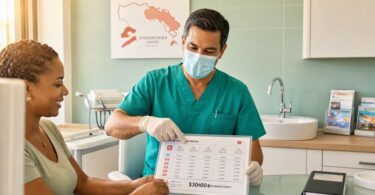
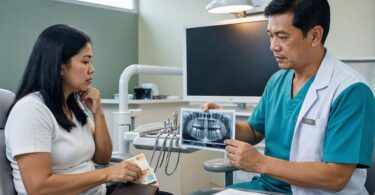
For individuals facing the prospect of losing all of their teeth or who are already living with the challenges of traditional dentures, full mouth dental implants represent a life-changing solution. This treatment restores a complete arch of stable, natural-looking, and fully functional teeth. However, in countries like the United States or Canada, the cost is prohibitively expensive for many people, often reaching $40,000 to $60,000 or more per arch. This reality has led to a surge in dental tourism, with Mexico emerging as the premier destination. So, the question is: What is the cost of full mouth dental implants in Mexico?
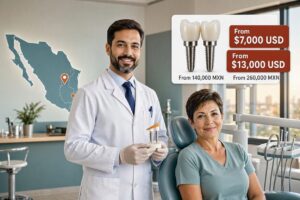
The answer is that full mouth dental implants in Mexico are dramatically cheaper than in the US or Canada. You can expect to pay anywhere from $8,000 to $15,000 per arch for a high-quality, implant-supported full mouth restoration. This represents a savings of 60% to 75% compared to prices north of the border. This guide will break down these costs, explain the different types of full mouth implant procedures, and help you understand what to expect when seeking this treatment in Mexico.
What Is The Cost Of Full Mouth Dental Implants In Mexico?
Understanding Full Mouth Dental Implant Options
The term “full mouth dental implants” does not refer to a single, uniform procedure. There are different techniques and approaches, and the cost varies significantly depending on which one you choose.
1. Implant-Supported Overdenture (Snap-On Denture)
This is the most affordable full mouth implant option. It involves placing a smaller number of implants (typically 2 to 4 per arch) into the jawbone. A custom-made denture is then created with special attachments that “snap” onto the implants.
-
Pros: Much more stable than traditional dentures, removable for easy cleaning, lower cost than fixed options.
-
Cons: Still a removable appliance, may require periodic adjustments, can still have some slight movement.
-
Cost in Mexico: $6,000 to $10,000 per arch.
2. All-on-4 / All-on-6 Fixed Implants
This is the most popular and well-known full mouth implant procedure. The “All-on-4” technique involves placing four strategically angled implants per arch. A full bridge of 12-14 artificial teeth is then permanently screwed onto these implants. The “All-on-6” variation uses six implants for even greater stability.
-
Pros: Fixed and non-removable, feels and functions like natural teeth, can often be done in a single surgery, high success rate.
-
Cons: More expensive than overdentures, requires surgery, the artificial gum portion of the bridge can be visible.
-
Cost in Mexico: $8,000 to $14,000 per arch.
3. Zygomatic Implants (For Severe Bone Loss)
For patients who have experienced severe bone loss in the upper jaw and are not candidates for traditional implants, zygomatic implants are a specialized solution. These implants are longer and anchor into the zygomatic bone (the cheekbone) rather than the jawbone.
-
Pros: Can provide fixed teeth even for patients who have been told they are not candidates for implants, avoids the need for extensive bone grafting.
-
Cons: The most complex and expensive implant procedure, requires a highly skilled specialist.
-
Cost in Mexico: $15,000 to $25,000+ per arch.
Comparative Table: Full Mouth Implant Costs
| Procedure | Cost in United States (per arch) | Cost in Mexico (per arch) | Savings |
|---|---|---|---|
| Implant-Supported Overdenture | $15,000 – $30,000 | $6,000 – $10,000 | 60-70% |
| All-on-4 / All-on-6 | $25,000 – $50,000+ | $8,000 – $14,000 | 65-75% |
| Zygomatic Implants | $35,000 – $60,000+ | $15,000 – $25,000 | 55-65% |
These numbers are estimates, but they illustrate the massive potential for savings. For a full mouth restoration (both upper and lower arches) using the All-on-4 technique, a US patient might pay $50,000 to $100,000 or more. In Mexico, the same treatment would cost $16,000 to $28,000.
What Is Included in the Price?
When you receive a quote from a Mexican dental clinic, it is crucial to understand what is included. Reputable clinics that cater to dental tourists offer all-inclusive packages.
A typical package should include:
-
Initial consultation and comprehensive examination.
-
3D Cone Beam CT scan and X-rays.
-
The surgical procedure for placing the implants.
-
The implants themselves (usually from reputable brands like Straumann, Nobel Biocare, or Zimmer).
-
A temporary fixed bridge on the day of surgery (for All-on-4 cases).
-
The final, custom-made permanent bridge (often made of zirconia or porcelain-fused-to-metal).
-
All follow-up visits and adjustments during your stay.
-
A warranty on the implants and the final prosthesis.
You should ask about:
-
The brand of implants being used.
-
The material of the final bridge (zirconia is the best quality).
-
The length of the warranty.
-
Any additional costs for medications or post-operative care.
The Dental Tourism Experience in Mexico
Mexico has a well-established dental tourism industry. Border towns like Los Algodones (near Yuma, Arizona) and Tijuana (near San Diego, California) are particularly famous for their high concentration of dental clinics. Other popular destinations include Cancun, Mexico City, and Guadalajara.
The Process:
-
Remote Consultation: You will typically start by contacting a clinic online. You will send them photos and X-rays (if you have them) and discuss your goals via email or video call.
-
Travel and Treatment: You will travel to Mexico for the procedure. For an All-on-4 case, the initial trip is often 5-7 days. During this time, you will have the surgery, and a temporary bridge will be placed.
-
Healing Period: You return home and allow your implants to heal and fuse with the bone (a process called osseointegration). This takes 3-6 months.
-
Final Trip: You return to Mexico for a second, shorter trip (3-5 days) to have your permanent, custom-made bridge fitted and attached.
The “Single-Trip” Option: Some clinics now offer a “one-trip” or “teeth in a day” protocol where the final, permanent zirconia bridge is placed within a few days of the surgery, eliminating the need for a second trip. This is more expensive but offers convenience.
Why Is It So Much Cheaper? Is Quality Compromised?
The lower cost in Mexico is not an indication of lower quality, but rather a reflection of economic realities.
-
Lower Cost of Living: Salaries, rent, and operational costs are much lower in Mexico than in the US or Canada.
-
Lower Regulatory Costs: Malpractice insurance and licensing fees are significantly less expensive.
-
Competitive Market: The dental tourism industry is highly competitive, driving clinics to offer high quality at competitive prices.
Many dentists in Mexico have received training in the US or Europe, are members of international dental organizations, and use the same high-quality implant brands and materials used by dentists in the US. The best clinics are equipped with state-of-the-art technology, including 3D imaging and in-house dental laboratories.
How to Choose a Safe and Reputable Clinic in Mexico
This is the most important part of your research. Do not choose a clinic based on price alone.
-
Look for Credentials: Check if the dentist is a specialist in implantology or oral surgery. Look for memberships in organizations like the International Congress of Oral Implantologists (ICOI) or the American Academy of Implant Dentistry (AAID).
-
Read Independent Reviews: Do not rely only on testimonials on the clinic’s website. Look for reviews on Google, Trustpilot, and independent dental tourism forums like Dental Departures or WhatClinic.
-
Ask About the Implant Brand: Reputable clinics are transparent about the brands they use. Stick with well-known, international brands like Straumann, Nobel Biocare, Zimmer Biomet, or Dentsply Sirona.
-
Ask About the Lab: Does the clinic have an in-house lab, or do they work with a local lab? An in-house lab allows for better quality control and communication.
-
Verify the Warranty: A good clinic will offer a written warranty on both the implants (often 5-10 years or lifetime) and the bridge.
-
Communicate Before You Commit: Have a detailed conversation with the treatment coordinator. Ask all your questions. A trustworthy clinic will be patient and transparent.
Conclusion
The cost of full mouth dental implants in Mexico is a fraction of the cost in the United States or Canada. You can expect to pay between $8,000 and $15,000 per arch for a high-quality, fixed, full-arch restoration like All-on-4. This represents a life-changing opportunity for many people who could otherwise not afford this treatment. However, it is essential to do thorough research, choose a reputable clinic with international credentials, and understand the travel and healing process involved. With careful planning, getting your smile back in Mexico can be a safe, successful, and incredibly cost-effective experience.
Frequently Asked Questions (FAQ)
1. Is it safe to get full mouth dental implants in Mexico?
Yes, it is very safe if you choose a reputable, well-reviewed clinic with experienced, credentialed implant dentists. The standards of care in top-tier Mexican dental clinics are on par with those in the US and Canada.
2. How long will I need to stay in Mexico for the procedure?
For an All-on-4 procedure, the initial trip is typically 5-7 days. If the clinic offers a final bridge at a later date, you will need a second trip of 3-5 days after a 3-6 month healing period. Some clinics offer a one-trip protocol with the final bridge placed immediately.
3. What are the risks of getting dental implants in a foreign country?
The primary risk is follow-up care. If you have a complication after you return home, it can be challenging to get it resolved. Choose a clinic that offers a strong warranty and has a clear protocol for handling post-treatment issues.
4. Can I finance dental work in Mexico?
Some clinics offer payment plans. There are also third-party financing companies that specialize in medical tourism. However, most patients pay with cash, credit card, or a combination of both.
5. Do I need a passport and visa to go to Mexico for dental work?
Yes, you need a valid US passport to travel to Mexico and return to the US. No visa is required for stays of less than 180 days for US citizens.
Additional Resource
For more information on researching and comparing dental clinics abroad, you can visit the patient resources page of the International Congress of Oral Implantologists (ICOI): www.icoi.org