Dealing with a tooth abscess is a painful and stressful experience. The throbbing pain, swelling, and sensitivity can make it impossible to focus on anything else. When you are in that situation, your first thought is finding relief. Your second thought is often about the cost. If you are a Medicare beneficiary, you may wonder if your coverage will help pay for the extraction of that infected tooth.
The answer is not simple. It requires understanding how Medicare works and the specific circumstances under which it might provide coverage. This guide will explain the relationship between Medicare and dental care, focusing specifically on tooth extractions for an abscess. We will explore the rules, exceptions, and alternatives to help you navigate this confusing area of healthcare.

Will Medicare Cover The Cost Of Extracting A Tooth That Has An Abscess?
Understanding the Medicare Dental Coverage Gap
Medicare is the federal health insurance program primarily for people aged 65 and older, as well as some younger individuals with disabilities. It is divided into parts, each covering different services.
Original Medicare (Part A and Part B)
Original Medicare consists of Part A (hospital insurance) and Part B (medical insurance). The most important thing to know is that Original Medicare does not cover most routine dental care. This includes:
-
Cleanings
-
Fillings
-
Tooth extractions
-
Dentures
-
Root canals
-
Dental implants
This is a significant gap in coverage for many seniors. The exclusion has been in place since Medicare was created in 1965. It means that for a standard tooth extraction, even one required because of an abscess, you will likely have to pay the entire bill out of pocket.
The Critical Exception: When Medicare Might Pay
There is a narrow but very important exception to the rule. Medicare may cover a tooth extraction if it is deemed a necessary part of a covered medical procedure. The key word here is “medical,” not “dental.”
The extraction must be “medically necessary” and directly related to another service that Medicare does cover. This means the dental work is not the primary focus; it is a required step to ensure the safety and success of a larger medical treatment.
Examples of Covered Situations
Here are some specific scenarios where Medicare might pay for a tooth extraction:
-
Before Radiation Therapy for Jaw Cancer: If you have cancer in your jaw, face, or neck and require radiation therapy, an oral surgeon may need to extract teeth in the radiation field. This is done to prevent severe complications like osteoradionecrosis (bone death) after treatment. Medicare would likely cover the extraction as part of the cancer treatment plan.
-
Before Organ Transplant Surgery: If you need an organ transplant, the medical team will want to eliminate any potential sources of infection in your body. An abscessed tooth is a major infection risk. Medicare may cover the extraction to clear the infection before you receive the transplant.
-
Before Heart Valve Surgery: Similarly, an infection in the mouth can travel to the heart and cause serious problems, especially during heart valve surgery. Medicare may pay for an extraction to reduce this risk before the cardiac procedure.
-
Treatment of a Jaw Fracture: If you suffer a fracture to your jaw, a tooth in the line of the fracture may need to be removed to allow the bone to heal properly. This would be considered part of the medical treatment for the fracture.
-
Extraction Related to a Covered Oral Surgery: Some oral surgeries are covered by Medicare under Part B (medical insurance), such as the removal of a facial tumor or a biopsy. If a tooth must be extracted during one of these covered procedures, it would likely be included.
In these cases, the extraction is not a standalone “dental” service. It is a component of a broader, medically necessary treatment plan.
What If the Abscess Requires Hospitalization?
An abscess itself is a medical condition—it is an infection. If the infection from your abscessed tooth becomes severe and spreads, it can become a life-threatening medical emergency.
When an Abscess Becomes a Medical Emergency
Sometimes, a tooth infection can spread to other parts of your face, neck, or even your brain. This is called a deep neck infection or cellulitis. If this happens, you will likely need to be admitted to the hospital for treatment.
In this situation, Medicare Part A (hospital insurance) may cover your hospital stay. This coverage can include:
-
Intravenous (IV) antibiotics to fight the infection
-
Diagnostic tests like X-rays or CT scans
-
Room and board in the hospital
-
Drainage of the infection by a surgeon
The Extraction Itself: A Gray Area
Here is where it gets complicated. If you are in the hospital for a severe infection, and the doctors determine that the source of the infection (the abscessed tooth) must be extracted, will Medicare pay for that extraction?
The answer is: it depends. The physician and hospital may bill the extraction as a part of the overall emergency treatment. Medicare may pay for the hospital and physician services related to the infection. However, the actual extraction is still considered a dental service by many payers. The hospital may bill you separately for the dentist’s fee.
It is not a guarantee. You could find yourself with a hospital bill that is covered and a separate bill for the extraction that is not. Before any procedure, you should ask the hospital’s billing department and the treating physicians about how they plan to code the extraction.
How to Find Out if Your Specific Extraction is Covered
Because the rules are so specific, you cannot assume coverage. You must take proactive steps to find out before you receive the service.
-
Ask Your Doctor and Dentist: They are the first line of defense. They understand the medical necessity of the procedure. They can write a letter of medical necessity explaining why the extraction is required for your overall medical treatment (e.g., before transplant surgery).
-
Contact Medicare: Call 1-800-MEDICARE and ask about your specific situation. Have your Medicare number ready and be prepared to explain the medical context of the extraction.
-
Request a Pre-Determination: For planned procedures (like before a transplant), your doctor’s office can submit a request for a pre-determination to Medicare. This is like asking for approval in advance. Medicare will review the details and give you a written decision on whether they will cover the service. This is not a guarantee of payment, but it is a strong indicator.
-
Review Your Medicare Summary Notices (MSNs): If you have already had the procedure, check your MSN. It will show you what Medicare paid and what you may owe.
The Role of Medicare Advantage Plans (Part C)
So far, we have discussed Original Medicare. Medicare Advantage plans (Part C) are different. These are plans offered by private insurance companies that contract with Medicare to provide your Part A and Part B benefits. They must cover everything Original Medicare covers, but they can also offer extra benefits.
Expanded Dental Coverage
Many Medicare Advantage plans have begun to include dental coverage as an added benefit to attract members. This can include coverage for:
-
Routine exams and cleanings
-
Fillings
-
Simple and surgical extractions
-
Root canals
-
Dentures
-
An annual maximum benefit (e.g., $1,000 – $2,000 per year)
If you have an abscessed tooth and need an extraction, your Medicare Advantage plan may very well cover a portion of the cost, even if it is a standard dental procedure. This is a huge benefit over Original Medicare.
How to Use Your Advantage Plan for an Extraction
-
Check Your Evidence of Coverage (EOC): This document explains exactly what your plan covers. Look for the dental section to see your benefits for extractions.
-
Use In-Network Dentists: You will pay the lowest out-of-pocket costs if you see a dentist in your plan’s network.
-
Understand Your Cost-Sharing: The plan may cover 50-80% of the extraction cost, leaving you with a co-insurance amount. There may also be an annual cap on dental benefits.
Your Options if Medicare Won’t Pay
If you find that your extraction is not covered by Medicare or your Advantage plan does not have dental benefits, you are not out of options. Here are several ways to manage the cost.
Medicaid
If you have a low income, you may qualify for Medicaid, the joint federal and state program. In many states, Medicaid provides some level of dental coverage for adults, including extractions. The coverage varies significantly from state to state.
Dental Schools
Dental schools offer high-quality care at a reduced cost. Students perform the work under the direct supervision of experienced, licensed dentists. You can often get an extraction for a fraction of the price of a private practice. The appointment may take longer, but the savings are substantial.
Community Health Centers
Federally funded community health centers provide care on a sliding fee scale based on your income. They often have dental clinics and can perform extractions at a cost you can afford.
Dental Discount Plans
These are not insurance, but membership plans that give you access to a network of dentists who have agreed to charge lower rates. You pay an annual fee and receive discounts on services.
Payment Plans
Many dentists are willing to work with you on a payment plan. Be honest about your financial situation and ask if they offer in-house financing or can refer you to a third-party lender like CareCredit.
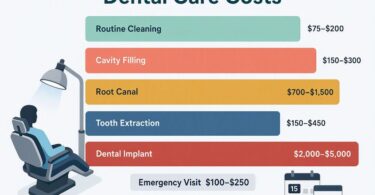
The Cost of an Abscessed Tooth Extraction
To understand the financial stakes, it helps to know what an extraction typically costs without insurance.
| Type of Extraction | Typical Cost Range (No Insurance) | Description |
|---|---|---|
| Simple Extraction | $100 – $300 | The tooth is visible above the gum line and can be removed with simple instruments. |
| Surgical Extraction | $200 – $600+ | The tooth is broken, impacted, or below the gum line. Requires an incision and possibly removal of bone. An abscessed tooth often requires a surgical extraction. |
| Extraction with Sedation | Adds $100 – $500+ | The cost of nitrous oxide (laughing gas) or IV sedation to help you relax during the procedure. |
Important Note: An abscessed tooth can be more difficult to numb with local anesthesia due to the acidity of the infection. Your dentist will likely prescribe antibiotics first to help reduce the infection before performing the extraction. This will add to the total cost.
Steps to Take When You Have an Abscess
If you suspect you have a tooth abscess, do not wait. The infection will not go away on its own and can become dangerous.
-
See a Dentist Immediately: This is the only way to treat the source of the infection.
-
Discuss Your Insurance Coverage: Before the procedure, ask the dental office to check your benefits if you have a Medicare Advantage plan with dental coverage.
-
Ask for a Written Estimate: Get the cost of the procedure in writing before you agree to it.
-
Plan for Payment: If you are uninsured or Medicare won’t cover it, be prepared to discuss your payment options with the dental office staff.
Conclusion
In summary, Original Medicare will only cover a tooth extraction for an abscess under very specific circumstances where the procedure is a required part of a larger, covered medical treatment, such as before a transplant or radiation therapy. If the infection becomes a severe medical emergency requiring hospitalization, Part A may cover the hospital stay, but the extraction itself may still be billed separately. Your best chance of having a routine extraction covered is if you are enrolled in a Medicare Advantage plan that includes dental benefits. If you are not covered, explore alternatives like Medicaid, dental schools, or community health centers to manage the cost safely.
Frequently Asked Questions (FAQ)
1. Does Medicare Part B ever pay for a tooth extraction?
Part B (medical insurance) may pay for an extraction if it is performed as an integral part of a covered medical procedure, such as a jaw reconstruction or the removal of a facial tumor. A standalone extraction for an abscess is not covered under Part B.
2. What is the difference between a medical and dental diagnosis?
This is the heart of the matter. A “dental” diagnosis is related to the health of your teeth and gums (like a cavity or an abscess). A “medical” diagnosis is related to the health of your body. Medicare covers medical diagnoses. For an extraction to be covered, it must be linked to a medical diagnosis (like cancer or organ transplant).
3. If I have Original Medicare, what is my best option for affordable dental care?
Your best options are to explore dental discount plans, visit a dental school, or seek care at a community health center. Many dentists also offer their own in-house savings plans for patients without insurance.
4. Are Medicare Advantage dental benefits worth the extra cost of the plan?
For many people, yes. If you need multiple extractions, dentures, or other dental work, the included dental benefit can save you thousands of dollars per year. It is a major reason people choose Advantage plans over Original Medicare.
5. What happens if I ignore an abscessed tooth because I can’t afford treatment?
Ignoring an abscess is extremely dangerous. The infection can spread to your jaw, face, neck, and even your brain. It can lead to sepsis, a life-threatening condition. If you cannot afford care, go to a hospital emergency room. They are required to treat you to stabilize the infection, even if they cannot perform the definitive dental work.
Additional Resource:
To find a community health center with a dental clinic near you, you can use the search tool on the Health Resources and Services Administration (HRSA) website at www.hrsa.gov.