
All-on-4 dental implants represent a groundbreaking solution for patients suffering from extensive tooth loss or severe dental decay. Unlike traditional dentures, which can slip and cause discomfort, All-on-4 implants provide a permanent, stable foundation for a full-arch prosthetic. This technique uses just four strategically placed implants to support an entire set of upper or lower teeth, making it a cost-effective and minimally invasive alternative to individual implants.
The American Dental Association (ADA) has established specific billing codes (Current Dental Terminology, or CDT codes) for All-on-4 procedures, ensuring standardized documentation for insurance and reimbursement purposes. This article will explore these ADA codes, the step-by-step process, benefits, costs, and frequently asked questions about All-on-4 implants.
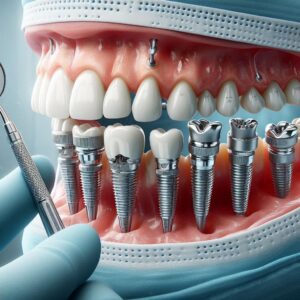
All-on-4 Dental Implants ADA Codes
2. Understanding ADA Codes for All-on-4 Implants
The ADA assigns Current Dental Terminology (CDT) codes to dental procedures for insurance and billing accuracy. Below are the most relevant ADA codes for All-on-4 implants:
Table 1: Common ADA Codes for All-on-4 Procedures
| CDT Code | Description | Notes |
|---|---|---|
| D6010 | Surgical placement of implant (per implant) | Covers each implant placement |
| D6057 | Custom abutment (per implant) | Supports the prosthetic |
| D6110 | Implant-retained denture (upper arch) | Full-arch prosthesis |
| D6111 | Implant-retained denture (lower arch) | Full-arch prosthesis |
| D6190 | Radiographic/surgical guide | For precise implant placement |
| D7953 | Bone graft (per site) | If bone augmentation is needed |
These codes help streamline insurance claims and ensure transparency in dental billing.
3. The All-on-4 Procedure: Step-by-Step Breakdown
Phase 1: Consultation and Planning
-
Diagnostic Imaging: CBCT scans and X-rays assess bone density.
-
Treatment Plan: A prosthodontist designs the implant positions.
Phase 2: Implant Placement Surgery
-
Anesthesia: Local or IV sedation is administered.
-
Extractions (if needed): Remaining damaged teeth are removed.
-
Implant Insertion: Four titanium implants are placed at precise angles.
-
Temporary Prosthesis: A fixed denture is attached the same day.
Phase 3: Final Restoration (After Osseointegration)
-
A permanent, custom-made prosthesis is fitted after 3-6 months.
4. Benefits of All-on-4 Over Traditional Dentures
Table 2: All-on-4 vs. Traditional Dentures
| Feature | All-on-4 Implants | Traditional Dentures |
|---|---|---|
| Stability | Fixed, no slipping | May shift or loosen |
| Bone Preservation | Prevents jawbone loss | Accelerates bone resorption |
| Chewing Efficiency | Near-natural bite strength | Reduced chewing ability |
| Maintenance | Brush like natural teeth | Requires adhesives and removal |
| Longevity | 20+ years with care | 5-10 years, needs replacement |
5. Cost and Insurance Coverage
The average cost for All-on-4 implants ranges from $20,000 to $40,000 per arch, depending on materials and location. Some insurance plans cover part of the procedure under CDT codes D6010 and D6110.
6. Candidacy and Pre-Implant Evaluations
Ideal candidates:
-
Have significant tooth loss or decay
-
Possess adequate jawbone density (or qualify for bone grafting)
-
Are non-smokers or willing to quit
7. Post-Procedure Care and Maintenance
-
Oral Hygiene: Brush, floss, and use antimicrobial rinses.
-
Diet: Avoid hard foods initially.
-
Follow-ups: Regular check-ups to monitor implants.
8. Common Myths and Misconceptions
❌ Myth: All-on-4 implants are painful.
✅ Fact: Sedation ensures a comfortable procedure.
❌ Myth: They look fake.
✅ Fact: Modern prosthetics mimic natural teeth.
9. FAQs About All-on-4 Implants
Q: How long do All-on-4 implants last?
A: With proper care, they can last 20+ years.
Q: Does insurance cover All-on-4?
A: Partial coverage may apply under specific ADA codes.
Q: Is the procedure painful?
A: No, anesthesia ensures minimal discomfort.
10. Conclusion
All-on-4 dental implants offer a permanent, natural-looking solution for full-arch tooth replacement. With standardized ADA codes, patients can navigate insurance claims more efficiently. This advanced procedure provides superior stability, functionality, and aesthetics compared to traditional dentures.


