In the intricate lexicon of medical billing, a five-digit code can tell a profound story. It encapsulates hours of surgical training, the precision of a skilled surgeon’s hands, the complex physiology of human anatomy, and the hope of a patient seeking relief from debilitating pain. CPT code 47600 – Cholecystectomy – is one such code. While its laparoscopic counterpart (47562-47564) often steals the spotlight in modern surgical discourse, the open cholecystectomy remains a foundational, vital procedure in the general surgeon’s arsenal. It is the failsafe, the solution for complex cases, and the historical precursor upon which minimally invasive techniques were built. This article delves beyond the numeric facade of cpt code 47600, exploring its clinical indications, precise technical requirements, nuanced coding rules, and the intricate dance between surgeon, patient, and payer that it represents. For medical coders, billers, surgeons, and healthcare administrators, understanding this code is not merely an administrative task; it is a window into a critical surgical service that continues to save lives and restore health.
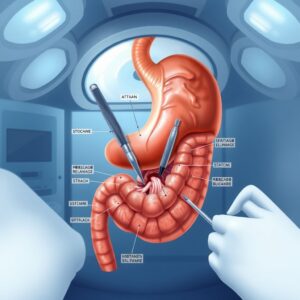
CPT Code 47600
2. Anatomy and Physiology: The Gallbladder’s Role and Its Failures
To appreciate the procedure, one must first understand the organ. The gallbladder is a small, pear-shaped, hollow organ nestled in a fossa on the inferior surface of the right lobe of the liver. It is part of the biliary system, functioning primarily as a storage and concentration reservoir for bile.
-
Bile Production and Function: Bile is a greenish-yellow fluid continuously produced by the liver (up to 1 liter per day). It is essential for the emulsification and absorption of dietary fats and fat-soluble vitamins (A, D, E, K) in the small intestine.
-
The Biliary Tree: Bile travels from the liver through the right and left hepatic ducts, which merge to form the common hepatic duct. The cystic duct connects the gallbladder to this system. The common hepatic duct and cystic duct then form the common bile duct (CBD), which empties bile into the duodenum via the sphincter of Oddi.
-
Concentration Mechanism: The gallbladder’s mucosal lining actively reabsorbs water and electrolytes, concentrating the bile by 5-10 times its original potency. When fatty food enters the duodenum, it stimulates the secretion of the hormone cholecystokinin (CCK), which causes the gallbladder to contract and the sphincter of Oddi to relax, ejecting concentrated bile into the digestive tract.
This elegant system is prone to dysfunction, primarily through the formation of gallstones, a condition known as cholelithiasis.
3. The Clinical Pathway: From Symptoms to Diagnosis
Not all gallstones cause symptoms (“silent gallstones”). However, when they obstruct ducts or irritate the gallbladder wall, they can initiate a cascade of painful conditions.
Common Gallbladder Pathologies:
-
Biliary Colic: Transient, episodic pain caused by a gallstone temporarily obstructing the cystic duct. The pain, often in the right upper quadrant (RUQ) or epigastrium, typically subsides as the stone dislodges.
-
Acute Cholecystitis: A more serious condition where persistent obstruction of the cystic duct leads to inflammation and infection of the gallbladder wall. Symptoms include persistent RUQ pain, fever, leukocytosis (elevated white blood cell count), and a positive Murphy’s sign (pain upon inspiration during palpation of the RUQ).
-
Choledocholithiasis: The presence of gallstones within the common bile duct, which can cause obstruction, jaundice (yellowing of the skin and eyes), dark urine, clay-colored stools, and potentially life-threatening ascending cholangitis (infection of the biliary tree).
-
Gallstone Pancreatitis: A gallstone lodged at the distal end of the common bile duct can obstruct the pancreatic duct, causing inflammation of the pancreas.
-
Cholesterolosis (“Strawberry Gallbladder”): A condition where cholesterol is deposited in the gallbladder wall, often asymptomatic.
-
Gallbladder Polyps and Carcinoma: Although less common, these are significant pathologies that may require cholecystectomy.
Diagnostic Tools and Tests:
The journey to CPT 47600 begins with accurate diagnosis. Key diagnostic modalities include:
-
Transabdominal Ultrasound: The first-line, gold-standard imaging test for detecting gallstones, with a sensitivity and specificity exceeding 95%. It can also show gallbladder wall thickening, pericholecystic fluid, and a sonographic Murphy’s sign, all indicative of acute cholecystitis.
-
Hepatobiliary Iminodiacetic Acid (HIDA) Scan: A nuclear medicine functional study. A radioactive tracer is injected and taken up by the liver and excreted into the biliary system. Non-visualization of the gallbladder suggests cystic duct obstruction, confirming acute cholecystitis.
-
Computed Tomography (CT) Scan: Less sensitive for gallstones but excellent for evaluating complications such as perforation, abscess, or pancreatitis.
-
Magnetic Resonance Cholangiopancreatography (MRCP): A non-invasive MRI technique that provides detailed images of the biliary and pancreatic ducts, excellent for diagnosing choledocholithiasis.
-
Endoscopic Retrograde Cholangiopancreatography (ERCP): Both a diagnostic and therapeutic procedure. An endoscope is used to inject dye into the bile ducts. If stones are found in the CBD, they can often be removed sphincterotomy and extraction.
4. The Surgical Spectrum: Laparoscopic vs. Open Cholecystectomy
The choice of surgical approach is a critical decision point, directly determining whether code 47562-47564 or 47600 is reported.
The Rise of Laparoscopy (Codes 47562-47564)
Since its widespread adoption in the late 1980s and early 1990s, laparoscopic cholecystectomy has become the procedure of choice for uncomplicated symptomatic cholelithiasis and cholecystitis. Its benefits are profound:
-
Minimally Invasive: Four small incisions (usually 0.5-1 cm) versus one large incision.
-
Less Postoperative Pain
-
Shorter Hospital Stay: Often outpatient or 23-hour observation.
-
Faster Recovery and Return to Normal Activities
-
Improved Cosmetic Results
Why Open Surgery (47600) Remains Crucial
Despite the dominance of laparoscopy, open cholecystectomy is far from obsolete. It is indicated in numerous scenarios where laparoscopy is inadvisable, unsafe, or has failed. Key indications include:
-
Severe Inflammation and Fibrosis: Cases of gangrenous cholecystitis, empyema, or chronic fibrotic disease where tissue planes are obliterated, making laparoscopic dissection hazardous and increasing the risk of bile duct injury.
-
Uncontrolled Bleeding: Occurring during an attempted laparoscopic procedure.
-
Unclear Anatomy: In cases of severe distortion of the Calot’s triangle (the anatomic area bounded by the cystic duct, common hepatic duct, and the inferior liver edge), an open approach provides superior visualization and tactile feedback to safely identify structures.
-
Suspected or Known Malignancy: Open surgery allows for a wider exploration and potential resection of adjacent tissues if gallbladder cancer is found.
-
Cirrhosis and Portal Hypertension: These conditions cause extensive vascular collateralism around the gallbladder, making laparoscopic port placement and dissection extremely risky for major hemorrhage.
-
Late Pregnancy: Particularly in the third trimester, where the enlarged uterus obstructs the laparoscopic field of view.
-
Multiple Previous Abdominal Surgeries: Extensive adhesions may make laparoscopic access impossible or dangerous.
-
Morbid Obesity: In some cases, technical challenges related to body habitus may necessitate an open approach.
-
Conversion from Laparoscopic to Open: This is not a complication but rather a sign of sound surgical judgment. If the surgeon encounters any of the above issues during a laparoscopic attempt, the procedure is converted to open for patient safety.
5. CPT Code 47600: A Deep Dive into the Technical Description
The American Medical Association’s CPT® codebook provides the definitive description for reporting services.
Official CPT Wording:
47600 – Cholecystectomy;
The simplicity of this description is deceptive. It encompasses the entire surgical package for a standard open removal of the gallbladder. This includes:
-
Making the incision (typically a right subcostal [Kocher] incision or an upper midline incision).
-
Exploring the abdominal cavity.
-
Dissecting the gallbladder from the liver bed.
-
Identifying, clipping/ligating, and dividing the cystic duct and cystic artery.
-
Removing the gallbladder.
-
Irrigating the surgical site.
-
Checking for hemostasis (control of bleeding).
-
Closing the incision in layers (fascia, subcutaneous tissue, skin).
Included and Excluded Services (NCCI Edits)
The National Correct Coding Initiative (NCCI) edits are critical for preventing improper coding when multiple procedures are performed. Understanding what is bundled into 47600 is essential.
-
Included (Not separately reportable):
-
Lysis of adhesions (44005) required to access the gallbladder.
-
Placement of drains (e.g., 49020) if placed in the gallbladder bed.
-
Surgical laparoscopy (49320) that is converted to open. The laparoscopic attempt is not separately reported.
-
Biopsy of the liver (47000, 47100) if performed on the gallbladder bed.
-
-
Excluded (May be separately reportable with appropriate modifiers):
-
Common Bile Duct Exploration (CBDE): Codes 47700 (exploration without transduodenal sphincterotomy) and 47701 (exploration with transduodenal sphincterotomy) are separately reportable if stones are discovered and removed from the CBD during the same operation.
-
Intraoperative Cholangiography: Code 74300 is a radiological procedure code billed by the radiologist, not the surgeon. The surgeon’s work of cannulating the duct and injecting dye is considered integral to the procedure and is not separately reported.
-
Cholecystostomy (47490): If a separate procedure to drain the gallbladder was performed days or weeks prior to the definitive cholecystectomy, it may be billed separately with modifier -58 (staged procedure).
-
Major Repair of Blood Vessels: If significant, unexpected vascular injury occurs requiring complex repair, it may be separately reportable with modifier -22 (increased procedural services).
-
6. Coding in Practice: A Step-by-Step Guide to 47600
When to Use 47600 vs. 47562-47564 (Laparoscopic)
The cardinal rule is to code the procedure that was completed. If the surgery started laparoscopically but was converted to open, only code 47600 is reported. The attempt and the conversion are not coded separately; the final approach determines the code.
Modifiers and Their Application
Modifiers provide payers with additional information about the circumstances of the service.
-
Modifier -22 (Increased Procedive Services): Used when the procedure required substantially greater effort than typically required. This must be supported by detailed documentation describing the exceptional factors (e.g., “severe inflammatory phlegmon obscuring all anatomy, requiring 3 hours of additional dissection time, significant blood loss”). A special report should be appended to the claim.
-
Modifier -51 (Multiple Procedures): Applied to the secondary procedure(s) when multiple surgeries are performed during the same operative session. E.g., 47600 (primary) and 47700 (CBDE, with modifier -51).
-
Modifier -54 (Surgical Care Only): Used when one surgeon performs the surgery and another provides the postoperative management.
-
Modifier -55 (Postoperative Management Only): The complementary modifier used by the surgeon providing only the follow-up care.
-
Modifier -58 (Staged or Related Procedure): Used for a procedure planned or anticipated (e.g., a cholecystectomy following a previous cholecystostomy tube placement).
ICD-10-CM Diagnosis Code Linkage
Medical necessity is paramount. The diagnosis code(s) must justify the procedure performed. Common ICD-10-CM codes linked to 47600 include:
-
K80.00-K80.2: Calculus of gallbladder with acute cholecystitis
-
K80.10-K80.12: Calculus of gallbladder with other cholecystitis
-
K80.20-K80.22: Calculus of gallbladder without cholecystitis
-
K80.30-K80.32: Calculus of bile duct with acute cholecystitis
-
K80.44-K80.46: Calculus of gallbladder and bile duct with acute cholecystitis
-
K81.0: Acute cholecystitis
-
K81.1: Chronic cholecystitis
-
K81.9: Cholecystitis, unspecified
-
K82.3: Fistula of gallbladder
-
K82.4: Cholesterolosis of gallbladder
-
C23: Malignant neoplasm of gallbladder
7. The Operating Room: A Detailed Walkthrough of the Open Procedure
Preoperative Preparation: After informed consent is obtained, the patient is made NPO (nothing by mouth). Preoperative antibiotics are administered to reduce the risk of surgical site infection. Deep vein thrombosis (DVT) prophylaxis is initiated.
Anesthesia and Positioning: The procedure is performed under general anesthesia. The patient is positioned supine on the operating table. Some surgeons may place a rolled sheet under the right lower rib cage to improve exposure.
Surgical Approach:
-
Incision: A right subcostal (Kocher) incision is most common, made about 2-3 cm below and parallel to the right costal margin. Alternatively, an upper midline incision may be used.
-
Exposure: The abdomen is entered, and a self-retaining retractor (e.g., a Bookwalter or Thompson retractor) is placed to hold the liver and intestines out of the way.
-
Dissection: The duodenum is mobilized to expose the hepatoduodenal ligament. The peritoneum overlying the Calot’s triangle is incised. The cystic artery and cystic duct are meticulously identified, doubly ligated with sutures or clips, and divided. This “critical view of safety” – visualizing the cystic duct and artery as the only two structures entering the gallbladder – is paramount to preventing bile duct injury.
-
Extraction: The gallbladder is then dissected from its fossa on the liver using electrocautery. This must be done carefully to avoid causing bleeding from the liver bed.
-
Completion: The gallbladder is removed. The operative field is irrigated and inspected for bleeding or bile leakage. A drain may be placed near the foramen of Winslow.
-
Closure: The fascia is closed with strong, permanent or long-lasting absorbable sutures. The subcutaneous tissue and skin are then closed.
Postoperative Care: The patient is monitored for pain, nausea, and vital signs. Diet is advanced as bowel function returns (typically within 1-3 days). The patient is mobilized early to prevent DVT and atelectasis. Discharge usually occurs within 2-5 days, depending on the patient’s recovery and the complexity of the surgery.
8. Global Periods, RVUs, and Reimbursement Economics
Understanding the 90-Day Global Surgical Package
CPT 47600 has a 90-day global period. This means the reimbursement for code 47600 includes payment for:
-
The surgery itself
-
All related preoperative visits after the decision for surgery is made (e.g., the day before)
-
All related postoperative care for the next 90 days
Any unrelated E/M services during this period must be reported with modifier -24 (unrelated E/M service) or -79 (unrelated procedure by same physician).
Relative Value Units (RVUs) and Payment Calculation
Payment from Medicare and other payers is based on RVUs, which measure the resources required to perform a service. They consist of:
-
Work RVU (wRVU): Physician time, skill, and effort.
-
Practice Expense RVU (peRVU): Overhead costs (staff, equipment, supplies).
-
Malpractice RVU (mRVU): Cost of professional liability insurance.
The total RVU is multiplied by a geographic practice cost index (GPCI) and a conversion factor (CF) to determine the payment amount.
Table: RVU and National Medicare Reimbursement Comparison (2023)
| CPT Code | Procedure Description | Work RVU | Total RVU | National Medicare Facility Payment (Approx.) |
|---|---|---|---|---|
| 47562 | Laparoscopic Cholecystectomy | 10.70 | 18.87 | $1,050 |
| 47563 | Lap Chole w/ Cholangiography | 11.52 | 20.46 | $1,140 |
| 47564 | Lap Chole w/ CBDE | 15.61 | 27.03 | $1,505 |
| 47600 | Open Cholecystectomy | 15.04 | 27.02 | $1,505 |
| 47700 | CBDE (Open) | 16.00 | 26.04 | $1,450 |
| 47701 | CBDE w/ Sphincterotomy | 18.00 | 29.21 | $1,625 |
Source: CMS Physician Fee Schedule Relative Value File 2023. Payment is an estimate and varies by locality. Always verify with current year data.
This table illustrates several key points:
-
Open cholecystectomy (47600) is valued higher than a standard laparoscopic procedure (47562) due to its increased complexity, longer operative time, and more difficult recovery.
-
The work RVU for 47600 (15.04) is significantly higher than for 47562 (10.70), reflecting the greater physician work required.
-
A laparoscopic procedure with common bile duct exploration (47564) is valued similarly to a standard open cholecystectomy (47600).
9. Complications and Their Coding Implications
Coding must accurately reflect the entire surgical encounter, including the management of complications.
-
Intraoperative Complications:
-
Bleeding: Control of bleeding is included in 47600. However, if a major, unexpected vascular injury occurs (e.g., injury to the portal vein requiring complex vascular repair), this may justify reporting modifier -22.
-
Bile Duct Injury: This is a serious complication. Immediate repair (e.g., Roux-en-Y hepaticojejunostomy) is a major separate procedure with its own CPT code (47760-47802) and would be reported instead of, or in addition to, 47600, depending on the circumstances.
-
-
Postoperative Complications (within the global period):
-
Management of complications (e.g., wound infection, ileus, bile leak) is generally included in the global surgical package and not separately billed. If a return to the operating room (RTO) is required for a related complication (e.g., evacuation of a hematoma, repair of a bile leak), it is typically billed with the appropriate procedure code with modifier -78 (return to the OR for related procedure).
-
10. Case Studies: Applying Knowledge to Real-World Scenarios
Case Study 1: The Elective Conversion
-
Presentation: A 45-year-old female with recurrent biliary colic. She is taken for an elective laparoscopic cholecystectomy (47562).
-
Intraop: Upon entry, dense, vascular adhesions are found from a previous right colectomy. The anatomy of Calot’s triangle is impossible to delineate laparoscopically.
-
Action: The surgeon converts to an open procedure via a Kocher incision and successfully performs the cholecystectomy.
-
Coding: 47600 only. Do not report 47562. The diagnosis is the original reason for surgery (e.g., K80.20).
Case Study 2: The Complex, Inflamed Gallbladder
-
Presentation: A 70-year-old male presents with 5 days of RUQ pain, fever, and leukocytosis. Ultrasound shows a large, impacted stone in the neck of the gallbladder, with a thickened wall and pericholecystic fluid.
-
Plan: Due to the severity and duration of symptoms, the surgeon elects for a primary open cholecystectomy.
-
Intraop: The gallbladder is found to be gangrenous and adherent to the omentum and duodenum. Dissection is extremely difficult, taking 4 hours (vs. a typical 1-1.5 hours), with significant blood loss requiring transfusion.
-
Coding: 47600-22. A detailed operative report must support the use of modifier -22, describing the excessive time, blood loss, and technical difficulty. Diagnosis: K80.00 (Calculus of gallbladder with acute cholecystitis).
Case Study 3: Cholecystectomy with Common Bile Duct Exploration
-
Presentation: A 55-year-old female with jaundice, RUQ pain, and dilated CBD on ultrasound. MRCP confirms a 7mm stone in the distal CBD.
-
Plan: Open cholecystectomy with planned common bile duct exploration.
-
Intraop: The surgeon performs an open cholecystectomy (47600). Through a separate choledochotomy incision in the CBD, the stone is visualized and removed with a balloon catheter. A T-tube is placed.
-
Coding: 47600 and 47700 (with modifier -51 appended to 47700). Diagnosis: K80.44 (Calculus of gallbladder and bile duct with acute cholecystitis).
11. The Future of Gallbladder Surgery: Single-Incision, Robotics, and NOTES
The evolution continues. New techniques aim to reduce invasiveness even further:
-
Single-Incision Laparoscopic Surgery (SILS): Performing a laparoscopic cholecystectomy through a single umbilical incision. It is often reported with the same code as a standard laparoscopic cholecystectomy (47562), though some payers may require a distinct code or modifier.
-
Robotic-Assisted Cholecystectomy: Using the da Vinci® Surgical System for enhanced 3D visualization and wristed instrumentation. This is also reported with the standard laparoscopic codes (47562-47564). The use of the robot is not a separately reimbursable service by the surgeon; its cost is bundled into the facility’s fee.
-
Natural Orifice Transluminal Endoscopic Surgery (NOTES): An experimental technique where the gallbladder is removed via a natural orifice (e.g., the stomach or vagina) without any external incisions. It remains largely in the research domain.
Despite these advances, the open approach, coded by the enduring 47600, will remain an indispensable tool for dealing with the most challenging cases, ensuring patient safety when minimally invasive techniques reach their limits.
12. Conclusion: The Enduring Legacy of Open Cholecystectomy
CPT code 47600 represents far more than a historical surgical technique; it is a critical, modern-day procedural option for complex biliary disease. Its accurate application requires a deep understanding of surgical indications, intraoperative challenges, and precise coding rules that distinguish it from its laparoscopic counterparts. While minimally invasive approaches dominate elective cases, the open cholecystectomy stands as the definitive fallback, ensuring that surgeons can safely manage the most difficult pathologies. For medical coders, mastering the nuances of 47600—from its global period and NCCI edits to the judicious use of modifiers—is essential for ensuring accurate reimbursement and reflecting the true complexity and value of this vital surgical service.
13. Frequently Asked Questions (FAQs)
Q1: Can I bill both a laparoscopic and an open cholecystectomy code if the surgeon converts from laparoscopy to open?
A: Absolutely not. You must code only the procedure that was completed. If the surgery was converted to open, you report only 47600. The laparoscopic attempt is considered a preliminary step to the definitive open procedure and is not separately billable.
Q2: When is it appropriate to use modifier -22 with 47600?
A: Modifier -22 should be used sparingly and only when the documentation clearly demonstrates that the procedure required substantially greater effort than usual. Examples include: extensive lysis of adhesions taking extraordinary time, encountering severe inflammation/fibrosis that obscures anatomy, managing unexpected life-threatening hemorrhage, or operating on a patient with extreme morbid obesity that complicates the procedure. Always submit a special report detailing the reasons.
Q3: How do I code for an intraoperative cholangiogram during an open cholecystectomy?
A: The surgical work of performing the cholangiogram (cannulating the duct, injecting contrast) is included in the global surgical package of 47600 and is not separately reported by the surgeon. The actual radiological supervision and interpretation (S&I) is billed by the radiologist using code 74300.
Q4: What is the global period for 47600, and what does it include?
A: The global period for 47600 is 90 days. This means the single payment for 47600 covers the surgery itself, the immediate preoperative visit (after the decision for surgery is made), and all related postoperative care for the next 90 days. Any unrelated E/M services during this period require modifier -24.
Q5: A patient had a cholecystostomy tube placed two months ago for acute cholecystitis. They are now back for a definitive open cholecystectomy. How should I code this?
A: This is a classic scenario for modifier -58 (staged or related procedure). You would report the open cholecystectomy as 47600-58. This indicates to the payer that this is a planned, subsequent procedure following the initial cholecystostomy (which was billed separately at the time it was performed, likely with 47490).
14. Additional Resources and References
-
American Medical Association (AMA): The definitive source for the CPT® codebook and coding guidelines. www.ama-assn.org
-
Centers for Medicare & Medicaid Services (CMS): Provides the Medicare Physician Fee Schedule, NCCI edits, and official policy manuals. www.cms.gov
-
American College of Surgeons (ACS): A great resource for clinical practice guidelines and surgical education. www.facs.org
-
American Health Information Management Association (AHIMA): Offers credentials and resources for medical coders. www.ahima.org
-
American Academy of Professional Coders (AAPC): The leading professional organization for medical coders, offering certification (CPC®) and ongoing education. www.aapc.com
Disclaimer: This article is for informational and educational purposes only and does not constitute medical, coding, or legal advice. While every effort has been made to ensure accuracy, CPT® codes are proprietary to the American Medical Association (AMA), and the ultimate responsibility for correct coding lies with the healthcare provider, who must use the current, official CPT codebook and payer-specific guidelines. Always consult with a certified professional coder, your payer policies, and the latest official resources for definitive guidance.