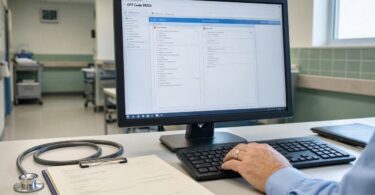
Oxygen therapy is a life-saving treatment for patients with chronic respiratory conditions such as COPD, pulmonary fibrosis, and severe asthma. One of the most commonly billed codes for durable medical equipment (DME) in oxygen therapy is CPT Code E1390, which refers to stationary oxygen concentrators.
This article provides an in-depth exploration of CPT Code E1390, including its definition, medical necessity, billing guidelines, insurance coverage, and future advancements in oxygen therapy. Whether you’re a healthcare provider, medical coder, DME supplier, or patient, this guide will help you navigate the complexities of E1390 with clarity.

CPT Code E1390
2. What Is CPT Code E1390?
CPT Code E1390 is a billing code used to describe a stationary oxygen concentrator capable of delivering continuous flow oxygen at various liter-per-minute (LPM) settings. It falls under the Durable Medical Equipment (DME) category and is regulated by Medicare, Medicaid, and private insurers.
Key Features of E1390 Oxygen Concentrators:
-
Continuous flow (not pulse-dose)
-
Prescription required (medical necessity must be documented)
-
Covers only stationary (non-portable) devices
-
Typically used in home settings
Comparison of E1390 vs. Other Oxygen Concentrator Codes
| CPT Code | Device Type | Flow Type | Portability |
|---|---|---|---|
| E1390 | Stationary Oxygen Concentrator | Continuous Flow | No (Fixed) |
| E1392 | Portable Oxygen Concentrator | Pulse-Dose | Yes |
| E0431 | Portable Gas System | Continuous/Pulse | Yes |
3. Understanding Oxygen Concentrators
Oxygen concentrators are medical devices that filter nitrogen from ambient air, delivering purified oxygen (90-95% concentration) to patients.
How They Work:
-
Air Intake: Draws in room air.
-
Compression: Compresses air into molecular sieve beds.
-
Filtration: Removes nitrogen, retaining oxygen.
-
Delivery: Supplies oxygen via nasal cannula or mask.
Types of Oxygen Concentrators:
-
Stationary (E1390): For home use, higher flow rates (up to 10 LPM).
-
Portable (E1392): Lightweight, battery-operated, pulse-dose delivery.
Oxygen Concentrator Flow Rates & Uses
| Condition | Recommended LPM | Device Type |
|---|---|---|
| Mild COPD | 1-2 LPM | Portable (E1392) |
| Severe COPD/Pulmonary Fibrosis | 5-10 LPM | Stationary (E1390) |
| Sleep Apnea with Hypoxia | 2-4 LPM | Stationary + Humidifier |
4. Medical Necessity and Eligibility for E1390
To qualify for an E1390-covered oxygen concentrator, patients must meet strict medical criteria:
Documentation Requirements:
-
Arterial Blood Gas (ABG) Test: PaO2 ≤ 55 mmHg or SpO2 ≤ 88% at rest.
-
Pulmonary Function Tests (PFTs): Confirming severe respiratory impairment.
-
Physician’s Prescription: Stating the need for continuous oxygen therapy.
Insurance Denial Risks:
-
Lack of proper documentation.
-
Billing for portable instead of stationary concentrators.
-
Missing proof of medical necessity.
5. Billing CPT Code E1390 Correctly
Steps for Accurate Billing:
-
Verify Insurance Coverage (Medicare, Medicaid, or private payer).
-
Ensure Proper Documentation (ABG, PFTs, physician notes).
-
Use Correct Modifiers (e.g., NU for new equipment).
-
Submit Claims with Supporting Documents.
Common Denials & Solutions:
-
Denial: “Medical necessity not proven.”
-
Solution: Submit ABG/PFT results.
-
-
Denial: “Prior authorization required.”
-
Solution: Obtain pre-approval from insurer.
-
6. Future Trends in Oxygen Therapy
-
Smart Oxygen Concentrators (IoT-enabled remote monitoring).
-
Lightweight Portable Systems (Replacing some stationary uses).
-
Improved Battery Life & Efficiency.
7. Conclusion
CPT Code E1390 is essential for patients requiring stationary oxygen concentrators. Proper documentation, billing accuracy, and compliance with insurer guidelines are crucial for approval. As technology advances, oxygen therapy will become more efficient and patient-friendly.
8. FAQs
Q1: Can I get a portable oxygen concentrator under E1390?
No, E1390 covers only stationary concentrators. Portable units require E1392.
Q2: How often does Medicare cover oxygen concentrator replacements?
Typically every 5 years, unless medically necessary sooner.
Q3: What if my claim for E1390 is denied?
Appeal with additional medical documentation supporting necessity.