Navigating the world of medical coding can sometimes feel like learning a new language. If you are a medical coder, a physician, a student, or a healthcare administrator, you know that accuracy is everything. One wrong character can mean the difference between a clean claim and a denied reimbursement.
If you have been searching for the correct “cpt code for abdominal aortogram,” you have come to the right place. This guide is designed to be your comprehensive resource. We will break down what this procedure entails, explore the specific codes you need, and discuss the nuances of bundling, modifiers, and reimbursement.
Our goal is to provide you with a clear, honest, and practical roadmap. Let’s demystify this coding scenario together.
CPT Code for Abdominal Aortogram
What is an Abdominal Aortogram?
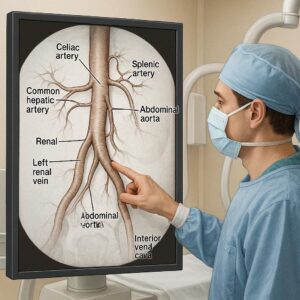
Before we dive into the numbers, it is essential to understand what the procedure actually is. An aortogram, at its core, is an angiogram of the aorta. Specifically, an abdominal aortogram is a minimally invasive imaging test that allows a radiologist or cardiologist to see the abdominal aorta—the main artery supplying blood to your stomach, liver, kidneys, and legs.
During the procedure, a thin, flexible tube called a catheter is inserted, usually into an artery in the groin (the femoral artery) or sometimes the arm. The doctor guides this catheter, using live X-ray guidance (fluoroscopy), into the abdominal aorta. A contrast dye is then injected through the catheter, and a series of X-ray images are taken. These images reveal the inside of the blood vessels, showing blood flow and identifying any blockages, narrowing (stenosis), aneurysms (bulging), or other abnormalities.
Why is this procedure performed?
An abdominal aortogram is a powerful diagnostic tool. It is typically ordered to:
-
Evaluate an Abdominal Aortic Aneurysm (AAA): To precisely measure its size and location before treatment.
-
Assess Peripheral Arterial Disease (PAD): To find blockages in the arteries that supply blood to the legs.
-
Investigate Renal Artery Stenosis: To check for narrowing in the arteries that go to the kidneys, which can cause high blood pressure.
-
Plan for Surgery or Intervention: It provides a detailed “road map” for vascular surgeons planning a bypass or stent placement.
-
Preoperative Evaluation: In some cases, for living kidney donors to map their blood supply.
The Primary CPT Code for Abdominal Aortogram
Let’s get to the heart of the matter. The medical coding system uses Current Procedural Terminology (CPT) codes to describe the services performed. For an abdominal aortogram, there is one code that fits the standard, standalone procedure.
CPT 75635: The Workhorse Code
The primary and most comprehensive code for this procedure is CPT 75635.
Official Description: Computed tomographic angiography, abdominal aorta and bilateral iliofemoral lower extremity runoff, radiological supervision and interpretation, with contrast material(s), including noncontrast images, if performed.
Important Note: While the older, film-based codes (like 75625 for an abdominal aortogram) have been retired, CPT 75635 is the modern standard for CT angiography (CTA) of the abdominal aorta. In today’s practice, traditional catheter-based aortography has largely been replaced by CTA for diagnostic purposes. If you are coding for a diagnostic interventional radiology procedure using a catheter and X-ray, you must look into the vascular family coding, which we will discuss in the next section.
To be perfectly clear, in 99% of modern outpatient and inpatient settings, when a physician orders an “abdominal aortogram,” they are referring to a CT scan. Therefore, 75635 is the code you will use most frequently.
What Does 75635 Include?
This code is bundled, meaning it includes several components in one. It covers the radiological supervision and interpretation of:
-
The abdominal aorta.
-
Both iliac arteries (the arteries in your pelvis).
-
The lower extremity runoff vessels (the arteries all the way down both legs).
The description also notes that it includes the use of contrast material and any non-contrast images taken for comparison. It is a complete package for evaluating the vascular system from the abdomen down through the feet.
Catheter-Based Aortography: A Different Coding Scenario
While less common for purely diagnostic purposes, you may still encounter a traditional, catheter-based abdominal aortogram, often performed in a hospital’s catheterization lab or during an interventional radiology procedure.
In this case, the coding is not as simple as using one single code. It falls under the larger category of vascular injection procedures. These codes are divided based on the anatomy and the order of the vessels injected.
The “First Order” Code: CPT 36200
If the goal of the procedure is to perform an aortogram by placing the catheter tip in the aorta and injecting contrast, you will look at codes in the 36200-36299 range.
-
CPT 36200: Introduction of catheter, aorta.
-
Official Description: This code represents the work of placing the catheter into the aorta. However, it is critical to understand that this is an introduction code only. It does not include the injection of contrast or the taking of X-ray images. In coding terms, it covers the “surgical” component of the catheter placement.
To fully code the procedure, you would need to pair this with the appropriate radiological supervision and interpretation code.
The Corresponding S&I Code: CPT 75625 (Archived)
In the past, you would pair CPT 36200 with CPT 75625 (Aortography, abdominal, by serialography, radiological supervision and interpretation). This code covered the “reading” of the images.
Crucial Update: CPT 75625 has been deleted and is no longer valid for billing. It was removed when the CPT coding system consolidated many of the old, modality-specific radiology codes.
Modern Coding for Catheter-Directed Angiography
Today, if you need to code for a diagnostic catheter-based abdominal aortogram, you must use the codes from the Coding Institute (CI) or Interventional Radiology (IR) families. These are often bundled by the radiologist or cardiologist performing the procedure.
You will use codes for selective catheter placement and the associated radiological supervision and interpretation (S&I). For a non-selective study of the aorta, the coding might look like this:
-
Surgical Component: 36200 (for catheter placement in the aorta).
-
Radiological S&I Component: +75630 (if it included aortography and bilateral lower extremity runoff) or a similar code. However, many interventional radiologists now use a combination of codes from the +36221-36228 series for CT and MR angiography, and for catheter-based work, the radiology component is often captured within a global package code or a specific S&I code for aortography.
The key takeaway is that diagnostic angiography coding is complex. If you are coding for an invasive procedure, you must have the full operative report to determine the order of vessels selected and the extent of imaging performed. It is rarely a one-code-fits-all scenario.
Comparing the Key CPT Codes
To make this easier, let’s look at a comparison table of the codes mentioned.
| CPT Code | Status | Procedure Type | Official Description (Simplified) | Typical Use Case |
|---|---|---|---|---|
| 75635 | Active | CT Angiography (CTA) | CTA of abdominal aorta and both leg arteries, including contrast and images. | The most common code. Outpatient CT scan for AAA, PAD, or renal artery evaluation. |
| 36200 | Active | Catheter Introduction | Catheter placed into the aorta. | The “surgical” part of a catheter-based procedure in a cath lab or IR suite. |
| 75625 | Deleted | Catheter Angiography | Old code for abdominal aortography (film-based). | Do not use. This code is no longer in the CPT manual. |
Understanding Bundling and Modifiers
Using the correct code is only half the battle. You also need to know what is included and what isn’t.
What is Bundled with 75635?
CPT 75635 is a comprehensive code. You cannot separately bill for:
-
Imaging of the abdomen.
-
Imaging of the pelvis.
-
Imaging of the legs.
-
The contrast material (in a facility setting, the hospital bills for the contrast).
-
Non-contrast images (if performed as part of the study).
The code includes the professional component (the doctor’s interpretation) and the technical component (the use of the equipment and technician time) depending on where the service is performed. When you see a code without a modifier, it usually implies the global service.
When to Use Modifiers
Modifiers are two-character codes that provide extra information about the service performed. They tell the payer, “This service was different, but here is why.”
-
Modifier -26 (Professional Component): If you are a physician billing only for your interpretation of the CT scan performed at a hospital, you would append -26 to 75635 (e.g., 75635-26). The hospital would bill the technical component with a separate, facility-specific code (like a “TC” modifier, though many payers now require separate HCPCS codes for the TC).
-
Modifier -TC (Technical Component): This is used by a facility or independent lab to bill only for the use of their equipment and staff. You rarely see this on a physician’s claim.
-
Modifier -59 (Distinct Procedural Service): This is a critical modifier in interventional radiology. If a surgeon performs a diagnostic abdominal aortogram and then, during the same session, decides to perform an intervention (like an angioplasty or stent placement), the diagnostic portion may be bundled into the intervention. To indicate that the diagnostic run was a separate, distinct, and necessary service (e.g., to make the treatment decision), you may append -59 to the diagnostic code. Payer rules for this vary widely, so careful documentation is essential.
Note for Coders: Always check with your local Medicare Administrative Contractor (MAC) and private payers for their specific National and Local Coverage Determinations (NCDs and LCDs). They often have specific guidelines on when diagnostic angiography is separately payable before an intervention.
What Influences Reimbursement?
The actual payment you receive for CPT 75635 is not a fixed national price. It is determined by a few key factors:
-
Place of Service (POS): Is the procedure performed in a hospital outpatient department (HOPD), a physician’s office, or an independent diagnostic testing facility (IDTF)? Each place has a different fee schedule. Reimbursement is typically higher in a physician’s office (since the practice bears the overhead cost of the equipment) and lower for the professional component only in a hospital.
-
Payer Contract: Private insurance companies negotiate rates with providers. These contracted rates can differ significantly from the Medicare fee schedule.
-
Geographic Locality: Medicare uses a Geographic Practice Cost Index (GPCI) to adjust payments based on the cost of living and practice expenses in a specific area. A code reimbursed in New York City will be higher than the same code in rural Montana.
-
Medicare Fee Schedule: For Medicare patients, payment is determined by the Medicare Physician Fee Schedule (MPFS), which is updated annually. You can look up the specific rate for 75635 in your locality on the CMS website.
The Importance of Accurate Documentation
Codes are just a reflection of the medical record. If the documentation isn’t clear, the coding won’t be accurate. To support the use of CPT 75635 or any other aortogram code, the physician’s report must clearly state:
-
The reason for the exam: The signs, symptoms, or diagnosis (e.g., “abdominal bruit, rule out renal artery stenosis”).
-
The anatomy evaluated: “Abdominal aorta and bilateral lower extremity runoff.”
-
The technique used: “CT Angiography of the abdomen and lower extremities was performed following the administration of IV contrast.”
-
The findings: A detailed description of what was seen in the aorta, iliac arteries, and leg vessels.
-
The impression/Conclusion: A summary of the diagnosis and any recommendations.
Poor documentation leads to downcoding, denials, and potential compliance issues.
Common Mistakes to Avoid
Even experienced coders can trip up. Here are some pitfalls to watch out for:
-
Using old codes: Billing with the retired code 75625 is a surefire way to get a claim rejected.
-
Unbundling: Trying to bill separate codes for the abdomen and each leg when using 75635 is not allowed. It’s a bundled study.
-
Coding from a requisition form only: Never code from the order alone. You must read the final report to confirm what was actually done.
-
Forgetting the diagnosis code: A CPT code must be linked to an appropriate ICD-10-CM diagnosis code that justifies the medical necessity of the procedure. For example, linking 75635 to a code for “leg pain” might be rejected if the documentation doesn’t show an attempt to rule out vascular causes.
-
Incorrect use of modifiers: Overusing or misusing modifiers like -59 is a major audit risk.
The Patient’s Perspective: What to Expect
While we focus on the coding side, it’s helpful to understand the patient’s journey, as it puts the procedure into context.
Before the Procedure:
-
The patient will likely be asked to stop eating or drinking for a few hours beforehand.
-
They should inform their doctor of all medications, allergies (especially to iodine or shellfish, which can indicate a contrast dye allergy), and any conditions like diabetes or kidney problems.
-
Blood work may be done to check kidney function, as the contrast dye is processed by the kidneys.
During the Procedure (for a CTA – CPT 75635):
-
The patient lies on a table that slides into the large, donut-shaped CT scanner.
-
An IV line is started in a vein, usually in the hand or arm.
-
The patient will be asked to hold their breath for short periods to prevent blurring.
-
The contrast dye is injected through the IV. A common sensation is a warm, flushing feeling that spreads through the body. It is harmless and passes quickly.
-
The scan itself is painless and usually takes only a few minutes.
After the Procedure:
-
The patient can typically resume normal activities immediately.
-
They are encouraged to drink plenty of fluids to help flush the contrast from their system.
-
The images are interpreted by a radiologist, and a report is sent to the referring physician, who will discuss the results with the patient.
Future Trends in Vascular Imaging and Coding
The world of medical coding is not static. As technology evolves, so do the codes. What might the future hold for abdominal aortogram coding?
-
Increased use of AI: Artificial intelligence is already being used to assist in interpreting imaging studies. This may eventually lead to new, more specific codes for AI-aided interpretation.
-
Advanced Visualization: 3D reconstructions and other advanced imaging techniques are becoming standard. Codes may evolve to better capture this additional work.
-
Combined Modality Exams: We may see more bundled codes for hybrid imaging, such as PET/CT angiography.
-
Value-Based Care: As reimbursement shifts from volume to value, the focus will be on the quality and appropriateness of the imaging study, rather than just the number of codes billed.
Conclusion
Finding the correct CPT code for an abdominal aortogram depends entirely on the context of the procedure. For the vast majority of modern diagnostic studies, CPT 75635 (CT angiography of the abdominal aorta and bilateral lower extremity runoff) is the accurate and specific code you need. For the rare catheter-based procedure, a more complex coding path involving vascular introduction and supervision codes is required. Accurate coding hinges on a clear understanding of the procedure, meticulous documentation, and a firm grasp of payer rules.
Frequently Asked Questions (FAQ)
1. What is the difference between CPT 75635 and an ultrasound of the abdomen?
CPT 75635 is a CT angiogram, which uses X-rays and IV contrast to create detailed 3D images of the arteries. An abdominal ultrasound (e.g., CPT 76700) uses sound waves to create images of solid organs like the liver and gallbladder, and can also be used to screen for an aortic aneurysm (aorta ultrasound, often CPT 76706). They are completely different technologies used for different purposes.
2. Can I bill CPT 75635 and a separate code for a renal artery study?
It depends on what was done. CPT 75635 is a comprehensive runoff study. It typically includes visualization of the renal arteries as they branch off the aorta. If the study was specifically a CT angiogram of the abdomen and lower extremities, the renal arteries are part of that evaluation. You generally cannot add an additional, separate code for them.
3. Is an abdominal aortogram the same as an angiogram?
An aortogram is a specific type of angiogram. An angiogram is a general term for imaging any blood vessel (arteries or veins). An aortogram specifically images the aorta. So, an abdominal aortogram is an angiogram of the abdominal aorta.
4. What ICD-10 code goes with CPT 75635?
The ICD-10 code must support the medical necessity for the study. Common examples include:
-
I71.4 for Abdominal aortic aneurysm, without rupture
-
I70.0 for Atherosclerosis of aorta
-
I70.20 for Unspecified atherosclerosis of native arteries of extremities
-
R03.1 for Nonspecific elevation of blood-pressure reading (if investigating renovascular hypertension)
-
Z11.6 for Encounter for screening for other bacterial diseases (this is not appropriate for a diagnostic aortogram; it’s for screening, which is different).
5. Does Medicare cover abdominal aortograms?
Yes, Medicare covers medically necessary abdominal aortograms. Coverage is determined by Local Coverage Determinations (LCDs). Generally, it is covered for indications like diagnosing or monitoring an aneurysm, evaluating PAD, or as part of preoperative planning for a kidney transplant.