If you are a medical coder, a billing specialist, or a podiatrist trying to make sense of a claim, you know that foot surgery coding sits at a tricky intersection of detail and precision. One of the most common procedures performed in conjunction with bunion surgery is the Akin osteotomy. But when it sits down at the coding table, where does it belong? How do you bill for it? And why does it sometimes feel like you are leaving money on the table?
Let’s clear the air. This guide is designed to walk you through everything you need to know about the correct CPT code for an Akin osteotomy. We will look at how it works as an add-on procedure, how it interacts with a standard bunionectomy, and the specific modifiers you need to keep your claims clean and your reimbursements accurate.
By the time you finish reading, you will not just know a code; you will understand the logic behind it. And that is what turns a good coder into a great one.
What is an Akin Osteotomy? A Quick Overview for Coders
Before we even talk about numbers and modifiers, we need to be on the same page about what the surgery actually is. You cannot code what you do not understand.
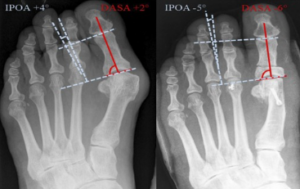
An Akin osteotomy is a surgical procedure performed on the foot, specifically on the big toe (the hallux). Unlike the more famous Scarf or Chevron osteotomies that cut and shift the metatarsal bone (the long bone in the foot), the Akin osteotomy is performed on the phalanx. More precisely, it is performed on the proximal phalanx of the hallux.
Here is the simplest way to visualize it:
-
The surgeon makes a small cut (osteotomy) in the base of the toe bone itself.
-
They remove a small wedge of bone, usually on the side closest to the second toe.
-
When they close the wedge, it straightens the toe, correcting any angulation.
Think of it as straightening a crooked picture frame by adjusting the frame itself, rather than the hook on the wall. It is a powerful procedure for correcting a condition called hallux valgus interphalangeus, where the very tip of the toe points outward away from the body.
CPT Code for an Akin Osteotomy
Why is this distinction important for coding?
Because the code you choose must reflect where the work is being done. If the surgeon works on the metatarsal, you are in one family of codes. If they work on the phalanx (the toe bone), you are in another.
The Primary Code: 28310
When searching for the “cpt code for akin osteotomy,” there is one answer that stands above the rest. The correct and most commonly used code is:
CPT 28310
Official Descriptor: Ostectomy, hallux valgus correction, with or without sesamoidectomy; proximal phalanx (eg, Akin type procedure)
Let’s break down why this is the perfect fit:
-
“Ostectomy” vs. “Osteotomy”: You might notice the code says “ostectomy” which means removal of bone. While the procedure is colloquially called an osteotomy (the cut), the code descriptor recognizes that the correction involves the removal of a bone wedge. It is a subtle but important distinction.
-
“Proximal phalanx”: This confirms the location. It is the toe bone, not the foot bone.
-
“(eg, Akin type procedure)”: The CPT manual literally uses the Akin procedure as its primary example. When a code name drops the name of the surgery, you know you are in the right place.
Important Note: CPT 28310 is technically a “correction” code. It assumes the surgeon is performing an ostectomy (bone removal) to realign the toe. While an Akin osteotomy involves an osteotomy (cut), the resection of the wedge qualifies it as an ostectomy for coding purposes.
Is It Separate? Understanding Add-On Codes and Bundling
Here is where the confusion usually starts. In the vast majority of cases, an Akin osteotomy is not performed alone. It is usually part of a larger procedure to correct a bunion.
If a patient has a bunion, they often have two problems:
-
The metatarsal bone is angled outward (hallux valgus).
-
The toe itself is angled outward (hallux valgus interphalangeus).
The surgeon will often fix the first problem with a procedure on the metatarsal (like a Chevron, Scarf, or Lapidus procedure) and fix the second problem with the Akin osteotomy on the toe.
So, the billing question becomes: Can I bill for both?
The answer is a nuanced yes, but carefully.
The Add-On Code Logic
Because the Akin osteotomy is performed on a different bone (the phalanx) than the primary bunion correction (the metatarsal), it is generally considered a distinct, separate surgical procedure. However, it is almost always performed through the same incision and during the same operative session.
To properly bill this, you need to understand the relationship between the codes.
-
Primary Procedure: You will bill the major bunion correction code (e.g., 28296 for a Chevron osteotomy with distal soft tissue repair, or 28297 for a Lapidus procedure).
-
Secondary Procedure: You will bill CPT 28310 for the Akin osteotomy.
Because these are separate bone procedures, you are not “double-dipping.” You are billing for two distinct surgical corrections.
The Modifier That Makes It Work: -59
This is the most critical part of the coding puzzle. When you submit two procedure codes together, the insurance company’s software (the National Correct Coding Initiative or NCCI edits) will look at them and say, “Are these really separate?”
Sometimes, the software might bundle 28310 into the primary bunion code, assuming it is part of the same service.
To tell the insurance company, “No, these are truly distinct procedures performed on different bones,” you need to attach a modifier.
The modifier you need is Modifier -59 (Distinct Procedural Service).
In many cases, you might also see Modifier -51 (Multiple Procedures), but for NCCI edits, -59 is the heavy lifter that unbundles the codes and proves medical necessity for both.
Coder’s Tip: Some payers prefer the -XS modifier (Separate Structure) over -59, as it is more specific. Check with your major carriers (Medicare, Blue Cross) for their preference, but in general, -59 remains the industry standard for showing a procedure was performed on a different anatomical structure.
The Payer Perspective: Why This Matters
Insurance companies scrutinize foot surgery codes because they are high-cost procedures. They want to ensure they are not paying twice for the same work.
When you submit a claim with both a bunionectomy code and an Akin osteotomy code (28310), the adjuster will be asking:
-
Was the Akin osteotomy medically necessary? Was the deformity at the toe level significant enough to warrant a separate bone cut?
-
Was it a separate procedure? Was it truly an additional service, or just a minor part of the main surgery?
By using Modifier -59, you are answering question number two definitively. However, you also need to ensure the documentation answers question number one. The operative report must clearly describe the deformity of the proximal phalanx and the decision to perform the Akin osteotomy to correct it.
Detailed Code Comparison: Akin vs. Other Bunion Codes
To help visualize where the Akin osteotomy fits in the puzzle, let us look at a comparison table of common foot surgery codes. This will help you see why 28310 is distinct and when to use it.
| CPT Code | Procedure Description | Anatomical Location | Typical Use Case | Relationship to Akin |
|---|---|---|---|---|
| 28310 | Ostectomy, proximal phalanx (Akin type) | Proximal Phalanx (Toe Bone) | Correcting hallux valgus interphalangeus (crooked toe tip). | The subject of this guide. |
| 28296 | Correction, hallux valgus (bunion), with sesamoidectomy; with metatarsal osteotomy (eg, Chevron) | Metatarsal Head (Foot Bone) | Correcting the angle of the first metatarsal. The classic “bunion” bump removal with bone cut. | Often performed with 28310 for a double correction. |
| 28297 | Correction, hallux valgus (bunion), with sesamoidectomy; with metatarsal osteotomy and soft tissue realignment (eg, Lapidus) | Tarsometatarsal Joint (Foot) | Correcting a severe instability at the base of the metatarsal. | Can be performed with 28310 for a “triple” arthrodesis (Lapidus + Akin). |
| 28292 | Correction, hallux valgus (bunion), with sesamoidectomy; Keller, McBride, or Mayo type procedure | Metatarsal & Joint | Older style procedure; often involves joint removal. | Less commonly combined; Akin is more modern joint-preserving. |
| 28302 | Osteotomy, talus or calcaneus | Talus or Calcaneus (Hindfoot) | Correcting rearfoot deformities. | Unrelated to the Akin site. |
Key Takeaway from the Table:
Notice that all the other codes (28296, 28297) focus on the metatarsal or the tarsal bones. Code 28310 is the only one in this family that specifically addresses the phalanx. This anatomical distinction is the bedrock of correct coding.
Step-by-Step: How to Bill an Akin Osteotomy
If you are sitting at your desk with an operative report in front of you, follow this simple checklist to ensure your claim is perfect.
Step 1: Read the Op Report for the “Akin” Mention
Look for the specific language. The surgeon will usually dictate something like:
“Attention was then turned to the hallux. A medial eminence resection was performed. An Akin osteotomy was then performed at the proximal phalanx to correct the residual valgus angulation of the toe. A wedge was resected and the osteotomy was fixated with a staple.”
If you see “Akin,” “proximal phalanx,” and “wedge resection,” you are on the right track.
Step 2: Identify the Primary Procedure
What was the main surgery?
-
Was it just the Akin? (Rare, but possible if the bunion deformity is minor and the toe deformity is primary).
-
Was it an Akin plus a bunionectomy?
-
Was it an Akin plus a hammertoe correction?
Step 3: Apply the Codes
-
If it is just the Akin: 28310 (No modifier needed, it is the only procedure).
-
If it is Akin + Bunionectomy: Primary Code (e.g., 28296) and Secondary Code (28310-59).
Step 4: Attach the Correct Modifier
For the secondary procedure (28310), append Modifier -59 to the claim line. This tells the payer, “Do not bundle this; it was a separate site.”
Step 5: Double-Check the Documentation
Ask yourself: Does the op report clearly state the medical necessity for the Akin? It should mention the “hallux valgus interphalangeus” or the residual angulation of the toe itself, not just the bunion.
Common Mistakes and How to Avoid Them
Even experienced coders can stumble on foot surgery. Here are the most frequent errors made when coding an Akin osteotomy.
Mistake #1: Using the Wrong Code for the Location
The Error: Using a metatarsal osteotomy code (like 28296) to bill for the Akin.
Why it happens: Confusion between the metatarsal and the phalanx.
The Fix: Remember the “P” in “Phalanx” and “Proximal” for code 28310. The toe is the phalanx; the foot bone is the metatarsal.
Mistake #2: Forgetting the Modifier
The Error: Billing 28296 and 28310 together without a modifier.
Why it happens: Assuming the payer knows they are different bones.
The Fix: Never assume. Insurance software looks for code pairs. If you don’t use -59, the secondary code (28310) will likely be denied as bundled.
Mistake #3: Unbundling When Not Supported
The Error: Using Modifier -59 when the Akin was a trivial part of the closure or was not medically indicated.
Why it happens: Trying to maximize reimbursement.
The Fix: Be honest. If the op report just says “a small wedge was removed to fine-tune the position,” it is still valid. But if there is no description of the deformity or the cut, you might be risking an audit.
Mistake #4: Confusing 28310 with 28306-28309
The Error: Mixing up the “283xx” series.
Why it happens: All the codes start with 283.
The Fix:
-
28300-28315 generally refer to the metatarsals (the long bones of the foot).
-
28310-28313 generally refer to the phalanges (the toe bones).
Reimbursement Realities and Payer Policies
Understanding the code is one thing; understanding the money is another. Reimbursement for an Akin osteotomy varies widely depending on the payer and the geography.
Medicare
Medicare generally follows the NCCI guidelines strictly. If you bill 28310 with a major bunion procedure, you will need the -59 modifier. Medicare Administrative Contractors (MACs) have local coverage determinations (LCDs) that may specify the medical necessity requirements for these procedures. It is always wise to check your specific MAC’s policy on hallux valgus correction.
Private Payers
Most private insurers follow Medicare’s lead regarding coding edits but may have different fee schedules.
-
Anthem/BCBS: Often require the -59 modifier and may audit for “separate site” specificity.
-
UnitedHealthcare: Similar to Medicare, they look for unbundling.
-
Aetna/Cigna: Generally accept the -59 modifier but have specific medical policies regarding the severity of the deformity required for surgery.
Realistic Expectation: You can generally expect reimbursement for 28310 to be somewhere in the range of 40% to 60% of the primary procedure’s value, depending on your contract. It is a significant add-on that compensates the surgeon for the extra time, skill, and fixation materials (like staples or screws) required.
The Role of Fixation in Coding
Does the type of screw or staple affect the code?
No. Whether the surgeon uses a buried screw, a nitinol staple, or even just sutures (though rare), the CPT code remains 28310.
The code is for the procedure (the bone cut and realignment), not the method of fixation. However, the type of fixation might be important for tracking implants in your inventory or for facility billing (where the hospital charges separately for the screw/staple as an implant), but for the professional fee (the surgeon’s bill), it does not change the code.
FAQ: Your Burning Questions Answered
Q: Can I bill an Akin osteotomy if it is done through the same incision as the bunionectomy?
A: Yes. The fact that it is the same incision does not matter. What matters is that it is a separate bone. You should still use Modifier -59 to indicate it is a distinct procedural service.
Q: What if the surgeon performs an Akin osteotomy but does not remove a wedge, just drills and breaks the bone?
A: This is sometimes called a “greenstick” osteotomy. Technically, if they are creating an osteotomy to shift the bone, it still qualifies as a correction of the proximal phalanx. Code 28310 is still appropriate, as the code descriptor includes “Akin type procedure,” which implies a cut to change alignment. However, if no bone is removed at all (ostectomy), ensure the surgeon’s dictation supports the medical necessity for the osteotomy.
Q: Is there a separate code for a “reverse Akin” osteotomy?
A: A reverse Akin is sometimes performed to correct a deformity where the toe angles inward (hallux varus). You would still use 28310. The CPT code describes the anatomical location and the general act of cutting the bone; it does not specify the direction of the wedge. The medical necessity in the op report must clearly state it is for varus, not valgus, correction.
Q: My claim for 28310 was denied. What do I do?
A: First, look at the denial reason.
-
If it says “Bundled,” you likely forgot the -59 modifier. Appeal with the modifier and a copy of the op report highlighting the two distinct bone cuts.
-
If it says “Not Medically Necessary,” you need to provide the op report and possibly the clinical notes showing the preoperative deformity of the proximal phalanx (X-rays and physical exam findings).
Q: What if the Akin osteotomy is the only procedure performed?
A: If the patient only needs the toe straightened and the main bunion deformity is minimal, bill 28310 alone. No modifier is needed.
Conclusion
Coding for an Akin osteotomy doesn’t have to be a headache. By remembering the key principles—anatomy matters, modifiers are your friend, and documentation is king—you can navigate this with ease. The correct code is 28310, and when paired with another bunion procedure, it requires Modifier -59 to tell the story of a distinct and necessary surgical correction.
Summary
An Akin osteotomy is coded with CPT 28310, specifically targeting the proximal phalanx. When combined with a primary bunionectomy, it requires Modifier -59 to be recognized as a distinct service. Accurate coding relies on understanding the anatomical separation between the toe and foot bones.
Additional Resource
For the most up-to-date information on coding edits and payer policies, the American Podiatric Medical Association (APMA) provides excellent resources for coding and reimbursement.
[Visit the APMA Coding Resource Center] (https://www.apma.org/){:target=“_blank”}
Disclaimer: The information provided in this article is for educational and informational purposes only and does not constitute legal, billing, or coding advice. CPT codes are property of the American Medical Association. Reimbursement policies vary by payer and region. You should always consult with qualified professionals and refer to current coding manuals and payer contracts for guidance on specific claims.