If you have been told you need a shoulder MRI with contrast, you might be looking at your pre-authorization paperwork and feeling a bit overwhelmed. Medical coding can feel like a secret language. You are looking for the specific cpt code for mri arthrogram shoulder to understand what is being billed, or perhaps you are a medical coder trying to ensure your documentation is perfect.
You are in the right place.
In this guide, we will strip away the confusion. We will look at not just one code, but the family of codes associated with this specific procedure. We will explore why the code matters, how it affects your insurance, and what actually happens during the exam.
By the end of this article, you will have a clear, professional understanding of the coding landscape. Let’s get started.
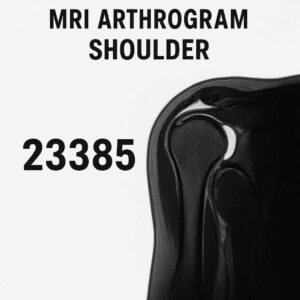
CPT Code for MRI Arthrogram Shoulder
What is an MRI Arthrogram of the Shoulder?
Before we dive into the numbers, it is helpful to understand exactly what this procedure is. An MRI arthrogram is not a standard MRI. It is a two-part process designed to give radiologists the clearest possible view of the intricate structures inside your shoulder joint.
The Two-Step Process
A standard MRI uses a powerful magnetic field and radio waves to create detailed images. However, sometimes the soft tissues—like the labrum, ligaments, and tendons—can look similar to the joint fluid surrounding them. To solve this, your doctor will order an arthrogram.
-
The Injection: First, a radiologist uses fluoroscopy (live X-ray) or ultrasound to guide a thin needle into your shoulder joint. They inject a contrast solution. This solution is often a mixture of gadolinium (a safe contrast agent for MRI) and saline.
-
The MRI Scan: After the injection, you are moved to the MRI machine. The contrast solution distends the joint capsule, outlining the structures perfectly. It acts like a highlighter, making tears or abnormalities “pop” in the image.
Why the Shoulder?
The shoulder is a complex ball-and-socket joint. It is highly mobile, which also makes it prone to injury. An MRI arthrogram is considered the gold standard for diagnosing:
-
Labral tears: (SLAP tears, Bankart lesions) which are common in athletes or after dislocations.
-
Rotator cuff tears: Especially partial tears on the underside of the tendon that are hard to see on a standard MRI.
-
Instability: Checking for loose bodies or damage after repeated dislocations.
The Primary CPT Code: 73222
When we talk about the cpt code for mri arthrogram shoulder, the main code you will encounter is 73222.
This is the specific Current Procedural Terminology (CPT) code designated for:
Magnetic resonance (e.g., proton) imaging, any joint of upper extremity; with arthrography
Let’s break down what this code actually covers.
-
732: This is the prefix for MRI procedures of the upper extremity.
-
22: This specific suffix indicates that the procedure includes the arthrography component (the injection of contrast).
What 73222 Includes
When a provider bills 73222, they are billing for the complete service: the injection of contrast under imaging guidance and the subsequent MRI scan of the shoulder. In most outpatient settings, this is the bundled code used because it is efficient and covers the entire diagnostic pathway.
Distinguishing 73222 from 73221
To understand why 73222 is specific, you have to look at its neighbor, 73221.
-
73221: MRI upper extremity joint without contrast material.
-
73222: MRI upper extremity joint with arthrography.
If you have a standard MRI of the shoulder without an injection, the code is 73221. However, if the doctor needs to see inside the joint capsule with contrast, they use 73222. It is crucial that these are not confused, as the reimbursement rates and medical necessity requirements are vastly different.
The Injection Component: A Closer Look at Guidance
This is where coding can get a little tricky. While 73222 is the primary code for the entire procedure in most cases, the way the injection is performed matters.
The injection is not just a blind stick. It requires imaging guidance to ensure the contrast goes precisely into the joint space and not into the surrounding muscle or tissue.
Fluoroscopic Guidance (77002)
In many facilities, the radiologist uses a live X-ray (fluoroscopy) to guide the needle.
-
77002: Fluoroscopic guidance for needle placement (e.g., biopsy, aspiration, injection).
Ultrasound Guidance (76942)
Alternatively, some radiologists prefer ultrasound because it shows the soft tissues in real-time and avoids radiation exposure.
-
76942: Ultrasonic guidance for needle placement (e.g., biopsy, aspiration, injection).
How This Fits with 73222
Here is the nuance. If a facility is billing globally (the technical component of the MRI plus the injection), 73222 typically includes the injection guidance. However, in some settings—particularly in hospital outpatient departments (HOPDs) or when the injection is done by a different specialty prior to the MRI—you may see 73222 billed alongside a guidance code like 77002.
Important Note: Payers often have policies that bundle 77002 into 73222. This means they will not pay for the guidance separately if billed on the same day by the same provider. It is essential to check payer-specific guidelines.
Professional vs. Technical Components
Another layer of complexity involves who owns the equipment and who reads the scan.
CPT codes are often split into components, especially in institutional settings like hospitals.
-
Technical Component (TC): This covers the cost of the equipment, the technologist’s time, the contrast material, and the facility overhead. If a hospital owns the MRI machine, they bill the TC.
-
Professional Component (26): This covers the physician’s work: the interpretation of the images and the creation of the report.
-
Global: If the same entity provides both the equipment and the interpretation (like in a private imaging center), they bill the global code.
So, for an MRI arthrogram shoulder, you might see:
-
73222-TC (Facility fee)
-
73222-26 (Radiologist’s reading fee)
Understanding this helps explain why you might receive two separate bills for one procedure—one from the hospital and one from the radiologist.
When Modifiers Are Necessary
Modifiers are two-digit additions to CPT codes that tell the insurance company something changed about the procedure. For shoulder arthrograms, certain modifiers are common.
Modifier 50: Bilateral Procedure
If the patient requires an MRI arthrogram on both shoulders, you do not simply bill 73222 twice. Instead, you use modifier 50.
-
73222-50
This signals to the payer that the procedure was performed bilaterally. Reimbursement policies vary, but usually, the second side is paid at a reduced rate (often 50% of the allowable amount).
Modifier RT and LT
If you are not using Modifier 50, you must specify which side was done.
-
73222-RT (Right side)
-
73222-LT (Left side)
This is non-negotiable. Insurance companies will deny the claim if the laterality is not clearly stated, as they need to know which body part was treated to ensure medical necessity.
A Comparative Look: Upper Extremity MRI Codes
To truly appreciate where 73222 fits, it is helpful to see it alongside other codes in the same family. This table illustrates the differences in MRI coding for the upper extremity.
| CPT Code | Description | Key Differentiator |
|---|---|---|
| 73218 | MRI upper extremity, joint; without contrast | Basic joint MRI (e.g., wrist, elbow) without injection. |
| 73219 | MRI upper extremity, joint; with contrast | Joint MRI with IV contrast (not typically used for arthrograms). |
| 73220 | MRI upper extremity, joint; without contrast followed by contrast | Joint MRI done twice—once without, once with contrast (rare for shoulders). |
| 73221 | MRI upper extremity joint; without contrast | The standard “non-contrast” MRI shoulder code. |
| 73222 | MRI upper extremity joint; with arthrography | The primary code for MRI arthrogram shoulder. |
| 73223 | MRI upper extremity joint; without contrast followed by contrast (IV) | Complex study, rarely used for arthrogram as arthrogram uses intra-articular contrast, not IV. |
As you can see, 73222 stands alone as the specific code for the arthrogram technique.
What to Expect: The Patient Journey
If you are a patient scheduled for this procedure, knowing the coding helps, but knowing what to expect physically can ease anxiety. Here is a typical timeline.
Step 1: The Pre-Procedure Check
You will arrive at the imaging center or hospital. You will be asked to change into a gown. Metal is a strict no-go in the MRI suite, so you will remove jewelry, watches, and anything with metal zippers.
Note: If you have a history of kidney disease, you must inform the technologist. The contrast used (gadolinium) is generally safe, but in patients with severe kidney issues, there is a risk of nephrogenic systemic fibrosis (NSF). Blood work may be required to ensure your kidneys are functioning properly.
Step 2: The Arthrogram Injection
You will lie on a table, usually under a fluoroscope (X-ray machine) or next to an ultrasound machine.
-
Cleaning: The radiologist will clean your shoulder with an antiseptic.
-
Numbing: They will inject a local anesthetic (lidocaine) to numb the skin and the tissues down to the joint capsule.
-
Injection: Using imaging for guidance, they insert a needle into the shoulder joint. You may feel pressure. They inject the contrast. You might hear a “pop” as the contrast enters the joint.
-
Post-Injection: You will be asked to move your shoulder gently. This helps the contrast coat the structures inside the joint.
Step 3: The MRI Scan
After the injection, you will be moved to the MRI suite (or the table slides into the MRI if it’s a combined system).
-
Positioning: You will lie on your back or side. A special coil (like a cage) will be placed over your shoulder to capture the signal.
-
The Scan: You must remain perfectly still. The machine makes loud knocking and buzzing sounds. You will be given earplugs or headphones. The scan usually lasts between 30 and 45 minutes.
-
Contrast Confirmation: The technologist will ensure the contrast is visible in the joint before you leave.
Reimbursement and Medical Necessity
From a billing perspective, the cpt code for mri arthrogram shoulder (73222) is a high-cost, high-complexity procedure. Insurance companies do not approve these lightly. They require proof of medical necessity.
What constitutes medical necessity? It is not enough to have “shoulder pain.”
Common Acceptable Diagnoses
For 73222 to be considered medically necessary, the diagnosis codes (ICD-10) usually must support a high suspicion of:
-
M24.11: Disorder of articular cartilage, shoulder (e.g., labral tear)
-
S43.4xxA: Sprain of shoulder joint (rotator cuff/labrum)
-
M75.100: Unspecified rotator cuff tear or rupture
-
Post-dislocation: History of shoulder instability requiring assessment of the labrum
-
S46.0xxA: Injury of rotator cuff
Pre-Authorization
Almost all insurance plans require pre-authorization (prior approval) for 73222. The ordering physician’s office must submit clinical notes and imaging requests to the insurance company to prove why an arthrogram is necessary instead of a standard non-contrast MRI (73221).
If you skip this step, the insurance company can deny the claim entirely, leaving you responsible for the full bill—which can range from $1,500 to $3,500 or more depending on the facility.
Common Billing Mistakes to Avoid
For medical coders and billers, accuracy is everything. Here are the most frequent errors seen with MRI arthrogram coding.
1. Mixing Up 73222 and 73221
This is the most common error. If the documentation clearly states an arthrogram was performed (contrast injected into the joint), 73222 is the correct code. Using 73221 (without contrast) when contrast was used is under-coding and can result in a loss of revenue or a compliance risk if corrected later.
2. Unbundling the Injection
Some billers attempt to bill the injection (20610 – Arthrocentesis) separately.
-
20610: Arthrocentesis, aspiration and/or injection; major joint or bursa.
-
The Rule: You cannot bill 20610 with 73222 on the same day for the same joint. The injection is considered integral to the arthrogram. The only exception is if the injection is performed for a separate, distinct reason (e.g., a therapeutic injection for pain) on a different day.
3. Missing Laterality
Failing to append -RT or -LT to the claim is a surefire way to get a denial. Insurance systems require this to calculate benefits.
4. Incorrect Use of Modifier 59
If the injection guidance (77002) is billed separately and the payer allows it, a modifier -59 (Distinct Procedural Service) is often required to indicate the guidance was a separate and distinct service from the MRI. However, as noted, most payers bundle this.
The Role of Contrast: Intra-Articular vs. Intravenous
A point of frequent confusion in medical coding is the type of contrast used. This distinction is critical for selecting the correct CPT code.
-
Intra-Articular (Joint) Contrast: This is what happens in an arthrogram. The contrast is injected directly into the joint space. This is represented by 73222.
-
Intravenous (IV) Contrast: This is when contrast is injected into a vein in your arm. It circulates through the bloodstream and helps highlight inflammation, tumors, or vascularity. If an MRI of the shoulder is done with only IV contrast, the code is 73219.
If a physician orders an MRI with “contrast” but does not specify the route, it is the coder’s responsibility to check the documentation to ensure the correct code (73219 vs 73222) is used. They are not interchangeable.
Medicare and Insurance Policies
Medicare and commercial insurance carriers have specific Local Coverage Determinations (LCDs) and coverage policies regarding MRI arthrograms.
Medicare Guidelines
Medicare generally covers 73222 when:
-
There is a suspected labral tear that cannot be diagnosed by physical exam or standard MRI.
-
There is a history of shoulder instability with suspected intra-articular pathology.
-
The patient has had a prior rotator cuff repair and there is a suspected recurrent tear.
Medicare also strictly enforces the frequency of these exams. They are considered “high-cost” and are typically not allowed to be repeated on the same joint within a short timeframe (often 90 days) unless there is a significant change in clinical status.
Commercial Payer Trends
Many private insurers are moving toward “radiation reduction” protocols. Some are beginning to approve MR Arthrograms with direct injection using Ultrasound guidance over fluoroscopy (X-ray) when possible, though the CPT code (73222) remains the same. The guidance code (76942 vs 77002) simply reflects the technique used.
Frequently Asked Questions (FAQ)
Here are some of the most common questions people ask about this procedure and its billing.
Q: Does 73222 include the injection?
A: Yes, in the vast majority of cases, 73222 is a global code that includes the fluoroscopic or ultrasound guidance, the injection of contrast, and the MRI scan. However, the professional interpretation (reading) is often billed separately with the -26 modifier.
Q: Is an MRI arthrogram painful?
A: Most patients report a brief sting from the local anesthetic used to numb the skin. The contrast injection itself usually causes a sensation of pressure or fullness in the joint, but not sharp pain. If you experience severe pain during the injection, tell the radiologist immediately, as the needle may be in the wrong position.
Q: Why can’t I just get a regular MRI?
A: A regular MRI (73221) is excellent for looking at rotator cuff tendons and general anatomy. However, the labrum (the cartilage rim around the socket) is often difficult to see clearly without the contrast distending the joint. If your doctor suspects a labral tear (common in athletes or after dislocations), an arthrogram provides a much more accurate diagnosis.
Q: How long does the contrast stay in my shoulder?
A: The contrast solution is eventually absorbed by your body. You may feel a slight “clicking” or fluid sensation for 12 to 24 hours after the procedure. This is normal. If you develop increasing pain, redness, or fever, contact your doctor immediately as this could indicate infection.
Q: I have a metal implant. Can I have this procedure?
A: It depends on the type of metal. Most surgical hardware (plates, screws, joint replacements) is made of titanium or non-ferromagnetic stainless steel and is MRI-safe. However, you must complete a thorough safety screening. Tell the MRI technologist about any metal in your body, including old bullet fragments, pacemakers, or aneurysm clips.
How to Prepare for Your MRI Arthrogram
Preparation is minimal, but following these tips can ensure your scan is successful and your images are diagnostic.
-
Medications: Take your usual medications unless told otherwise. If you are on blood thinners (like warfarin, apixaban, or rivaroxaban), you must inform the scheduling staff and the radiologist. You may need to stop these medications temporarily before the injection to reduce the risk of bleeding into the joint.
-
Clothing: Wear a loose-fitting, two-piece outfit. You will likely change into a gown, but comfortable clothing helps you relax afterward.
-
Transportation: You do not need a driver for the sedation (there usually is none), but if you take a mild anti-anxiety medication for the MRI, arrange for a ride home.
-
Allergies: Inform the staff if you have a known allergy to gadolinium or iodine-based contrast. While gadolinium allergies are rare, they do occur.
The Future of Shoulder Arthrography
The field of musculoskeletal radiology is always evolving. While the CPT code 73222 remains standard for 2026 and the foreseeable future, there are interesting developments on the horizon.
3T MRI
High-field-strength 3 Tesla (3T) MRI machines provide double the signal-to-noise ratio of standard 1.5T machines. In some advanced centers, high-resolution 3T imaging is beginning to reduce the need for direct arthrograms for certain indications. However, for complex labral pathology, the arthrogram still reigns supreme.
AI Integration
Artificial intelligence is being integrated into MRI workflows. AI algorithms can help accelerate scan times, reducing the time a patient has to lie still with a contrast-filled joint. While this does not change the CPT code, it improves the patient experience and throughput for imaging centers.
A Note on Out-of-Pocket Costs
One of the biggest concerns for patients is cost. The cpt code for mri arthrogram shoulder (73222) is often associated with higher out-of-pocket expenses due to its complexity.
-
In-Network vs. Out-of-Network: Always verify that the imaging center, the radiologist, and the facility are all in-network. A common financial trap is using an in-network facility only to have an out-of-network radiologist read the scan.
-
Deductibles: If you have a high-deductible health plan (HDHP), you may be responsible for the full contracted rate until you meet your deductible.
-
Payment Plans: Most hospitals and imaging centers offer payment plans. Do not hesitate to ask the billing department about financial assistance or installment options before the procedure.
Conclusion
Navigating the world of medical imaging can be daunting, but understanding the specifics brings clarity and control. The cpt code for mri arthrogram shoulder, 73222, is more than just a number; it represents a sophisticated diagnostic journey designed to provide surgeons and physicians with the most accurate view of the shoulder’s intricate internal landscape.
Whether you are a patient preparing for the procedure, a coder ensuring compliance, or a provider ordering the test, recognizing the distinction between 73222 and standard shoulder MRI codes is vital. It ensures the correct procedure is performed, the billing is accurate, and the insurance approval process goes smoothly. Remember, the goal of this detailed imaging is always the same: to pinpoint the source of pain and instability so you can get back to moving freely and living well.
Additional Resource
For the most up-to-date information on Local Coverage Determinations (LCDs) for MRI arthrography in your specific state, it is highly recommended to consult the official Medicare Coverage Database. You can search for “MRI Arthrography Shoulder” to review specific coverage requirements and frequency limitations in your region.