Psychotherapy is a critical component of mental health treatment, helping individuals manage conditions such as depression, anxiety, PTSD, and other psychological disorders. To ensure proper billing and reimbursement, healthcare providers must use the correct Current Procedural Terminology (CPT) codes.
Among the most commonly used codes is CPT 90837, which applies to 60-minute individual psychotherapy sessions. This article provides an in-depth exploration of this code, including its proper use, documentation requirements, billing nuances, and best practices for maximizing reimbursement while maintaining compliance.
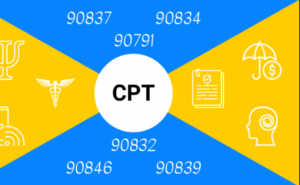
CPT Code for Psychotherapy 60 Minutes
2. Understanding CPT Code 90837 (60-Minute Psychotherapy)
Definition and Scope
CPT Code 90837 is defined as:
*”Psychotherapy, 60 minutes with patient and/or family member.”*
This code is used when a licensed mental health professional (e.g., psychiatrist, psychologist, licensed clinical social worker) conducts a 60-minute therapy session focused on diagnosing and treating mental health conditions.
When to Use 90837 vs. 90834
-
90834 = 45-minute session
-
90837 = 60-minute session
The key factor in choosing between these codes is time. If the session lasts 53 minutes or longer, 90837 should be billed. If it’s between 38-52 minutes, 90834 applies.
Table: Comparison of Psychotherapy CPT Codes
| CPT Code | Session Duration | Typical Use Case |
|---|---|---|
| 90832 | 30 minutes | Brief therapy, follow-ups |
| 90834 | 45 minutes | Standard individual therapy |
| 90837 | 60 minutes | Extended, in-depth therapy |
| 90847 | 50 mins (Family therapy) | Family/group involvement |
3. Documentation Requirements for 90837
Proper documentation is essential to justify billing 90837. Key elements include:
A. Session Time Log
-
Start and end times must be recorded.
-
Total face-to-face time (excluding administrative tasks).
B. Treatment Plan and Progress Notes
-
Diagnosis (e.g., F32.9 Major Depressive Disorder).
-
Therapeutic interventions used (CBT, DBT, etc.).
-
Patient response and progress toward goals.
C. Medical Necessity
-
Insurance requires proof that a 60-minute session was necessary (e.g., complex trauma, crisis intervention).
4. Billing and Reimbursement Guidelines
A. Medicare and Medicaid Policies
-
Medicare typically covers 90837 but may require additional documentation.
-
Some Medicaid programs limit the number of 60-minute sessions per year.
B. Private Insurance Considerations
-
Prior authorization may be needed for extended sessions.
-
Denials often occur due to insufficient documentation.
C. Self-Pay and Sliding Scale Options
-
Patients without coverage may opt for out-of-pocket payment.
-
Sliding scale fees can improve accessibility.
5. Common Billing Mistakes and How to Avoid Them
| Mistake | Solution |
|---|---|
| Billing 90837 for a 45-minute session | Use 90834 for sessions under 53 minutes |
| Lack of time documentation | Log exact start/end times in EHR |
| Unsubstantiated medical necessity | Detail why a 60-minute session was required |
6. Best Practices for Psychotherapy Sessions
-
Time Management: Structure sessions efficiently.
-
Patient-Centered Care: Tailor therapy to individual needs.
-
Compliance: Stay updated on CMS and APA billing guidelines.
7. Conclusion
CPT code 90837 is essential for billing 60-minute psychotherapy sessions, but proper documentation and adherence to billing rules are crucial. Understanding differences between 90834 and 90837, avoiding common mistakes, and staying informed on insurance policies will ensure compliance and optimal reimbursement.
8. FAQs on CPT Code 90837
Q1: Can I bill 90837 for a 50-minute session?
No, 90834 should be used for sessions under 53 minutes.
Q2: Does Medicare cover 90837?
Yes, but documentation must support medical necessity.
Q3: What if insurance denies my claim?
Appeal with additional clinical notes justifying the session length.