In the vast and intricate world of orthopedic surgery, few procedures have the transformative power of a total knee arthroplasty (TKA). Often referred to as a “knee replacement,” this operation stands as a beacon of modern medicine’s ability to restore quality of life, turning debilitating, bone-on-bone pain into a gateway for renewed mobility and freedom. For over 800,000 Americans each year, this procedure is not just a medical code on a chart; it is a second chance at an active life. But behind this clinical miracle lies a language of precision—a system of codes and descriptors that allows surgeons, hospitals, coders, and insurers to communicate with unambiguous clarity. At the heart of this language for a primary knee replacement on the right side is five digits that carry immense weight: CPT Code 27447.
This article is dedicated to a comprehensive exploration of CPT code 27447. We will move far beyond a simple definition, embarking on a detailed journey that covers the procedure’s clinical nuances, its precise placement within the CPT coding system, the critical importance of flawless documentation, and the complex financial and compliance landscape that surrounds it. Whether you are an orthopedic surgeon refining your documentation skills, a medical coder seeking mastery, a healthcare administrator managing revenue cycles, or a patient seeking to understand the bureaucracy behind your care, this guide aims to be the definitive resource. Our goal is to ensure that the story told by the medical record—from the first diagnosis to the final claim—is as precise and effective as the surgery itself.
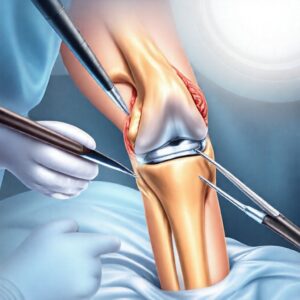
CPT Code for Right Total Knee Arthroplasty
2. Understanding the Fundamentals: What is a Total Knee Arthroplasty?
Before one can truly appreciate the code, one must understand the procedure it represents. A total knee arthroplasty is a major surgical operation in which a damaged or diseased knee joint is resurfaced with artificial components, known as prostheses or implants.
Anatomy of a Knee Gone Wrong: Osteoarthritis and Beyond
The native knee is a complex hinge joint where the femur (thigh bone), tibia (shin bone), and patella (kneecap) meet. The ends of these bones are covered with a smooth, durable layer of articular cartilage, which allows for frictionless movement. Menisci act as shock-absorbing cushions between the femur and tibia. The primary culprit necessitating a TKA is primary osteoarthritis, a “wear-and-tear” condition where this protective cartilage gradually erodes. This leads to pain, stiffness, swelling, and a significant loss of function. Other conditions that can destroy the joint include:
-
Rheumatoid arthritis and other inflammatory autoimmune diseases
-
Post-traumatic arthritis (following a serious fracture or ligament injury)
-
Osteonecrosis (death of bone tissue due to lack of blood supply)
-
Severe deformity (e.g., bowleg or knock-knee)
The Prosthesis: Engineering a New Knee
A knee prosthesis is not a single implant but a system of components typically made from cobalt-chromium alloys, titanium, and highly cross-linked polyethylene (a durable medical-grade plastic). The main components are:
-
Femoral Component: Covers the end of the femur. It is a curved, metal component that recreates the joint’s natural groove.
-
Tibial Component: A two-part piece that includes a flat metal tray attached to the top of the tibia and a polyethylene insert that sits securely within the tray. This insert acts as the new bearing surface.
-
Patellar Component: A dome-shaped piece of polyethylene that resurfacing the back side of the kneecap. Not all TKAs include this, but it is common.
These components can be fixed to the bone using bone cement (polymethylmethacrylate) or can be cementless, designed with porous surfaces that allow the patient’s own bone to grow into them for biologic fixation.
The Surgical Goal: Restoration of Function and Alleviation of Pain
The objectives of TKA are unequivocal: to relieve pain that has not responded to conservative measures (medications, injections, physical therapy) and to restore mechanical alignment and function to the knee, thereby dramatically improving the patient’s ability to perform activities of daily living.
3. The CPT® Ecosystem: A Primer on the Code Set
CPT, or Current Procedural Terminology, is a uniform coding system developed and maintained by the American Medical Association (AMA). It is the foundational language used to describe medical, surgical, and diagnostic services across the United States and is essential for communication with payers for reimbursement.
What is the CPT® Code Set and Who Governs It?
CPT is a proprietary code set that is mandated for use by the Health Insurance Portability and Accountability Act (HIPAA) for reporting physician and outpatient services. The AMA’s CPT Editorial Panel, composed of physicians, and the Relative Value Scale Update Committee (RUC), which advises CMS on the value of services, are responsible for its ongoing updates, additions, and deletions. This ensures the code set evolves with medical innovation.
The Structure of a CPT Code: Category I, II, and III
-
Category I: These are the standard five-digit codes used for reporting procedures and services performed by physicians. They are widely accepted by payers. Code 27447 is a Category I code.
-
Category II: These are optional alphanumeric codes used for performance measurement and tracking. They are not used for reimbursement.
-
Category III: These are temporary codes for emerging technologies, services, and procedures. They allow for data collection on new services before they are considered for a permanent Category I status.
The Importance of Unilateral and Bilateral Coding Distinctions
A core principle in surgical coding is laterality—specifying which side of the body a procedure was performed on. The CPT code set is designed with this in mind. Many codes, including 27447, are inherently unilateral. This means the code describes the procedure on a single side. Performing the same procedure on both sides during the same operative session requires the use of the bilateral modifier (-50). This distinction is critical for accurate billing and appropriate reimbursement.
4. A Deep Dive into CPT Code 27447: The Specifics
Official Code Descriptor: A Word-for-Word Analysis
The official descriptor for CPT code 27447 in the AMA CPT® Professional Edition is:
“Arthroplasty, knee, condyle and plateau; medial AND lateral compartments with or without patella resurfacing (total knee arthroplasty)”
Let’s deconstruct this:
-
Arthroplasty: This is the medical term for surgical joint reconstruction or replacement.
-
Knee: Specifies the joint involved.
-
Condyle and plateau: Refers to the specific anatomical parts. The femoral condyles are the two rounded prominences at the end of the femur. The tibial plateau is the flat top of the tibia. Replacing both indicates a total, not partial, replacement.
-
Medial AND lateral compartments: This is the most critical part of the descriptor. The knee has three compartments: medial (inner), lateral (outer), and patellofemoral (behind the kneecap). A total knee arthroplasty, by definition, involves replacing the medial and lateral compartments. The use of “AND” is a deliberate and inclusive “and,” meaning both must be addressed.
-
With or without patella resurfacing: This indicates that the code is inclusive. Whether the surgeon resurfaces the undersurface of the patella or chooses not to, the same code, 27447, is used. The decision is based on the condition of the patient’s patellar cartilage and the surgeon’s clinical judgment.
What Makes 27447 Unique? Differentiating from Partial Knee Replacements and Revisions
It is crucial to understand what 27447 is not.
-
It is not a unicompartmental/partial knee arthroplasty (UKA). Codes 27446 (medial OR lateral compartment) and 27445 (patellofemoral compartment only) are used for procedures that address only one compartment. 27447 is used only when both the medial and lateral tibiofemoral compartments are replaced.
-
It is not a revision arthroplasty. Code 27487 is used when a previously implanted total knee prosthesis must be removed and replaced. Revision surgery is far more complex, carries higher RVUs (Relative Value Units), and has a different code.
The “Right” Side of the Story: Laterality in Coding
CPT code 27447, as listed in the codebook, is inherently unilateral and does not specify a side. It is the coder’s responsibility to append the appropriate modifier to indicate laterality. For a right TKA, the code must be reported as 27447-RT. Failure to append this modifier will almost certainly result in a claim rejection or denial, as the payer cannot determine which knee was replaced. This simple two-digit modifier is a non-negotiable requirement for clean claim submission.
5. The Surgical Journey: A Step-by-Step Walkthrough of the Procedure
Understanding the technical steps involved in a TKA is paramount for coders to appreciate the work described in an operative report and for clinicians to document it thoroughly.
Preoperative Phase: Patient Selection, Education, and Surgical Planning
The process begins long before the incision. The surgeon must confirm the diagnosis through history, physical exam, and radiographs (X-rays). They ensure all conservative measures have been exhausted. Patient education is critical, setting realistic expectations for recovery and outcomes. Modern planning often involves using long-standing X-rays to measure mechanical alignment and, increasingly, CT or MRI scans for creating patient-specific instrumentation (PSI) or planning for robotic-assisted surgery.
Day of Surgery: Anesthesia, Positioning, and Draping
The patient receives regional anesthesia (e.g., spinal block) often combined with sedation or general anesthesia. They are positioned supine on the operating table, and a tourniquet is applied high on the thigh to create a bloodless surgical field. The entire limb is prepped and draped in a sterile fashion.
The Incision and Surgical Approach
A standard anterior midline skin incision is made, followed by a medial parapatellar arthrotomy—an incision through the quadriceps tendon, around the patella, and into the medial capsule to open the joint and evert the patella.
Bone Resection: Precision and Alignment
Using manual jigs, PSI guides, or robotic-arm technology, the surgeon makes precise bone cuts:
-
Distal Femur Cut: The end of the femur is cut to align perpendicular to the mechanical axis of the leg.
-
Femoral Anterior/Posterior Cuts: The front and back of the femur are cut to size the femoral component.
-
Proximal Tibia Cut: The top of the tibia is cut to remove the damaged plateau.
-
Patellar Resection (if performed): The arthritic posterior surface of the patella is trimmed flat.
Implant Trialing, Balancing, and Final Fixation
Trial components are placed. The surgeon meticulously tests the knee’s range of motion, stability, and alignment—a process known as “balancing the knee.” Ligament releases may be performed to ensure proper tension. Once satisfied, the trials are removed. The bone surface is prepared, and the final implants are inserted with or without cement. The knee is reduced, and the cement is allowed to harden if used.
Wound Closure and the Path to Recovery
The joint is irrigated with saline. A drain may be placed. The arthrotomy and subcutaneous tissues are closed with sutures, and the skin is closed with staples or sutures. A sterile dressing is applied. The patient is moved to recovery and begins physical therapy often on the same day, embarking on a months-long journey of rehabilitation.
6. Coding in Practice: Mastering 27447 and its Companions
Bundled Services: What’s Included in 27447?
The concept of “bundling” is central to CPT. Code 27447 represents a global service. It includes not only the procedure itself but also:
-
The surgical approach (the arthrotomy)
-
The dissection
-
All component insertion
-
Any synovectomy or scar tissue excision performed within the knee joint
-
Any partial meniscectomy required to facilitate implantation
-
The irrigation and closure
-
Typical postoperative care within the global period
Modifiers: The Essential Tools for Accuracy
Modifiers are two-digit codes that provide additional information about a service without changing the definition of the code itself.
-
Modifier -LT / -RT (Left Side / Right Side): As established, this is mandatory. 27447-RT is the correct code for a right total knee arthroplasty.
-
Modifier -50 (Bilateral Procedure): If a patient undergoes a left TKA and a right TKA during the same surgical session, the codes are reported as 27447-RT, 27447-LT-50. Payer policies on reimbursement for bilateral procedures vary; some pay 100% for the first and 50% for the second, while others have different formulas.
-
Modifier -22 (Increased Procedural Services): This is used rarely and only when the service provided is substantially greater than typically required. For a TKA, this might be warranted in cases of extreme deformity (e.g., severe post-traumatic arthritis with 40 degrees of fixed flexion contracture and bone loss requiring extensive reconstruction with augments or cones). Documentation must be impeccable to justify its use, as it signals a request for additional reimbursement.
-
Modifier -52 (Reduced Services): This is even rarer in TKA. It might be used if a procedure was terminated after anesthesia was administered but before the arthrotomy was made, for example.
Commonly Reported Ancillary Codes (CPT, HCPCS)
While 27447 is the star, other codes are often reported alongside it for the same encounter.
-
Anesthesia: 01402 (Anesthesia for open procedures involving knee joint)
-
Radiology: 73564 (Radiologic examination, knee; complete, 4 or more views) – for preoperative and postoperative films.
-
Pathology: 88305 (Level IV – Surgical pathology, gross and microscopic examination) for any tissue removed (e.g., synovium).
-
HCPCS Level II Codes:
-
C1776 (Joint device, prosthetic) and C1781 (Prosthetic implant, patellofemoral) for the implant itself (often billed by the hospital).
-
L1832 (Knee orthosis, adjustable knee joints, custom fabricated) for a postoperative brace.
-
Global Surgical Package: Understanding the 90-Day Postoperative Period
A major concept in surgical reimbursement is the “global period.” For code 27447, the global period is 90 days. This means that the payment for 27447 is intended to cover:
-
The procedure itself
-
All related preoperative visits after the decision for surgery is made (e.g., the visit where surgery is scheduled)
-
All postoperative follow-up care for the next 90 days
-
Management of typical complications
During this 90-day window, separate evaluation and management (E/M) codes for routine postoperative care are generally not billable. However, care for unrelated problems or a return to the operating room for a complication (e.g., manipulation under anesthesia for stiffness, coded as 27570) may be billed separately with a modifier like -78 or -79.
7. The Documentation Imperative: What Surgeons Must Record
The operative report is the source of truth for the coder. Incomplete documentation leads to incorrect coding, which can result in denials, audits, and compliance issues.
Key Elements of a Defensible Operative Report
A robust operative report for a 27447 procedure should include:
-
Preoperative and Postoperative Diagnoses: e.g., “Primary osteoarthritis, right knee.”
-
Title of Procedure: “Right total knee arthroplasty.”
-
Surgeon(s) and Assistant(s): Names and roles.
-
Anesthesia: Type used.
-
Description of Procedure (in detail):
-
Incision: Location and length.
-
Approach: “Medial parapatellar arthrotomy.”
-
Findings: Description of the articular cartilage damage, osteophyte presence, ligament status.
-
Steps: Detail of bone resections (e.g., “9mm of distal femur was resected using an intramedullary guide set to 5 degrees of valgus.”).
-
Implants: The manufacturer, name, and size of every component used must be documented. This is often recorded on a separate implant sheet but should be in the report. (e.g., “Zimmer Persona PS Femoral Component, size D; Tibial Baseplate, size 4; 11mm Polyethylene Insert; Zimmer 32mm Patellar Component”).
-
Patella: Explicitly state “patella was resurfaced” or “patella was not resurfaced.”
-
Cement: State whether cement was used and on which components (e.g., “All components were cemented with Palacos antibiotic-impregnated bone cement.”).
-
Closure: Description of how the wound was closed.
-
-
Estimated Blood Loss (EBL) and Tourniquet Time.
-
Specimens: Any tissue sent to pathology (e.g., “Synovial tissue and medial meniscal remnant sent for pathology.”).
-
Complications: “None” or a detailed account of any intraoperative issues.
Linking Medical Necessity to Diagnosis Codes (ICD-10-CM)
The medical reason for performing the TKA must be clearly documented and linked to the correct diagnosis code. The primary ICD-10-CM code for 27447 is most often:
-
M17.0 – Bilateral primary osteoarthritis of knee (if billing for one knee, this is still correct as the code describes the disease state, not the procedure)
-
M17.11 – Unilateral primary osteoarthritis, right knee
Other common codes include M17.5 (secondary osteoarthritis), M05.761 (Rheumatoid arthritis of right knee), and M23.201 (Derangement of right medial meniscus due to old tear).
Avoiding Clinical Vagueities that Lead to Denials
Phrases like “knee arthroplasty performed” or “components placed” are insufficient. Documentation must be precise, quantitative, and unambiguous to support the use of 27447 and to differentiate it from other procedures like a revision or a partial replacement.
8. Navigating the Financial Landscape: Reimbursement and Compliance
Understanding the RUC Process and RVU Assignment
The value of a CPT code is expressed in Relative Value Units (RVUs), which are determined through the AMA/Specialty Society RVS Update Committee (RUC) process. The RUC surveys physicians to gauge the work involved in a procedure. The total RVU for a code has three components:
-
Work RVU (wRVU): Reflects the physician’s time, skill, effort, and stress.
-
Practice Expense (PE) RVU: Covers overhead like staff, equipment, and supplies.
-
Malpractice (MP) RVU: Covers the cost of professional liability insurance.
These RVUs are multiplied by a conversion factor (CF) set by CMS to determine the Medicare payment amount. Code 27447 carries a significant total RVU, reflecting its complexity.
Common Denial Reasons for 27447 and How to Appeal
-
Missing Modifier: Denial for no laterality modifier. Solution: Resubmit with -RT or -LT.
-
Bundling: Denial of an ancillary service as included in the primary procedure. Solution: Ensure the service was truly distinct and not part of the global package. Appeal with clinical rationale.
-
Medical Necessity: Denial stating the procedure was not medically necessary. Solution: Appeal with strong documentation (progress notes, X-ray reports) demonstrating failure of conservative treatment and significant functional limitation.
-
Invalid Code for Place of Service: 27447 is typically performed in an inpatient or outpatient hospital setting (Place of Service 21 or 22). Billing for POS 11 (office) would be incorrect.
Compliance Pitfalls: Avoiding Fraud, Waste, and Abuse
-
Unbundling: Knowingly reporting multiple codes for services that are bundled into 27447.
-
Upcoding: Using 27447 when a simpler procedure (e.g., 27446 unicompartmental) was actually performed.
-
Misrepresenting Laterality: Billing for the wrong knee.
-
Lack of Medical Necessity Documentation: Performing surgery without adequate proof that it was needed.
Maintaining auditable, detailed records is the best defense against compliance issues.
9. Beyond the Primary: Related Codes and Clinical Scenarios
CPT 27486: Revision Total Knee Arthroplasty
This code is used when a previously implanted total knee prosthesis is removed and replaced. It is vastly more complex than a primary TKA. The work involves:
-
Painstaking removal of old components, often with specialized tools.
-
Dealing with bone loss, which may require bone grafts or metal augments.
-
Addressing ligament instability, which may require more constrained (hinged) implants.
The RVUs for 27486 are significantly higher than for 27447, reflecting the increased work and time.
CPT 27445: Arthroplasty, knee, hinge prosthesis (e.g., Walldius type)
This code is for a constrained hinge prosthesis. This is not a standard TKA. It is used in cases of extreme instability, massive bone loss, or certain tumor resections where the standard ligamentous support of the knee is absent. It is a more radical procedure and has its own unique code.
CPT 27437: Arthroscopy, knee, surgical; osteochondral autograft(s)
This represents a completely different philosophy—joint preservation. It involves harvesting a plug of healthy bone and cartilage from a non-weight-bearing area of the knee and transplanting it into a damaged area. It is for focal defects in younger patients, not widespread arthritis.
10. The Future of Knee Arthroplasty and its Coding
Technological Advancements: Robotics, Custom Implants, and Augmented Reality
The field is rapidly evolving. Robotic-arm assisted surgery (codes like 0054T, 0055T are Category III codes for this assistance) allows for unprecedented precision in bone resection and implant positioning. Patient-specific instrumentation (PSI) uses MRI/CT scans to create custom jigs. These technologies may lead to new CPT codes or revised valuations for existing ones as the standard of care evolves.
Value-Based Care: Bundled Payments and the CJR Model
The healthcare reimbursement model is shifting from fee-for-service to value-based care. The Comprehensive Care for Joint Replacement (CJR) model is a mandatory bundled payment program in many markets. Under CJR, hospitals are held financially accountable for the quality and cost of an entire episode of care—from the surgery through 90 days post-discharge. This makes efficient coding and documentation even more critical, as it directly impacts the hospital’s and surgeon’s financial risk and reward.
Anticipated Evolution of CPT Coding for Complex Procedures
As techniques become more refined, the CPT code set may be updated to further differentiate levels of complexity within primary TKA. We may see new codes or modifiers to account for the additional work and resources required for cases involving advanced technology (robotics), extreme deformity, or specific reconstruction techniques.
11. Conclusion
CPT code 27447 is far more than a billing tool; it is a precise linguistic representation of a highly sophisticated surgical procedure that restores mobility and alleviates suffering. Its accurate application hinges on a deep, collaborative understanding between the orthopedic surgeon, who must provide exhaustive and precise documentation, and the medical coder, who must translate that narrative into the unambiguous language of CPT. In an era of technological advancement and value-based reimbursement, mastering the nuances of 27447—from its technical definition and required modifiers to its place within the global surgical package and bundled payment models—is essential for ensuring compliant, appropriate reimbursement for the life-changing work of total knee arthroplasty.
12. Frequently Asked Questions (FAQs)
Q1: If a surgeon performs a right TKA and also does a extensive synovectomy (removal of the synovial lining) during the same procedure, can I report an additional code for the synovectomy?
A: No. A synovectomy performed as a necessary part of gaining exposure and preparing the knee joint for the arthroplasty is considered an integral component of the total knee arthroplasty (27447) and is not separately reportable.
Q2: A patient had a left TKA 6 weeks ago and now presents to the clinic with pain and swelling in their right knee. The surgeon performs an evaluation and schedules a right TKA. Can I bill for that office E/M visit?
A: Yes. The 90-day global period for the left TKA only covers care related to the left knee. The problem with the right knee is a new, unrelated issue. You can bill an appropriate office E/M code (e.g., 99213) for the visit with a diagnosis code for the right knee arthritis (e.g., M17.11). Modifier -24 (Unrelated Evaluation and Management Service by the Same Physician During a Postoperative Period) may be required on the claim.
Q3: What is the correct coding if a TKA is started arthroscopically and then converted to an open procedure?
A: You only report the open procedure, 27447. The arthroscopic portion is considered a surgical approach that was included in the conversion to the definitive open procedure. Do not report a separate arthroscopy code.
Q4: How do I code for the implants used in the surgery?
A: The physician’s work of inserting the implants is included in 27447. However, the cost of the implants themselves is typically billed by the facility (hospital or ambulatory surgery center) using HCPCS Level II codes (e.g., C1776, L8699) on their own claim, not on the physician’s claim.
13. Additional Resources
-
The American Medical Association (AMA): For the official CPT® codebook and coding resources. https://www.ama-assn.org
-
The American Academy of Orthopaedic Surgeons (AAOS): For clinical guidelines, coding workshops, and position statements. https://www.aaos.org
-
The Centers for Medicare & Medicaid Services (CMS): For National Correct Coding Initiative (NCCI) edits, Medicare coverage policies, and information on bundled payment models like CJR. https://www.cms.gov
-
The American Health Information Management Association (AHIMA): For credentials and resources for medical coders. https://www.ahima.org
-
The American Academy of Professional Coders (AAPC): For certifications, training, and networking for medical coders. https://www.aapc.com