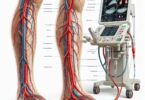
Echocardiography is a vital diagnostic tool in cardiology, providing real-time images of the heart’s structure and function. Accurate coding of echocardiograms is essential for proper billing and reimbursement. Understanding Current Procedural Terminology (CPT) codes ensures healthcare providers avoid claim denials and maximize revenue.
This guide explores the different types of echocardiograms, their corresponding CPT Codes for Echocardiograms, billing best practices, and emerging trends in cardiac imaging. Whether you’re a cardiologist, medical coder, or healthcare administrator, this article will help you navigate the complexities of echocardiogram coding.

CPT Codes for Echocardiograms
What Is an Echocardiogram?
An echocardiogram (echo) is a non-invasive ultrasound test that evaluates the heart’s chambers, valves, and blood flow. It helps diagnose conditions such as:
-
Heart failure
-
Valvular diseases (e.g., mitral regurgitation)
-
Congenital heart defects
-
Cardiomyopathies
-
Pericardial effusion
Echocardiograms use high-frequency sound waves to generate images, allowing cardiologists to assess heart function without radiation exposure.
Types of Echocardiograms and Their CPT Codes
1. Transthoracic Echocardiogram (TTE) (CPT 93306 & 93307)
-
93306: Complete TTE with 2D imaging, Doppler, and color flow.
-
93307: Limited or follow-up TTE (e.g., reassessment of a single parameter).
2. Transesophageal Echocardiogram (TEE) (CPT 93312–93318)
-
Involves inserting a probe into the esophagus for clearer images.
-
93312: Initial TEE for congenital cardiac anomalies.
-
93318: Monitoring during cardiac surgery.
3. Stress Echocardiogram (CPT 93350–93351)
-
Combines echocardiography with exercise or pharmacologic stress.
-
93350: Complete study with interpretation.
4. Doppler Echocardiography (CPT 93320–93325)
-
Measures blood flow velocity and direction.
5. 3D Echocardiography (CPT 93303–93304)
-
Provides volumetric imaging for complex cardiac assessments.
CPT Code Breakdown for Echocardiograms
| CPT Code | Description | Usage |
|---|---|---|
| 93306 | Complete TTE with Doppler | Full cardiac assessment |
| 93307 | Limited TTE | Follow-up or focused study |
| 93308 | TEE with probe insertion | Detailed valve assessment |
| 93312 | Stress echo with interpretation | Ischemia detection |
| 93320 | Doppler echocardiography | Blood flow analysis |
Billing and Reimbursement Guidelines
Documentation Requirements
-
Indication for the test (e.g., chest pain, murmur)
-
Findings and measurements (e.g., ejection fraction)
-
Comparison with prior studies (if applicable)
Common Denial Reasons
-
Lack of medical necessity
-
Incorrect modifier usage
-
Duplicate billing
Medicare and Private Payer Policies
-
Medicare covers echocardiograms for specific diagnoses (e.g., heart failure).
-
Private insurers may require prior authorization.
Emerging Trends in Echocardiography
-
AI-Assisted Analysis – Machine learning improves diagnostic accuracy.
-
Handheld Echo Devices – Portable ultrasounds for point-of-care diagnostics.
Conclusion
Understanding echocardiogram CPT codes ensures accurate billing and optimal reimbursement. Proper documentation, awareness of payer policies, and staying updated with coding changes are crucial. Advances in AI and portable technology are revolutionizing cardiac imaging, improving patient outcomes.
FAQs
Q1: What is the difference between CPT 93306 and 93307?
-
93306 is a complete echocardiogram, while 93307 is a limited or follow-up study.
Q2: Does Medicare cover stress echocardiograms?
-
Yes, if medically necessary (e.g., suspected coronary artery disease).
Q3: Can TEE and TTE be billed together?
-
Only if medically justified (e.g., inconclusive TTE requiring TEE).