The liver is a silent powerhouse, a metabolic maestro performing over 500 essential functions that sustain life. It filters toxins, produces vital proteins, stores energy, and aids in digestion. When this organ fails due to disease, cancer, or trauma, the consequences are dire. Fortunately, modern medicine offers a spectrum of interventions, from delicate biopsies to life-saving transplants, to diagnose, treat, and cure liver ailments. Yet, for every physical procedure performed by a skilled surgeon or interventionalist, there is a parallel process of administrative precision that is equally critical: medical coding.
The Current Procedural Terminology (CPT®) code set is the language used to translate complex medical procedures into a standardized, universal numeric script. This translation is not merely bureaucratic; it is the foundation of healthcare reimbursement, data analytics, public health tracking, and clinical research. Accurate coding for liver procedures is a discipline that demands a rare blend of knowledge: a deep understanding of human anatomy and surgical techniques, a meticulous grasp of constantly evolving coding rules, and a vigilant eye for compliance.
This article serves as a definitive guide for surgeons, gastroenterologists, interventional radiologists, medical coders, billers, and healthcare administrators navigating the intricate landscape of liver procedure CPT® codes. We will move beyond simple code lists and delve into the “why” and “how,” exploring the nuances, common pitfalls, and advanced concepts that separate adequate coding from expert coding. Our journey will take us from the initial diagnostic biopsy to the pinnacle of surgical achievement—the liver transplant—equipping you with the knowledge to ensure accuracy, compliance, and optimal patient care.
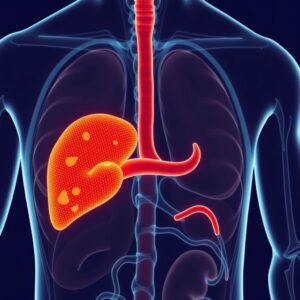
CPT Codes for Liver Procedures
Table of Contents
ToggleSection 1: Foundational Knowledge – Understanding the CPT® Ecosystem
Before diving into specific liver codes, one must understand the environment in which these codes exist.
What is the CPT® Code Set?
CPT® is a uniform coding system developed and maintained by the American Medical Association (AMA). It is used to describe medical, surgical, and diagnostic services provided by physicians and other healthcare professionals. Its primary purpose is to provide a uniform language for reporting these services, streamlining communication, and facilitating accurate reimbursement from insurers.
The Structure of a CPT® Code: Categories I, II, and III
-
Category I: These are the five-digit codes that form the core of the CPT® set. They represent procedures and services that are widely performed, approved by the FDA (if applicable), and have proven clinical efficacy. All primary liver procedure codes (e.g., 47135 for transplant) are Category I codes.
-
Category II: These are optional alphanumeric codes used for performance measurement and data collection. They are used to track things like patient counseling, follow-up, and other quality care measures. They are not used for liver procedures themselves but may be relevant for the overall patient encounter.
-
Category III: These are temporary codes for emerging technologies, services, and procedures. They allow for data collection on new procedures that are not yet widely performed enough to merit a Category I code. A liver-related technology might start here before becoming a permanent Category I code.
The Importance of Modifiers in Liver Coding
Modifiers are two-digit codes (e.g., -22, -50, -59, -LT, -RT) appended to a CPT® code to provide additional information about the service performed. They can indicate that a procedure was more complex than usual, performed bilaterally, or that multiple procedures were performed during the same session. Their correct use is non-negotiable in liver coding.
-
-22 (Increased Procedural Services): Used when the work required to perform a service is substantially greater than typically required. Example: A liver resection (47120) in a patient with severe prior adhesions from multiple previous surgeries.
-
-50 (Bilateral Procedure): The liver is a single organ, so -50 is not used for lobes. However, if a procedure is performed on paired organs during a liver case, this may apply.
-
-59 (Distinct Procedural Service): Used to identify procedures that are not normally reported together but are appropriate under the circumstances. This is a high-risk modifier that requires meticulous documentation to justify its use and avoid denials.
-
-LT and -RT (Left Side and Right Side): Crucially important. While the liver is one organ, its lobes are distinct surgical sites. Codes for ablation (47380 vs. 47381) and resection (47120 vs. 47125) are often specific to a lobe. Using -LT or -RT modifiers clarifies exactly which part of the organ was treated.
The Inseparability of CPT® and ICD-10-CM
CPT® tells the what (the procedure). ICD-10-CM tells the why (the diagnosis). They are two sides of the same coin. A claim for a liver biopsy (47000) will be denied without a supporting diagnosis code, such as K74.60 (Unspecified cirrhosis of liver) or R16.0 (Hepatomegaly). The medical necessity of the procedure must be established by the ICD-10-CM code.
Section 2: The Diagnostic Arsenal – Imaging and Laparoscopy Codes (47000-49399)
The journey often begins with diagnosis. Liver procedures in this category are primarily focused on obtaining tissue samples or visualizing the organ directly.
Percutaneous Liver Biopsy (47000, 47001): Technique, Guidance, and Modifiers
The percutaneous liver biopsy is a cornerstone of hepatology.
-
CPT® 47000: Biopsy of liver, needle; percutaneous. This code represents a standard needle biopsy.
-
CPT® 47001: …with radiologic guidance. This is an add-on code. It must never be reported alone. It is used in conjunction with 47000 when imaging guidance (ultrasound or CT) is used to precisely guide the needle into the target lesion.
Key Coding Considerations:
-
Guidance is Separate: The radiologist or other physician performing the imaging guidance reports their own separate code(s). 47001 is for the surgeon’s/gastroenterologist’s work of performing the biopsy with guidance.
-
Image Guidance Codes: The guidance itself is coded separately by the provider performing that service:
-
Ultrasound Guidance (76942): Ultrasonic guidance for needle placement…
-
CT Guidance (77012): Computed tomography guidance for needle placement…
-
Fluoroscopic Guidance (77002): Fluoroscopic guidance for needle placement…
-
-
Modifier -59: If multiple biopsies are taken from separate, distinct lesions, modifier -59 on a second 47000 might be justified, but this is rare and requires explicit documentation.
Laparoscopic Liver Biopsy (47379): A Minimally Invasive Alternative
When a percutaneous approach is too risky (e.g., due to ascites, coagulopathy, or the need for a more targeted biopsy), a surgeon may perform a laparoscopic biopsy.
-
CPT® 49320: Laparoscopy, abdomen, peritoneum, and omentum, diagnostic. This is the base code for diagnostic laparoscopy.
-
CPT® 47379: Unlisted laparoscopic procedure, liver. This is the correct code for a laparoscopic liver biopsy. According to AMA guidelines, a biopsy performed during a laparoscopy is not included in the diagnostic laparoscopy code (49320). The work of the biopsy is reported separately with 47379.
Documentation is King: Using an unlisted code requires strong documentation. The operative report must detail the procedure and justify its medical necessity. It is common practice to report 47379 with a cover letter comparing the service to a similar, established code (like 47000) and explaining the reason for the laparoscopic approach.
Diagnostic Laparoscopy (49320): A Window to the Abdomen
This procedure is used to visually inspect the liver and other abdominal organs, often for staging cancer (like pancreatic or gastric cancer) or diagnosing unexplained abdominal pain. If only a diagnostic laparoscopy is performed and the liver is simply visualized, only 49320 is reported. If a biopsy is taken, 47379 is added.
Section 3: The Surgeon’s Domain – Excision, Destruction, and Repair (47000-49999)
This section covers procedures where the surgeon physically alters the liver tissue, either by removing it or destroying it in place.
Wedge Resections vs. Lobectomies: Understanding the Anatomy
This is the most critical anatomical distinction in liver surgery coding.
-
Wedge Resection: This is a non-anatomic resection. The surgeon removes a portion of the liver, often including a tumor, without regard for the segmental or lobar boundaries. It’s like cutting a wedge out of a pie.
-
Lobectomy: This is a formal, anatomic resection. The surgeon removes an entire functional lobe of the liver (right or left) by meticulously dissecting along its natural vascular and biliary planes. This is a much more complex procedure.
Coding for Wedge Resection (47100, 47120)
-
CPT® 47100: Excision of lesion, liver; wedge resection. Use this code for a single wedge resection.
-
CPT® 47120: …partial hepatectomy. “Partial hepatectomy” is a broad term. In coding context, 47120 is typically used for a larger, more complex wedge resection or when multiple wedge resections are performed. The AMA CPT® Assistant has clarified that if multiple tumors are removed via separate wedge resections, only one unit of 47120 is reported. It is not reported per lesion.
Coding for Formal Lobectomy (47125, 47130)
-
CPT® 47125: Hepatectomy, resection of liver; partial lobectomy. This code is something of a misnomer. It is used for an anatomic resection of one or more segments of a lobe (e.g., a left lateral segmentectomy). It is not for a full lobe.
-
CPT® 47130: …total left lobectomy. Removal of the entire left lobe (segments II, III, and IV).
-
CPT® 47125: …total right lobectomy. Removal of the entire right lobe (segments V, VI, VII, and VIII). *Note: There is no specific code for a trisegmentectomy (e.g., right lobe + medial left lobe). This would be reported with 47120 (partial hepatectomy) or possibly 47125/47130 with extensive documentation.*
Ablation Therapy: Destroying Tumors with Radiofrequency (47370, 47371, 47380, 47381)
Ablation uses heat (radiofrequency-RFA, microwave-MWA) or cold (cryoablation) to destroy tumors without removing them.
-
Open/Laparoscopic Approach:
-
47370: Ablation, open, of 1 or more liver tumor(s); radiofrequency.
-
47371: …cryoablation.
-
-
Percutaneous Approach:
-
47380: Ablation, percutaneous, of 1 or more liver tumor(s); radiofrequency.
-
47381: …cryoablation.
-
Crucial Distinction: The codes are not reported per tumor. Whether the surgeon ablates one tumor or five tumors during the same session, only one unit of the code is reported. The code includes all tumors treated during that operative session. The approach (open vs. percutaneous) is the key differentiator.
Section 4: The Transplant Miracle – Coding for the Ultimate Procedure (47133-47147)
Liver transplantation represents the most complex and costly procedure in all of surgery. Its coding reflects this complexity.
The Donor Procedure (Living Donor Hepatectomy – 47133)
-
CPT® 47133: Donor hepatectomy (including cold preservation), from living donor. This code covers the entire procedure for removing a portion (usually the right lobe) of the liver from a healthy living donor for transplantation. It includes all pre-donation care, the surgery itself, and immediate post-operative care.
The Backbone: Recipient Liver Allotransplantation (47135)
-
CPT® 47135: Liver allotransplantation; orthotopic, partial or whole, from cadaver or living donor, recipient. This is the workhorse code for the transplant surgeon performing the recipient operation. It includes the removal of the diseased native liver (hepatectomy) and the implantation of the donor graft. It is a massive code that encompasses an enormous amount of work.
The Intricacies: Additional Procedures During Transplant (47136)
Transplants are rarely straightforward. This add-on code captures common additional complexities.
-
CPT® 47136: …with recipient hepatectomy (including portocaval shunt) performed in a separate session from the transplant itself (list separately in addition to code for primary procedure).
This is used if the native liver is removed in a separate, prior operative session from the transplant operation. This “piggyback” approach is sometimes used in very complex cases where the patient is too unstable to undergo the full transplant at once.
The Revision and Re-transplantation Codes (47140-47147)
This family of codes addresses complications.
-
47140: Explanation of liver transplant.
-
47141: Re-transplantation of liver. (This is reported instead of 47135).
-
47142-47147: Codes for various arterial and venous revisions and anastomoses.
Section 5: The Interventional Radiologist’s Toolkit – Vascular and Biliary Procedures
Not all liver procedures are performed in the operating room. Interventional Radiologists (IRs) treat many conditions percutaneously.
Transarterial Chemoembolization (TACE) – 37241, 37242, 37243
TACE is a targeted therapy for liver cancer. Chemotherapy drugs are injected directly into the artery feeding the tumor, followed by agents that block the artery (embolization).
-
CPT® 37241: Vascular embolization or occlusion…; tumor…
-
CPT® 37242: …with chemoembolization.
-
CPT® 37243: …with radioembolization.
Coding requires careful check of NCCI edits. The codes include all catheter placement, imaging, and embolization within the treated vascular distribution.
Radioembolization (Y-90) – 79445
Y-90 therapy involves injecting tiny radioactive beads into the hepatic arteries.
-
CPT® 79445: Radiopharmaceutical therapy, by intra-arterial particulate administration. This code is used for the administration of the Y-90 microspheres. The work of the catheter placement and angiograms is reported with separate codes (e.g., 36247, 75726).
Portal Vein Embolization (PVE) – 37248
Performed before a major resection to cause the future liver remnant to grow.
-
CPT® 37248: Transcatheter occlusion or embolization… for tumors… including all selective catheterization…; venous.
Biliary Drainage and Stenting (47510, 47511, 47525, 47530)
For managing biliary obstruction.
-
47510: Percutaneous biliary catheter placement.
-
47511: Exchange of biliary catheter.
-
47525: Biliary stent placement.
-
47530: Removal of biliary stent.
Section 6: Advanced Concepts and Compliance Challenges
Bundling and NCCI Edits: Avoiding Unbundling Pitfalls
The National Correct Coding Initiative (NCCI) edits are rules that prevent “unbundling”—the practice of separately reporting codes for services that are considered integral to a larger, more comprehensive procedure. For example, a diagnostic laparoscopy (49320) is bundled into a major liver resection. It would not be paid separately if performed immediately before the resection to plan the operation.
The Global Surgical Package: What’s Included?
Most surgery codes include payment for the surgery itself and all routine postoperative care for a “global period” (0, 10, or 90 days). A liver transplant (47135) has a 90-day global period. This means all follow-up visits, wound checks, and management of complications within those 90 days are included in the payment for 47135 and are not separately billable.
Documentation is King: What Coders Need from Providers
A coder can only code what is documented. The operative report must be explicit:
-
Procedure: Exactly what was done? (e.g., “laparoscopic wedge resection of segment VI” vs. “open right hepatic lobectomy“).
-
Approach: Open, laparoscopic, percutaneous, robotic?
-
Specificity: Right lobe vs. left lobe? Segment?
-
Guidance: Was ultrasound/CT used? For what?
-
Lesions: How many? Where? Was ablation complete?
-
Findings: What did the surgeon see and do?
Auditing and Compliance: Mitigating Risk
Regular internal and external audits are essential to ensure coding accuracy and protect against allegations of fraud and abuse. Audits verify that the codes submitted match the documentation in the medical record.
Common Liver CPT® Codes at a Glance
| CPT® Code | Procedure Description | Key Points & Considerations |
|---|---|---|
| 47000 | Percutaneous needle biopsy | Base code for the biopsy. |
| 47001 | Add-on for radiologic guidance | Never report alone. Use with 47000. |
| 47379 | Unlisted lap procedure, liver | Used for laparoscopic biopsy. Send records. |
| 47100 | Wedge resection, single | For a single, simple wedge. |
| 47120 | Partial hepatectomy | For larger/multiple wedges. Report once per session. |
| 47125 | Partial lobectomy | Anatomic resection of 1+ segments. |
| 47130 | Total left lobectomy | |
| 47125 | Total right lobectomy | |
| 47380 | Percutaneous RFA ablation | Reported once per session, regardless of # of tumors. |
| 47370 | Open RFA ablation | |
| 47133 | Living donor hepatectomy | For the healthy donor’s surgery. |
| 47135 | Liver transplant, recipient | The primary transplant code. 90-day global. |
| 37242 | Chemoembolization (TACE) | IR code. Includes catheter work within distribution. |
| 79445 | Radioembolization (Y-90) | Administration code only. Catheter work billed separately. |
Conclusion: The Art and Science of Liver Procedure Coding
Mastering liver CPT® codes requires a synthesis of anatomical knowledge and coding precision. Accuracy ensures fair reimbursement and fuels vital health data. Vigilant compliance, guided by thorough documentation and ongoing education, is the ethical and practical standard for all involved in this critical field.
Frequently Asked Questions (FAQs)
Q1: Can I report code 47000 for a biopsy performed during a laparoscopic procedure?
A: No. A biopsy performed during a laparoscopy is not reported with 47000 (percutaneous). You must use the unlisted laparoscopic code 47379 for the biopsy procedure, in addition to the diagnostic laparoscopy code (49320) if performed.
Q2: If a surgeon ablates three separate liver tumors during one percutaneous session, do I report 47380 three times?
A: No. CPT® codes 47380 and 47381 are reported once per session, not per tumor. A single code encompasses the ablation of all tumors treated during that operative encounter.
Q3: What is the difference between a wedge resection (47100) and a partial hepatectomy (47120)? When should I use each?
A: While the terms can overlap, 47100 is typically for a single, straightforward wedge resection. 47120 is used for a more extensive or complex wedge resection, or when multiple wedge resections are performed from different segments during the same operation. Only one unit of 47120 is reported for the session.
Q4: How do I code for a laparoscopic left lateral segmentectomy?
A: The correct code is 47125 (hepatectomy, partial lobectomy). You would append modifier -LT (left side) to specify the anatomy. The laparoscopic approach is inherent to the code selection; there is not a separate laparoscopic-specific code for resection.
Q5: Does the liver transplant code (47135) include the removal of the patient’s diseased liver?
A: Yes. CPT® code 47135 for the recipient liver transplant includes the total hepatectomy (removal of the diseased liver) as an integral component of the procedure. You would not report a separate code for the hepatectomy.
Additional Resources
-
The American Medical Association (AMA): The ultimate source for the CPT® code set, guidelines, and updates. https://www.ama-assn.org/
-
American College of Surgeons (ACS): Provides clinical resources and often has coding advice for surgeons. https://www.facs.org/
-
Society of Interventional Radiology (SIR): Excellent resource for coding guidelines specific to IR procedures like TACE and Y-90. https://www.sirweb.org/
-
Centers for Medicare & Medicaid Services (CMS): Provides NCCI edits, Medicare coverage policies, and transmittals that directly affect reimbursement. https://www.cms.gov/
-
The AAPC (American Academy of Professional Coders): A premier organization for medical coders, offering certifications, training, networking, and ongoing education. https://www.aapc.com/
Date: September 3, 2025
Author: The Medical Coding Specialist Team
Disclaimer: This article is intended for informational and educational purposes only. It is not a substitute for professional medical coding advice, consultation, or the official resources provided by the American Medical Association (AMA). CPT® is a registered trademark of the AMA. Medical coders must always consult the most current, official CPT® code book, AMA guidelines, and payer-specific policies for accurate coding and billing. The information contained herein is based on guidelines available as of the publication date and is subject to change.