Imagine a patient plagued by chronic abdominal pain, unexplained infertility, or a recurring bowel obstruction. After years of tests and misdiagnoses, the culprit is finally discovered not as a new disease, but as a web of internal scar tissue—adhesions—binding organs together that should be free. The solution is a delicate and precise surgical procedure known as lysis of adhesions or adhesiolysis. For the surgeon, the challenge is anatomical, requiring skill to dissect this scar tissue without causing injury. For the medical coder, biller, and healthcare administrator, the challenge is translating this complex procedure into the precise language of medical billing: Current Procedural Terminology (CPT) codes.
The coding for lysis of adhesions is a labyrinthine endeavor, fraught with potential for error. It sits at the intersection of intricate anatomy, varied surgical approaches, and stringent payer policies. Using the wrong code can lead to claim denials, significant revenue loss for a practice, and even compliance issues and audits. This article serves as a definitive guide to navigating this labyrinth. We will dissect the primary CPT codes for adhesiolysis, explore the critical link between detailed operative documentation and accurate coding, and provide practical strategies for ensuring proper reimbursement while maintaining full compliance. Whether you are a seasoned surgeon, a medical coder specializing in surgery, a healthcare administrator, or a billing professional, mastering this topic is essential for the financial and operational health of your practice.
CPT Codes for Lysis of Adhesions
2. Understanding Adhesions: The Body’s Unintended Scar Tissue
What Are Adhesions?
Adhesions are bands of fibrous scar tissue that form between internal organs and tissues. In a healthy physiological response to injury, such as surgery or inflammation, the body deposits fibrin—a sticky protein—to the damaged surfaces. Typically, this fibrin breakdown is controlled, and healing occurs without permanent scarring. However, sometimes this process becomes dysregulated. The fibrin persists and matures into fibrous, band-like tissue that fuses surfaces that are normally separate. Think of it as the body’s internal “glue” overreacting to a traumatic event.
Causes and Risk Factors
The vast majority of adhesions—an estimated 90-95%—form as a result of prior surgical intervention. Any surgery that involves handling of organs, exposure to air, or the use of sponges and instruments can trigger their formation.
-
Common Surgeries Leading to Adhesions:
-
Abdominal surgeries (e.g., appendectomy, colectomy, cholecystectomy)
-
Gynecological surgeries (e.g., cesarean section, hysterectomy, myomectomy, treatment of endometriosis)
-
Cardiothoracic surgeries
-
Peritoneal dialysis catheter placement
-
-
Other Causes:
-
Inflammation: Conditions like diverticulitis, pelvic inflammatory disease (PID), Crohn’s disease, or endometriosis can cause widespread inflammation, leading to adhesion formation without any surgery.
-
Infection: Abdominal or pelvic infections.
-
Radiation Therapy: Can cause tissue damage and subsequent scarring.
-
Trauma: Blunt or penetrating abdominal trauma.
-
Congenital: Rarely, some adhesions can be present from birth.
-
Clinical Symptoms and Consequences
Adhesions are a leading cause of morbidity and can manifest in numerous ways, often years after the initial inciting event.
-
Chronic Pain: A common symptom, often described as a sharp, pulling, or aching pain, exacerbated by movement or stretching.
-
Bowel Obstruction: This is a serious complication. Adhesions can kink, twist, or compress sections of the small or large intestine, preventing the normal passage of digestive contents. This can be a partial or complete obstruction, a life-threatening emergency.
-
Female Infertility: In the pelvis, adhesions can distort the anatomy of the fallopian tubes and ovaries, preventing the egg from being captured and transported for fertilization.
-
Difficulty During Subsequent Surgery: The presence of dense adhesions significantly increases the complexity, risk, and time of any future abdominal surgery, as the surgeon must carefully dissect through the scar tissue to access the target organ, risking inadvertent enterotomy (cutting into the bowel).
3. The CPT Code System: A Foundation for Medical Billing
What is CPT and Who Governs It?
Current Procedural Terminology (CPT) is a uniform coding system developed and maintained by the American Medical Association (AMA). It is the primary language used to describe medical, surgical, and diagnostic services provided by physicians and other healthcare professionals. Each procedure or service is assigned a unique five-digit code. These codes are used by providers to communicate to payers (insurance companies, Medicare, Medicaid) what was done for a patient, forming the basis for reimbursement.
The Importance of Accurate Coding
Accuracy in CPT coding is not merely a bureaucratic exercise; it is a critical financial and legal imperative.
-
Reimbursement: Correct codes ensure the provider is paid accurately and promptly for the work performed.
-
Compliance: Incorrect coding, whether unintentional (upcoding or downcoding), can be construed as fraud and abuse, leading to severe penalties, fines, and exclusion from government healthcare programs.
-
Data Integrity: CPT data is used for public health tracking, research, and policy planning. Accurate codes ensure this data is reliable.
-
Medical Necessity: Codes must justify the medical necessity of the procedure. A mismatch between the diagnosis (ICD-10 code) and the procedure (CPT code) is a primary reason for claim denial.
Code Modifiers: Adding Specificity
Modifiers are two-digit codes (e.g., -22, -50, -59, -78, -79) appended to a CPT code to provide additional information about the service without changing the code’s definition. They are crucial for adhesiolysis coding. For example:
-
Modifier -22 (Increased Procedural Services): Used when the adhesiolysis is exceptionally complex or time-consuming beyond what is typically required.
-
Modifier -59 (Distinct Procedural Service): Used to indicate that the lysis of adhesions was a separate procedure from other services performed at the same time (e.g., when it’s not a typical component of the main procedure).
4. The Core CPT Codes for Lysis of Adhesions: A Deep Dive
There is no single “lysis of adhesions” code. The correct code is determined by the anatomical location and nature of the procedure. The three primary codes are 44005, 58740, and 64727.
44005: Enterolysis (Freeing Intestinal Adhesions)
-
CPT Description: “Enterolysis (freeing of intestinal adhesion) (separate procedure).”
-
Anatomy: This code is specific to the intestines (small bowel and large bowel/colon). It describes the surgical freeing of adhesions that are directly involving and constricting the intestinal tract.
-
Key Consideration – “Separate Procedure”: This parenthetical term is critical. According to CPT guidelines, a code designated as a “separate procedure” is one that is usually performed as an integral part of a larger, more comprehensive service. If enterolysis is performed as a necessary part of a larger abdominal procedure (e.g., a small bowel resection for obstruction), it is typically not reported separately. It is only separately reportable if it is the primary procedure performed or if it is performed in a different anatomical area or through a separate incision from the main procedure and meets the criteria for modifier -59.
58740: Lysis of Adhesions in the Female Pelvis
-
CPT Description: “Lysis of adhesions (salpingolysis, ovariolysis).”
-
Anatomy: This code is specific to the female pelvic organs: the ovaries, fallopian tubes, and uterus. Procedures described include salpingolysis (freeing the tube) and ovariolysis (freeing the ovary).
-
Context: This code is frequently used in fertility surgery to restore normal anatomical relationships. It is also common during procedures like hysterectomy or myomectomy if significant adhesive disease from endometriosis or prior surgery is encountered.
-
Coding Note: Like 44005, if the lysis is a necessary part of another pelvic procedure (e.g., freeing adhesions to access the uterus for a hysterectomy), it may not be separately reportable unless it is extensive and documented as such.
64727: Neuroplasty (Lysis of Adhesions in a Peripheral Nerve)
-
CPT Description: “Neuroplasty, major peripheral nerve, arm or leg; with transposition.”
-
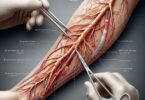
Anatomy: This family of codes (64702-64727) deals with peripheral nerves in the arms and legs, not the abdominal cavity. Neuroplasty involves the surgical release of a nerve from surrounding restrictive scar tissue, a common cause of failed prior carpal or cubital tunnel surgery.
-
Specificity: Codes are chosen based on the nerve (e.g., median, ulnar) and whether a transposition (moving the nerve to a new position) was performed. This is a fundamentally different procedure from abdominal or pelvic adhesiolysis and is performed by different types of surgeons (e.g., orthopedic, plastic, hand, or neurosurgeons).
Core CPT Codes for Lysis of Adhesions
| CPT Code | Procedure Name | Anatomical Focus | Primary Context | Key Consideration |
|---|---|---|---|---|
| 44005 | Enterolysis | Intestines (Small & Large Bowel) | Bowel obstruction, abdominal pain | “Separate procedure” rule; often bundled. |
| 58740 | Lysis of Adhesions | Female Pelvis (Ovaries, Tubes, Uterus) | Infertility, pelvic pain, gynecologic surgery | Must be distinct from main procedure. |
| 64727 | Neuroplasty | Peripheral Nerves (Arms, Legs) | Nerve entrapment, revision surgery | Involves nerves, not viscera; includes transposition. |
5. Anatomical Considerations: Mapping the Codes to the Body
Understanding the precise anatomy is the first step in selecting the correct code.
Abdominal and Intestinal Adhesions (44005)
This involves adhesions anywhere in the peritoneal cavity that are directly involving the bowel. The surgeon’s operative note must clearly describe adhesions between:
-
Loops of small bowel
-
Small bowel and colon
-
Bowel and the abdominal wall (a common site after laparotomy incisions)
-
Bowel and the liver or other organs
The documentation should specify the extent of the adhesions (e.g., “dense adhesions involving 50 cm of ileum to the anterior abdominal wall”) and the time and effort required to lyse them.
Pelvic and Gynecological Adhesions (58740)
This code is strictly for the reproductive organs within the true pelvis. Common scenarios include:
-
Adhesions between the ovary and the pelvic sidewall.
-
Adhesions enveloping and obstructing the fimbriated end of the fallopian tube.
-
Adhesions between the uterus and the bowel or bladder.
The documentation should name the specific structures involved (e.g., “lysis of adhesions binding the left ovary to the sigmoid colon” or “salpingolysis of the right fallopian tube”).
Peripheral Nerve Entrapments (64727)
This is a distinct category. The pathology is scar tissue (often from a prior surgery or trauma) compressing a named nerve, leading to pain, numbness, tingling, or weakness. The most common examples are:
-
Revision Carpal Tunnel Release: Scar tissue around the median nerve.
-
Cubital Tunnel Release with Transposition: Scar tissue around the ulnar nerve at the elbow, often requiring the nerve to be moved to a new location to prevent recurrence.
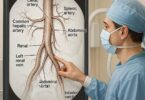
(Image: An anatomical diagram of the abdomen, with callouts pointing to common sites of adhesions: between bowel loops, from bowel to abdominal wall, and in the pelvis involving the uterus and ovaries.)
6. Surgical Approaches: Open, Laparoscopic, and Robotic
The method of access is a major factor in the procedure’s complexity and can have coding implications.
Open Lysis of Adhesions (Laparotomy)
This is the traditional approach through a large abdominal incision. It offers the surgeon the most direct tactile feedback and room to maneuver, which is often necessary for very dense, vascular, or complex adhesive disease, especially in emergency settings like a bowel obstruction.
Laparoscopic Lysis of Adhesions
This minimally invasive approach uses several small incisions for a camera and long, thin instruments. Benefits include less pain, shorter hospital stays, and faster recovery. However, it requires significant skill, as working in a confined space with adhesions increases the risk of inadvertent bowel injury. The CPT codes (44005, 58740) are approach-neutral, meaning they are used whether the procedure is open or laparoscopic.
Robotic-Assisted Lysis of Adhesions
This is an advanced form of laparoscopy where the surgeon controls robotic arms from a console. The system provides 3D high-definition vision and wristed instruments that mimic the movement of the human hand with greater dexterity. This can be particularly advantageous for meticulous dissection in the deep pelvis or around delicate structures.
Coding Implications of the Surgical Approach
The core adhesiolysis code remains the same. However, the approach may be inferred from the code or may require a separate code for the laparoscopic access.
-
For a laparoscopic procedure, the initial placement of the trocars and the diagnostic laparoscopy is often bundled. However, if a diagnostic laparoscopy (49320) was performed and, based on findings, the decision was made to proceed to a therapeutic laparoscopy (e.g., 58740), both codes may be reportable with modifier -59 appended to 49320, indicating it was a distinct diagnostic service. Payer policies on this vary widely.
7. Documentation is King: The Operative Note’s Critical Role
The operative report is the foundation of all coding. Vague documentation guarantees coding errors, denials, and audit risk. A coder can only code what is documented, not what they assume was done.
Key Elements for a Coder-Friendly Operative Report
For lysis of adhesions, the report must be exceptionally detailed. It should read like a story, painting a clear picture of the complexity.
-
Indication/Preoperative Diagnosis: Why was the surgery performed? (e.g., “Small bowel obstruction,” “Chronic pelvic pain,” “Infertility”).
-
Findings: This is the most critical section. Describe the adhesions in detail:
-
Location: “Between the omentum and the anterior abdominal wall,” “between loops of ileum,” “obliterating the pouch of Douglas.”
-
Density/Quality: “Filmy and avascular,” “dense and vascular,” “dense, fibrous adhesions.”
-
Extent: “Involving approximately 60% of the small bowel,” “completely enveloping the right adnexa.”
-
Anatomic Distortion: “Causing kinking of the terminal ileum,” “pulling the sigmoid colon into the right lower quadrant.”
-
-
Description of Procedure:
-
Time Spent: Note the time required for adhesiolysis specifically (e.g., “Approximately 45 minutes was spent carefully lysing dense adhesions…”).
-
Technique: Describe the instruments used (e.g., “Lysis was performed sharply with Metzenbaum scissors and cautiously with electrocautery on low setting.”).
-
Blood Loss: Estimate blood loss specific to the adhesiolysis portion if it was significant.
-
Separate Procedure Rationale: If reporting 44005 or 58740 with another procedure, the surgeon should document why the adhesiolysis was above and beyond, such as: “The adhesiolysis was extensive, requiring significant additional time and dissection, and was not a routine component of the planned cholecystectomy.”
-
-
Postoperative Diagnosis: Should reflect the adhesive disease found (e.g., “Postoperative adhesions causing small bowel obstruction”).
Linking Documentation to Medical Necessity
The diagnosis codes (ICD-10-CM) must align with the procedure. For example:
-
K56.50 (Unspecified intestinal obstruction) or K56.69 (Other partial intestinal obstruction) justifies 44005.
-
N73.6 (Female pelvic peritoneal adhesions) justifies 58740.
-
G56.02 (Carpal tunnel syndrome, upper limb) and M96.2 (Postlaminectomy syndrome) might justify 64722 (Neuroplasty without transposition).
Common Documentation Pitfalls and How to Avoid Them
-
Pitfall: “Lysis of adhesions performed.”
-
Solution: Be specific. “Lysis of dense adhesions between the jejunum and the anterior abdominal wall was performed sharply, freeing approximately 30 cm of bowel.”
-
Pitfall: Failing to document the time and effort for complex cases.
-
Solution: “The adhesiolysis was exceptionally complex due to the matted nature of the bowel and its proximity to the iliac vessels. This portion of the procedure alone required 90 minutes and resulted in an estimated blood loss of 300 cc.”
-
Pitfall: Not differentiating the adhesiolysis from the main procedure.
-
Solution: “Although the planned procedure was a hysterectomy, the patient had severe adhesive disease from prior endometriosis surgery that was unrelated to the hysterectomy itself. Significant time was spent on salpingolysis and ovariolysis to mobilize the adnexa before the hysterectomy could begin.”
8. Billing and Reimbursement: From Code to Payment
Understanding the Global Surgical Package
CPT codes for surgery include a “global period” (0, 10, or 90 days). This means the single payment for the procedure is intended to cover the surgery itself and all routine preoperative and postoperative care within that period. Lysis of adhesions codes typically have a 90-day global period. Billing for separate evaluation and management (E&M) visits during this period for related care is generally not allowed unless specific, unrelated circumstances are met and documented with modifier -24 (Unrelated E&M Service).
RVUs and Calculating Reimbursement
Payment is based on the concept of Relative Value Units (RVUs). Each CPT code is assigned:
-
Work RVU: Reflects the physician’s time, skill, effort, and stress.
-
Practice Expense RVU: Covers overhead like staff, equipment, and supplies.
-
Malpractice RVU: Covers the cost of professional liability insurance.
The sum of these RVUs is multiplied by a conversion factor (a dollar amount set by Medicare or other payers) to determine the payment. Codes for complex adhesiolysis have higher RVUs than simpler procedures, which is why accurate coding and documentation of complexity are financially critical.
Common Denials and How to Appeal Them
-
Denial Reason: “Bundled service.” (The payer believes the adhesiolysis is included in the payment for the primary procedure).
-
Appeal Strategy: Submit a detailed copy of the operative report, highlighting the passages that describe the extent, time, and complexity of the adhesiolysis. Explain why it was not a typical component of the main procedure. Reference CPT guidelines on “separate procedures.”
-
Denial Reason: “Lack of medical necessity.”
-
Appeal Strategy: Ensure the ICD-10 diagnosis code is specific and aligns with the procedure. Submit office notes and imaging reports that demonstrate the patient’s symptoms and the failure of conservative management, proving the procedure was necessary.
9. Compliance and Audit Risks: Staying on the Right Side of the Law
Lysis of adhesions is a high-risk area for audits by Medicare Administrative Contractors (MACs), the Recovery Audit Contractors (RACs), and other payers. It is considered a “potentially misvalued code” due to its subjective nature and the fact that it is often performed with other procedures.
The Scrutiny of Lysis of Adhesions
Auditors look for patterns where a provider consistently reports 44005 or 58740 with another major procedure. They will request medical records to verify that the adhesiolysis was truly separate, distinct, and medically necessary.
Key Audit Triggers
-
High Frequency: Reporting adhesiolysis with another procedure at a rate significantly higher than your peers.
-
Lack of Modifiers: Never using modifier -59 or -22 when reporting adhesiolysis with another code.
-
Poor Documentation: Operative notes that are templated and lack specific, detailed descriptions of the adhesions.
-
Inconsistent Diagnoses: Using vague diagnosis codes that don’t support the need for the procedure.
Best Practices for Compliance
-
Educate Surgeons: Surgeons must understand that their documentation directly impacts reimbursement and compliance. Provide them with examples of strong vs. weak operative notes.
-
Internal Audits: Conduct regular internal audits of surgical charts before claims are submitted. This proactive approach catches errors and educates coders and providers.
-
Develop Guidelines: Create internal billing policies for when it is appropriate to report lysis of adhesions separately. When in doubt, err on the side of caution.
-
Use Modifiers Judiciously: Apply modifiers -59 and -22 only when the documentation fully supports their use. Misuse of modifier -59 is a common audit target.
10. Case Studies: Applying Knowledge to Real-World Scenarios
Case Study 1: The Repeat Cesarean Section
-
Scenario: A patient presents for her third cesarean section. Upon entering the abdomen, the obstetrician encounters dense adhesions between the bladder and the lower uterine segment, a known risk from prior surgery.
-
Action: The surgeon spends an additional 25 minutes carefully dissecting the bladder off the uterus using sharp and blunt dissection to safely access the uterus for the C-section.
-
Coding Question: Should 58740 be reported with the C-section code (59510)?
-
Analysis & Answer: Typically, no. Some degree of adhesiolysis is an expected and inherent part of a repeat cesarean delivery. It is considered a “surgical approach” and is bundled. To report it separately, the documentation must show the adhesiolysis was extraordinary—far more complex and time-consuming than typically expected for a repeat C-section. The 25 minutes, while significant, might not be deemed extraordinary by most payers without more dramatic documentation of danger and complexity.
Case Study 2: Small Bowel Obstruction
-
Scenario: A patient with a history of appendectomy 10 years prior presents with a complete small bowel obstruction. They are taken for an exploratory laparotomy.
-
Action: The surgeon finds a single, dense adhesive band compressing a loop of ileum, causing the obstruction. The band is lysed. The bowel is pink and viable, so no resection is needed.
-
Coding Question: What is the correct coding?
-
Analysis & Answer: This is a clear case for 44005. The adhesiolysis was the primary procedure performed to relieve the obstruction. It is not bundled into another larger procedure. The diagnosis code would be K56.50 (Unspecified intestinal obstruction) or a more specific code if available.
Case Study 3: Carpal Tunnel Revision
-
Scenario: A patient had carpal tunnel release two years ago. Their symptoms returned. A hand surgeon performs a revision surgery.
-
Action: The surgeon finds extensive scar tissue encasing the median nerve. She performs a neuroplasty, carefully dissecting the nerve free from the scar tissue.
-
Coding Question: What code is used?
-
Analysis & Answer: This is not an abdominal code. The correct code is 64722 (Neuroplasty, major peripheral nerve, arm or leg; without transposition) or 64721 for a digital nerve. Code selection depends on the specific nerve involved and whether it was transposed.
11. The Future of Adhesiolysis Coding: Trends and Innovations
-
New Technologies and Techniques: The use of robotic platforms and advanced energy devices for adhesiolysis will continue to grow. CPT may develop new codes or modify existing ones to reflect the work and practice expense of these technologies.
-
Evolving CPT Guidelines: The AMA’s CPT Editorial Panel continuously reviews codes. The guidelines around “separate procedures” and the reporting of adhesiolysis may be clarified or changed to reduce ambiguity.
-
The Role of AI in Coding and Documentation: Natural Language Processing (NLP) and AI are being integrated into Electronic Health Records (EHRs) to help review operative notes and suggest appropriate codes. However, the complexity and nuance of adhesiolysis documentation mean human coders will remain essential for the foreseeable future to interpret context and apply guidelines correctly.
12. Conclusion: Mastering the Complexity
Accurate coding for lysis of adhesions is a multifaceted challenge that demands a synergistic effort between the surgeon and the coder. It hinges on precise anatomical knowledge, meticulous surgical documentation, and a deep understanding of CPT guidelines and payer policies. By moving beyond vague descriptions to detailed narratives of surgical findings and effort, healthcare providers can ensure they are justly compensated for their complex work while maintaining the highest standards of compliance and data integrity. In the intricate world of surgical billing, clarity and precision are the keys to successfully navigating the labyrinth.
13. Frequently Asked Questions (FAQs)
Q1: Can I bill both 44005 and 58740 during the same surgery?
A: Yes, but only if the procedures are performed in distinct anatomical areas and are both separately identifiable and medically necessary. For example, if a surgeon lyses adhesions involving the small bowel (44005) and also separately lyses adhesions involving the ovaries and tubes (58740), and both are documented in detail, both codes may be reported. Modifier -59 would likely be appended to one of the codes to indicate a distinct procedural service.
Q2: Is there a code for lysis of adhesions on the stomach or liver?
A: There is no specific CPT code for adhesiolysis on specific solid organs like the liver or stomach. In these cases, if the adhesiolysis is the primary procedure and doesn’t involve the intestine, an unlisted procedure code (e.g., 43999 for the stomach) might be considered, though this is complex and requires special handling with the payer. More commonly, significant adhesiolysis in these areas is considered part of the surgical approach to another procedure and is not separately reported.
Q3: How do I justify using modifier -22 for increased procedural services?
A: Modifier -22 is used when the work required to perform the adhesiolysis is substantially greater than typically required. The operative report must provide specific details: the time spent (e.g., “120 minutes”), excessive blood loss (e.g., “500 mL”), the density of adhesions (“concrete-like,” “frozen pelvis”), and the presence of unusual risk factors (e.g., “extreme difficulty due to morbid obesity”). A separate cover letter explaining the extraordinary nature should accompany the claim.
Q4: What is the difference between 44005 and 44180?
A: Code 44180 is for “Enterectomy, resection of small intestine; with enterostomy.” This is a resection (cutting out and removing) a diseased segment of bowel. Code 44005 is for freeing the bowel from adhesions without removing any of it. They are fundamentally different procedures.
Q5: If a laparoscopy is converted to an open procedure due to adhesions, how is it coded?
A: You code only the completed procedure. If a laparoscopic adhesiolysis was attempted but converted to an open procedure due to dense adhesions, you would code only the open procedure (44005). You do not code the attempted laparoscopic approach. The fact of the conversion and the reason for it should be well-documented.
14. Additional Resources
-
American Medical Association (AMA): The definitive source for CPT codebooks, guidelines, and updates. https://www.ama-assn.org/
-
American College of Surgeons (ACS): Provides resources on surgical practice, coding, and compliance. https://www.facs.org/
-
American Academy of Professional Coders (AAPC): A leading organization for medical coders, offering certifications, training, and networking resources. https://www.aapc.com/
-
American Health Information Management Association (AHIMA): Another premier organization for health information management professionals. https://www.ahima.org/
-
Centers for Medicare & Medicaid Services (CMS): Provides Medicare coverage policies, transmittals, and National Correct Coding Initiative (NCCI) edits that dictate which codes can be billed together. https://www.cms.gov/
-
Local Medicare Administrative Contractor (MAC) Websites: Your local MAC (e.g., Noridian, Palmetto GBA) publishes Local Coverage Determinations (LCDs) and articles that provide specific guidance on how they will adjudicate claims, including those for lysis of adhesions.