The human nail, while a small and often overlooked part of our anatomy, can be the source of significant pain, chronic infection, and debilitating discomfort. When conservative treatments fail, nail removal becomes a necessary and often life-changing procedure for patients. For the medical professional, however, the procedure itself is only half the battle. The other half—accurately translating the complex medical service into the universal language of healthcare billing and reimbursement—is where many practices encounter unexpected challenges. This is where CPT (Current Procedural Terminology) codes come into play.
A CPT code is not merely a number on a form; it is a precise descriptor of a medical, surgical, or diagnostic service. In the context of nail removal, selecting the correct code—whether it’s for a simple partial avulsion or a complex permanent matrixectomy—is a critical function that impacts practice revenue, compliance, and audit risk. Using an incorrect code can lead to claim denials, delayed payments, accusations of fraud, and ultimately, financial strain on a medical practice.
This definitive guide is designed to be an exhaustive resource for dermatologists, podiatrists, general surgeons, medical coders, billers, and practice administrators. We will move beyond a superficial understanding and delve into the intricate details of nail removal CPT codes. We will explore the anatomy involved, the specific criteria for each code, the essential modifiers that clarify the service, and the vital link to supporting diagnosis codes. Our goal is to provide you with the knowledge and confidence to code these procedures accurately, optimize reimbursement, and ensure full compliance with payer regulations. This is not just about getting paid; it’s about building a robust, efficient, and ethically sound billing process.
CPT Codes for Nail Removal
2. Understanding the Fundamentals: Anatomy of the Nail Unit
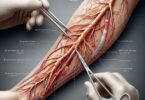
To accurately code a nail procedure, one must first understand what is being operated on. The nail unit is a complex structure, and each component plays a role in both the pathology and the procedure performed.
-
Nail Plate: This is the hard, keratinized structure we commonly refer to as the “nail.” It is the part that is visibly removed during an avulsion.
-
Nail Bed: The soft tissue directly underneath the nail plate. The bed is attached to the plate and is responsible for its growth and adherence. Trauma to the nail bed is a common reason for removal.
-
Lunula: The white, crescent-shaped area at the base of the nail plate. This is the visible part of the matrix.
-
Nail Matrix: The “root” or “factory” of the nail. This is where nail cells are produced and keratinized to form the nail plate. The proximal matrix forms the top layer of the plate, while the distal matrix forms the bottom layer. Destruction of the matrix is the key differentiator for permanent nail removal codes.
-
Cuticle (Eponychium): The layer of skin at the base of the nail plate that protects the matrix.
-
Nail Folds (Lateral and Proximal): The skin folds that surround and support the nail plate on three sides.
-
Hyponychium: The area under the free edge of the nail plate where the nail bed meets the skin of the fingertip. It is a critical seal against infection.
Understanding this anatomy is paramount. For example, a code for “avulsion” (11730, 11732) involves the plate. A code for “excision” (11740) involves the plate and a portion of the nail bed. Codes for “destruction” (11750, 11752) target the matrix to prevent regrowth. The coder must be able to interpret the operative report to identify which specific structures were addressed.
3. Indications for Nail Removal: When is it Medically Necessary?
Payers will only reimburse for procedures they deem “medically necessary.” It is not a cosmetic service. The documentation must clearly support the reason for the intervention. Common indications include:
-
Onychocryptosis (Ingrown Toenail): The most frequent reason for nail removal. The nail plate pierces the lateral nail fold, leading to pain, inflammation, swelling, and often infection (paronychia).
-
Onychomycosis: A fungal infection of the nail that causes thickening, discoloration, crumbling, and distortion of the plate. Removal may be necessary if the nail is painful, causes functional impairment, or if topical/systemic antifungals cannot penetrate the thickened nail.
-
Trauma: Severe crushing injuries, subungual hematomas (blood under the nail) that are too large or painful, or lacerations to the nail bed that require repair.
-
Chronic Paronychia: A persistent inflammation and infection of the nail folds, often seen in individuals with frequently wet hands (e.g., bartenders, nurses).
-
Tumor or Cyst: Benign (e.g., pyogenic granuloma, glomus tumor, myxoid cyst) or malignant (e.g., squamous cell carcinoma, melanoma) lesions under or adjacent to the nail.
-
Onychogryphosis (“Ram’s Horn Nail”): A severe, thickened, curved deformation of the nail that can become painful and difficult to manage.
-
Pincer Nail: A transverse overcurvature of the nail plate that pinches the nail bed, causing pain.
The medical record must detail the patient’s symptoms, the history of the condition, any prior conservative treatments attempted (e.g., antibiotics, soaks, trimming, topical medications), and the physical exam findings that justify the procedure.
4. A Deep Dive into the CPT® Code Set: 11730, 11732, 11740, 11750, 11752
The CPT manual provides specific codes for nail procedures. Using the correct one is non-negotiable.
CPT 11730 – Avulsion of nail plate, partial or complete, simple; single
CPT 11732 – … each additional nail plate
-
Description: This code describes the mechanical separation and removal of the nail plate from the underlying nail bed and folds. It is a “simple” avulsion, meaning it does not involve any chemical or surgical destruction of the nail matrix.
-
“Simple” Definition: The procedure is typically performed with a straight hemostat or nail elevator. No extensive dissection or matrix work is done.
-
Coding Instructions: Code 11730 is reported for the first nail avulsed. If multiple nails on the same foot/hand are avulsed during the same session, report 11730 for the first nail and 11732 for each subsequent nail.
-
Clinical Example: A patient presents with an acutely ingrown toenail with purulent drainage. The physician administers a digital block, lifts the ingrown corner of the nail plate, and cuts it away. The matrix is not treated. This is a partial simple avulsion, coded as 11730.
CPT 11740 – Evacuation of subungual hematoma.
-
Description: This is a very specific code for relieving pressure from a collection of blood under the nail plate, usually caused by acute trauma.
-
Procedure: This is often a simpler procedure that may not even require a full digital block. The physician typically trephines (punctures) the nail plate with a heated paperclip, electrocautery tip, or large-bore needle to allow the blood to drain. It does not involve removal of the nail plate. If the nail plate is removed to repair a laceration in the nail bed, that service is coded differently (e.g., 11730 for the avulsion plus a repair code for the nail bed).
-
Key Differentiator: This code is for evacuation only. If the nail is avulsed, you cannot use 11740.
CPT 11750 – Excision of nail and nail matrix, partial or complete (eg, ingrown toenail removal), for permanent removal;
CPT 11752 – … each additional nail plate
-
Description: These codes are for procedures performed with the intention of permanently preventing the regrowth of the nail. This requires destruction or excision of the nail matrix.
-
Methods: The destruction of the matrix can be achieved through several methods:
-
Chemical (Phenolization): The most common method. After avulsing the nail segment, phenol is applied to the matrix to chemically cauterize it.
-
Surgical Excision: The matrix is surgically excised with a scalpel.
-
Electrocautery/Electrosurgery: A high-frequency electrical current is used to ablate the matrix tissue.
-
Laser Ablation: A laser is used to destroy the matrix.
-
-
Coding Instructions: Code 11750 is reported for the first nail permanently removed. Code 11752 is reported for each additional nail permanently removed during the same session.
-
Clinical Example: A patient with recurrent ingrown toenails undergoes a procedure. The physician performs a digital block, avulses the lateral one-third of the nail plate, and applies phenol to the corresponding section of the matrix to prevent it from regrowing. This is a partial permanent removal, coded as 11750.
The below provides a clear, at-a-glance comparison of these key codes:
| CPT Code | Procedure Description | Key Components | Intent | Example |
|---|---|---|---|---|
| 11730 | Avulsion, simple; single | Mechanical removal of nail plate only. No matrix destruction. | Temporary relief. Nail is expected to regrow. | Removing the spicule of an ingrown nail. |
| 11732 | Avulsion, simple; each additional | Same as 11730, for each extra nail in same session. | Temporary relief. | Avulsing two ingrown toenails on the same foot. |
| 11740 | Evacuation of subungual hematoma | Drainage of blood from under the nail plate. Nail may remain intact. | Relief of pressure and pain from acute trauma. | Trephining a nail after smashing it with a hammer. |
| 11750 | Excision for permanent removal; single | Removal of nail plate and destruction/excision of the nail matrix. | Permanent destruction to prevent regrowth. | Phenolization of the matrix after avulsing an ingrown nail. |
| 11752 | Excision for permanent removal; each additional | Same as 11750, for each extra nail in same session. | Permanent destruction. | Performing a phenol matrixectomy on two toes during one visit. |
Table 1: Comparison of Common Nail Removal CPT Codes
5. Procedure Breakdown: From Partial Avulsion to Permanent Removal
Let’s walk through the typical steps of two common procedures to understand what the coder should see documented in the operative report.
Scenario A: Partial Simple Avulsion (11730) for Ingrown Toenail
-
Informed Consent: The physician discusses risks, benefits, and alternatives.
-
Preparation: The patient is placed supine. The toe is prepped with antiseptic solution.
-
Anesthesia: A digital block is administered using lidocaine without epinephrine.
-
Avulsion: A small straight hemostat or nail elevator is inserted under the affected lateral corner of the nail plate. The instrument is advanced to separate the plate from the bed and fold. The impacted spicule is then cut longitudinally with scissors or a blade and removed.
-
Hemostasis & Dressing: Bleeding is controlled with pressure. An antibiotic ointment and sterile dressing are applied.
What the Coder Looks For: The report should specify “partial avulsion,” mention the instrument used (e.g., “hemostat”), and note that the matrix was not treated. This supports 11730.
Scenario B: Partial Permanent Removal with Phenol (11750)
-
Consent, Prep, Anesthesia: Same as above.
-
Avulsion: The lateral portion (e.g., 20%) of the nail plate is avulsed.
-
Matrix Destruction: The lateral nail fold is retracted. A cotton-tipped applicator soaked in 80-88% phenol solution is inserted and vigorously rotated over the exposed matrix area for approximately 30-60 seconds. This process may be repeated 2-3 times.
-
Neutralization: The area is flushed with alcohol or saline to neutralize the phenol.
-
Dressing: A topical antibiotic and non-adherent dressing are applied.
What the Coder Looks For: The report is gold. It must explicitly state that the matrix was destroyed and specify the method (e.g., “phenol applied to nail matrix,” “matrix excised,” “cautery applied to matrix”). This is the documentation that justifies moving from a temporary code (11730) to a permanent code (11750).
6. The Critical Role of Modifiers: LT, RT, 58, 59, and More
Modifiers are two-digit codes appended to a CPT code to provide additional information about the service performed. They are essential for nail procedures to indicate location, laterality, and unusual circumstances.
-
Modifiers -LT and -RT (Left Side, Right Side): These are the most frequently used modifiers for nail procedures. They are mandatory to identify which foot or hand was operated on.
-
Example: 11750-LT for a permanent nail removal on the left great toe.
-
-
Modifier -59 (Distinct Procedural Service): This modifier indicates that a procedure or service was distinct or independent from other services performed on the same day. Use it sparingly and only when necessary.
-
Appropriate Use: Reporting 11750 and 11730 on the same toe is never appropriate, as 11750 includes the avulsion. However, if a physician performs a permanent removal on the right great toe (11750-RT) and a simple avulsion on the left great toe (11730-LT) during the same session, modifier -59 is not needed because the procedures are on different sites.
-
Potential Use: If a physician performs a permanent removal on the lateral portion of one nail and also separately addresses a medial problem on the same nail during the same session (a very rare scenario), modifier -59 might be needed to indicate two distinct procedures. However, the standard of care is usually to address both sides at once, which would be included in a single 11750.
-
-
Modifier -58 (Staged or Related Procedure): This modifier is used when a procedure is planned or anticipated (staged), more extensive than the original procedure, or for the management of a problem during the postoperative period of the first procedure by the same physician.
-
Example: A patient has a simple avulsion (11730) for an infected ingrown toenail. Two weeks later, during the global period, they return to the same surgeon for a definitive permanent matrixectomy (11750). You would report 11750-58 to indicate this was a planned, staged procedure during the postoperative period.
-
-
Modifier -TA, -T1-T9 (Toe Specific Modifiers): While LT and RT are standard, some payers may require more specific modifiers to identify the exact toe. These are HCPCS Level II modifiers:
-
-TA: Great toe
-
-T1: Second toe
-
-T2: Third toe
-
-T3: Fourth toe
-
-T4: Fifth toe
-
Check individual payer guidelines, as LT/RT are usually sufficient.
-
7. Linking to Diagnosis: The Importance of ICD-10-CM Codes
The CPT code tells the payer what you did. The ICD-10-CM code tells them why you did it. This link, known as medical necessity, is the cornerstone of a clean claim.
For each CPT code submitted, you must link it to a supporting diagnosis code. Common ICD-10-CM codes for nail removal include:
-
L60.0 – Ingrown nail: The primary code for onychocryptosis.
-
L60.2 – Onychogryphosis: For a ram’s horn nail.
-
L60.3 – Nail dystrophy: A general code for deformed or abnormal nail.
-
B35.1 – Tinea unguium: For confirmed fungal infection of the nail.
-
L03.01 – Cellulitis of finger / L03.02 – Cellulitis of toe: For infection.
-
S60.2xx- / S90.2xx- – Contusion of nail (with or without damage to nail): For traumatic injury.
-
S61.3xx- / S91.3xx- – Laceration without foreign body of finger/toe with damage to nail: For a laceration involving the nail bed.
Coding Example:
-
Procedure: CPT 11750-LT
-
Diagnosis: L60.0 (Ingrown nail)
This link clearly shows a medically necessary permanent removal of a nail on the left foot due to an ingrown toenail.
8. Global Periods and Reimbursement: Understanding Payer Policies
Most surgical procedures, including nail removals, have a “global period.” This is a number of days (0, 10, or 90) during which all routine postoperative care is included in the payment for the surgery. You cannot separately bill for an E&M (evaluation and management) service for follow-up care of that surgical site during the global period unless specific, distinct circumstances are met (e.g., using modifier -24 for an unrelated E&M).
-
11730, 11732, 11740: Typically have a 0-day or 10-day global period. Check with your specific payer, but often, any follow-up within a short window is included in the procedure’s fee.
-
11750, 11752: Typically have a 90-day global period because they are considered more complex surgical procedures. All routine postoperative visits for the first 90 days are bundled.
Reimbursement rates vary drastically by payer, geographic region, and contract. Generally, 11750 is reimbursed at a higher rate than 11730 because it is a more complex and definitive procedure. It is crucial to verify coverage and policies with major payers like Medicare, Medicaid, and private insurers, as they may have Local Coverage Determinations (LCDs) or policies that dictate specific documentation requirements for matrix destruction procedures.
9. Common Coding Scenarios and Challenges: Real-World Examples
Scenario 1: Bilateral Ingrown Toenails
-
Presentation: Patient has ingrown toenails on both great toes.
-
Procedure: The physician performs a permanent phenol matrixectomy on the lateral borders of both great toes.
-
Coding: 11750-RT (for the right great toe) and 11752-LT (for the left great toe). Do not use modifier -50 for bilateral procedures on these codes; instead, report two codes with the laterality modifiers. Some payers may want you to list 11750-RT and 11750-LT; however, the CPT descriptor designates 11750 for the first and 11752 for each additional, so that is the most correct method.
Scenario 2: Staged Procedure
-
Visit 1: Patient presents with an acutely infected, draining ingrown toenail. The physician performs a simple partial avulsion (11730) to drain the abscess and relieve pain, prescribing antibiotics.
-
Visit 2 (4 weeks later): After the infection has cleared, the patient returns to the same physician for a definitive permanent matrixectomy (11750).
-
Coding (Visit 2): Report 11750 with modifier -58 to indicate this is a staged, related procedure performed during the postoperative period of the first.
Scenario 3: Avulsion with Nail Bed Repair
-
Presentation: A patient crushes a finger in a car door, causing a significant subungual hematoma and a laceration to the nail bed.
-
Procedure: The physician performs a digital block, avulses the entire nail plate (11730) to expose the laceration, and then repairs the nail bed laceration with sutures.
-
Coding: This requires two codes: 11730 for the avulsion and a code from the Repair (Closure) section (12001-12021, 12031-12037, 13100-13133) for the complex repair of the nail bed. The repair code is based on the length and complexity of the repair. Modifier -59 would likely be appended to the repair code to indicate it was a distinct procedure from the avulsion.
10. Documentation: The Foundation of Accurate Coding
“If it wasn’t documented, it wasn’t done.” This old adage is the absolute truth in medical coding. The operative report must be detailed and unambiguous. Key elements to include:
-
Preoperative Diagnosis: (e.g., “Ingrown right great toenail”)
-
Postoperative Diagnosis: (Should match the preoperative Dx)
-
Procedure Performed: State the procedure clearly (e.g., “Partial permanent nail avulsion with phenol matrixectomy of the right great toe”).
-
Anesthesia: (e.g., “Digital block with 1% Lidocaine without epinephrine”)
-
Detailed Description:
-
Which toe(s) were treated.
-
What portion of the nail was removed (e.g., “lateral 20%”).
-
The method of avulsion.
-
Crucially, the method of matrix destruction (e.g., “Phenol 88% was applied to the nail matrix for 45 seconds x3 applications”).
-
How hemostasis was achieved.
-
The nature of the dressing applied.
-
-
Blood Loss: (Typically “minimal” or “<5 mL”)
-
Specimens: (If any tissue was sent to pathology)
-
Condition: (e.g., “Tolerated procedure well and left the office in stable condition.”)
A vague note that simply says “removed ingrown toenail” will only support the lowest level code (11730) and will likely lead to a denial if 11750 was billed.
11. The Future of Nail Procedure Coding: Trends and Updates
CPT codes are updated annually by the American Medical Association (AMA). While the core nail codes have been stable, it is vital to stay informed about changes in guidelines, payer policies, and valuation (Relative Value Units or RVUs).
-
Increased Scrutiny: Payers are increasingly using automated auditing software and performing targeted audits on surgical procedures. Accurate documentation and coding are more important than ever to avoid take-backs.
-
Telehealth: The rise of telehealth may lead to more initial evaluations for nail problems being conducted remotely. However, the procedure itself will always require an in-person visit.
-
Advancing Techniques: As new technologies (e.g., specific lasers for matrix ablation) become more common, the AMA may introduce new or revised codes to better describe these services. Coders must stay engaged with continuing education.
12. Conclusion: Mastering the Nuances for Success
Accurate coding for nail removal procedures hinges on a deep understanding of the CPT code definitions, precise anatomical knowledge, and meticulous documentation review. Distinguishing between a simple avulsion and a permanent matrixectomy is the single most critical decision, directly driven by the physician’s operative report. By diligently applying correct modifiers, linking to specific ICD-10-CM codes, and adhering to payer-specific global period rules, healthcare practices can ensure compliant billing, minimize denials, and secure appropriate reimbursement for these common and valuable surgical services.
13. Frequently Asked Questions (FAQs)
Q1: Can I bill CPT 11730 and CPT 11750 for the same nail during the same session?
A: Absolutely not. CPT 11750 (permanent removal) includes the avulsion of the nail plate as the first step of the procedure. Billing both would be considered “unbundling” and is a coding violation. You only bill 11750.
Q2: If a physician avulses a nail and then decides during the procedure to also destroy the matrix, how is that coded?
A: It is coded as 11750. The decision to perform the matrix destruction is part of the surgical session. The code represents the complete procedure performed, regardless of whether it was planned preoperatively or decided intraoperatively.
Q3: How do I code for a total simple avulsion of all ten toenails?
A: You would report 11730 for the first nail and 11732 for the next nine nails. You must append the appropriate modifiers (e.g., -LT, -RT) or toe-specific modifiers if required by the payer to identify each individual nail. The claim would show one unit of 11730 and nine units of 11732.
Q4: What is the difference between 11740 and 11730 for a traumatic injury?
A: Use 11740 if the physician only trephines (drains) the hematoma without removing the nail plate. If the physician must remove the nail plate to examine the bed, repair a laceration, or fully evacuate the clot, then 11730 (avulsion) is the appropriate code, and a repair code may also be necessary.
Q5: A patient has a follow-up dressing change within the 90-day global period of a 11750. Can I bill for it?
A: No. Routine postoperative wound care and dressing changes are included in the global surgical package and are not separately billable.