
If you have ever looked at a dental treatment plan and wondered what exactly an “alveoloplasty” is—and why there are different codes for it—you are not alone. Even for seasoned dental professionals, the nuances of coding for this common procedure can sometimes feel like navigating a maze.
In the simplest terms, an alveoloplasty is a surgical procedure used to smooth and reshape the jawbone. Think of it as the finishing touch after a tooth extraction. When a tooth is removed, the bone that held it in place (the alveolar bone) can sometimes be left with sharp edges, uneven ridges, or protruding spicules. An alveoloplasty smooths all of that out.
But here is where it gets complicated for the front office: When do you bill for it? Is it always part of the extraction? When is it a separate service?
This guide is designed to clear up the confusion. We will walk through the specific dental procedure codes (CDT codes) for alveoloplasty, explain the difference between “in conjunction with” extractions and “independent” procedures, and give you the confidence to code claims correctly the first time.
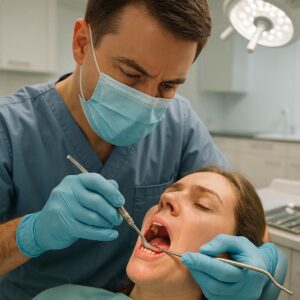
Dental Code for Alveoloplasty
What Is Alveoloplasty? (A Quick Overview for Patients and Teams)
Before we dive into the numbers, let’s make sure we are all on the same page about the procedure itself. A dentist performs an alveoloplasty for one primary reason: to create a smooth, stable foundation.
Imagine trying to build a house on a rocky, uneven plot of land. You would need to level the ground first. The same logic applies to your mouth.
-
After Extractions: When multiple teeth are pulled, the bone ridge can become jagged. Smoothing it helps dentures fit better and prevents sore spots.
-
Before Dentures: A smooth ridge is essential for a comfortable and functional denture. If you place a denture directly on a bumpy bone, the patient will be in pain.
-
Site Preservation: Sometimes, it is done to simply remove a small bone spur that is working its way through the gums, causing irritation.
It is important to remember that this is a bone procedure, not a gum procedure. While it often involves suturing the gum tissue closed, the “work” is happening on the osseous (bone) structure underneath.
The Complete List of Dental Codes for Alveoloplasty
The Current Dental Terminology (CDT) codes, published by the American Dental Association (ADA), are the standard for dental billing in the United States. For alveoloplasty, there are specific codes that tell the insurance company exactly what was done and why.
Here is the breakdown of the primary codes you need to know.
D7310: Alveoloplasty in Conjunction with Extractions
This is arguably the most commonly used—and most commonly misunderstood—code.
-
What it means: This code is used when the dentist performs an alveoloplasty at the same time as tooth extractions. The key here is that the bone smoothing is not a simple incidental touch-up. It is a separate, deliberate surgical procedure to contour the bone.
-
When to use it: If a patient needs four teeth pulled, and after the teeth are out, the dentist uses a bone file or a bur to reshape a significant portion of the alveolar ridge to prepare it for an immediate denture, you would use D7310 per quadrant.
-
The “Incidental” Rule: You cannot bill this if the dentist simply smooths a tiny rough spot on the socket edge. Insurance companies consider that part of the extraction service.
Important Note: D7310 is typically billed “per quadrant.” If you perform the procedure on the upper right and upper left, you would bill it twice, once for each quadrant, assuming the documentation supports it.
D7311: Alveoloplasty in Conjunction with Extractions – Partial
This is a newer addition to the CDT code set, designed to add more specificity to billing.
-
What it means: This code is used when the alveoloplasty performed with extractions is limited in scope. It is not a full quadrant contouring, but it is more than just smoothing the edge of a single socket.
-
When to use it: Imagine a patient has two adjacent teeth extracted. The bone between them (the interdental septum) is very high and sharp. The dentist removes that specific high spot to create a more even surface, but does not contour the entire quadrant. D7311 is the appropriate code here.
-
Why it exists: It helps distinguish between a major, quadrant-level reconstruction (D7310) and a minor, localized bone adjustment (D7311). This accuracy can help with insurance reimbursement and patient understanding.
D7320: Alveoloplasty – Independent Procedure (Not with Extractions)
This code represents a scenario where the teeth are already missing, or the alveoloplasty is being done in an area where no teeth are currently being removed.
-
What it means: The dentist is performing a bone contouring procedure on an edentulous (toothless) area. This is common for patients who have been wearing old dentures for years and have developed severe bone irregularities or knife-edge ridges.
-
When to use it: A patient comes in because their lower denture is loose and painful. Upon examination, you find a sharp bony ridge. The dentist performs a surgery to smooth that ridge, and the teeth are already gone. This is a stand-alone procedure.
-
Independent Nature: Because this is not tied to an extraction, the reimbursement logic is slightly different, and it often requires clear documentation of medical necessity (e.g., “to enable construction of a new denture”).
D7321: Alveoloplasty – Independent Procedure, Partial
Just like its counterpart for extractions, this code covers limited, localized bone work in an area without teeth.
-
What it means: A minor smoothing of a specific area, not a full quadrant recontouring, in a spot where teeth are not being extracted during the same visit.
-
When to use it: A patient has a single, isolated bone spur poking through the gums in an area where a tooth was removed six months ago. The dentist numbs the area and removes the small spur.
-
Specificity: This is more accurate than billing a full D7320 for a tiny spur removal.
Alveoloplasty Code Comparison Table
To make it easier to see the differences at a glance, here is a simple comparison table.
| CDT Code | Procedure Context | Scope | Typical Scenario |
|---|---|---|---|
| D7310 | With Extractions | Full Quadrant | Extractions + full bone contouring for an immediate denture. |
| D7311 | With Extractions | Partial/Localized | Extractions + smoothing a few specific sharp areas. |
| D7320 | Independent Procedure | Full Quadrant | Smoothing an entire ridge on a patient with no teeth, pre-denture. |
| D7321 | Independent Procedure | Partial/Localized | Removing a single bone spicule from an edentulous area. |
Alveoloplasty vs. Extractions: Why Separate Codes Matter
One of the biggest hurdles in dental billing is understanding why an alveoloplasty isn’t just “part of the pull.” From a clinical perspective, they are two distinct events.
-
Extraction (D7140, D7210, etc.): This code covers the removal of the tooth structure itself. It includes the anesthesia, the elevation of the tooth, and the basic post-extraction care, which includes minor smoothing of the immediate socket rim.
-
Alveoloplasty (D7310-D7321): This code covers the deliberate, surgical reshaping of the bone. It goes beyond the socket. It involves altering the contour of the alveolar process to change the shape of the ridge.
Think of it like paving a driveway.
-
Extraction is like demolishing the old, broken concrete and hauling it away. (You have to do this first).
-
Alveoloplasty is like grading the dirt and laying down a smooth bed of gravel so the new pavement (the denture) has a perfect surface to sit on.
If you just demolish the concrete and leave a bumpy dirt patch, you haven’t finished the job. The grading (alveoloplasty) is an extra step that requires extra skill and time, hence the separate code.
When is Alveoloplasty Covered by Insurance?
This is the million-dollar question. Dental insurance is designed to cover procedures that are medically necessary or that restore function. Coverage for alveoloplasty usually falls into one of two categories.
The “Aid to Denture” Rationale
The most common reason for coverage is to facilitate the construction or seating of a prosthetic device (a denture). If a patient cannot wear a denture because of bony irregularities, smoothing the bone becomes a necessary step in dental treatment.
-
The Verdict: Most insurance plans will consider alveoloplasty a covered benefit if it is performed to allow for a denture. You will often see it covered at 50% or a similar rate to other major restorative procedures.
The Surgical Necessity Rationale
If a patient has a bone spicule that is causing chronic pain, irritation, or recurrent infection, the procedure is deemed surgically necessary to alleviate pain.
-
The Verdict: This is also typically covered, though the plan’s “surgical” benefits will apply. Documentation, such as a clinical note describing the irritation or a radiograph showing the bony prominence, is crucial here.
When Coverage is Unlikely
You may run into denials if:
-
It is bundled with the extraction: The insurance reviewer might deem the work “incidental” to the extraction, especially if only D7310 is billed with a single tooth extraction.
-
It is purely cosmetic: While rare in bone surgery, if the purpose is solely for cosmetic ridge augmentation without functional need, it might be denied.
-
Missing Documentation: This is the biggest one. Without a narrative or X-rays showing the irregular bone, the insurance company has no proof the procedure was necessary.
How to Document Alveoloplasty for Insurance Claims
Proper documentation is your best friend. To ensure your claim gets paid, your clinical notes and radiographs must tell the same story as the code you are billing.
Here is a quick checklist for your documentation:
-
Radiographic Evidence: Does the X-ray show a sharp ridge, an irregular bone pattern, or a bone spicule? Circle it on the image if you are sending it in.
-
Clinical Narrative: In your notes, describe what you felt and saw. Phrases like “Palpation reveals a sharp, knife-edge ridge on the mandibular left quadrant” or “Patient presents with exposed bony spicule causing lingual ulceration” are powerful.
-
Treatment Rationale: Link the procedure to the outcome. “Alveoloplasty performed to eliminate sharp ridge and ensure stable fit of future mandibular prosthesis.”
-
Photographs: If your office has intraoral cameras, a photo of the bony protuberance or the irritated tissue can be invaluable.
Common Billing Mistakes and How to Avoid Them
Let’s look at some frequent errors that cause claim rejections or delays.
-
Mistake #1: Billing D7310 with a Single Extraction.
-
The Problem: Unless that single tooth socket had a massive, unusual bone deformity that required extensive contouring beyond the socket, this will likely be denied as part of the extraction.
-
The Fix: If it truly is a single tooth with extensive work, consider using D7311 (partial) and add a detailed narrative explaining why it was necessary.
-
-
Mistake #2: Confusing Quadrants.
-
The Problem: Billing two units of D7310 for an upper arch when the procedure was performed continuously from the right premolar to the left premolar. Some payers may view the anterior area (between the canines) as a separate zone.
-
The Fix: Know your payer’s policy. Generally, the mouth is divided into quadrants (UR, UL, LR, LL). If you cross the midline in the front, you may be entering a new quadrant.
-
-
Mistake #3: Missing the “Independent” Modifier (Conceptually).
-
The Problem: Failing to justify why D7320 is being done on its own.
-
The Fix: Ensure your notes explicitly state the purpose. “Site preparation for future mandibular complete denture” is a perfect justification.
-
Alveoloplasty Procedure Workflow (For the Dental Team)
Understanding the physical steps of the procedure can help the administrative team grasp why the code matters.
-
Diagnosis: The dentist identifies a bony irregularity through palpation (feeling the bone) and radiographic examination. This is noted in the chart.
-
Anesthesia: Local anesthesia is administered to the site.
-
Incision & Reflection (if necessary): For a full alveoloplasty, a small incision is made, and the gum tissue is gently lifted away from the bone to expose the area.
-
Bone Contouring: Using surgical burs, bone files, or chisels, the dentist reshapes the bone, removing sharp edges and undercuts. Saline is used to irrigate the site to prevent overheating the bone.
-
Tissue Closure: The gum tissue is repositioned and sutured back into place, creating a smooth, rounded contour over the newly shaped bone.
-
Post-Op Instructions: The patient is given care instructions, which typically include avoiding pressure on the site, gentle rinsing, and pain management.
The Difference: Alveoloplasty vs. Other Bone Procedures
It is easy to confuse alveoloplasty with other surgical bone procedures. Here is a quick distinction:
-
Alveoloplasty: Contouring existing bone. It is about reshaping, not adding or removing large structural pieces. (Think: Sculpting).
-
Tuberoplasty (D7340): This is a specific type of alveoloplasty performed on the maxillary tuberosity (the area behind the upper molars). It often involves reducing soft tissue and bone in that area.
-
Ridge Augmentation (D7950): This involves adding bone graft material to build up a ridge that is too thin or too short. (Think: Building up).
-
Sinus Lift (D7951/D7953): This is a procedure to add bone to the floor of the maxillary sinus to allow for dental implant placement.
Conclusion
Mastering the dental code for alveoloplasty is about understanding the “why” and “how much.” Is the procedure being done with or without extractions? Is it a full quadrant of work or a minor, localized adjustment?
By distinguishing between D7310, D7311, D7320, and D7321, you ensure that your dental practice is accurately reimbursed for the skilled work performed. More importantly, accurate coding and documentation build trust with insurance providers and help patients understand the value of creating a smooth, healthy foundation for their future smiles.
Frequently Asked Questions (FAQ)
1. Is alveoloplasty a major or basic dental service?
It is almost always classified as a Major Restorative or Oral Surgery procedure. Coverage levels typically range from 50% to 80%, depending on the patient’s specific insurance plan.
2. Does my medical insurance cover alveoloplasty?
Generally, no. This is considered a dental surgical procedure related to the oral cavity and is covered under the dental benefit plan. The only exception might be if it is part of a treatment for a medically necessary condition, like the removal of a tumor, but this is rare.
3. Can I bill D7310 and the extractions on the same day?
Yes, absolutely. In fact, that is the standard protocol. You would list the extraction codes (e.g., D7140 for each tooth) and the D7310 code on the same claim form. The insurance company will apply their rules regarding bundling and payment.
4. What if the dentist does an alveoloplasty but doesn’t charge for it?
Sometimes a dentist will waive the fee for very minor smoothing as a courtesy. In this case, you would not bill the patient or the insurance. However, you should still note the procedure in the patient’s chart for clinical records. If you are billing insurance, you must charge for the service.
5. How painful is recovery from an alveoloplasty?
Most patients compare it to the recovery from a difficult extraction. There is typically some swelling and discomfort for a few days, which can be managed with over-the-counter or prescribed pain medication, ice packs, and a soft food diet.
Disclaimer: This article is for informational purposes only and does not constitute legal or billing advice. Dental coding guidelines, insurance policies, and payer contracts vary. You should always verify codes and coverage with the specific insurance carrier and consult with a professional coding specialist for your practice.
Author: Professional SEO Web Content Writer
Date: March 06, 2026
Additional Resource
For the most up-to-date and official information on dental procedure codes, you should always refer to the source.


