
Walking into a dental office can sometimes feel like stepping into a world of cryptic numbers and complex jargon. You book an appointment for a “check-up,” but when you receive the paperwork or the insurance explanation of benefits, you see a code like D0150. If you have ever wondered what that number means, why your dentist used it, or why it might cost more than your last visit, you are in the right place.
Understanding the specific procedures associated with dental codes is the best way to take control of your oral health and your healthcare budget. This article is designed to be your definitive guide to the dental code for comprehensive exam. We will break down everything you need to know about this specific procedure, from what it entails and why it is essential, to how it impacts your insurance and how it differs from a regular check-up.
Whether you are a new patient, someone returning to the dentist after a long break, or simply trying to decipher a bill, this guide provides a realistic, honest, and thorough explanation.
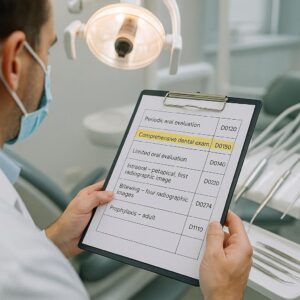
Dental Code for Comprehensive Exam
What Exactly is a Comprehensive Oral Evaluation?
Before we dive into the code itself, it is vital to understand what the procedure represents. A comprehensive oral evaluation is far more than a simple “check-up.” It is the foundational assessment of your overall oral health.
Think of it as creating a complete map of your mouth. When you visit a new dentist, or if it has been a few years since your last visit, the dentist cannot simply assume everything is fine. They need to establish a baseline. This baseline includes:
-
Review of Medical History: A thorough discussion of your overall health, medications, and any conditions (like diabetes or heart disease) that can impact your oral health.
-
Extraoral Examination: The dentist will examine your head, neck, lymph nodes, jaw joints (TMJ), and muscles for any signs of swelling, asymmetry, or tenderness.
-
Intraoral Examination: This is a detailed look inside your mouth, including:
-
Hard Tissue Exam: Checking each tooth for decay, cracks, fractures, and the condition of existing restorations (fillings, crowns).
-
Soft Tissue Exam: Screening the gums, cheeks, tongue, palate, and throat for signs of oral cancer, infections, or other pathologies.
-
Periodontal Exam: Measuring the depth of the pockets around each tooth to assess gum health.
-
-
Diagnostic Tools: This often includes taking a full set of dental X-rays (like a panoramic or full-mouth series) and, sometimes, photographs or study models of your teeth.
The goal of this comprehensive exam is not just to find cavities. It is to get a complete picture of your oral health status, diagnose any existing conditions, identify risk factors for future problems, and create a long-term treatment plan tailored specifically to you.
The Official Dental Code: D0150
In the world of dentistry, standardization is key for communication between dental offices and insurance companies. This is where the Current Dental Terminology (CDT) codes come in. These codes, published by the American Dental Association (ADA), provide a uniform language for describing dental procedures.
The specific dental code for comprehensive exam is D0150.
According to the official CDT code description, D0150 is defined as:
“A comprehensive evaluation of the new or established patient when there is no three-year history of a comprehensive evaluation in the practice, or when there is a new condition that may require a comprehensive evaluation. This service includes a thorough evaluation of the patient’s oral health, hard and soft tissues, and associated structures. It may include the evaluation and recording of the patient’s dental and medical history and general health assessment. It typically includes a thorough examination of the oral hard and soft tissues, as well as an evaluation of the patient’s oral health and risk assessment.”
Let’s break down what this definition means in practice.
Key Criteria for Using D0150
The code description highlights two primary scenarios when a dentist should use D0150:
-
New Patients: If you are visiting a dental practice for the first time, the dentist has no history of your oral health. Therefore, a comprehensive exam is the standard of care to establish that baseline. The code specifies “no three-year history,” meaning if you haven’t been seen in that practice for a comprehensive exam in over three years, they may also use this code for your visit.
-
New Condition or Significant Change: Even for an existing patient, a new, complex condition might arise. For example, if you develop a mysterious pain in your jaw, or if you are diagnosed with a new systemic condition like cancer or an autoimmune disorder, the dentist may need to perform a new comprehensive exam (D0150) to fully assess how this new condition impacts your oral health, rather than just a routine check-up.
What is Included in a D0150 Procedure?
When a dentist performs a comprehensive exam (D0150), they are undertaking a significant amount of work. It is not a five-minute glance in your mouth. A proper comprehensive evaluation includes:
-
Comprehensive Health History Review and Update: This is more than just ticking boxes. It involves a conversation about your overall health, medications (including supplements and over-the-counter drugs), hospitalizations, allergies, and lifestyle factors like smoking or diet.
-
Vital Signs (Potentially): Some dentists will record blood pressure and pulse as part of the general health assessment.
-
Head and Neck Examination:
-
Palpation of lymph nodes.
-
Assessment of the temporomandibular joint (TMJ) for clicking, popping, or pain.
-
Evaluation of muscles of mastication.
-
Inspection of the skin and lips.
-
-
Intraoral Hard Tissue Examination:
-
Visual and tactile (using an explorer) examination of every tooth surface for decay.
-
Checking the integrity of existing crowns, bridges, fillings, and implants.
-
Assessment of tooth wear (attrition, abrasion, erosion).
-
-
Intraoral Soft Tissue Examination (Oral Cancer Screening):
-
Systematic inspection of all soft tissues: lips, cheeks, tongue (all surfaces), floor of the mouth, hard and soft palate, and throat.
-
Looking for red or white lesions, swelling, or any other abnormalities.
-
-
Periodontal Evaluation:
-
Using a small probe to measure the “pockets” between the teeth and gums (typically 6 measurements per tooth).
-
Recording gum recession.
-
Assessing bleeding, inflammation, and plaque/calculus levels.
-
Classifying the patient’s periodontal health (e.g., healthy, gingivitis, periodontitis).
-
-
Diagnostic Data Collection: This is often where the X-rays come in. A panoramic X-ray or a full-mouth series of X-rays (FMX) is almost always part of a comprehensive exam to see what is happening below the gum line and inside the teeth.
All of this information is then synthesized into a diagnosis and a proposed treatment plan, which the dentist will discuss with you.
D0150 vs. Other Common Dental Exam Codes
One of the biggest sources of confusion for patients is the difference between a comprehensive exam and a periodic exam (the “recall” or “routine check-up”). They are two distinct services with different codes and different purposes.
Let’s compare them side-by-side.
| Feature | Comprehensive Exam (D0150) | Periodic Exam (D0120) | Problem-Focused Exam (D0140) |
|---|---|---|---|
| Purpose | Establish a baseline and create a long-term treatment plan. | Monitor existing oral health at routine intervals (e.g., every 6 months). | Evaluate a specific problem (e.g., toothache, broken tooth). |
| Patient Type | Typically new patients or those not seen for 3+ years. | Established patients with regular care. | Any patient with a specific, acute issue. |
| Scope | Extensive; covers head, neck, full mouth, periodontium, and review of history. | Limited; focuses on checking for changes since the last visit. | Narrow; focuses only on the chief complaint and affected area. |
| X-rays | Usually includes a full set (panoramic or FMX). | Typically includes bitewings (4) to check for cavities between teeth. | May include a single, focused X-ray (PA) of the problem area. |
| Time | 30-60 minutes or more. | 15-20 minutes. | 10-20 minutes. |
| Outcome | A comprehensive treatment plan for overall oral health. | A “clean bill of health” or referral for treatment of a new issue. | Diagnosis and treatment plan for the specific problem. |
Why This Distinction Matters to You
The difference is not just clinical; it is also financial. Because a comprehensive exam (D0150) is more extensive and time-consuming, its fee is typically higher than that of a periodic exam (D0120). Your dental insurance plan will have specific rules about how often they cover each type of exam.
-
Frequency Limitations: Most insurance plans cover a periodic exam (D0120) twice per year. However, they will typically only cover a comprehensive exam (D0150) once every three to five years, or for a new patient. If your dentist uses D0150 and your insurance says you are not eligible, you may be responsible for a larger portion of the cost.
-
Deductibles and Co-pays: The cost of the D0150 exam often goes towards your annual deductible.
This is why you might see a different charge on your bill for your first visit to a new office compared to your six-month cleaning visit.
The Comprehensive Exam Process: A Patient’s Step-by-Step Guide
Knowing what to expect during a D0150 procedure can alleviate anxiety and help you prepare. Here is a realistic walkthrough of a typical comprehensive exam appointment.
Step 1: The Paperwork and Health History
Before anything else, you will likely fill out or update a detailed medical history form. Be honest and thorough. Information about medications, allergies, and conditions like pregnancy, heart murmurs, or joint replacements is critical for your safety and the quality of your care.
Step 2: Diagnostic Imaging (X-rays)
You will be taken to a room to have X-rays taken. For a comprehensive exam, this often means:
-
Panoramic X-ray: A machine rotates around your head to give a single image of your entire mouth, including all teeth, jaws, and sinuses.
-
Full Mouth Series (FMX): A series of 14-20 individual X-rays showing every tooth from crown to root.
The process is painless and quick. You will wear a lead apron for protection.
Step 3: The Clinical Examination
This is where the dentist performs the comprehensive evaluation described earlier. You will be seated in the dental chair.
-
The dentist will start by talking with you about your health history and any concerns you have.
-
They will feel around your neck and jaw (palpation).
-
They will then examine the inside of your mouth. They may use a small mirror and an explorer. They will call out numbers and observations to a dental assistant, who will record them in your chart. This includes the periodontal probing, which might sound intimidating but is simply a gentle measurement of your gum pockets.
Step 4: Consultation and Treatment Planning
Once the examination is complete, the dentist will sit down with you (often in the same room) to discuss their findings. They will use your X-rays and the clinical exam notes to explain:
-
Areas of decay or cavities.
-
The health of your gums.
-
The condition of any existing dental work.
-
Findings from the oral cancer screening.
-
Any other observations, like signs of teeth grinding or wear.
They will then present a treatment plan. This might be as simple as “come back in six months for a cleaning,” or it could be a more complex plan involving fillings, crowns, or gum therapy. They will explain the recommended procedures, why they are needed, and the order in which they should be done. This is your opportunity to ask questions.
Cost, Insurance, and Payment for D0150
Let’s talk about money. Understanding the costs associated with the dental code for comprehensive exam helps you budget and navigate your insurance benefits effectively.
How Much Does a Comprehensive Exam Cost?
The cost of a D0150 exam can vary significantly based on several factors:
-
Geographic Location: Dental fees are generally higher in major metropolitan areas compared to rural locations.
-
Type of Practice: A specialist’s office or a high-end boutique practice may charge more than a general, community-based dental office.
-
Inclusion of X-rays: The quoted fee for the “exam” often includes the clinical evaluation by the dentist, but the X-rays (like D0210 for a full mouth series or D0330 for a panoramic image) are usually billed separately. Your total out-of-pocket cost will include both the exam code and the X-ray codes.
As a very general estimate, without insurance, the clinical evaluation portion (D0150) might range from $100 to $250. When you add the cost of a full set of X-rays, the total investment for a new patient comprehensive exam can be between $200 and $400 or more.
Important Note: Always ask your dentist’s office for a cost estimate before your appointment. They can provide you with a “predetermination of benefits” or a treatment plan that outlines the expected costs and what your insurance is likely to cover.
How Does Dental Insurance Handle D0150?
Most dental insurance plans cover preventive care, including exams, to encourage patients to seek regular treatment. However, they distinguish between the types of exams.
-
Coverage Percentage: Comprehensive exams are almost always covered under the preventive category, often at 80% to 100%, after your deductible is met. However, this generous coverage is subject to frequency limits.
-
Frequency Limits: As mentioned earlier, insurance companies are very strict on this. They will not pay for a comprehensive exam every six months. Their systems are programmed to look for a previous D0150 claim. If one was paid within the last three years (or their specific plan limit), they will deny the claim or apply it to a different, less generous benefit category, leaving you with a larger bill. They will likely suggest the less expensive periodic exam (D0120) should have been used.
-
The Role of the Deductible: The cost of your comprehensive exam may be applied to your annual deductible. For example, if your plan has a $50 deductible and your exam costs $150, you may have to pay the first $50, and then your insurance will cover their portion (e.g., 80%) of the remaining $100.
What if You Don’t Have Insurance?
If you are paying out-of-pocket, a comprehensive exam is still a worthwhile investment. It provides you with a complete diagnosis and a roadmap for your dental health. Many dental offices offer:
-
In-house membership plans: These are annual programs where you pay a flat fee for preventive care (including exams and cleanings) and receive discounts on other treatments.
-
Third-party financing: Options like CareCredit allow you to pay for larger treatment plans over time, often with no interest if paid in full within a promotional period.
-
Payment plans: Many offices are willing to work with patients to create a manageable payment plan for necessary treatment.
Don’t let the cost deter you from getting an exam. Early diagnosis of dental problems almost always leads to less expensive and less invasive treatment in the long run.
Why Is a Comprehensive Exam So Important?
In the rush of daily life, it can be tempting to skip dental visits, especially if you aren’t in pain. However, the comprehensive exam (D0150) plays a critical role in your overall health and wellness. It is an investment, not just an expense.
1. Early Detection Saves Teeth and Money
The most common dental issues—cavities and gum disease—are often painless in their early stages. A small cavity on an X-ray or a slightly inflamed gum might not bother you, but the dentist can spot it. Treating a small cavity with a simple filling is quick, affordable, and preserves more of your natural tooth structure. Waiting until that cavity causes a toothache usually means the decay is deep, potentially requiring a root canal, a crown, or even extraction. The same applies to gum disease; early-stage gingivitis is reversible, while advanced periodontitis causes irreversible bone loss.
2. Oral Cancer Screening Saves Lives
Oral cancer is a serious disease, but when caught early, the survival rate is dramatically higher. The comprehensive exam includes a thorough visual and tactile exam of all your soft tissues to look for suspicious lesions or sores that you might never notice yourself. Your dentist is on the front lines of this detection.
3. The Mouth-Body Connection
Your mouth is a window to the rest of your body. During a comprehensive exam, your dentist may see signs of systemic diseases. For example:
-
Diabetes: Manifestations like dry mouth, gum disease, and slow healing can be indicators.
-
Osteoporosis: Dental X-rays can sometimes show a loss of bone density in the jaw.
-
Eating Disorders: Tooth erosion from stomach acid (bulimia) can be visible.
-
Autoimmune Diseases: Conditions like Sjögren’s syndrome (which causes dry mouth) or lupus can have oral symptoms.
By performing a thorough evaluation, your dentist isn’t just looking after your teeth; they are contributing to your overall health monitoring.
4. Establishing a Baseline for Future Care
The records from your D0150 exam become your dental “home base.” Years from now, if a tooth starts to hurt, the dentist can look back at your original X-rays and notes to see what was normal for you. This helps differentiate between a new problem and an old, stable condition. It provides a vital roadmap for your lifelong oral health journey.
Preparing for Your D0150 Appointment
To make the most of your comprehensive exam, a little preparation goes a long way.
-
Gather Your Information: Bring a list of all medications, vitamins, and supplements you are taking. Know your medical history, including any hospitalizations, surgeries, or chronic conditions. If you are seeing a new dentist, it can be helpful to request your previous X-rays and records be sent over, though the new dentist will likely still take their own for a baseline.
-
Prepare Your Questions: This is your chance to get answers. Write down any concerns you have. Examples include:
-
“I notice my gums bleed when I floss. Is that normal?”
-
“I have a spot on my tongue that has been there for a while.”
-
“I’m unhappy with the color of my teeth. What are my options?”
-
“I sometimes feel a pop in my jaw when I eat.”
-
-
Be Honest: Don’t be embarrassed or shy about your dental habits. If you haven’t flossed in a year, tell them. If you smoke, tell them. If you are anxious about dental work, tell them. This information is crucial for the dentist to provide you with the best, most compassionate care. They are there to help, not to judge.
-
Plan for the Time: A comprehensive exam appointment is longer than a standard cleaning. Block out at least an hour, possibly 90 minutes, in your schedule so you don’t feel rushed.
Frequently Asked Questions (FAQ)
To wrap up, here are answers to some of the most common questions patients have about the dental code for comprehensive exam.
Q: Is D0150 the same as a “cleaning”?
A: No, it is not. D0150 refers specifically to the examination performed by the dentist. A “cleaning,” known professionally as prophylaxis, has its own code (D1110). They are often done at the same appointment, but they are separate procedures with separate codes. Your bill will likely show D0150 for the exam and D1110 for the cleaning.
Q: My dentist used D0150, but I’ve been a patient here for years. Why?
A: This can happen if it has been more than three years since your last comprehensive exam. If you have only been coming in for six-month cleanings and periodic exams (D0120) for several years, your dentist may deem it time for a new comprehensive evaluation to update your baseline. It could also be due to a new, complex condition that warrants a more thorough look.
Q: Will my insurance cover D0150 every year?
A: Almost never. The vast majority of dental insurance plans consider D0150 a once-every-three-years or once-every-five-years procedure, and primarily for new patients. Your plan will have a specific frequency limitation. Check your benefits summary or call your insurance company to be sure.
Q: What is the difference between D0150 and a D0140 emergency exam?
A: A D0140 is a “problem-focused” exam. If you call the dentist with a toothache, they will likely perform a D0140 to diagnose and address that specific pain. It is limited in scope. A D0150 is a comprehensive evaluation of your entire mouth, regardless of whether you have a specific complaint.
Q: I’m a new patient. Will my first visit always be a D0150?
A: Yes, this is the standard of care. A responsible dentist needs to perform a comprehensive evaluation to understand your complete oral health status before recommending any treatment. It is a sign of a thorough and ethical practice.
Additional Resources
For the most authoritative information on dental procedure codes, you can refer directly to the source:
-
American Dental Association (ADA) – CDT Code: Link to the official ADA page for the CDT Code (This link leads to the official ADA resource for the Current Dental Terminology code set).
Conclusion
Understanding the dental code for comprehensive exam (D0150) empowers you to be an active participant in your dental care. It is more than just a billing number; it represents a thorough, baseline assessment of your oral and overall health. By knowing what this procedure entails, how it differs from a routine check-up, and how it interacts with your insurance, you can navigate your dental visits with confidence and make informed decisions for your long-term well-being.
Disclaimer: The information provided in this article is for general informational purposes only and does not constitute professional dental or insurance advice. Always consult with a qualified dentist for diagnosis and treatment, and with your insurance provider for details regarding your specific coverage.


