
If you wear dentures, you know that the journey to a perfect fit doesn’t end when you first put them in. Your mouth is a living structure that changes over time. Bone ridges shrink, gums recede, and the careful fit of your dentures can become loose, uncomfortable, or even painful.
When this happens, your dentist will recommend an adjustment. But when you look at your treatment plan or insurance Explanation of Benefits (EOB), you might see a confusing code like D5410 or D5422. Understanding this dental code for denture adjustment is the key to knowing what procedure you are getting, why it costs what it does, and how your insurance will handle it.
This guide is designed to demystify these codes. We will walk you through the specific terminology, the difference between adjustments and relines, and what you can expect to pay out-of-pocket.
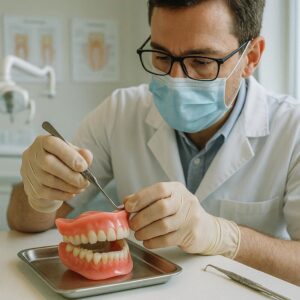
Dental Code for Denture Adjustment
What is a Denture Adjustment? (The Procedure, Not Just the Code)
Before diving into the numbers and letters of the codes, it’s important to understand what physically happens during an adjustment. This isn’t just a quick “tightening.” It is a precise clinical procedure.
A denture adjustment, often called a “post-insertion adjustment,” is performed to relieve areas of irritation caused by the denture pressing on the soft tissues of the mouth. When you receive a new denture, or when your mouth changes shape, the hard acrylic base of the denture may have “pressure points.”
During the appointment:
-
Identification: The dentist will examine your gums. They will look for red or sore spots (ulcerations) that indicate where the denture is rubbing too hard.
-
Marking: A pressure-indicating paste may be applied to the denture’s fitting surface. When you put the denture back in, the paste transfers to the high spots, clearly marking where the adjustment is needed.
-
Adjustment: The dentist uses a high-speed handpiece (a drill) to selectively and carefully remove small amounts of acrylic from the marked areas.
-
Polishing: The adjusted area is then smoothed and polished to ensure it feels comfortable against your tongue and cheek.
This process requires skill. Removing too much acrylic can ruin the denture’s seal or cause it to fit improperly, which is why this is a billable service and not just a simple fix.
The Main Codes: D5410 vs. D5422
In the world of dental billing, the Current Dental Terminology (CDT) codes are the standard. For denture adjustments, the codes are specific to the type of denture you have. There isn’t a one-size-fits-all “denture adjustment code.”
The two most common codes you will encounter are D5410 and D5422. Here is the breakdown.
D5410: Adjust Complete Denture – Maxillary
-
What it means: This code is used for adjusting a complete (full) upper denture. A complete denture replaces all of the teeth in the upper arch (maxilla).
-
When it’s used: If your top denture is loose, causing sore spots on the roof of your mouth or the upper gum ridge, this is the code your dentist will file.
D5422: Adjust Complete Denture – Mandibular
-
What it means: This code is used for adjusting a complete (full) lower denture. The lower arch (mandible) is often harder to fit due to the movement of the tongue and the shape of the lower jawbone.
-
When it’s used: If your bottom denture is rocking, causing sores on the lower ridge, your dentist will use this code.
Important Note: These codes are specifically for complete dentures. If you have a partial denture (a plate that fills in gaps where some natural teeth remain), the codes are different.
Adjustment Codes for Partial Dentures
Partial dentures interact with both the gum tissue and your remaining natural teeth. Adjusting them requires a different approach—and a different code—because the issue might be a clasp that is too tight or a framework that is impinging on a tooth.
| Dental Code | Description | When It’s Typically Used |
|---|---|---|
| D5411 | Adjust Partial Denture – Maxillary | The upper partial is bothering you. Maybe a clasp is loose, or the metal framework is rubbing the gum. |
| D5421 | Adjust Partial Denture – Mandibular | The lower partial is uncomfortable. This often happens with “distal extension” partials that rest on the gum in the back of the mouth. |
Denture Adjustment vs. Denture Reline: What’s the Difference?
One of the biggest points of confusion for patients is the difference between an adjustment and a reline. They are not the same thing, and they have different codes and costs. Knowing the difference helps you understand what your dentist is recommending.
Adjustment (The “Tune-Up”)
-
Code Example: D5410, D5422
-
What it is: Reshaping the inner surface of the denture to relieve sore spots caused by high spots.
-
Material Removed: Acrylic is removed from the denture base.
-
Scope: A minor, localized fix. It addresses specific pressure points.
-
Longevity: Provides immediate relief but doesn’t fix a generalized loose fit.
Reline (The “Rebase”)
-
Code Example: D5710 (Chairside), D5711 (Lab processed)
-
What it is: Adding new acrylic material to the fitting surface of the denture to fill the gap created by bone and tissue shrinkage.
-
Material Added: Acrylic is added to the denture base to make it “plump” again.
-
Scope: A major procedure. It re-adapts the entire denture base to the current shape of your jaw.
-
Longevity: Extends the life of the denture by months or years.
Analogy: Think of it like a pair of shoes.
-
An adjustment is like putting a small cushion or bandage on a spot where a shoe rubs your heel.
-
A reline is like replacing the insole of the shoe entirely because your foot has changed shape and the old insole doesn’t provide support anymore.
If you need adjustments constantly (every few weeks), you likely don’t have a “pressure spot” problem—you have a “loose fit” problem, and you probably need a reline instead.
The Hidden Code: D9930 (The In-Office Courtesy)
There is a “gray area” code that sometimes appears on treatment plans, though it is used less frequently for adjustments today: D9930 – Treatment of Complications (Post-Surgical) Unusual Circumstances.
In the past, some offices might have used this for emergency visits to adjust a denture after hours. However, for standard adjustments, D5410 and D5422 are the correct and most commonly accepted codes by insurance companies.
It’s also worth noting that many dentists include a short “post-insertion adjustment period” (usually the first 60-90 days after delivery) as part of the original cost of the denture. If you got your dentures last week and need a tweak, you likely won’t be billed. If you got them six months ago, the code applies.
How Much Does a Denture Adjustment Cost? (Out-of-Pocket)
Since this is a professional service, the cost can vary based on your location, the dentist’s experience, and the complexity of the adjustment. However, you can generally expect the following ranges for a standard adjustment code (D5410 or D5422):
-
Without Insurance (Self-Pay): $75 to $200 per adjustment.
-
With Insurance (In-Network): If you have dental insurance, these codes are typically covered under your basic restorative or diagnostic/preventive benefits.
-
Copay/Coinsurance: You may pay a copay (e.g., $25–$50) or a percentage (e.g., 20-50%) of the negotiated fee.
-
Deductible: You may need to meet your annual deductible first.
-
Factors Influencing Price:
-
Location: Urban areas with higher overhead tend to have higher fees.
-
Complexity: A simple spot adjustment is cheaper than a comprehensive equilibration of the entire bite.
-
Emergency vs. Regular Visit: An after-hours or weekend emergency adjustment will usually incur a higher fee.
Does Dental Insurance Cover Denture Adjustments?
The short answer: Yes, usually.
Because adjustments are considered necessary to maintain the health of your oral tissues and the functionality of the prosthetic, most dental insurance plans provide coverage.
However, there are limits to be aware of:
-
Frequency Limits: Insurance companies are smart. They know that if you need your denture adjusted every month, it might actually need a reline. Many plans will cover adjustments, but they may limit coverage to a certain number per year (e.g., two adjustments per calendar year) after the initial placement.
-
Waiting Periods: If you just got a new insurance plan, there may be a waiting period (often 6-12 months) for major procedures, but adjustments usually fall under basic care, which may have a shorter waiting period or none at all.
-
Medicare (Original): Original Medicare (Parts A and B) does not cover dental care, including dentures or adjustments.
-
Medicare Advantage (Part C): Many Medicare Advantage plans do offer dental benefits. Check your specific plan’s summary of benefits to see if adjustments are covered and what your copay is.
-
Medicaid: Coverage varies wildly by state. Some states cover adjustments for adults, while others only cover them for emergencies or not at all.
A Step-by-Step Guide to Your Adjustment Appointment
Knowing what to expect can ease anxiety and help you communicate better with your dentist.
-
The Complaint: You tell the dentist exactly where it hurts. Be specific. “It hurts here when I chew” is more helpful than “My mouth hurts.”
-
The Inspection: The dentist removes your dentures and visually inspects your gums. The location of the sore is a roadmap to the problem area on the denture.
-
The Marking (Optional): The dentist may apply a thin liquid or spray to the denture. When you bite, it smudges or clears away on the pressure points. This is the most precise method.
-
The Adjustment: You’ll hear the sound of drilling. Don’t be alarmed. The dentist is working on the denture, not your mouth. They will dip the denture in water periodically to keep it cool.
-
The Polish: The rough area is buffed smooth.
-
The Re-insertion: You put the dentures back in. The dentist will check your bite (occlusion) to ensure the adjustment didn’t affect how your teeth come together.
-
The Verdict: You’ll likely feel immediate relief, though the sore spots on your gums may take a few days to fully heal. Rinsing with warm salt water can speed up this healing.
Patient Tip: Never attempt to adjust your own dentures with sandpaper, files, or over-the-counter reline kits. These kits contain harsh chemicals that can damage the denture structure and harm your oral health. Always see a professional.
Frequently Asked Questions (FAQ)
Q1: Is there a specific “dental code for denture adjustment” for immediate dentures?
A: Immediate dentures (placed right after teeth are extracted) often require more frequent adjustments as the gums shrink rapidly during healing. The codes used are still the standard codes (D5410, D5422, etc.). However, many dentists include a certain number of these adjustments in the global fee for the immediate denture itself.
Q2: How long does a denture adjustment take?
A: The actual procedure is usually very fast, often taking only 10 to 20 minutes. However, plan for a full 30-minute appointment to allow for examination and discussion.
Q3: My denture feels fine, but it clicks when I talk. Is that an adjustment?
A: “Clicking” is often related to the fit or your bite. This may require an adjustment to the way the teeth come together (occlusal adjustment) or a reline if the denture is loose. Your dentist will need to diagnose the cause.
Q4: What if my denture is broken? Is that code D5410?
A: No. A break is a repair. Adjustment codes are for fit and comfort. If your denture is cracked or a tooth pops out, the code will be something like D5510 (Repair broken complete denture base) or D5520 (Replace missing or broken tooth).
Q5: Can a denture adjustment fix a gag reflex issue?
A: Sometimes. If the back of the upper denture (the posterior palatal seal) extends too far or is too thick, it can trigger a gag reflex. Trimming this area is a type of adjustment. Mention this specifically to your dentist, as it is a common but resolvable issue.
Additional Resources
For the most accurate and up-to-date information on dental coding straight from the source, you can refer to the American Dental Association (ADA). They are the governing body that maintains and publishes the CDT (Current Dental Terminology) code set.
-
Link to the American Dental Association (ADA) Shop for the latest CDT Manual
Note: While the full manual is a paid resource, their website offers excellent public information on dental health and the importance of coding standards.
Disclaimer
The information provided in this article is for general informational and educational purposes only and is not a substitute for professional dental or medical advice, diagnosis, or treatment. Always seek the advice of your dentist, physician, or other qualified health provider with any questions you may have regarding a medical or dental condition or treatment. While we strive to keep the information accurate and up-to-date, dental coding (CDT codes) and insurance policies are subject to change. You should verify any information with your insurance provider and dental office directly.
Conclusion
Navigating the terminology behind your dental treatment doesn’t have to be a mystery. The dental codes for denture adjustment—primarily D5410 (upper) and D5422 (lower) —are straightforward identifiers for a common procedure designed to keep you comfortable. By understanding the difference between an adjustment and a reline, and knowing what your insurance covers, you can have more informed conversations with your dentist and avoid unexpected bills. Remember, a well-fitting denture is essential not just for eating, but for your overall confidence and health.


