
Few dental experiences are as painful as developing a dry socket. You’ve just had a tooth extracted, and you are expecting some soreness, but instead, you are hit with a sharp, throbbing pain that radiates across your face. It is a situation that demands immediate relief.
However, in the midst of the pain, the last thing on your mind is paperwork or insurance codes. But once the treatment is done and you are finally feeling better, the bill arrives, and you are faced with a line item: a specific “dental code.”
Understanding the dental code for dry socket treatment is crucial. It determines how much your insurance will pay, what you owe out-of-pocket, and whether the procedure is considered part of the original extraction or a separate service.
This guide is designed to demystify those numbers. We will walk you through what dry socket is, the exact codes dentists use (specifically D9110 and D9930), how pricing works, and how to navigate your insurance benefits like a pro.
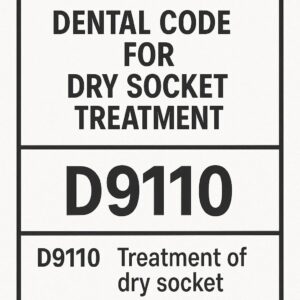
Dental Code for Dry Socket Treatment
What Exactly is a Dry Socket? (A Quick Overview)
Before we dive into the codes, it is helpful to understand what your dentist is actually treating. Medically known as alveolar osteitis, a dry socket occurs when the blood clot that forms in the socket after an extraction is dislodged, dissolves too early, or simply fails to form.
This clot is essential. It protects the underlying bone and nerve endings while the gum heals. Without it, the bone is exposed to air, food particles, and fluids, causing intense pain.
Why Does This Require a Separate Code?
This is the most common point of confusion for patients. You just paid for an extraction, so why is there an extra charge? The extraction code covers the removal of the tooth. The dry socket treatment code covers the management of a post-operative complication. It is a separate medical service aimed at alleviating pain and promoting healing.
The Primary Dental Codes for Dry Socket Treatment
In the world of dental billing, there are two main codes you will likely see if you require dry socket treatment. They are part of the Current Dental Terminology (CDT) code set, maintained by the American Dental Association (ADA).
The two codes are D9110 and D9930. While they are often used interchangeably by patients, they represent slightly different scenarios.
D9110: Palliative Treatment of Dental Pain
This is the most common code used for dry socket treatment.
What it means: The word “palliative” means to relieve symptoms without necessarily curing the condition immediately. In the context of a dry socket, D9110 is used when the dentist provides emergency care to stop the pain.
What the procedure usually involves:
-
Irrigation: Gently flushing the socket with a sterile solution (like saline or chlorhexidine) to remove food debris and bacteria.
-
Medicated Dressing: Placing a medicated gel or paste (often containing eugenol, which is derived from clove oil) directly into the socket. This soothes the nerve endings and provides a protective barrier.
-
Instructions: Advising you on how to keep the area clean and manage discomfort at home.
Key takeaway: D9110 is typically billed on a “per visit” basis. It covers the dentist’s time, expertise, and the materials used to provide immediate relief.
D9930: Treatment of Complications (Post-Operative)
This code is less frequently used for a standard dry socket, but it is important to know.
What it means: D9930 is used when a complication arises from a surgical procedure that requires more complex treatment than a simple palliative dressing. It might be used if the dry socket is exceptionally severe, if there is an infection present, or if the socket requires debridement (cleaning out dead or infected tissue).
The Difference:
-
D9110 is purely for pain relief.
-
D9930 implies a more complex management of the complication.
Think of it this way: If the dentist just flushes the socket and packs it with gauze/medication, it is likely D9110. If they have to surgically trim the gum, remove bone fragments, or place sutures to manage the dry socket complication, it might fall under D9930.
Comparison Table: D9110 vs. D9930
| Feature | D9110 (Palliative Treatment) | D9930 (Treatment of Complications) |
|---|---|---|
| Primary Goal | Symptom relief (pain management) | Resolving a post-surgical complication |
| Typical Use | Standard dry socket treatment | Severe dry socket, infection, or bone exposure |
| Complexity | Low to Moderate. Involves irrigation and dressing. | Moderate to High. May involve debridement or surgery. |
| Frequency | Often billed per visit. | Billed per occurrence of the complication. |
| What it feels like | A quick, focused procedure for pain relief. | A longer appointment addressing a specific problem. |
The Procedure: What Happens During a Dry Socket Appointment?
To help you understand the value behind the code, let’s walk through a typical appointment.
Step 1: Diagnosis and Assessment
The dentist will ask about your pain level and when it started. They will then visually inspect the extraction site. They are looking for a missing clot and visible bone. There is usually no need for X-rays unless they suspect retained root fragments.
Step 2: Gentle Cleansing (Irrigation)
This is a critical step. Using a syringe with a curved tip, the dentist gently flushes the socket. This removes any trapped food particles or bacteria that are irritating the exposed bone. Patients often feel immediate relief simply from the cleaning.
Step 3: Applying the Medicament
A small piece of gauze or ribbon is impregnated with a sedative dressing (like Alvogyl or Dry Socket Paste). This is loosely placed into the socket. It does not act as a new clot, but as a pharmacological bandage.
Step 4: Home Care Instructions
The dentist will explain that the packing may fall out in a few days. They will advise you on gentle saltwater rinses and may prescribe pain medication or antibiotics if an infection is suspected.
Important Note for Readers: The relief from a dry socket packing is often rapid, but it is temporary. You may need to return for a “dressing change” in 24 to 48 hours, which would constitute another visit and potentially another D9110 code.
Cost Analysis: How Much Does Dry Socket Treatment Cost?
The cost associated with the dental code for dry socket treatment varies significantly based on geography, the dentist’s experience, and the complexity of the case.
Average Price Range
-
D9110 (Palliative Treatment): The cost typically ranges from $75 to $200 per visit. This usually covers the examination of the site, irrigation, and the placement of the medicated dressing.
-
D9930 (Complication Management): If this code is used, the price can range from $150 to $350 or more, as it involves more chair time and skill.
Is It Worth It?
Absolutely. The pain from a dry socket is often described as one of the most intense types of dental pain. Paying for the D9110 code provides almost immediate relief and prevents further complications, such as osteomyelitis (infection of the bone), which is far more expensive and dangerous to treat.
Dental Insurance and Dry Socket Codes
This is where understanding the code pays off literally. Dental insurance plans are contracts that cover specific services. How they treat the code for dry socket treatment can vary.
Is Dry Socket Treatment Covered?
In most cases, yes, it is covered. However, the percentage of coverage depends on the plan’s classification of the service.
-
As a Basic Restorative Service: Many insurance companies classify D9110 under “Basic Procedures.” If your plan covers basic services at 80%, you will pay 20% of the fee.
-
As a Diagnostic or Preventive Service: Some plans, recognizing that palliative care stops a minor issue from becoming major, might cover it at a higher rate, sometimes 100% after the exam.
-
Subject to Deductible: You will likely have to meet your annual deductible first. If this is your first dental visit of the year, you may have to pay the full cost until your deductible is met.
The “Same Service” Rule and Frequency
Insurance companies look closely at the D9110 code regarding frequency.
-
If you go back for a dressing change the next day, the insurance company may reject the second claim, arguing it is part of the initial treatment.
-
In this case, either the dentist writes off the second visit, or you pay a small fee out-of-pocket.
What If the Extraction Was Just Done?
This is a very common question: “Shouldn’t this be free since it’s a complication of the surgery I already paid for?”
From a medical standpoint, it is a complication. From a business and insurance standpoint, it is a separate service.
-
If you had a wisdom tooth removed and developed a dry socket, the oral surgeon will bill the extraction code (e.g., D7240) and the dry socket code (D9110) separately. You are responsible for both, based on your insurance benefits.
-
Some general dentists may be sympathetic and not charge for a quick post-op check-up, but if they have to open a sterile kit, mix medication, and spend 20 minutes treating you, it is reasonable to expect a charge.
How to Talk to Your Dentist and Insurance Company
Navigating the financial side of dental pain can be stressful. Here is a script and some tips to help you.
Questions to Ask Your Dentist’s Office:
-
“Can you clarify which code you will be using for the dry socket treatment? Is it D9110 or D9930?”
-
“What is the estimated out-of-pocket cost for this procedure today?”
-
“Will my insurance be billed electronically, and do you take assignment of benefits?” (This means they bill insurance directly, and you only pay your estimated portion).
Questions to Ask Your Insurance Company:
-
“What is my coverage percentage for the code D9110? Is it considered basic or major?”
-
“Has my annual deductible been met?”
-
“Is there a frequency limitation on this code?”
Preventing Dry Socket: The Best Way to Avoid the Code
The best code is the one you never have to use. While not all dry sockets are preventable (some are purely biological bad luck), you can significantly lower your risk by following these rules after an extraction.
The “Do Not” List (The Golden Rules)
-
Do not use a straw. The sucking motion can easily dislodge the clot.
-
Do not smoke. Smoking introduces chemicals that inhibit healing and the physical act of inhaling can pull the clot out. (Vaping counts too!).
-
Do not spit vigorously. Let saliva drool out; don’t spit it out with force.
-
Do not rinse harshly. For the first 24 hours, avoid rinsing altogether. After that, only do gentle swishes with salt water.
The “Do” List
-
Do take prescribed antibiotics. If your dentist prescribes them, finish the course.
-
Do eat soft foods. Stick to applesauce, yogurt, and mashed potatoes for a few days.
-
Do practice good oral hygiene. Keep the rest of your mouth clean, but be very gentle near the extraction site.
Frequently Asked Questions (FAQ)
Here are some of the most common questions patients have regarding the dental code for dry socket treatment.
Q: Is D9110 the only code for dry socket?
A: It is the most common, but D9930 is used for managing more serious complications. In rare cases, if an infection is present, an antibiotic code might be added, but the D9110 covers the dry socket procedure itself.
Q: Why is my dentist charging me if the extraction was just done yesterday?
A: The extraction fee covers the removal of the tooth. The dry socket is a post-operative complication requiring new materials, time, and expertise to treat. It is similar to going back to the doctor for a post-surgery infection; it requires a new visit and new treatment.
Q: Will my insurance deny the D9110 code?
A: Usually, no. It is a standard code. However, they may apply it to your deductible or only cover a portion. Denials usually happen if the code is billed too frequently in a short period (e.g., three days in a row).
Q: Does Medicare or Medicaid cover D9110?
A: Original Medicare (Part A and B) does not cover routine dental care or complications like dry sockets. Some Medicare Advantage plans may offer dental benefits that could cover it. Medicaid coverage varies drastically by state; some states cover emergency dental services for adults, while others do not.
Q: The code on my bill says “D9110” but it says “Emergency Exam” next to it. Is that right?
A: Yes. Many dental software systems use “Emergency Exam” or “Palliative Treatment” as the descriptor for D9110. It is the correct code for an emergency visit focused on pain relief.
Additional Resources
Navigating dental health can be overwhelming. For official information on dental procedures and codes, you can refer to the American Dental Association (ADA). They maintain the CDT code set.
-
Resource: For general patient education on oral health and procedures, visit the ADA’s public education site: MouthHealthy.org
Conclusion
Dealing with a dry socket is painful, but understanding the billing shouldn’t be. The primary dental code for dry socket treatment is D9110, which covers the palliative care needed to stop the pain. If the complication is more severe, the code D9930 may be used. Remember that this is a separate service from your initial extraction, and insurance coverage will vary based on your specific plan. By knowing these codes, you can have an informed conversation with your dentist and insurance provider, ensuring you get the relief you need without financial surprises.
Disclaimer:
The information provided in this article is for informational purposes only and does not constitute professional medical or financial advice. Dental codes, insurance policies, and treatment protocols can change and vary by provider and region. Always consult with a qualified dental professional and your insurance provider regarding your specific diagnosis, treatment, and coverage.


