
Finding an unusual spot in your mouth can be unsettling. When your dentist recommends removing it for testing, it’s a crucial step in protecting your health. This procedure, known as an excisional biopsy, is common in dentistry. However, understanding the paperwork, especially the billing codes, can often feel like learning a new language.
If you’ve been told you need a biopsy, or if you are simply trying to understand your dental insurance explanation of benefits (EOB), you have likely encountered the term “dental code for excisional biopsy.”
This guide is designed to demystify that code—specifically D7286—and walk you through everything you need to know. We’ll cover what the procedure entails, why the specific code matters, what to expect during recovery, and how to navigate the financial aspects with confidence. Our goal is to turn a confusing topic into a clear, manageable conversation.
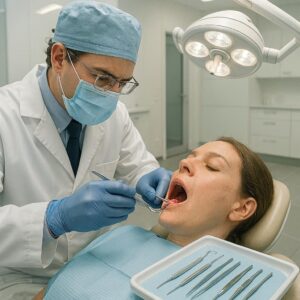
Dental Code for Excisional Biopsy
What is an Excisional Biopsy in Dentistry? (And Why It’s Different)
Before diving into the code itself, it’s essential to understand the procedure. An excisional biopsy is both a diagnostic and a therapeutic surgical procedure. The word “excisional” comes from “excise,” which means to cut out completely.
In simple terms, your dentist surgically removes an entire lesion, lump, or abnormal area of tissue from your mouth. This is different from taking just a small sample.
Excisional vs. Incisional Biopsy: A Crucial Distinction
The primary difference between an excisional and an incisional biopsy lies in how much tissue is removed. This distinction is also reflected in their respective dental codes.
-
Excisional Biopsy (D7286): The entire lesion is removed. This is often the preferred method for smaller lesions or those that are easily accessible. Because the dentist removes the whole thing, it can often serve as the complete treatment, provided the pathology report comes back benign (non-cancerous).
-
Incisional Biopsy (D7285): Only a small portion, or a “wedge,” of a larger lesion is removed. This is typically done for large lesions where complete removal might cause significant changes to your oral structures. The goal here is purely diagnostic—to find out what the lesion is before deciding on a full treatment plan.
Think of it like weeding a garden. An excisional biopsy is pulling out the entire weed, roots and all. An incisional biopsy is just taking a leaf to figure out what kind of weed you are dealing with before deciding how to get rid of the whole plant.
The Primary Dental Code for Excisional Biopsy: D7286
In the world of dental billing and record-keeping, the Current Dental Terminology (CDT) code is the standard. For an excisional biopsy, the specific code you and your insurance company will see is D7286.
This code is officially defined as: “Biopsy of oral tissue – excision of tissue mass, lesion, or area (List additional procedure, surgical access, and reimplantation or placement of interface material, if performed separately).”
Let’s break down what this definition means for you:
-
“Excision of tissue mass, lesion, or area”: This confirms that the procedure involves the complete removal of the abnormal tissue.
-
“List additional procedure… if performed separately”: This is a critical note. It means that D7286 covers the biopsy itself. However, other related procedures—like opening a flap to access the lesion, placing stitches, or using special bone grafting materials—may be billed in addition to this code. This is why the final cost can sometimes be higher than the fee listed for the biopsy alone.
When is D7286 Used?
Your dentist will likely use the D7286 code when:
-
They find a small to medium-sized lump, sore, or discolored patch that doesn’t go away on its own within two weeks.
-
The lesion is firm to the touch, bleeds easily, or has an irregular shape.
-
A suspicious area needs to be completely removed and sent to a pathologist for a definitive diagnosis.
-
The dentist believes that removing the entire lesion is the best course of action, both for diagnosis and treatment.
Beyond the Code: Other Related Dental Procedure Codes
To get a complete picture, it’s helpful to understand how D7286 relates to other common surgical codes. This prevents confusion when reviewing a treatment plan.
| CDT Code | Procedure Name | Description | When It’s Used |
|---|---|---|---|
| D7286 | Excisional Biopsy | Complete removal of a lesion. | For small lesions where full removal is possible and diagnostic. |
| D7285 | Incisional Biopsy | Removal of a representative sample of tissue. | For large lesions, to get a diagnosis before planning major surgery. |
| D7410 | Excision of Benign Lesion | Removal of a lesion up to 1.0 cm in size. | After a biopsy has confirmed the lesion is benign (non-cancerous). This is a separate surgical removal. |
| D7411 | Excision of Benign Lesion | Removal of a lesion larger than 1.0 cm. | After a biopsy has confirmed the lesion is benign. |
| D7450 | Removal of Odontogenic Cyst/Tumor | Removal of a cyst or tumor that originates from tooth-forming tissues. | For lesions of dental origin, often involving bone. |
Important Note: You might see both D7286 and, later, a code like D7410 on your records. This would happen if the initial biopsy didn’t remove the entire lesion and a second surgery was needed to take out the rest after a benign diagnosis. More commonly, if D7286 is used successfully, no further surgical code is needed.
What Happens During an Excisional Biopsy Procedure?
Knowing what to expect can significantly reduce anxiety. While every dentist has their own technique, the process for an excisional biopsy generally follows these steps:
-
Examination and Diagnosis: Your dentist will thoroughly examine the area, note its size, color, and texture, and record it in your chart with photos if necessary.
-
Anesthesia: A local anesthetic (like Novocaine) is administered to numb the area completely. You should feel no pain during the procedure, only pressure.
-
Excision: Using a surgical scalpel or a laser, the dentist carefully cuts around the lesion, removing it in its entirety along with a small margin of healthy tissue. This margin is crucial because it helps the pathologist see if the abnormal cells have started to spread.
-
Hemostasis (Controlling Bleeding): The dentist will control any bleeding, often with gauze pressure, cautery, or topical agents.
-
Closure: Depending on the size and depth of the wound, the dentist may place one or more sutures (stitches) to help the area heal smoothly.
-
Specimen Handling: The removed tissue is immediately placed in a small container with a special preservative called formalin. It is carefully labeled with your information and the exact location the tissue came from.
-
Pathology Referral: The specimen is sent to an oral pathologist—a specialist who analyzes tissue under a microscope.
A Note from Your Dentist: “The waiting period for pathology results is often the hardest part for patients. It usually takes 5 to 10 business days. Please know that the vast majority of oral lesions are benign (non-cancerous). We perform these biopsies to be thorough and ensure your long-term health. We will call you as soon as we have the results.”
Understanding Your Costs and Insurance Coverage
The financial aspect of healthcare can be confusing. Here’s what you need to know about how dental insurance typically handles the D7286 code.
Is an Excisional Biopsy Covered by Dental Insurance?
In most cases, yes, diagnostic procedures like biopsies are a standard benefit covered by dental insurance plans.
-
Diagnostic vs. Therapeutic: Insurance companies view biopsies as diagnostic. This means they are a covered service to determine the nature of a problem, similar to how they cover X-rays.
-
Medical vs. Dental Insurance: This is where it can get tricky. Because a biopsy is a diagnostic procedure for a potential pathology (disease), some or all of the cost may be billable to your medical insurance.
-
The “Dual Coverage” Scenario: Your dentist’s office may submit the claim to your dental insurance first. If the biopsy reveals a condition that is medical in nature (like cancer or a pre-cancerous condition), your dental insurance may deny the claim and suggest it be filed with your medical insurer. A well-informed dental office will help navigate this process.
Factors Affecting the Final Cost
The cost of an excisional biopsy can vary. The D7286 code covers the professional service of removing the tissue, but other items can add to the total bill:
-
The Biopsy (D7286): The primary fee for the surgical removal.
-
Pathology Fee: This is a separate, often large, fee from the oral pathologist for examining the tissue and providing a written report. This is almost always a medical insurance claim.
-
Anesthesia: If sedation or general anesthesia is required (for anxious patients or complex cases), this will be an additional charge.
-
Surgical Supplies: Stitches, special dressings, or other materials may have separate, smaller fees.
-
Facility Fee: If the procedure is done in a hospital or surgical center, there will be a facility fee.
Always ask your dentist’s financial coordinator for a written estimate that includes the biopsy fee and explains how the pathology fee will be handled.
Recovery and Aftercare: What to Expect
Healing from an excisional biopsy is generally straightforward. Your dentist will provide specific aftercare instructions, but here are the general guidelines.
Immediate Aftercare (First 24-48 Hours)
-
Bleeding: Some minor oozing is normal. Bite gently on a gauze pad placed over the area for 30-45 minutes to help a clot form. If bleeding continues, replace the gauze and apply pressure for another 30 minutes.
-
Pain Management: Over-the-counter pain relievers like ibuprofen (Advil, Motrin) or acetaminophen (Tylenol) are usually sufficient to manage discomfort. Take as directed by your dentist.
-
Swelling: If swelling occurs, apply an ice pack to the outside of your face for 15-minute intervals.
-
Eating: Stick to soft foods and liquids. Avoid hot foods and drinks for the first 24 hours, as they can dissolve the protective blood clot.
-
Oral Hygiene: Do not brush or floss near the surgical site. You can gently rinse your mouth with a warm salt water mixture (1/2 tsp salt in 8 oz of water) starting 24 hours after the procedure, especially after meals.
Long-Term Healing (First Two Weeks)
-
Stitches: If you have non-dissolving stitches, you will need a follow-up appointment to have them removed, usually within 7 to 14 days.
-
Activity: Avoid strenuous physical activity for a few days, as it can increase bleeding.
-
Avoid Irritants: Do not smoke or use tobacco products. Smoking severely impairs healing and increases the risk of complications. Avoid alcohol and spicy foods.
-
Watch for Infection: Call your dentist immediately if you experience increasing pain, swelling that worsens after 3 days, fever, or pus draining from the site.
Frequently Asked Questions (FAQ)
We’ve compiled the most common questions patients have about the dental code for excisional biopsy and the procedure itself.
Q: Is D7286 the only code my dentist will use for my biopsy?
A: D7286 is the primary code for the surgical removal. However, if other services are performed, such as complex surgical access (like reflecting a flap) or placement of a dressing, you may see additional codes on your claim. The pathology report from the lab will be billed under a separate set of codes, usually on the medical side.
Q: Does insurance always cover D7286?
A: Most dental insurance plans cover diagnostic services like biopsies. However, coverage levels vary. Some plans may pay a percentage (like 80%), while others may have a set fee schedule. It’s always best to check with your insurance provider or have your dentist’s office do a pre-authorization.
Q: My dentist found a spot. Why can’t they just “watch it”?
A: While monitoring is appropriate for some harmless spots, any lesion that persists for more than two weeks without a clear cause (like biting your cheek) should be evaluated. A biopsy provides a definitive diagnosis, ruling out serious conditions and providing peace of mind. It’s the gold standard for accurate diagnosis.
Q: What if the biopsy comes back as cancerous?
A: If the pathology report indicates cancer or a pre-cancerous condition (dysplasia), your dentist will refer you to a specialist, usually an oral and maxillofacial surgeon or a head and neck surgeon, for further treatment. The excisional biopsy you had is the critical first step in catching it early.
Q: Is the procedure painful?
A: You will be completely numb with local anesthesia, so you should not feel any sharp pain during the excision. Most patients report feeling only pressure and vibration. After the numbness wears off, there is typically mild to moderate discomfort, similar to a canker sore, which can be managed with over-the-counter pain relief.
Q: How long does it take to get the results?
A: It typically takes between 5 and 10 business days. The tissue must be processed, sliced incredibly thin, stained, and then carefully examined by a pathologist. Your dentist will contact you as soon as the final report is received.
Additional Resources
For more information on oral health and detecting oral cancer early, these resources can be invaluable:
-
The American Dental Association (ADA): Search for “Oral Health Topics” on ADA.org – Provides reliable, science-based information on a wide range of dental conditions.
-
The Oral Cancer Foundation: www.oralcancerfoundation.org – A comprehensive resource for patients and families dealing with oral cancer, including information on diagnosis, treatment, and support.
Conclusion
Facing an oral biopsy can be a stressful experience, but understanding the process can make it less daunting. The dental code for excisional biopsy, D7286, represents a precise and vital procedure for diagnosing and often treating oral lesions. It signifies the complete removal of tissue to ensure an accurate diagnosis, setting it apart from simpler sampling methods. By knowing what to expect—from the surgery itself to recovery and insurance considerations—you can approach this important step in your healthcare with confidence and clarity.
Disclaimer:
The information provided in this article is for educational and informational purposes only and is not a substitute for professional medical or dental advice. Always seek the advice of your dentist, physician, or other qualified health provider with any questions you may have regarding a medical condition or treatment. Insurance policies and coverage vary greatly; please consult with your insurance provider and dental office for details regarding your specific plan.


