
Navigating the world of dental procedure codes (CDT codes) can sometimes feel like learning a foreign language. When you add specific products like Gluma into the mix, it’s easy to get lost in the details. Whether you are a dentist looking to ensure proper reimbursement, a dental hygienist explaining treatment to a patient, or an office manager double-checking a claim, you need clarity.
This guide is designed to provide exactly that. We will explore the specific dental codes used for Gluma, why the coding can vary depending on the situation, and how to ensure your documentation is both compliant and accurate.
We will focus on the practical, real-world application of these codes, avoiding the confusing jargon and focusing on what you need to know to make informed decisions in your practice.
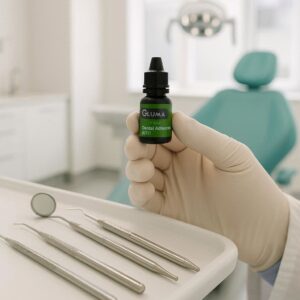
Dental Code for Gluma
What is Gluma? A Quick Overview
Before we dive into the numbers and letters of dental coding, it is helpful to understand what Gluma actually is. Developed by Kulzer, Gluma is a well-known brand in the dental industry, primarily famous for its desensitizing properties. If you have ever experienced that sharp, sudden pain when your tooth encounters something cold, you know what dentin hypersensitivity feels like.
Gluma works by occluding the dentinal tubules. Think of these tubules as tiny tunnels leading to the nerve of the tooth. When they are exposed, stimuli can travel straight to the nerve, causing pain. Gluma seals these tunnels, providing relief.
Common Applications in the Dental Office
You will typically see Gluma used in three main scenarios:
-
Before Restorative Procedures: Applied to prepared tooth surfaces to prevent post-operative sensitivity after placing a filling.
-
As a Standalone Desensitizing Treatment: For patients with generalized sensitivity not associated with a cavity.
-
Under Crowns and Bridges: To protect the tooth from sensitivity after preparation and before the final restoration is placed.
Understanding why you are using Gluma is the first and most critical step in determining the correct dental code.
The Primary Dental Code for Gluma: D9910
If you are looking for the most common code associated with Gluma, it is D9910. Let’s break down what this code represents.
CDT Code D9910: Application of desensitizing medicament
This is the “catch-all” code for applying a agent to reduce pain sensitivity in a tooth. It is the code you will use most frequently when Gluma is your product of choice.
When to Use D9910 for Gluma
You should consider using D9910 in the following situations:
-
Treatment of Generalized Sensitivity: A patient presents with discomfort in several teeth due to gum recession or enamel wear. You apply Gluma to the affected areas.
-
Post-Scaling and Root Planing: After deep cleaning, teeth can be extremely sensitive. Applying a desensitizer like Gluma is a common and billable service.
-
As a Separate, Planned Procedure: The patient specifically books an appointment to address tooth sensitivity.
Important Note on D9910 Limitations
It is crucial to understand that D9910 is generally considered a “per visit” code, not a “per tooth” code. Most dental insurance plans will cover the application of a desensitizing agent once per session, regardless of how many teeth you treat. You cannot typically bill D9910 for every single tooth you paint with Gluma.
Important Note for Billers: Always check the patient’s specific plan limitations. Some insurance providers consider D9910 a component of a comprehensive oral evaluation and may not reimburse it separately. Others may have a frequency limitation, such as once every two years.
The “Hidden” Code: D9911 for In-Office Treatments
There is a lesser-known code that deserves attention, especially for practices focusing on treating hypersensitivity as a primary service.
CDT Code D9911: Application of desensitizing resin for cervical and/or root surface, per tooth
This code is distinctly different from D9910. While D9910 is a topical application, D9911 implies the use of a resin-based material (like some formulations of Gluma) that bonds to the tooth structure and provides a longer-lasting, more robust desensitizing effect.
Key Differences Between D9910 and D9911
| Feature | D9910 (Desensitizing Medicament) | D9911 (Desensitizing Resin) |
|---|---|---|
| Material | Typically a gel, liquid, or paste. | A resin-based material that often requires light-curing. |
| Billing Unit | Per visit / per arch. | Per tooth. |
| Longevity | Generally shorter-term relief. | Designed for longer-term, durable desensitization. |
| Procedure | Simple application with a brush or applicator. | May involve etching, rinsing, drying, and light-curing. |
| Reimbursement | Lower reimbursement, often subject to frequency limits. | Higher reimbursement potential, reflecting the more complex procedure. |
Can You Use D9911 for Gluma?
It depends entirely on the specific Gluma product and your application technique.
-
Classic Gluma Desensitizer is a liquid containing HEMA and glutaraldehyde. It works chemically and does not require light-curing to set. This is best suited for D9910.
-
Gluma Comfort Bond + Desensitizer or other adhesive resin-based desensitizers fall more in line with the description for D9911.
When in doubt, document the exact product used and the steps taken. If you had to cure the material with a dental curing light, you are likely performing a service more aligned with D9911.
Bundled Services: When Gluma is Included in the Primary Procedure
This is where coding gets tricky. In many clinical scenarios, applying Gluma is considered a standard part of another, larger procedure. In these cases, you cannot bill for Gluma separately. The fee for the primary procedure is meant to cover the cost of the materials and the time to apply them.
You should not bill D9910 or D9911 if you are using Gluma during:
1. Placement of a Direct Restoration (Fillings)
When you place a composite or amalgam filling, the process often involves etching, bonding, and placing the material. If you apply Gluma after preparing the tooth but before placing the bonding agent, this is considered a step in the restorative process. It is part of ensuring a successful restoration, not a separate treatment for sensitivity.
Correct Code: The appropriate filling code (e.g., D2391 for a one-surface composite).
Incorrect Code: Adding D9910 to the claim.
2. Cementation of an Indirect Restoration (Crowns, Bridges, Inlays)
Before cementing a permanent crown, it is best practice to treat the prepared tooth to prevent sensitivity. If you apply a desensitizer like Gluma at this stage, it is part of the cementation or luting procedure. It is not a separate therapeutic service.
Correct Code: The appropriate crown code (e.g., D2740 for a porcelain/ceramic crown) or the cementation code if billed separately by a lab.
Incorrect Code: Adding D9910 to the claim.
3. As Part of a Periodontal Procedure
Following scaling and root planing (SRP), it is common to apply a desensitizer. However, many insurance contracts consider this post-operative care that is included in the SRP fee, especially if it is done at the same appointment.
Honest Advice for Practices: Bundling is the most common reason for claim denials related to desensitizers. A simple rule of thumb is: If you are already opening the tooth for another primary procedure, the desensitizer is included. If the sole purpose of the application is to treat sensitivity, it is a separate service.
Coding for Gluma During Bleaching Procedures
Tooth sensitivity is a very common side effect of in-office or take-home whitening. This creates another potential coding scenario.
If a patient returns to your office specifically because they are experiencing severe pain from bleaching, and you apply Gluma to alleviate that discomfort, you have a valid reason to bill D9910. The sensitivity is a direct result of a previous procedure, and you are now treating a new condition (pain).
However, if you apply a desensitizer before starting the bleaching, as a preventative measure during the same appointment, this is typically considered part of the whitening procedure and is not separately billable.
Step-by-Step: How to Document Gluma Application
Proper documentation is your best defense against a denied claim or an audit. Your clinical notes should tell the story of why the service was medically necessary. Here is a template you can adapt:
Sample Clinical Note for D9910 (Standalone Treatment)
Date: [Date of Service]
Patient: [Patient Name]
Chief Complaint: “My teeth are sensitive to cold water and air, especially on the bottom front teeth.”
Clinical Findings: Generalized recession noted on teeth #23-26. Air syringe stimulus elicited a sharp, immediate pain response. No caries detected. Teeth are vital.
Procedure: Treatment plan and fee estimate discussed with patient. Informed consent obtained.
-
Teeth #22-27 were isolated with cotton rolls.
-
The cervical areas were gently dried.
-
Gluma Desensitizer was applied to the affected root surfaces with a microbrush and allowed to sit for 60 seconds.
-
The area was gently air-dried to remove excess.
-
Patient tolerated the procedure well.
Treatment Provided: D9910 – Application of desensitizing medicament.
Plan: Patient to return in 2 weeks for re-evaluation. Discussed use of desensitizing toothpaste at home.
Sample Clinical Note for Gluma under a Crown (Not Separately Billable)
Date: [Date of Service]
Patient: [Patient Name]
Procedure: Tooth #3 prepared for full-coverage crown.
-
Following tooth preparation, hemostasis achieved.
-
Gluma Desensitizer was applied to the prepared dentin surfaces for 60 seconds as part of the pre-cementation protection protocol prior to temporization.
-
Provisional crown fabricated and cemented with temporary cement.
Treatment Provided: D2740 – Crown – porcelain/ceramic.
The Role of Medical Necessity in Desensitizer Claims
Insurance companies pay for services that are “medically necessary.” When it comes to desensitizers, this means the treatment must be required to alleviate pain or discomfort that interferes with the patient’s normal function (eating, drinking, breathing cold air).
To establish medical necessity for a standalone D9910 claim, your notes should include:
-
The Patient’s Complaint: Direct quotes are powerful. “Patient states cold drinks cause sharp pain.”
-
Objective Evidence: “Tooth #5 responds intensely to air and cold testing.”
-
The Diagnosis: “Generalized dentin hypersensitivity.”
-
The Treatment Provided: “Application of Gluma to desensitize the area.”
Simply writing “Tooth sensitivity” in the notes is not enough. Paint a clear picture of the problem and the solution.
What About Over-the-Counter Alternatives?
Patients often ask, “Why should I pay for you to put something on my teeth when I can buy a tube of sensitivity toothpaste at the pharmacy?” This is a valid question, and it actually helps clarify the coding.
-
Over-the-Counter (OTC) Toothpastes: These work by blocking tubules over time with consistent use. They are a home-care approach.
-
In-Office Gluma Application: This is a clinical procedure. The dentist applies a concentrated, professional-grade medicament that works immediately. The fee for D9910 covers the doctor’s skill, the use of the product, and the immediate results.
When discussing the procedure with patients, focus on the value of the professional, in-office service versus the gradual, often less effective, approach of OTC products.
Meta Description
Meta Description: Confused about the dental code for Gluma? This comprehensive guide explains D9910 vs. D9911, when to bill separately, and how to avoid claim denials for desensitizer applications.
Frequently Asked Questions (FAQ)
Q1: Can I bill insurance for applying Gluma after a cleaning?
A: It depends. If the patient returns on a different day specifically to address sensitivity caused by the cleaning, yes (using D9910). If you apply it immediately after the cleaning at the same appointment, it is often considered part of the post-operative care and is not separately billable.
Q2: My claim for D9910 was denied. What should I do?
A: First, don’t panic. Review the Explanation of Benefits (EOB). Was it denied because it’s a “patient liable” service (not covered), or because it was “bundled” into another procedure? If it was a valid standalone treatment, you can appeal with your clinical notes that demonstrate medical necessity.
Q3: Is there a specific “Gluma code”?
A: No. There is no CDT code that mentions “Gluma” by name. Gluma is a brand. You must use the appropriate code that describes the procedure you performed, which is either D9910 or D9911.
Q4: How many times a year can I bill D9910?
A: This is plan-specific. Many PPO plans allow it once per year or once every two years. Some medical assistance plans may allow it more frequently. Always verify benefits beforehand.
Q5: Is desensitizer treatment considered dental or medical?
A: It is a dental procedure (CDT code). However, in cases of severe sensitivity caused by conditions like GERD or bulimia (which cause enamel erosion), there may be a medical cross-over, but it is still billed to the dental plan first.
Additional Resource
For the most up-to-date and official information on dental coding, the American Dental Association (ADA) is the definitive source. You can find the complete list of CDT codes and their descriptors on their website.
[Visit the American Dental Association (ADA) for CDT Coding Information] (https://www.ada.org/en/publications/cdt)
Conclusion
Finding the right dental code for Gluma comes down to understanding the intent of your treatment. For a simple, topical application to relieve sensitivity, D9910 is your go-to code. If you are using a light-cured resin for a longer-term, tooth-by-tooth solution, D9911 may be more appropriate. The most important takeaway is to remember when not to bill—specifically, when desensitizer application is part and parcel of a larger restorative or crown procedure. By pairing the correct code with thorough documentation, you can ensure your patients get the relief they need and your practice gets reimbursed fairly.
Author: Dental Coding Specialist
Date: March 13, 2026
Disclaimer: This article is intended for informational purposes only and does not constitute legal or billing advice. Dental coding and insurance policies vary and are subject to change. Always consult with your payers and refer to the current CDT manual published by the American Dental Association for the most accurate and up-to-date information.


