
If you’ve recently finished your orthodontic treatment—or if you’re about to start—you’ve likely heard of a Hawley retainer. It’s the classic retainer with the metal wire and acrylic plate that fits against the roof of your mouth or along your tongue. But when it comes time to replace it, repair it, or get your first one, the conversation often shifts from orthodontics to insurance. Suddenly, you’re hearing terms like “CDT codes,” “lifetime maximums,” and “frequency limitations.”
It can feel overwhelming. You might be wondering: What is the exact dental code for a Hawley retainer? Will my insurance cover it? Why is the cost different from a clear plastic retainer?
This guide is designed to answer all those questions and more. We’ll break down the specific codes used by dental professionals, explain what they mean in plain English, and help you navigate the insurance maze so there are no surprises when you get to the front desk.
Think of this as your friendly roadmap to understanding the paperwork behind your smile.
Dental Code for Hawley Retainer
What is a Hawley Retainer? A Quick Refresher
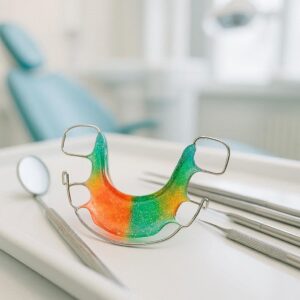
Before we dive into the world of codes and billing, it’s helpful to understand exactly what we’re talking about. The Hawley retainer, invented by Dr. Charles Hawley in the early 20th century, is a removable orthodontic appliance.
Unlike its modern cousin, the clear plastic retainer (often made from materials like Essix), the Hawley is easily identifiable by its design:
-
Acrylic Base: A custom-molded piece of acrylic that fits snugly against the palate (roof of the mouth) or the lingual side of the lower teeth.
-
Stainless Steel Wire: A wire that runs across the front of the teeth to hold them in their new, corrected position. This wire can be adjusted by your orthodontist to make minor tweaks.
-
Adjustable Clasps: Sometimes, small clasps are used to grip the molars for a more secure fit.
Why Choose a Hawley?
Many orthodontists prefer Hawley retainers for specific cases because they are durable, can be adjusted, and allow the teeth to settle naturally over time. Plus, they are virtually unbreakable compared to their all-plastic counterparts. However, they are more visible and can take a few days to get used to speaking with.
Now that we’re clear on the what, let’s get to the why of this article: the billing codes.
The Language of Dental Billing: Understanding CDT Codes
In the world of dentistry and orthodontics, communication with insurance companies happens through a standardized language: CDT Codes. CDT stands for Current Dental Terminology. These codes are published by the American Dental Association (ADA) and are updated every year. They are the universal language that your orthodontist’s office uses to tell your insurance company exactly what procedure was performed.
When you see a code like D8210, that’s shorthand for a very specific service. Using the correct code is crucial. If the wrong code is used, your insurance claim could be denied, or you might be charged incorrectly.
For orthodontic retainers, there are several codes, and using the right one depends entirely on the situation. Are you getting the retainer for the first time after braces? Is it a replacement for one you lost? Is it broken and needs fixing?
The Primary Dental Code for Hawley Retainer: D8210
Let’s get straight to the point. If you are looking for the specific code used to bill for a Hawley retainer, the most common code you will encounter is D8210.
CDT Code D8210: Removable orthodontic retainer
According to the official CDT code definition, D8210 is used for a “removable orthodontic retainer.” This is the standard, go-to code for a Hawley-type appliance.
However, here’s where it gets a little nuanced. Because “removable orthodontic retainer” is a broad category, D8210 technically covers both Hawley retainers and clear plastic retainers in many insurance contexts. But in common practice, and for the purpose of this article, D8210 is the code associated with the fabrication and delivery of a Hawley retainer.
When is D8210 Used?
You will typically see this code used in the following scenarios:
-
Post-Treatment Retention: After braces or Invisalign treatment is complete, and you receive your first set of retainers to hold your teeth in place.
-
Replacement Retainers: If your old Hawley retainer is lost, broken beyond repair, or no longer fits, a new one is fabricated. This also falls under D8210.
Important Note: Insurance plans often have limitations on how often they will pay for D8210. For example, a plan might cover a replacement retainer only once every 24 or 36 months, or not at all if it’s lost due to negligence. We’ll cover insurance specifics later.
Other Relevant Codes for Hawley Retainers
While D8210 is the star of the show, it’s not the only code related to Hawley retainers. Things break, need adjustments, or require different procedures. Here are other codes you might see on an invoice or explanation of benefits (EOB).
D8220: Fixed Orthodontic Retainer
This code is for a fixed retainer, which is a thin wire that is permanently bonded to the back of your teeth (usually the lower front teeth). This is not a Hawley retainer, but it’s important to know the difference because they serve a similar purpose but are billed completely differently. If you have both a Hawley (removable) for your upper teeth and a fixed wire for your lower teeth, you will see D8210 for the upper and D8220 for the lower.
D8680: Orthodontic Retention (Removal of Appliances)
This is a big one. Code D8680 is used for the visit when your braces are taken off. It covers the removal of the brackets and bands, the cleaning of the teeth, and the initial placement of your retainers. This is a comprehensive procedure code. So, if you just finished braces, you likely won’t see a separate D8210 charge for that day. The cost of the retainer is usually bundled into the comprehensive treatment fee (D8080 for braces or D8090 for Invisalign) or into the D8680 retention visit fee.
D8691: Repair of Orthodontic Appliance
Life happens. You might sit on your retainer, or the wire might bend. Code D8691 is used when an orthodontist repairs an existing removable appliance, like a Hawley retainer. If the wire snaps or the acrylic cracks, the doctor can fix it, and this code covers that labor and material cost. It is almost always much cheaper than fabricating a brand new retainer (D8210).
D8999: Unspecified Orthodontic Procedure
You might occasionally see this code, but it’s a bit of a “miscellaneous” code. It’s used for a procedure that doesn’t have a specific code. For instance, if you need a specialized type of retainer that doesn’t fit the standard definition, your provider might use D8999. Because it’s vague, it often requires a written description to be sent to the insurance company for approval.
Comparing Retainer Codes: A Quick Reference Table
To make it easier to see the differences at a glance, here’s a simple breakdown of the most common codes related to Hawley retainers and other post-orthodontic appliances.
| CDT Code | Procedure Description | Common Use Case for Hawley Retainers |
|---|---|---|
| D8210 | Removable Orthodontic Retainer | Fabrication and delivery of a new Hawley retainer (standard). |
| D8220 | Fixed Orthodontic Retainer | Permanent wire bonded to the back of teeth (not a Hawley, but often used alongside one). |
| D8680 | Orthodontic Retention Visit | The final appointment where braces are removed and retainers (like Hawley) are placed. |
| D8691 | Repair of Orthodontic Appliance | Fixing a broken wire or cracked acrylic on an existing Hawley retainer. |
| D8999 | Unspecified Ortho Procedure | A catch-all code for unusual or custom retainer designs. |
The Cost Breakdown: What Does a Hawley Retainer Code Actually Cost?
Understanding the code is one thing, but understanding the price tag is another. The cost associated with code D8210 can vary widely based on your geographic location, the orthodontist’s expertise, and the complexity of your case.
On average, without insurance, a single Hawley retainer can cost anywhere from $350 to $600 or more.
Why is there such a range?
-
Laboratory Fees: Many orthodontists send impressions or digital scans to a professional dental lab to fabricate the Hawley retainer. The lab charges the orthodontist, who then passes that cost on to you (with a markup for their expertise).
-
In-Office Fabrication: Some larger practices have in-house labs where they can make the retainers themselves, which can sometimes reduce costs.
-
Geographic Location: Like all medical services, orthodontic fees are higher in major metropolitan areas than in rural towns.
-
Complexity: If your case requires special adjustments or complex wire bending, the cost might be higher.
Navigating Insurance Coverage for Your Hawley Retainer
This is often the most confusing part for patients. Dental insurance is designed to help, but it comes with its own set of rules. Here’s what you need to know about how insurance typically handles the dental code for a Hawley retainer.
The “Orthodontic Lifetime Maximum”
Most dental insurance plans that cover orthodontics for children (and sometimes adults) have a separate lifetime maximum for orthodontic benefits. This is different from your annual maximum for cleanings and fillings.
For example, your plan might have a $1,500 or $2,000 lifetime orthodontic maximum. The comprehensive orthodontic treatment (braces or Invisalign, coded D8080 or D8090) eats up most of that maximum. The retention phase (your Hawley retainers, coded D8210 or part of D8680) is usually included in that initial treatment fee. This is why you often don’t see a separate bill for the retainers at the end of treatment—it was all part of the total package price.
Replacement Retainers: A Different Story
Things change when you need a replacement retainer a year or two later. Since your comprehensive orthodontic treatment is long over, the “orthodontic lifetime maximum” on your policy may already be exhausted.
In this case, a replacement Hawley retainer (D8210) is often treated like a regular dental procedure. Here’s how it might be covered:
-
It may not be covered at all. Many basic dental insurance plans explicitly exclude replacement orthodontic appliances for adults.
-
It may fall under your major restorative coverage. If it is covered, it might be subject to your plan’s “major services” deductible and coinsurance. For example, the plan might pay 50% of the allowed amount for code D8210, and you pay the other 50%.
-
Frequency limitations apply. As mentioned earlier, the plan might only cover a replacement retainer once every 3 to 5 years.
Important Note for Readers: Always check with your insurance provider before scheduling an appointment for a replacement retainer. Ask them directly: “Is code D8210 covered for a replacement retainer? What is my coverage percentage? Does it apply to my deductible? Is there a frequency limit?” Getting pre-authorization can save you from a hefty surprise bill.
Lost or Broken Retainers: Is It Covered?
This is a gray area. Most standard dental insurance policies do not cover retainers that are lost or broken due to negligence. They consider this a patient responsibility. However, if the retainer breaks because of a manufacturing defect (which is rare), the orthodontist might replace it under a warranty.
Some higher-tier “premier” or “premium” dental plans offer more robust orthodontic benefits for adults and might include one replacement retainer every few years. Again, this is where reading the fine print of your specific policy is essential.
Why Clear Aligner “Vivera” Retainers Have a Different Code
It’s common for people to confuse the codes for Hawley retainers with those for clear retainers, especially replacement sets from Invisalign, known as Vivera retainers.
Invisalign uses a specific system for their replacement retainers. Instead of the standard D8210 code, your orthodontist might bill using a different code or a bundled procedure. Often, the cost for a set of Vivera retainers (usually 3 or 4 sets) is a separate, all-inclusive fee that is not processed through insurance in the same way as a single D8210 Hawley. If they do bill insurance for it, they might still use D8210, but they will attach a note specifying it is a Vivera retainer set, as the cost is significantly higher.
The key takeaway: D8210 is the industry standard code for a single removable retainer, whether it’s made of acrylic and wire (Hawley) or clear plastic, but the final cost and lab process are entirely different.
The Patient Journey: From Lost Retainer to New Smile
Let’s walk through a realistic scenario to see how these codes come into play in real life.
The Situation: You finished braces 3 years ago. You wore your Hawley retainer faithfully, but during a move, it was accidentally thrown away. You need a replacement.
The Process:
-
The Call: You call your orthodontist’s office to schedule an appointment for a new retainer. The receptionist notes that you need a replacement Hawley (D8210).
-
The Insurance Check: The office asks for your current insurance information. They will run a “benefits check” to see if your plan covers D8210 for an adult replacement.
-
The Appointment: You come in for your appointment. The orthodontist or assistant takes a new digital scan or a physical impression of your teeth. This is part of the D8210 procedure.
-
The Fabrication: The scan/impression is sent to a lab, where a technician carefully crafts your new custom Hawley retainer.
-
The Delivery: You return to the office a week or two later. The orthodontist checks the fit, makes any necessary wire adjustments, and gives you care instructions. This final fitting is also part of the D8210 service.
-
The Bill: The office files a claim with your insurance using code D8210. If the insurance covers 50% of the $500 fee, you are responsible for the remaining $250. If the insurance denies it, you are responsible for the full $500.
Caring for Your Investment: Prolonging the Life of Your Hawley
Now that you understand the value of what code D8210 represents, it makes sense to protect your investment. A Hawley retainer is durable, but it’s not indestructible.
-
Clean it daily: Brush it gently with a soft toothbrush and non-abrasive toothpaste or soap. Avoid using hot water, as it can warp the acrylic.
-
Use the case: When you’re not wearing it, it must be in its hard plastic case. Dogs love to chew retainers, and they can easily be lost in napkins or on lunch trays.
-
Handle with care: The wire can bend if you’re not careful when inserting or removing it.
-
Keep it away from pets: This is worth repeating. The smell of you on the retainer is irresistible to dogs, and they will destroy it in seconds.
Conclusion
Navigating the world of dental codes doesn’t have to be a mystery. The primary dental code for a Hawley retainer is D8210, which stands for a removable orthodontic retainer. Whether you are getting your first retainer after braces or need a replacement years later, this is the code you and your orthodontist’s office will use. Understanding this code, along with related ones like D8691 for repairs, empowers you to have informed conversations with your insurance provider and your dental team. By knowing what to ask and how coverage works, you can focus on what really matters: protecting the beautiful, healthy smile you worked so hard to achieve.
Frequently Asked Questions (FAQ)
1. Is D8210 the same code for an upper and lower Hawley retainer?
Yes, typically each retainer is billed separately. If you are getting both an upper and a lower Hawley retainer, you will likely see two line items on your bill, both with the code D8210. Some offices might bundle them, but each is considered a separate appliance.
2. My child just got their braces off. Why doesn’t the bill show code D8210 for their new Hawley retainer?
The cost of your child’s initial retainers is almost always included in the comprehensive orthodontic treatment fee (coded D8080 for braces) or the retention visit fee (D8680). You won’t see a separate D8210 charge because it’s part of the total package price you already paid for.
3. Does medical insurance ever cover Hawley retainers?
It is very rare. Hawley retainers are almost exclusively considered a dental/orthodontic expense. Only in cases where an appliance is needed due to a severe congenital defect or as part of reconstructive jaw surgery might there be a slim chance of medical insurance coordination, but this is highly unusual and requires pre-authorization.
4. How often can I bill insurance for a replacement Hawley retainer (D8210)?
This depends entirely on your specific dental insurance plan. Common frequency limits are once every 24, 36, or 60 months. Some plans do not cover replacements at all. You must check your “Summary of Benefits” or call your insurance provider to confirm.
5. My Hawley retainer broke. Should the code be D8210 or D8691?
If the existing retainer can be repaired (e.g., re-attaching a wire or smoothing a small crack), the correct code is D8691 (Repair) . If the retainer is broken beyond repair, lost, or no longer fits correctly, you will need a new one, which requires code D8210 (New Retainer) .
Additional Resource
For the most up-to-date information on dental procedure codes, you can always refer to the source. The American Dental Association publishes the CDT code set annually.
Disclaimer: This article is for informational purposes only and does not constitute professional medical or insurance advice. Codes, coverage policies, and costs vary by provider and insurance plan. Always consult with your orthodontist and insurance company for specific information regarding your treatment and financial responsibility.


