
If you’ve recently invested in a Cone Beam Computed Tomography (CBCT) machine for your practice, or if you’re frequently referring patients for these scans, you know exactly how invaluable the technology is. It gives us a 3D perspective that traditional 2D radiographs simply cannot match. We can see bone density, nerve pathways, sinus cavities, and anatomical anomalies with breathtaking clarity.
But then comes the administrative side of things. You’ve captured the perfect image, but now you have to translate that clinical necessity into a language the insurance companies understand. This is where many dental teams get stuck. The terminology is specific, the codes are nuanced, and a single wrong character can mean a denied claim or a significant delay in payment.
Welcome to your comprehensive guide to the dental code for CBCT scan. We aren’t just going to list a number; we’re going to explore the entire landscape of 3D imaging codes, understand when to use them, and learn how to communicate their value to payers. By the end of this, you’ll feel confident navigating this crucial part of modern dental practice.
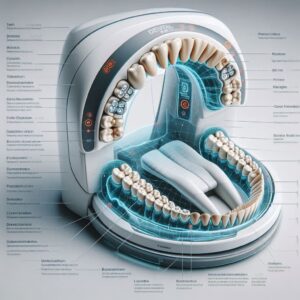
Dental Codes for CBCT Scans
Understanding the CDT Code Landscape for 3D Imaging
Before we dive into the specifics, it’s important to understand what these codes represent. In the United States, we use the Current Dental Terminology (CDT) codes, which are set by the American Dental Association (ADA). These codes are updated every year, so staying current is vital.
For years, the standard for 3D imaging was a single code. However, as technology evolved and the applications for CBCT expanded, the coding system had to become more sophisticated to accurately reflect the work being done. Today, the codes are primarily differentiated by two factors:
-
The Field of View (FOV): Is the scan capturing a small area, like a single tooth, or a large area, like both arches?
-
The Interpretation: Is this a focused look for a specific procedure, or a comprehensive evaluation of a larger volume of data?
The main code you will hear about is D0364, but it is part of a larger family.
The Core Code: D0364 – Cone Beam CT Capture and Interpretation
Let’s start with the most common code you will use. This is your workhorse for many implant and surgical cases.
-
Code: D0364
-
Descriptor: Cone beam CT capture and interpretation with field of view of less than one full jaw (e.g., one to two adjacent teeth)
Think of this as your “focused” 3D scan. The key phrase here is “less than one full jaw.” You are zooming in on a specific area. The classic example is a single implant site in the mandible. You need to see the height and width of the bone, the location of the inferior alveolar nerve, and the proximity of adjacent teeth.
Why choose this code?
You would use D0364 when your clinical question is very specific. It provides high-resolution data of a small area without exposing the patient to radiation over a larger region. This is often the most appropriate and defensible code for pre-surgical implant planning.
Expanding the View: D0365 – Full Jaw, One Arch
What happens when you need to see the bigger picture, but still only for one jaw?
-
Code: D0365
-
Descriptor: Cone beam CT capture and interpretation, including model construction, when indicated; less than one full jaw to one full jaw, mandible or maxilla
This code covers scans that range from less than one full jaw up to capturing the entire mandible or the entire maxilla (but not both). The descriptor includes the phrase “including model construction,” which refers to the software’s ability to create a virtual 3D model from the data.
Clinical Scenarios for D0365:
-
Full-arch implant cases: Planning for an “All-on-X” procedure requires seeing the entire mandible or maxilla to assess bone volume and identify the best implant positions.
-
Evaluating impacted teeth: If you have a deeply impacted canine and you need to see its exact relationship to the roots of all the adjacent teeth in that arch, this is your code.
-
Orthodontic assessment: Evaluating root resorption or the position of unerupted teeth in relation to the entire arch structure.
The Big Picture: D0366 – Both Jaws
For the most comprehensive view, we turn to the code for both arches.
-
Code: D0366
-
Descriptor: Cone beam CT capture and interpretation, including model construction, when indicated; both jaws, mandible and maxilla, with or without condyles
This code is for capturing the entire maxillofacial complex. It gives you a complete view of the upper and lower jaws, and often includes the temporomandibular joints (TMJs) and portions of the cervical spine.
When is this necessary?
-
Orthognathic surgery: Planning surgical correction of jaw discrepancies requires a full view of both jaws and their relationship to the skull base and each other.
-
Complex airway analysis: For sleep apnea assessments, you need to see the entire airway from the nasal cavity down to the trachea.
-
TMJ evaluations: Assessing osseous changes in the condyles and fossae.
-
Extensive pathology: If a large cyst or tumor is present, you need to know its full extent, which may cross from the maxilla into other structures.
The Supporting Codes: D0367 and D0709
The coding world doesn’t stop at capture. Sometimes, the images are taken by one provider and interpreted by another. Other times, the capture is just the first step, with a detailed analysis to follow.
D0367: When You Only Need the Data
-
Code: D0367
-
Descriptor: Cone beam CT capture only, with field of view of less than one full jaw to one full jaw, mandible or maxilla, with or without model construction, not including interpretation
This code is crucial for understanding referral patterns. Imagine a general dentist who has a CBCT machine but prefers an oral and maxillofacial radiologist to interpret the complex scan. The dentist would use D0367 to bill for the technical component (taking the scan). The radiologist would then use D0364, D0365, or D0366 (depending on the FOV) for the professional component (reading the scan). This is often referred to as a “split fee” or “technical and professional components.”
Important Note: Many insurance plans require the same provider to both capture and interpret the scan. If you use D0367, you are explicitly stating that you are not providing the interpretation, which can sometimes complicate reimbursement if the payer expects a complete service.
D0709: The Orthodontic Specific
While not a CBCT code per se, D0709 (Cephalometric image, cone beam, capture and interpretation) is an important part of the conversation. This code is specifically for a CBCT image that is acquired and then reconstructed to generate a traditional cephalometric (lateral headfilm) view. It is used primarily for orthodontic records and analysis. It acknowledges that the CBCT data can be used to create the same type of image used for orthodontic treatment planning, but it is billed separately from a comprehensive scan.
Comparative Table: Choosing the Right CBCT Code
To make this easier to digest at a glance, here is a quick reference table.
| CDT Code | Descriptor (Simplified) | Typical Field of View | Common Clinical Uses |
|---|---|---|---|
| D0364 | Capture & Interpretation; < 1 full jaw | Small (5×5 cm) | Single implant planning, endodontic evaluation, evaluating 2-3 adjacent teeth. |
| D0365 | Capture & Interpretation; 1 full jaw (single arch) | Medium (8×8 cm) | Full-arch implants, impacted teeth in one arch, orthodontic root assessment. |
| D0366 | Capture & Interpretation; Both jaws | Large (12×17 cm) | Orthognathic surgery, airway analysis, TMJ assessment, extensive pathology. |
| D0367 | Capture Only (no interpretation) | Small to Medium | When a dentist takes the scan but sends it to a specialist radiologist for the official report. |
| D0709 | Cephalometric image from CBCT | Large (reconstructed) | Orthodontic records to replace a traditional 2D cephalometric film. |
Navigating the Insurance Maze: Why Claims Get Denied
Knowing the correct code is only half the battle. The real challenge is getting the claim paid. Dental insurance was largely designed in an era of 2D radiographs, and many carriers are still catching up to the prevalence and value of 3D imaging. Here’s why claims for codes like D0364 get denied, and how to fight back.
1. The “Not a Covered Benefit” Trap
This is the most common denial reason. Many dental insurance plans, particularly older or more basic PPO plans, explicitly exclude CBCT scans from their list of covered benefits. They may view it as “experimental” or “diagnostic imaging beyond the standard of care,” even though we know it’s the standard for procedures like implant planning.
How to handle it:
-
Check benefits beforehand. This cannot be overstated. Call the insurance company and ask specifically, “Is code D0364 a covered benefit under this patient’s plan?” Get a reference number for the call.
-
Prepare the patient. If it’s not covered, inform the patient before the scan. Provide them with a detailed estimate. Many patients are willing to pay out-of-pocket for the improved diagnostic capability and safety.
2. The “Missing Medical Necessity” Argument
Even if it’s a covered benefit, the insurance company’s claims reviewer might not understand why a 2D panoramic X-ray wasn’t sufficient. Your claim form and your clinical notes must tell a compelling story.
How to bulletproof your claim:
-
Don’t just list the code. Include a concise but powerful narrative. For example, instead of just “D0364 for implant site #19,” write: “D0364 required to assess bone volume and precisely locate the inferior alveolar nerve canal to ensure safe placement of implant at site #19, mitigating the risk of paresthesia.”
-
Highlight the risk. Insurance companies understand risk. If a 2D image puts the patient at risk for nerve damage, sinus perforation, or violating anatomical boundaries, state that clearly.
-
Include images. If you are submitting a paper claim or have a portal that allows attachments, include a screenshot from your CBCT software that shows the pathology or the nerve proximity that necessitated the 3D view.
3. The “Global Surgical Fee” Confusion
This is a tricky one. Some insurance carriers consider the diagnostic imaging for a surgery to be part of the surgical fee itself. For example, if you are placing an implant (code D6010), they might argue that the CBCT scan is a bundled component of that procedure and should not be paid separately.
How to address it:
-
Consult the fee schedule. Look at the carrier’s fee schedule. If D0364 is listed with a fee, it is generally considered a separately payable benefit. If it’s not listed, they may try to bundle it.
-
Separate dates of service. Whenever clinically and logistically possible, perform the CBCT scan on a different day than the surgical procedure. This clearly delineates the diagnostic phase from the surgical phase and makes it harder for the payer to bundle them.
-
Appeal with documentation. If they bundle it, you can appeal, citing the CDT code definition which describes it as a distinct diagnostic service.
A Step-by-Step Guide to Patient Communication
Talking to patients about the cost of a CBCT scan can be daunting, but it’s an opportunity to demonstrate your commitment to their safety and the quality of your care.
Step 1: Explain the “What” and “Why”
“Mrs. Jones, to plan your implant for that back tooth, we need a very detailed, 3D picture of your jaw. A regular x-ray is flat, like a pancake, and it can’t show us exactly where your nerve is. This 3D scan, called a CBCT, is like a GPS for your mouth. It allows us to place the implant in the perfect spot, safely away from the nerve, and ensure you have enough bone. It’s the new standard of care for this type of procedure.”
Step 2: Address the Cost Proactively
“I know you’re concerned about the cost. This scan is a separate diagnostic procedure, just like an MRI would be at a medical office. The fee for this focused 3D scan is [Fee]. I’ve already checked with your insurance, and [explain coverage: it is covered at X%, it is not covered but you can use your annual maximum, or it is not a covered benefit]. Let’s go over your options.”
Step 3: Focus on the Value (Safety and Predictability)
“The most important thing for me is making sure your procedure is safe and successful. The information from this scan helps me avoid surprises during surgery. It’s the best tool we have to make sure your result is exactly what we both hope for.”
Best Practices for Documentation
Solid documentation is your best friend in the event of an audit or a claim denial. Your clinical notes should stand alone in justifying the need for the scan.
-
Link to the Diagnosis: The need for the scan must be directly related to a diagnosed condition. (e.g., “Patient presents with missing #19. Treatment planned for implant. CBCT required for surgical planning.”)
-
Document the Clinical Question: What specific question are you trying to answer with the 3D image? (e.g., “Need to assess buccolingual width and confirm location of mental foramen.”)
-
Note the Findings: In your notes, write a brief summary of your interpretation of the scan. (e.g., “CBCT reveals adequate bone height of 14mm, width of 7mm. Inferior alveolar nerve canal is located 4mm from alveolar crest. No pathology noted.”)
-
Store the Data: Ensure your CBCT data is stored securely as part of the patient’s permanent record, just like any other radiograph.
Frequently Asked Questions (FAQ)
Q: Can I use D0364 for an endodontic case?
A: Absolutely. D0364 is perfect for evaluating complex root canal anatomy, diagnosing cracked roots, or identifying periapical pathology that isn’t visible on 2D images. It’s often the best way to assess a tooth for resorption or perforation.
Q: My patient’s insurance denied D0364 because they said a panoramic X-ray is “standard.” What do I do?
A: First, don’t give up. File an appeal. In your appeal letter, explain why a panoramic film was insufficient for this specific case. Cite the need for 3D information to avoid critical structures like the nerve or sinus. Include a copy of the pan and a screenshot from the CBCT showing exactly what the pan missed. Highlight the improved safety and standard of care.
Q: Is there a specific code for a TMJ CBCT scan?
A: Yes, the most appropriate code is D0366, as it captures both jaws and typically includes the condyles. Some offices may attempt to use D0365 for a single joint, but if the scan captures the fossa and eminence of the temporal bone (which is part of the maxilla/midface), D0366 is more accurate for a bilateral evaluation. Always check the FOV of your specific TMJ protocol.
Q: How often do these codes change?
A: The ADA updates the CDT code set every year, with new codes taking effect on January 1st. While the core CBCT codes have been stable for several years, it’s crucial to use the most up-to-date code set from your software or coding manual to ensure compliance.
Q: What is the difference between a CBCT and a medical CT scan code?
A: CBCT scans performed in a dental office for dental purposes should always be billed using dental CDT codes (D0364-D0366) . Medical CT codes (e.g., 70486 for a CT of the mandible) are used when the scan is ordered for a medical diagnosis (like trauma, tumor, or severe infection) and performed in a hospital or medical imaging center. Billing a dental CBCT to a medical carrier can be complex and often requires a different kind of pre-authorization.
Additional Resources
Staying current with coding changes can feel like a full-time job. Here are some trusted resources to keep you on the right track:
-
American Dental Association (ADA) – CDT: This is the official source for all dental codes. Purchasing the current CDT manual is an investment in your practice’s financial health. [Link to ADA CDT Page]
-
Your Local Dental Society: Many state and local dental societies offer coding workshops and hotlines for members. This is an invaluable, personalized resource.
-
National Association of Dental Plans (NADP): This organization provides resources and information from the payer’s perspective, which can help you understand why insurers make certain decisions.
Conclusion: The Right Code is Just the Beginning
Mastering the dental codes for CBCT scans—from the focused D0364 to the comprehensive D0366—is about more than just getting paid. It’s about accurately documenting the high standard of care you provide. It’s about communicating the value of advanced technology to both patients and payers. While insurance reimbursement can be a challenge, a clear understanding of the codes, combined with meticulous documentation and proactive patient communication, will ensure that your practice can continue to leverage the incredible diagnostic power of 3D imaging to improve patient outcomes, safely and profitably.
Disclaimer: This article is intended for informational purposes only and does not constitute legal or billing advice. Coding and reimbursement guidelines are complex and subject to change. Always consult with your professional billing consultant, coding expert, or the relevant insurance payer for specific guidance on claim submission.


