
Healthcare billing and coding can be complex, especially when dealing with specialized medical supplies and equipment. One such code, HCPCS A5500, plays a crucial role in ensuring patients with diabetes receive the necessary foot care supplies. This article provides an in-depth exploration of HCPCS CODE A5500, including its definition, applications, billing procedures, and insurance coverage.
Whether you’re a medical coder, healthcare provider, or patient, understanding this code is essential for proper reimbursement and access to diabetic footwear. By the end of this guide, you’ll have a thorough grasp of how A5500 functions within the healthcare system.
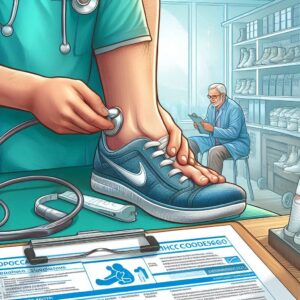
2. What is HCPCS Code A5500?
HCPCS (Healthcare Common Procedure Coding System) Code A5500 falls under the “Orthopedic Devices” category and is specifically designated for:
“Diabetic shoes, per pair.”
This code is used when billing for custom-fitted or depth-inlay shoes prescribed to diabetic patients to prevent foot complications such as ulcers, infections, and amputations.
Key Features of A5500:
-
Used for therapeutic footwear for diabetics.
-
Requires a physician’s prescription and proper documentation.
-
Covered under Medicare Part B and many private insurers under specific conditions.
3. Description and Purpose of HCPCS A5500
Diabetic patients often suffer from peripheral neuropathy (nerve damage) and poor circulation, increasing the risk of foot injuries. HCPCS A5500 covers shoes designed to:
✔ Reduce pressure points
✔ Prevent skin breakdown
✔ Accommodate custom orthotics
✔ Improve mobility and comfort
These shoes are not standard footwear—they must meet specific criteria, including:
-
Extra-depth design
-
Customizable inserts
-
Seamless interior to prevent irritation
4. When is HCPCS A5500 Used?
A5500 is applicable when:
✅ The patient has diabetes mellitus (Type 1 or Type 2).
✅ There is documented peripheral neuropathy or foot deformity.
✅ The patient has a history of foot ulcers or pre-ulcerative calluses.
✅ A physician certifies that standard shoes cannot accommodate the patient’s needs.
Who Can Prescribe A5500?
-
Podiatrists
-
Endocrinologists
-
Primary Care Physicians (PCPs)
-
Orthopedic Specialists
5. Coverage and Reimbursement Guidelines
Medicare Coverage for A5500
Medicare Part B covers one pair of diabetic shoes (A5500) and three pairs of inserts per year if:
📌 The patient has diabetes.
📌 The physician confirms medical necessity.
📌 The shoes are provided by a Medicare-approved supplier.
Private Insurance & Medicaid Policies
| Insurance Provider | Coverage Details | Limitations |
|---|---|---|
| Medicare | Covers 1 pair/year + 3 inserts | Must meet medical necessity |
| Medicaid | Varies by state | Prior authorization often required |
| Private Payers | Typically covers with a copay | May require pre-approval |
6. Documentation Requirements for A5500
To avoid claim denials, ensure the following documents are included:
📋 Physician’s detailed order (including diagnosis and necessity).
📋 Proof of diabetes diagnosis (lab reports, medical records).
📋 Foot exam notes (documenting neuropathy or deformities).
📋 Supplier’s invoice and fitting details.
7. Common Medical Scenarios Requiring A5500
-
Diabetic neuropathy with loss of protective sensation (LOPS).
-
History of partial foot amputation.
-
Charcot foot deformity.
-
Recurrent foot ulcers.
8. Differences Between A5500 and Similar HCPCS Codes
| HCPCS Code | Description | Key Differences |
|---|---|---|
| A5500 | Diabetic shoes, per pair | Covers standard diabetic footwear |
| A5510 | Custom diabetic shoes | For patients with severe deformities |
| A5512 | Diabetic shoe inserts | Only covers inserts, not shoes |
9. Billing and Coding Best Practices
-
Always use the correct modifier (e.g., KX for Medicare).
-
Submit supporting documentation with claims.
-
Verify patient eligibility before dispensing.
10. Potential Denials and How to Avoid Them
🛑 Common Denial Reasons:
-
Lack of medical necessity documentation.
-
Incorrect coding or missing modifiers.
-
Supplier not enrolled in Medicare.
✅ Solutions:
-
Double-check documentation.
-
Confirm patient eligibility.
-
Work with accredited suppliers.
11. Medicare, Medicaid, and Private Insurance Policies
-
Medicare: Follows DME (Durable Medical Equipment) guidelines.
-
Medicaid: State-dependent; some require prior auth.
-
Private Insurers: Often follow Medicare rules but may have additional restrictions.
12. Patient Eligibility and Accessibility
Patients must:
✔ Have diagnosed diabetes.
✔ Show evidence of foot complications.
✔ Obtain shoes from an approved provider.
13. Frequently Asked Questions (FAQs)
Q1: How often can I get diabetic shoes under A5500?
A: Medicare covers one pair per year, with three pairs of inserts.
Q2: Can I buy diabetic shoes without a prescription?
A: No, a doctor’s prescription and medical necessity documentation are required.
Q3: Does A5500 cover custom-made shoes?
A: No, custom shoes fall under A5510. A5500 is for standard-depth diabetic shoes.
Q4: What if my claim for A5500 is denied?
A: Review the denial reason, correct errors, and resubmit with proper documentation.
14. Conclusion
HCPCS code A5500 is essential for diabetic patients needing therapeutic footwear to prevent severe foot complications. Proper documentation, accurate billing, and adherence to insurance guidelines ensure smooth reimbursement. By understanding coverage criteria, coding best practices, and common pitfalls, healthcare providers and patients can maximize benefits while minimizing denials.


