
Navigating the world of medical billing and insurance codes can feel like learning a foreign language. If you are a caregiver for a child who relies on Pediasure for their nutritional needs, you have likely encountered the term “HCPCS code” and wondered what it means for your wallet and your insurance coverage.
Understanding this specific code is the first and most crucial step in ensuring that your child receives the nutrition they need without facing unexpected financial burdens. This guide is designed to walk you through everything you need to know about the HCPCS code for Pediasure, how insurance companies use it, and what to do if you run into trouble with a claim.
We’ll break down the jargon, explain the difference between over-the-counter and prescription nutrition, and give you the tools you need to advocate effectively for your child’s health. Whether you are just starting the process or are in the middle of an appeal, this is your go-to resource.
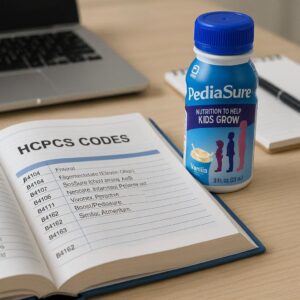
HCPCS Code for Pediasure
What is an HCPCS Code? (And Why Should You Care?)
Before we dive into the specific code for Pediasure, it’s helpful to understand what these codes are in the first place. Think of them as the product codes or SKUs of the healthcare world.
HCPCS stands for the Healthcare Common Procedure Coding System. It’s a set of codes created by the Centers for Medicare & Medicaid Services (CMS) to standardize the billing for medical services, procedures, supplies, and equipment that are not covered by other coding systems (like the CPT codes used for doctor visits).
There are two main levels of HCPCS codes:
-
Level I: These are the CPT (Current Procedural Terminology) codes, which are used for medical procedures and services provided by physicians.
-
Level II: These are the alphanumeric codes (they start with a letter A–V) used for products, supplies, and services not included in Level I. This is where you will find codes for things like ambulance rides, prosthetics, and, most importantly for us, enteral nutrition formulas like Pediasure.
Why should you, as a parent or caregiver, care about these codes?
Because your insurance company uses these codes to determine if a product is covered, how much they will pay, and how much you will owe. If the wrong code is used on a claim, it can be automatically denied, leading to delayed shipments, frustrated phone calls, and unexpected bills.
The Primary HCPCS Code for Pediasure: B4155
For standard, ready-to-use Pediasure formulas, the HCPCS code you will encounter most frequently is B4155.
This code falls under the broader category of enteral nutrition supplies and is specifically defined for “Enteral formula, nutritionally complete, blenderized, administered through a feeding tube, calories per unit varies.” While Pediasure isn’t typically “blenderized” in the traditional sense (it is a commercially prepared liquid), it falls under this code as a nutritionally complete, tube-feeding formula.
It is critical to understand that this code is designated for formulas administered via an enteral feeding tube (like a nasogastric tube, G-tube, or J-tube). This distinction is the single most important factor in insurance coverage.
Variations and Specifics
While B4155 is the most common “catch-all” code for pediatric formulas, the specific code can sometimes vary slightly based on the exact product or the insurance plan’s internal policies. Here are a few related codes you might come across:
| HCPCS Code | General Description | Relevance to Pediasure |
|---|---|---|
| B4155 | Enteral formula, nutritionally complete, blenderized, administered through a feeding tube. | The most common code for standard Pediasure and similar pediatric formulas. |
| B4154 | Enteral formula, nutritionally complete, with fiber, administered through a feeding tube. | Used for Pediasure with Fiber or other formulas containing added fiber. |
| B4161 | Enteral formula, for metabolic disorders, administered through a feeding tube. | Generally not for standard Pediasure. Used for specialized formulas for specific conditions. |
| B9998 | NOC (Not Otherwise Classified) enteral supply. | A temporary code used if a specific formula doesn’t have a standard code. This often requires additional paperwork and justification. |
Important Note for Readers: While B4155 is the standard code, always check with your durable medical equipment (DME) supplier or your insurance company to confirm which code they use for the specific Pediasure product you need. A prescription must explicitly state the formula name and that it is for “tube feeding” to be billed correctly under these codes.
The Golden Rule: Oral vs. Tube Feeding
This is the most common point of confusion and denial regarding insurance coverage for nutritional supplements. Let’s address it directly.
Oral Feeding (Drinking from a cup or bottle):
If your child drinks Pediasure by mouth, it is almost universally considered a food supplement, not a medical supply. Insurance companies, including Medicare and most private insurers, explicitly exclude food and dietary supplements from coverage. In this scenario, the HCPCS code is irrelevant. You are essentially buying groceries, and you would pay for Pediasure out-of-pocket or, in some cases, through a government food assistance program like WIC.
Tube Feeding (Enteral Nutrition):
If your child receives Pediasure through a feeding tube because they are unable to meet their nutritional needs orally due to a medical condition, it is classified as enteral nutrition. This is a medical treatment. In this context, the formula, supplies (tubing, bags, pumps), and sometimes even the pump itself, are considered Durable Medical Equipment (DME) or medical supplies. This is when the HCPCS codes like B4155 become the key to unlocking insurance coverage.
This distinction is non-negotiable for most insurance plans. A prescription for “Pediasure for poor weight gain” will be denied if the child is drinking it. The prescription must reflect the medical necessity of tube feeding.
How to Get Pediasure Covered by Insurance (The Right Way)
Getting the HCPCS code correct is just one piece of the puzzle. You need to build a solid case for medical necessity. Here is a step-by-step guide to navigating the process successfully.
Step 1: Obtain a Detailed Prescription
This is your foundation. A simple note that says “Needs Pediasure” will not work. You need a comprehensive order from your child’s physician that includes:
-
The Diagnosis: The specific medical condition requiring tube feeding (e.g., “failure to thrive secondary to cerebral palsy,” “dysphagia with aspiration risk”).
-
The Specific Product: “Pediasure 1.5 Cal” or “Pediasure with Fiber,” etc.
-
The Method of Administration: “For administration via gastrostomy tube.” This wording is non-negotiable.
-
The Daily Amount: The exact quantity prescribed per day (e.g., “4 cartons per day” or “1000 mL per day”).
-
The Duration: How long this treatment is expected to be needed (e.g., “ongoing,” “for 6 months”).
Step 2: Choose an In-Network DME Supplier
Your doctor will send the prescription to a DME company. It is vital to verify that the supplier is “in-network” with your insurance plan. If you use an out-of-network supplier, your coverage may be significantly lower, or you could be denied altogether. The DME supplier’s billing department will take your information and file the initial claim using the correct HCPCS codes.
Step 3: Understand Your Insurance Plan’s “Benefits”
Before the first shipment, call the customer service number on the back of your insurance card. Ask them these specific questions:
-
“What is my durable medical equipment (DME) coverage for enteral nutrition?”
-
“Is there a separate deductible for DME, and has it been met?”
-
“What is my co-insurance for DME? Is it a percentage or a flat copay?”
-
“Do I need prior authorization for enteral nutrition formula?” (This is very common).
-
“Which HCPCS code is used for pediatric tube-feeding formulas, and is it a covered benefit?”
Getting this information upfront can save you from a major financial surprise later.
Dealing with Denials: Your Appeal Toolkit
Even when you do everything right, claims can be denied. Don’t panic. A denial is not the final answer; it is often the first step in a negotiation. Here is why claims are denied and what you can do.
Common Reasons for Denial
-
“Not Medically Necessary”: The insurance company’s medical reviewer may not agree that the specific formula or quantity is required. They might suggest a cheaper, standard adult formula, even if it’s not appropriate for a child.
-
“Oral Route Not Medically Appropriate” Missing: The claim may have been processed incorrectly if the documentation didn’t clearly prove the child cannot take the formula by mouth.
-
Administrative Errors: The wrong HCPCS code was used, the prior authorization wasn’t filed correctly, or the prescription wasn’t signed. These are frustrating but often the easiest to fix.
-
“Not a Covered Benefit”: Some basic health plans have very limited coverage for enteral nutrition. You need to check your plan’s specific “Evidence of Coverage” document.
How to Write an Effective Appeal Letter
If your claim is denied, you have the right to appeal. Here is a simple structure for a strong appeal letter:
-
Introduce Yourself and the Patient: “I am writing to appeal the denial of coverage for Pediasure enteral formula for my son, [Child’s Name], (Date of Birth: XX/XX/XXXX, Member ID: XXXX). The date of service in question is XX/XX/XXXX.”
-
State Your Case Clearly: “I am requesting coverage for [Product Name] under HCPCS code B4155, as prescribed by [Doctor’s Name].”
-
Explain the Medical Necessity: This is the heart of your letter. Use simple, clear language.
“My child has a diagnosis of [Diagnosis]. This condition makes it impossible for him to swallow safely (dysphagia), and he relies on a feeding tube (gastrostomy tube) for all his nutrition and hydration. The prescribed Pediasure is specifically formulated for children to provide the essential vitamins and minerals necessary for growth and development, which standard adult formulas cannot provide safely.”
-
Attach Supporting Documents:
-
A copy of the denial letter.
-
The original, detailed prescription.
-
A letter of support from your child’s doctor (this is extremely powerful). Ask the doctor to write a brief letter explaining why the specific formula is medically necessary and why alternatives are not appropriate.
-
Any relevant medical records (swallow study results, growth charts showing failure to thrive).
-
-
Request a Specific Outcome: “I respectfully request that you reverse this decision and provide coverage for the prescribed Pediasure formula as a medically necessary enteral nutrition benefit.”
Send the letter via certified mail so you have proof of delivery.
Pediasure vs. Generic Alternatives: A Cost Comparison
If you are paying out-of-pocket or your insurance only covers a generic “base” formula, you might wonder about the cost difference. It’s important to be realistic.
| Product | HCPCS Code (if applicable) | Typical Monthly Cost (Out-of-Pocket)* | Key Features |
|---|---|---|---|
| Brand Name Pediasure | B4155 / B4154 | $300 – $600+ | Clinically tested for kids, specific vitamin/mineral profile for growth, various flavors and calorie densities. |
| Generic Pediatric Formula | B4155 | $200 – $450 | Meets basic nutritional standards for children, often less variety in flavors, may have different nutrient sources. |
| Standard Adult Formula | B4150 / B4152 | $150 – $350 | Not designed for children’s developmental needs. May contain inappropriate levels of protein or electrolytes for a child. |
*Costs are estimates and vary widely based on quantity, retailer, and region.
Quote from a Registered Dietitian:
“While generic formulas can be a good option for some, they are not a one-size-fits-all solution. For a child with specific needs—be it a higher calorie density for fluid restriction, a specific protein source for allergies, or the added prebiotics found in some brand-name formulas—the brand-name product is a medical necessity, not a luxury. The HCPCS code might be the same, but the clinical outcome for the patient can be vastly different.”
Beyond the Formula: HCPCS Codes for Supplies
The formula isn’t the only thing you need. If your child is tube-fed, you also need supplies to administer it. These are billed under their own set of HCPCS codes and are often covered under the same DME benefit. Here is a quick look at some common ones:
-
B4034: For feeding supply kit, syringe, and tube (for bolus feeding).
-
B4087: For a feeding tube (like a G-tube or J-tube replacement).
-
B9000: For an enteral nutrition infusion pump (the machine that controls the flow).
-
B9002: For an enteral nutrition pump, pediatric (sometimes a separate code for smaller, more precise pumps).
-
A9999: A miscellaneous code for other supplies like extension sets or tape.
Your DME supplier will typically bundle these into your monthly order. Make sure you understand what your co-pay or co-insurance is for both the formula (B4155) and the disposable supplies.
Frequently Asked Questions (FAQ)
Q1: Can I use my HSA/FSA to buy Pediasure if my child drinks it?
Yes, in most cases you can use a Health Savings Account (HSA) or Flexible Spending Account (FSA) to pay for Pediasure, but you usually need a Letter of Medical Necessity (LMN) from your doctor. The LMN states that the formula is needed to treat a specific medical condition (like a growth disorder or food allergy), not just for general nutrition. Keep your receipts and the LMN for your records.
Q2: What is the difference between HCPCS codes B4154 and B4155?
The primary difference is fiber. B4155 is for a standard, nutritionally complete formula without fiber. B4154 is specifically for a nutritionally complete formula that contains fiber. If your child’s doctor prescribes Pediasure with Fiber to help manage bowel regularity or diarrhea, your DME supplier should bill using B4154.
Q3: My insurance denied Pediasure and said to use a generic with the same code. Is that allowed?
This is a common practice called “step therapy” or using a preferred brand. If your insurance covers the HCPCS code B4155, they may only cover a specific generic product that also falls under that code. If your doctor insists that brand-name Pediasure is medically necessary (for taste, texture, or specific ingredient profile), they must file an appeal or a “formulary exception” request, providing clear clinical reasons why the generic is not suitable for your child.
Q4: Does the HCPCS code change if I need a different flavor?
No, the flavor does not affect the HCPCS code. The code is determined by the formula’s nutritional composition (e.g., standard, high-calorie, with fiber). Whether it is vanilla, strawberry, or unflavored, the billing code (like B4155) remains the same.
Q5: Where can I find the official HCPCS code for my specific Pediasure product?
The official code sets are managed by CMS, but they can be difficult to navigate. The easiest way is to ask your DME supplier. Their billing department has the most up-to-date code lists. You can also search online for “HCPCS code lookup,” but always cross-reference the information with your provider or supplier to be sure.
Additional Resources
Navigating insurance and medical supplies can be isolating, but you are not alone. Here are a few organizations that offer support, advocacy tips, and financial assistance.
-
The Oley Foundation: A fantastic resource for people relying on home intravenous (IV) and tube feeding. They offer peer support, educational conferences, and a wealth of information.
-
Feeding Tube Awareness Foundation: Provides parent-to-parent support and educational materials for families of children who are tube-fed.
-
NeedyMeds: A non-profit that helps people navigate assistance programs, including those that help with the cost of prescription drugs and medical supplies.
Conclusion
The journey to securing coverage for Pediasure through insurance hinges on understanding the specific language of the system. The HCPCS code B4155 is the key that unlocks coverage for tube-fed children, but it must be supported by a strong foundation: a clear diagnosis, a detailed prescription for enteral use, and a partnership with a qualified DME supplier.
Disclaimer
This article is for informational purposes only and does not constitute legal or medical advice. Insurance policies, coverage criteria, and coding guidelines vary by provider and are subject to change. You should always consult with your healthcare provider, insurance company, and a qualified billing specialist for advice tailored to your specific situation.


