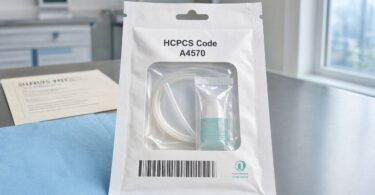
If you are a healthcare provider, a medical biller, or a patient navigating the complexities of addiction treatment, you know that clarity in billing is crucial. Few things are as frustrating as a denied claim for a medication that is essential to a patient’s recovery journey. When it comes to Vivitrol—the once-monthly injectable form of naltrexone used to treat alcohol dependence and opioid use disorder—understanding the correct code is the first step toward ensuring access to care.
In the world of medical billing, accuracy is everything. Using the wrong code can lead to delays, denials, and financial headaches for both the practice and the patient. So, what is the specific code you need?
The HCPCS code for Vivitrol is J2315.
This article is designed to be your ultimate resource for understanding everything about this code. We will break down the specifics of J2315, how it differs from other naltrexone codes, the reimbursement landscape, the prior authorization process, and the documentation required to ensure your claims are processed smoothly.
Whether you are setting up a new clinic, training new staff, or simply trying to understand your medical bill, consider this your comprehensive guide to the HCPCS code for Vivitrol.
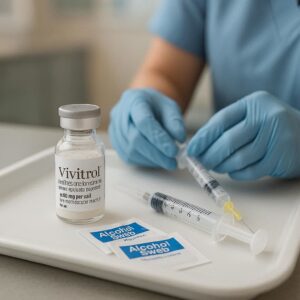
HCPCS Code for Vivitrol
What is Vivitrol? Understanding the Medication
Before we dive into the intricacies of the code, it is important to understand exactly what Vivitrol is and why it requires such specific billing attention.
Vivitrol is the brand name for extended-release naltrexone. Unlike the oral form of naltrexone, which is taken daily, Vivitrol is a microsphere formulation that is administered as a deep intramuscular (IM) injection into the gluteal muscle. Once injected, it releases a steady, therapeutic dose of naltrexone over a 28-day period.
How It Works
Naltrexone is an opioid antagonist. This means it works by blocking the effects of opioids in the brain. For individuals with opioid use disorder, it prevents the “high” associated with opioids. For those with alcohol dependence, it reduces cravings and the rewarding effects of alcohol. It is important to note that Vivitrol is not a controlled substance and does not cause physical dependence.
The Clinical Importance
Vivitrol plays a unique role in the landscape of Medication for Addiction Treatment (MAT), now often referred to as Medications for Opioid Use Disorder (MOUD). While methadone and buprenorphine are also effective for opioid use disorder, they are partial agonists or full agonists. Vivitrol is an antagonist, offering a different mechanism of action.
A critical clinical point is the induction period. A patient cannot simply walk into a clinic and receive a Vivitrol injection. Because naltrexone blocks opioid receptors, administering it to someone who still has opioids in their system can precipitate severe, immediate withdrawal symptoms. Therefore, patients must be completely opioid-free for a minimum of 7 to 14 days (depending on the opioid) before receiving their first injection. This is a key factor in the medical necessity documentation required for billing.
The Core Answer: J2315 – The HCPCS Code for Vivitrol
Let’s get straight to the point. The correct Healthcare Common Procedure Coding System (HCPCS) code for Vivitrol is J2315.
The official descriptor for J2315 is: “Injection, naltrexone, extended-release, 1 mg.”
This is a Level II HCPCS code. These are codes used primarily to identify products, supplies, and services not covered by CPT (Current Procedural Terminology) codes. J-codes specifically are used for drugs that are administered in a physician’s office or clinic.
Decoding J2315
Because the descriptor states “per 1 mg,” you must calculate the dosage to bill correctly. Vivitrol is supplied in a single-dose vial containing 380 mg of naltrexone.
Therefore, when a patient receives one injection of Vivitrol, you will bill 380 units of J2315.
-
One Vial = 380 mg = 380 units of J2315.
A Crucial Distinction: J2315 vs. J2310
A common source of billing errors is confusing J2315 with J2310.
-
J2315: Injection, naltrexone, extended-release, 1 mg. (This is Vivitrol).
-
J2310: Injection, naltrexone, depot form, 1 mg.
Wait, aren’t they the same? No. While they sound similar, payers strictly differentiate between these codes. Historically, J2310 was used for other forms of naltrexone. For a long time, there was no specific code for the extended-release version, leading to significant billing challenges. Today, J2315 is the exclusive and correct code for the branded Vivitrol product.
Using J2310 for Vivitrol is almost a guaranteed way to receive a denial. Always double-check your claim to ensure you are using J2315.
The Administering CPT Code: Alongside J2315
It is essential to understand that the J2315 code covers the drug itself. You must also bill a CPT code for the administration of the injection. You cannot bill for the drug without billing for the service of administering it.
The primary CPT code used for administering Vivitrol is:
CPT 96372: Therapeutic, prophylactic, or diagnostic injection (specify substance or drug); subcutaneous or intramuscular.
This code covers the work of preparing the injection, the supplies (like syringes and alcohol swabs), and the time and skill required to administer it safely.
Key Points for CPT 96372
-
Place of Service: This code is typically used in a physician’s office, clinic, or outpatient hospital setting.
-
Modifiers: In some cases, a modifier like JW (Drug amount discarded/not administered to any patient) might be used if a partial vial is wasted. However, because Vivitrol is a single-dose vial designed for one full injection, waste is minimal and should be documented.
-
Multiple Injections: If a patient receives multiple injections during the same visit (which is rare for Vivitrol), you may need to append modifier 76 (Repeat procedure by same physician) or 59 (Distinct procedural service) to the 96372 code, though payers have strict rules on this.
A Note on Evaluation and Management (E/M) Services
Often, the visit where a patient receives their Vivitrol injection includes more than just the injection. It typically involves a brief assessment to confirm the patient is still opioid-free, a review of side effects, and a discussion about the next appointment.
If this medical decision-making is significant and separate from the injection service, you may also bill an E/M code (e.g., 99211, 99212, or 99213) with modifier 25 (Significant, separately identifiable evaluation and management service by the same physician on the same day of the procedure). However, for many stable patients on maintenance therapy, the E/M service may be bundled into the injection code. You must check payer-specific policies.
Reimbursement and Cost Analysis
Understanding the financial side of the J2315 code is vital for a practice’s sustainability. Reimbursement rates vary widely depending on the payer (Medicare, Medicaid, commercial insurance), the geographic location, and the specific contract between the provider and the insurance company.
Estimated Reimbursement Rate (Per 380 mg Injection)
| Payer Type | Estimated Reimbursement (J2315) | Estimated Reimbursement (CPT 96372) | Total Estimated Reimbursement |
|---|---|---|---|
| Medicare | Varies by locality; Average: $1,200 – $1,500 | $30 – $50 | $1,230 – $1,550 |
| Medicaid | State-dependent; often ASP (Average Sales Price) + 6% | State-dependent; usually low | Varies significantly |
| Commercial | Based on contract; often higher than Medicare | Based on contract; moderate | $1,500 – $2,200+ |
Note: These are estimates. The Average Sales Price (ASP) for Vivitrol is published quarterly by CMS, which sets the Medicare payment rate. Providers should check the CMS ASP Drug Pricing Files for the most current data.
Why Reimbursement Can Be Challenging
While the reimbursement for J2315 can be substantial, the process is often complex. Insurance companies typically require strict adherence to clinical guidelines before approving payment for the drug.
Common reasons for denial include:
-
Incorrect HCPCS code: Using J2310 instead of J2315.
-
Incorrect Units: Billing for 1 unit instead of 380 units.
-
Lack of Prior Authorization: The most common cause of denial.
-
Missing Medical Necessity: Failure to document the patient’s diagnosis (F11.20 for opioid use disorder, F10.20 for alcohol dependence) and the failed attempts at other treatments or the specific contraindications to other MOUDs.
-
Incorrect Place of Service: Billing for an injection given in a clinic under a POS code that is not approved for this type of administration.
The Prior Authorization Process
Before you even think about submitting a claim with J2315, you must think about prior authorization. For most commercial insurance plans and Medicare Advantage plans, Vivitrol requires prior authorization (PA).
Prior authorization is a process where the provider must obtain approval from the insurance company before the drug is administered. Without this approval, the claim will be denied, and the practice may be left holding the cost of the expensive medication.
Steps to a Successful Prior Authorization
-
Verify Benefits: Contact the insurance company to confirm that the patient has pharmacy benefits or medical benefits for injectable drugs. Some plans cover J-code drugs under the medical benefit, while others require it to go through a specialty pharmacy.
-
Gather Clinical Documentation:
-
Diagnosis Codes: The primary diagnosis should be opioid use disorder (F11.20) or alcohol dependence (F10.20).
-
Induction Confirmation: Document that the patient has been opioid-free for the required period. This often includes negative urine drug screens.
-
Treatment History: Provide evidence of previous treatments. For example, if the patient is using Vivitrol because they cannot tolerate buprenorphine, or if they failed to respond to oral naltrexone, this strengthens the case.
-
Contraindications: Confirm the patient does not have acute hepatitis, liver failure, or a known allergy to naltrexone.
-
-
Submit the PA Request: Use the correct J2315 code and CPT 96372 on the PA form. Ensure the quantity is clearly stated as 380 mg.
-
Follow Up: Prior authorizations can take 3 to 10 business days. Do not administer the injection until you have a written approval in hand.
Documentation Requirements for J2315
Proper documentation is the backbone of a clean claim. When billing for J2315, your medical record must tell a complete story that justifies the use of this specific, high-cost medication.
Essential Elements in the Medical Record
-
Medication Administration Record (MAR): This should clearly state the date, time, site of injection (usually gluteal), and the name of the administering clinician.
-
Informed Consent: A signed consent form indicating the patient understands the risks, including the risk of precipitated withdrawal if they use opioids, and the importance of monthly adherence.
-
Prescription/Order: A valid order from a licensed prescriber for the Vivitrol injection.
-
Progress Note: This is the most critical part. The note should include:
-
Chief Complaint: “Follow-up for MOUD” or “Monthly Vivitrol injection.”
-
Assessment of Cravings: A brief assessment of the patient’s cravings since the last injection.
-
Urine Drug Screen (UDS) Results: Documentation of a negative UDS for opioids before administration. This is a non-negotiable safety requirement.
-
Physical Exam: Confirmation of the injection site’s integrity (no abscesses, no signs of infection) and a brief exam.
-
Plan: “Administer Vivitrol 380 mg IM (gluteal) today. Next appointment scheduled for 28 days.”
-
Vivitrol vs. Other MAT/ MOUD Medications: A Comparison
To fully appreciate the role of J2315 and Vivitrol, it helps to see how it fits into the broader landscape of addiction treatment. This table helps clarify the differences, which can be useful for documentation when justifying medical necessity.
| Feature | Vivitrol (J2315) | Suboxone (Buprenorphine/Naloxone) | Methadone |
|---|---|---|---|
| Mechanism | Opioid Antagonist (Blocks opioids) | Partial Agonist (Activates receptors mildly) | Full Agonist (Activates receptors fully) |
| Administration | Monthly IM injection (in-office) | Daily sublingual film/tablet (at home) | Daily oral liquid (at a clinic) |
| Risk of Diversion | Very Low (in-office only) | Moderate (taken home) | High (strictly controlled) |
| Induction | Requires 7-14 days opioid-free | Can be initiated when in mild withdrawal | Can be initiated when in withdrawal |
| Controlled Substance | No | Yes (CIII) | Yes (CII) |
| Billing | Medical benefit (J2315 + 96372) | Pharmacy benefit (prescription) | Clinic-based bundled services |
This comparison often forms the basis of the medical necessity argument. For instance, if a patient has a history of diverting their Suboxone, or if they work a job that makes daily clinic visits for methadone impossible, Vivitrol becomes the most clinically appropriate option.
Common Billing Mistakes and How to Avoid Them
Even seasoned billers can make errors when dealing with complex J-codes. Here are the most frequent pitfalls associated with J2315 and how to sidestep them.
1. Incorrect Units
Mistake: Billing 1 unit of J2315.
Why it happens: The biller sees “J2315” and thinks it represents the entire injection.
The Fix: Remember the descriptor says “1 mg.” Vivitrol is 380 mg. Always bill 380 units. For example, if your charge entry system asks for “Quantity,” you enter 380.
2. Using the Wrong Diagnosis Code
Mistake: Using a non-specific code like “Z79.899” (Other long-term (current) drug therapy) as the primary diagnosis.
Why it happens: The biller wants to show the patient is on maintenance therapy.
The Fix: The primary diagnosis must be the condition being treated. Use F11.20 (Opioid dependence, uncomplicated) or F10.20 (Alcohol dependence, uncomplicated). The Z79.899 can be a secondary code, but it cannot stand alone.
3. Missing the Administration Code
Mistake: Billing only J2315.
Why it happens: Some billers assume the J-code covers the entire encounter.
The Fix: Always bill CPT 96372 (or the appropriate administration code) alongside J2315. If you don’t, you are giving away the nursing and supply costs for free.
4. Overlooking Modifier JW for Waste
Mistake: Not documenting waste for a single-dose vial that was partially used.
Why it happens: While rare, if a clinic uses a vial for a patient and has to discard a portion, they often forget to document it.
The Fix: If you are administering a dose smaller than 380 mg (e.g., for a patient who cannot tolerate the full dose), you must document the discarded amount. Use modifier JW on the J2315 line to indicate the amount of drug that was discarded.
5. Ignoring Payer-Specific Policies
Mistake: Assuming all payers follow the same rules.
Why it happens: Billers apply the same Medicare logic to all claims.
The Fix: Blue Cross, Aetna, Cigna, and UnitedHealthcare all have specific medical policies for Vivitrol. For instance, some require that the patient try oral naltrexone first. Others require documentation of counseling or psychosocial support alongside the medication. Always check the payer’s medical policy before submitting the prior authorization.
A Step-by-Step Billing Scenario
Let’s walk through a realistic billing scenario to tie everything together.
Scenario:
A 34-year-old patient, John, comes to your clinic. He has a history of opioid use disorder (fentanyl). He completed a 10-day inpatient detox program and has been opioid-free for 12 days, confirmed by a negative UDS. You obtain prior authorization from his commercial insurance. He receives his first Vivitrol injection.
The Claim Should Look Like This:
| Code | Modifier | Units | Description |
|---|---|---|---|
| J2315 | – | 380 | Injection, naltrexone, extended-release, 1 mg |
| 96372 | – | 1 | Therapeutic, prophylactic, or diagnostic injection; intramuscular |
| 99212 | 25 | 1 | Office or other outpatient visit for evaluation and management (brief history, exam, and decision to administer) |
| Diagnosis Codes: | |||
| Primary: F11.20 | Opioid dependence, uncomplicated | ||
| Secondary: Z79.899 | Long-term (current) drug therapy |
Explanation:
-
J2315 captures the cost of the drug.
-
96372 captures the act of giving the shot.
-
99212 with modifier 25 captures the evaluation and medical decision-making that occurred before the injection, which is significant and separate from the simple injection service.
FAQs About the HCPCS Code for Vivitrol
Q1: Can I bill J2315 for the oral form of naltrexone?
No. The oral form (Revia) does not have a J-code for administration. It is typically dispensed through a pharmacy and billed under the pharmacy benefit. J2315 is strictly for the extended-release injectable form (Vivitrol).
Q2: What if the patient misses their appointment? Can I bill a “no-show” for J2315?
No. You cannot bill for a drug that was not administered. If a patient misses their appointment, you can bill a no-show CPT code (often used by practices is CPT 99024, but this is typically not reimbursed by insurance). The J2315 cannot be billed if the injection is not given.
Q3: How often can I bill J2315 for the same patient?
Typically, once every 28 days. However, payers may allow a window of 26 to 35 days to accommodate scheduling. Billing more frequently than 28 days without a specific medical reason (like a missed dose that required a re-induction) will likely result in a denial.
Q4: Is J2315 covered by Medicare Part B?
Yes, for the treatment of opioid use disorder in a qualified setting. Medicare Part B covers the administration of Vivitrol (J2315) in a physician’s office or outpatient hospital setting. However, there are specific requirements regarding the prescriber’s qualifications and the setting.
Q5: What is the difference between J2315 and a G-code?
G-codes are temporary codes used by Medicare for specific procedures or services that do not yet have a permanent CPT or HCPCS code. J2315 is a permanent HCPCS code and is the correct code to use. You should not use a G-code for Vivitrol administration.
Q6: What if the patient experiences a reaction and I don’t administer the full dose?
If you have to stop the injection due to an adverse reaction, you can bill for the amount administered (e.g., 200 mg = 200 units of J2315) and use modifier JW to indicate the 180 mg that was discarded. You must document the reaction and the reason for stopping the injection clearly in the medical record.
Additional Resources
For the most up-to-date and authoritative information regarding J2315 and Vivitrol billing, always refer to official sources. Here are some trusted resources:
-
Centers for Medicare & Medicaid Services (CMS) HCPCS Quarterly Update: This is the official source for HCPCS codes, including J2315. You can search for the code on the CMS website to see the official descriptor and any updates.
-
SAMHSA (Substance Abuse and Mental Health Services Administration): SAMHSA offers a wealth of information on MOUD, including billing guides and best practices for integrating substance use disorder treatment into clinical practice.
-
Alkermes (Manufacturer of Vivitrol): The manufacturer often provides resources for healthcare providers, including billing and coding guides, as well as patient assistance programs for those who are uninsured or underinsured.
-
Link: Vivitrol HCP Resources (Search for their Billing and Coding Guide)
-
Conclusion
Navigating the world of medical billing for addiction treatment requires precision and patience. The HCPCS code J2315 is the essential key to unlocking reimbursement for Vivitrol, a life-saving medication for individuals battling opioid and alcohol use disorders. By understanding the nuances of this code—from its 380-unit billing requirement to the necessity of pairing it with CPT 96372 and robust prior authorization—providers can reduce denials and focus on what truly matters: patient care.
Accurate coding not only ensures the financial health of a practice but also upholds the integrity of the treatment provided. Remember that thorough documentation, a clear understanding of payer policies, and meticulous attention to the clinical requirements for induction are the pillars of successful billing. This guide serves as a starting point; staying informed through official resources and continuous education will keep your practice at the forefront of quality addiction medicine.
Disclaimer: This article is for informational purposes only and does not constitute medical advice, legal advice, or a guarantee of payment. Billing regulations and coding guidelines are subject to change. Always consult with a certified medical coder or your specific payer for verification.
Author: Medical Billing & Coding Team
Date: April 01, 2026