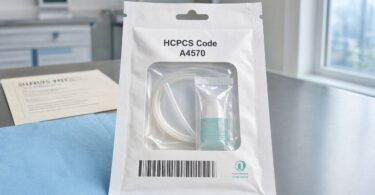
Hormone replacement therapy is a significant component of modern medical care. For patients with diagnosed hormonal deficiencies, these treatments restore balance, improve quality of life, and prevent long-term complications. Testosterone therapy is one of the most common forms of hormone replacement, particularly for men with hypogonadism.
In medical billing, injectable medications are coded using HCPCS Level II “J” codes. HCPCS code J3145 is a specific code used for a common formulation of injectable testosterone. Understanding this code, its proper application, and its billing nuances is essential for providers, coders, and billing staff in endocrinology, urology, and primary care practices.
This comprehensive guide will explore HCPCS code J3145 in detail. We will define the code, discuss its clinical uses, explain the billing and documentation requirements, and highlight common pitfalls to avoid.

HCPCS Code J3145
What Exactly is HCPCS Code J3145?
The “J” codes in HCPCS Level II are designated for drugs that are administered by injection or infusion and are not typically self-administered. These codes represent the drug product itself, separate from the service of administering it.
The official description for HCPCS code J3145 is: “Injection, testosterone cypionate, 1 mg.”
Let’s break down this description:
-
Injection: This indicates the route of administration. The drug is given via injection, typically intramuscularly (into a muscle) or subcutaneously (under the skin).
-
Testosterone Cypionate: This is the specific chemical formulation of the drug. Testosterone cypionate is a long-acting ester of testosterone. It is one of the most commonly prescribed forms of injectable testosterone in the United States. The “cypionate” ester slows the release of testosterone into the bloodstream, allowing for less frequent injections.
-
1 mg: This is the billing unit. It is critical to understand that J3145 is billed per milligram, not per vial or per injection.
In simple terms, J3145 is used to bill for the supply of testosterone cypionate when it is administered to a patient by a healthcare professional.
The Clinical Context: Who Needs Testosterone Cypionate?
Testosterone cypionate is prescribed for specific medical conditions. It is not a lifestyle drug or a performance enhancer. Its use is reserved for patients with a documented medical need.
Here are the primary clinical indications for testosterone cypionate therapy:
1. Male Hypogonadism
This is the most common and well-established indication. Hypogonadism is a condition where the body does not produce enough testosterone. It can be classified as:
-
Primary Hypogonadism: The problem is in the testicles themselves (e.g., due to Klinefelter syndrome, mumps orchitis, or injury).
-
Secondary Hypogonadism: The problem is in the pituitary gland or hypothalamus, which fail to signal the testicles to produce testosterone (e.g., due to a pituitary tumor or certain medications).
Symptoms of low testosterone include fatigue, decreased libido, erectile dysfunction, loss of muscle mass, increased body fat, and mood changes.
2. Delayed Puberty in Males
In some adolescent boys, puberty is significantly delayed. Testosterone therapy can be used under careful medical supervision to induce the development of secondary sexual characteristics.
3. Gender-Affirming Therapy
Testosterone cypionate is also used in gender-affirming care for transgender men (female-to-male transition). In this context, testosterone is administered to induce masculinizing effects such as deepening of the voice, facial hair growth, and body fat redistribution.
Important Note: A diagnosis must be clearly documented in the medical record. Billing for J3145 without a supporting diagnosis (such as hypogonadism or gender dysphoria) will result in claim denial.
Billing Guidelines for J3145: The Critical Unit Calculation
The single most common error in billing for J3145 is incorrect unit calculation. Because the code represents 1 mg of the drug, coders must convert the administered dose into billable units.
The Formula
(Total Administered Dose in mg) / (1 mg per unit) = Number of Billable Units
Since the unit is 1 mg, the calculation is simple: The number of units billed equals the number of milligrams administered.
Common Dosages and Billing Examples
Testosterone cypionate is typically supplied in vials of 100 mg/mL or 200 mg/mL. Common prescribed doses range from 50 mg to 400 mg, given every 1 to 4 weeks.
| Scenario | Prescribed Dose | Volume Injected | Units Billed for J3145 |
|---|---|---|---|
| Patient starting therapy with a standard dose. | 100 mg | 1 mL of 100 mg/mL solution | 100 Units |
| Patient on a bi-weekly protocol. | 200 mg | 1 mL of 200 mg/mL solution | 200 Units |
| Patient with a high-dose requirement. | 400 mg | 2 mL of 200 mg/mL solution | 400 Units |
| Patient on a low-dose maintenance protocol. | 50 mg | 0.5 mL of 100 mg/mL solution | 50 Units |
Critical Rule: Always verify the exact dose in the physician’s order and the medication administration record (MAR) before billing. A single misplaced decimal point can result in a 10-fold billing error.
The Difference Between the Drug and the Administration Service
A frequent source of confusion is the distinction between billing for the drug (the J-code) and billing for the service of giving the injection.
-
The Drug: This is billed with J3145. It represents the cost of the medication itself.
-
The Administration Service: This is billed with a CPT code. The appropriate code depends on the route and method of injection.
-
Intramuscular Injection: CPT code 96372 (Therapeutic, prophylactic, or diagnostic injection; subcutaneous or intramuscular).
-
Subcutaneous Injection: CPT code 96372 is also used for subcutaneous injections.
-
A complete claim for a testosterone injection will always include both the J-code for the drug and the CPT code for the administration.
Documentation Requirements: What Auditors Look For
To prove medical necessity and ensure clean claims, the patient’s medical record must contain comprehensive documentation.
The documentation should clearly establish:
-
The Diagnosis: A clear and specific ICD-10-CM code that justifies the use of testosterone. Examples include:
-
E29.1 (Testicular hypofunction)
-
E23.0 (Hypopituitarism)
-
F64.0 (Gender identity disorder/Transsexualism – though coding has evolved, check current guidelines for gender dysphoria codes)
-
E30.0 (Delayed puberty)
-
-
The Indication: The physician’s progress notes should explain why the therapy is being prescribed. This may include a summary of the patient’s symptoms and the results of laboratory testing.
-
The Dose and Route: The order and the administration record must clearly state the exact dose in mg (e.g., “Testosterone cypionate 200 mg IM”) and the route of administration.
-
The Date of Service: The date the injection was given.
-
The National Drug Code (NDC): For many payers, especially Medicare, you must include the NDC on the claim. This 11-digit number identifies the specific manufacturer and package size of the drug you used. It is found on the vial.
Reimbursement and Payment Considerations
The reimbursement for J3145 varies depending on the payer and the site of service.
1. The Physician Office Setting
In a physician’s office, testosterone cypionate is billed under the “buy-and-bill” model. The practice purchases the drug, administers it, and then submits a claim for reimbursement.
-
Medicare: Payment is typically set at 106% of the Average Sales Price (ASP) for the drug. This rate is updated quarterly by CMS.
-
Commercial Payers: Private insurers often reimburse based on a percentage of the Average Wholesale Price (AWP) or a contracted rate.
2. The Hospital Outpatient Setting
In a hospital-based clinic, the billing rules change. For Medicare patients, many drugs are “packaged” into the payment for the primary service (the clinic visit) under the Hospital Outpatient Prospective Payment System (OPPS). However, some drugs are separately payable. Testosterone cypionate is a relatively inexpensive drug, so it is often packaged.
3. The Issue of Wastage
Testosterone cypionate is typically supplied in single-dose vials. However, the prescribed dose is often less than the total amount in the vial. For example, a 200 mg/mL vial contains 1 mL of solution (200 mg total). If the prescribed dose is 100 mg (0.5 mL), there is 100 mg of drug left in the vial. This leftover drug is considered “wastage.”
-
Medicare Rule: Medicare may pay for the wasted amount if the vial is labeled as single-dose and the provider documents the amount wasted. You would bill the administered dose on one line and the wasted amount on a second line with the JW modifier.
-
Example: Administered 100 mg. Wasted 100 mg. You would bill 100 units of J3145 on one line and 100 units of J3145 with the JW modifier on a second line.
-
Documentation: The medical record must explicitly state the amount administered and the amount discarded.
Common Billing Errors and How to Avoid Them
| Error | Description | How to Prevent It |
|---|---|---|
| Incorrect Unit Calculation | Billing “1” unit for a 200 mg injection instead of “200” units. | Double-check the dose in the chart against the 1 mg descriptor. Use a calculator or a dosing cheat sheet. |
| Missing Administration Code | Submitting a claim for J3145 without a corresponding CPT code (e.g., 96372). | Ensure your billing software flags J-codes that are billed without an accompanying administration service. |
| Forgetting the NDC | Submitting a claim without the required NDC number. | Store the NDC for your testosterone cypionate supply in your billing software for easy selection. |
| Billing for Uncovered Indications | Billing for testosterone prescribed for “anti-aging” or “wellness” purposes without a documented diagnosis of hypogonadism. | This is a common area of fraud. Only bill for medically necessary treatment based on a documented diagnosis. |
| Improper Wastage Billing | Billing for wastage without proper documentation or using the JW modifier incorrectly. | Document the exact amount wasted in the patient’s chart and ensure your billing team knows how to apply the JW modifier correctly. |
A Quick Comparison of Injectable Testosterone Codes
Testosterone comes in different formulations, each with its own HCPCS code.
| HCPCS Code | Description | Common Use |
|---|---|---|
| J3145 | Injection, testosterone cypionate, 1 mg. | Most common injectable form. Long-acting. |
| J3121 | Injection, testosterone enanthate, 1 mg. | Another long-acting ester. Very similar to cypionate. |
| J1071 | Injection, testosterone cypionate, 1 mg. | (Note: This code may exist in some references, but J3145 is the standard. Always verify current codes.) |
| J3140 | Injection, testosterone suspension, 1 mg. | A short-acting, aqueous form used less commonly. |
| J0900 | Injection, testosterone enanthate and estradiol valerate, per 1 mg. | A combination product. |
Pro-Tip: Always verify the specific drug name and formulation from the vial label before assigning the HCPCS code. Testosterone cypionate and testosterone enanthate are similar but are billed with different codes.
The Importance of Accurate Coding in Hormone Therapy
Accurate billing for testosterone therapy is not just about revenue; it is about patient access and compliance. Testosterone cypionate is a controlled substance (Schedule III) due to its potential for abuse. This means there is increased regulatory scrutiny on its prescription and billing.
Payers are vigilant about preventing fraud and abuse related to testosterone. Claims for testosterone are often reviewed to ensure:
-
The patient has a documented diagnosis of hypogonadism or another covered condition.
-
The dose and frequency are within accepted medical guidelines.
-
The therapy is being monitored by a physician.
By maintaining meticulous documentation and coding accurately, you protect your practice from audits and ensure that your patients can continue to receive the treatment they need.
Conclusion
HCPCS code J3145 is the standard code for billing injectable testosterone cypionate. Its billing unit is per milligram, making accurate dose calculation essential. A complete claim includes both the J-code for the drug and the CPT code for the administration service.
Successful billing for J3145 requires a commitment to documentation. The medical record must clearly demonstrate the medical necessity of the therapy, the exact dose administered, and the amount of any drug that was wasted. By mastering these elements, healthcare providers and billing professionals can ensure clean claims, timely reimbursement, and continued access to this important medication for their patients.
Frequently Asked Questions (FAQ) About HCPCS Code J3145
Q: What is the difference between J3145 and J3121?
A: J3145 is for testosterone cypionate. J3121 is for testosterone enanthate. They are different chemical formulations of the drug, even though they are used for similar purposes. Always use the code that matches the specific product on the vial.
Q: How many units of J3145 do I bill for a 300 mg dose?
A: You would bill 300 units. Since the code is per 1 mg, the number of units is equal to the number of milligrams administered.
Q: Can testosterone be self-administered, and does that affect billing?
A: Yes, patients can be taught to self-administer testosterone. However, if the patient gives themselves the injection at home, you would not bill J3145 or the administration CPT code. You would provide a prescription to be filled at a pharmacy.
Q: What is the JW modifier?
A: The JW modifier is used to bill for the portion of a single-dose vial of a drug that is discarded and not administered to the patient. You must document the wasted amount in the patient’s record.
Q: Does Medicare cover testosterone therapy?
A: Medicare covers testosterone therapy when it is medically necessary for a documented condition like hypogonadism. It does not cover testosterone for “anti-aging” or general wellness.
Additional Resource
For the most current information on drug pricing and billing for Part B drugs like testosterone, you can consult the Centers for Medicare & Medicaid Services (CMS) website. They publish the Average Sales Price (ASP) files quarterly.
Link to CMS ASP Drug Pricing Files