Imagine a scene of chaos: flashing lights, sirens, and an individual lying on the asphalt after being struck by a vehicle. In the clinical setting, this chaos must be translated into a precise, standardized language—a language that communicates not just the shattered femur or the traumatic brain injury, but the story of the injury. How did it happen? Where? What was the person doing? Was it an accident or something more sinister? This language is the International Classification of Diseases, Tenth Revision, Clinical Modification (ICD-10-CM), and for trauma coding, it is the cornerstone of modern healthcare documentation, reimbursement, and public health surveillance.
For medical coders, clinical documentation specialists, trauma registrars, and healthcare administrators, accurately coding a “hit by a vehicle” incident is one of the most complex and critical tasks. It extends far beyond a simple injury code. It is a forensic exercise in applied terminology, requiring a meticulous understanding of vehicle types, pedestrian status, environmental factors, and clinical findings. A single misstep in code selection—confusing a van for a bus, omitting the place of occurrence, or misjudging intent—can distort injury statistics, jeopardize proper reimbursement for the extensive care required, and obscure patterns needed to design life-saving public safety interventions. This article, exceeding 15,000 words, serves as a definitive, exhaustive guide to mastering this intricate domain, ensuring that every facet of these tragic events is captured with the clarity and precision they demand.
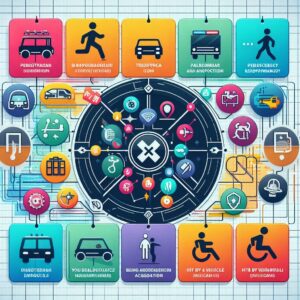
ICD-10-CM code for pedestrian and transport accidents involving being ‘hit by a vehicle
Chapter 1: The ICD-10-CM Framework – Beyond the Injury Itself
The Multiaxial Nature of ICD-10-CM
Unlike its predecessors, ICD-10-CM operates on a multiaxial principle. For trauma, this means coding in layers:
-
The Nature of Injury: The what. (e.g., S72.0xxA, Fracture of femoral neck, initial encounter).
-
The External Cause: The how, where, when, and why. This is the focus of the V00-V09 code block.
-
The Place, Activity, and other Factors: The context (e.g., Y92.811, Parking lot as the place of occurrence).
The Role of External Cause of Morbidity Codes (V00-Y99)
External cause codes are supplemental and are intended to provide data for injury research and prevention. They are never used as a principal diagnosis but are crucial for painting a complete picture. For transport accidents, including being hit by a vehicle, we primarily navigate Chapter 20, specifically the block V00-V99, with V00-V09 dedicated to pedestrian injuries.
Chapter 2: Deciphering the “Hit by a Vehicle” Code Block (V00-V09)
Pedestrian Definitions: More Than Just Walking
The ICD-10-CM manual defines a pedestrian broadly. It includes individuals:
-
On foot (walking, running, sitting, lying down).
-
Occupying a conveyance propelled by human power (bicycle, non-motorized scooter) or by animal power (horse-drawn cart).
-
Occupying a pedestrian conveyance (baby stroller, motorized wheelchair, skateboard, roller skates, non-motorized scooter).
This definition is pivotal. A person on a bicycle hit by a car is coded as a pedestrian, not as a cyclist in a vehicle-to-vehicle accident.
In-Depth Analysis of Key Codes
-
V03: Pedestrian Injured in Collision with Car, Pick-up Truck, or Van. This is the most common code. Key detail: the vehicle must be a motorized car, pick-up truck, or van. Collision with a parked vehicle is included here.
-
V04: Pedestrian Injured in Collision with Heavy Transport Vehicle or Bus. This code is for collisions with vehicles whose primary function is transporting heavy cargo (e.g., semi-truck, dump truck) or passengers in a bus (school bus, city bus). The distinction from V03 has significant implications for injury severity profiles and public health tracking.
-
V09: Pedestrian Injured in Other and Unspecified Transport Accidents. This is a critical “catch-all” category with important sub-divisions:
-
V09.0: Pedestrian injured in nontraffic accident involving other and unspecified motor vehicles. (e.g., hit by a forklift inside a warehouse).
-
V09.1: Pedestrian injured in traffic accident involving other and unspecified motor vehicles. (e.g., hit by a vehicle type not classifiable to V01-V04, like a tank or street sweeper).
-
V09.2-V09.9: Cover pedestrians injured in accidents involving off-road vehicles, military vehicles, and unspecified vehicles.
-
The Crucial 7th Character: Encounter Status
All codes in V00-V09 require a 7th character extension:
-
A: Initial encounter. Used for active treatment of the acute injury.
-
D: Subsequent encounter. Used for routine follow-up care after the acute phase (e.g., cast change, fracture healing check).
-
S: Sequela. Used for complications or conditions arising as a direct consequence of the injury (e.g., scar management, post-traumatic arthritis, chronic pain syndrome).
Chapter 3: The Nuances of Place, Activity, and Status
The Importance of Place of Occurrence (Y92)
A code from category Y92 provides invaluable context for injury prevention. Was the accident on a public highway (Y92.41-)? In a parking lot (Y92.81-)? On a rural farm road (Y92.79)? These codes help city planners, traffic engineers, and public health officials target interventions.
Activity Codes (Y93): Was the Patient Working or Exercising?
While not mandatory for billing, activity codes (Y93) add depth. Was the pedestrian injured while engaged in paid work (Y93.A1)? While jogging (Y93.01)? These can be relevant for occupational health and lifestyle-related injury studies.
Chapter 4: Intentionality and Circumstance – The “Y” Factor
Intent is a coder’s minefield, determined solely by provider documentation and, at times, police reports. The default assumption is accidental (unintentional). However, if the documentation states the patient was intentionally struck (assault), the external cause code shifts from the V00-V09 block to X82 (Assault by crashing of motor vehicle). Cases of suspected self-harm or undetermined intent require specific codes (X81-X83, Y31-Y33) and extreme caution, relying on clear clinical or legal determination.
Chapter 5: Bridging Mechanism to Injury – Coding the Trauma
The external cause code tells the story, but the injury codes quantify the damage. A patient hit by a bus (V04.xxxA) will likely have multiple, severe injuries that must be sequenced in order of severity or focus of treatment. Common injury codes in these events include:
-
S06.xxx: Intracranial injury (TBI)
-
S36.xxx, S37.xxx: Injury to internal organs (liver, spleen, kidney)
Coders must navigate complex guidelines on coding multiple injuries and the difference between confirmed diagnoses and “ruled out” conditions (which are not coded).
Chapter 6: Complex Scenarios and Case Studies
Case Study 1: The Delivery Worker on a Bicycle
A food delivery worker on a bicycle is struck by a sedan while crossing an intersection during work. Suffers a compound tibia fracture.
-
Injury: S82.251A (Displaced comminuted fracture of shaft of right tibia, initial encounter).
-
External Cause: V03.1xxA (Pedestrian on foot injured in collision with car, pick-up truck or van in traffic accident, initial encounter). *(Note: The bicycle makes him a ‘pedestrian’ per ICD-10-CM definition)*.
-
Place: Y92.410 (Street or highway intersection as place of occurrence).
-
Activity: Y93.A1 (Activity, other involving muscular force, performed for income).
Case Study 2: The Child and the Ice Cream Truck
A child runs into a residential street and is struck by a slow-moving, motorized ice cream truck. Suffers a concussion.
-
Injury: S06.0X0A (Concussion without loss of consciousness, initial encounter).
-
External Cause: V04.1xxA (Pedestrian on foot injured in collision with heavy transport vehicle or bus in nontraffic accident, initial encounter). (Note: The ice cream truck, while small, is classified as a ‘vehicle used primarily to transport goods’ – i.e., ice cream – and this is likely a non-traffic accident on a residential street).
-
Place: Y92.099 (Other residential institution as the place of occurrence).
Chapter 7: Table: ICD-10-CM Coding Pathway for “Hit by a Vehicle”
| Decision Point | Question to Ask | Code Category / Example | Notes & Caveats |
|---|---|---|---|
| 1. Pedestrian Status | Was the victim on foot, on a bicycle, in a wheelchair, on roller skates, etc.? | If YES, proceed to V00-V09. If NO (e.g., occupant of a car), see other V codes (V40-V49). | Definition is broad. Person on a skateboard is a pedestrian. |
| 2. Vehicle Type | What specific type of vehicle struck the pedestrian? | V03: Car, Pick-up, Van. V04: Heavy Transport Vehicle, Bus. V09.0/V09.1: Other Specified/Unspecified Vehicle. |
Critical distinction. A dump truck is V04. A sedan is V03. |
| 3. Traffic vs. Nontraffic | Did the accident occur entirely on a public highway (traffic) or elsewhere (nontraffic)? | 5th character specifies: .0x: Nontraffic accident .1x: Traffic accident .9x: Unspecified |
A parking lot or private driveway is typically “nontraffic.” |
| 4. Encounter Type | Is this the initial treatment, follow-up, or for sequela? | A: Initial Encounter D: Subsequent Encounter S: Sequela |
Required 7th character for all V00-V09 codes. |
| 5. Place of Occurrence | Where exactly did the accident happen? | Y92 series (e.g., Y92.411 – Street or highway interchange). | Always use as a secondary external cause code for completeness. |
| 6. Intent | Does documentation clearly indicate the event was intentional (assault) or self-harm? | Assault: X82 Self-Harm: X81 Unintentional (Default): V00-V09 |
Do not assume intent. Use V codes unless the record explicitly states assault/self-harm. |
| 7. Associated Injury | What are the specific injuries diagnosed? | S, T code series (e.g., S72.0xxA – Femoral neck fracture). | Sequence based on severity/focus of care. Code all documented injuries. |
Conclusion: Precision as a Professional Ethic
Mastering the ICD-10-CM coding for “hit by a vehicle” transcends administrative taskwork; it is an exercise in building a precise, multidimensional narrative from chaos. Each accurately assigned code—from the vehicle type and place to the injury and encounter—contributes to a vital ecosystem of healthcare data. This data fuels trauma system improvement, guides automotive and road design safety innovations, secures appropriate funding for complex patient care, and ultimately, informs policies that save lives. For the professional coder, this precision is not just a requirement—it is a core component of their ethical contribution to patient care and public health.
Frequently Asked Questions (FAQs)
Q1: A patient was hit by a car while riding an e-scooter. Is this V03 (pedestrian) or a different code?
A: According to ICD-10-CM guidelines, a pedestrian includes a person on a “non-motorized” scooter. An e-scooter has a motor. Therefore, the person is not considered a pedestrian. They would be coded under V20-V29 (Motorcycle rider injured in transport accident), as e-scooters are classified with motorcycles. Always check the current year’s coding guidelines for updates on emerging transport modes.
Q2: How many external cause codes can I list?
A: You should assign as many as are needed to fully describe the cause, intent, place, and activity. It is common to have at least two: one from V00-V09 (the mechanism) and one from Y92 (the place). A third from Y93 (activity) is recommended if applicable.
Q3: The doctor’s note says “patient was likely hit by a car.” Is this codeable?
A: ICD-10-CM guidelines state that you can code based on “probable,” “suspected,” or “likely” diagnoses for external cause codes only. Therefore, you can assign the appropriate V code. However, for the injury itself (e.g., the fracture), you must have a confirmed diagnosis, not a “likely” one.
Q4: When do I use the ‘Sequela’ (S) 7th character?
A: Use ‘S’ when the patient is being treated for a condition that is a direct result of the healed injury. Examples include: physical therapy for a permanent limp from a malunited fracture, surgery for scar revision, or management of chronic post-traumatic headaches. The original injury itself is no longer being actively treated.
Additional Resources
-
The Official Source: Centers for Medicare & Medicaid Services (CMS) ICD-10-CM Official Guidelines for Coding and Reporting. https://www.cms.gov/medicare/coding/icd10
-
Code Browser & Tools: The Centers for Disease Control and Prevention (CDC) ICD-10-CM Browser. https://www.cdc.gov/nchs/icd/icd10cm.htm
Disclaimer: The following article is for informational purposes only and is not a substitute for professional medical coding, clinical advice, or legal guidance. Medical coders must always consult the most current official ICD-10-CM coding manuals, guidelines, and physician documentation to ensure accurate and compliant code assignment. The scenarios and interpretations provided are illustrative examples.
Date: December 25, 2025
Author: The Clinical Coding Specialist