In the vast, intricate library of modern medicine, the International Classification of Diseases, Tenth Revision, Clinical Modification (ICD-10-CM) serves as a universal lexicon. It translates the complex tapestry of human illness into a standardized code, enabling communication, research, and reimbursement across the globe. Among its thousands of entries, one code, Q90, represents not just a medical condition, but a unique human genetic variation that has been a part of our species’ story for millennia. Q90 is the code for Down syndrome.
To the medical coder, Q90 is a precise alphanumeric sequence used for billing and statistical tracking. To the clinician, it is a diagnosis that carries a specific set of prognostic implications and management protocols. But to the individual with Down syndrome and their family, it is merely one facet of a rich, complex, and whole person. This article aims to bridge these perspectives, offering a deep, nuanced exploration of what Q90 truly signifies. We will journey from the microscopic world of chromosomes, where a third copy of chromosome 21 alters developmental pathways, to the macroscopic world of human experience, where support, acceptance, and medical care can profoundly shape life outcomes. This is more than an analysis of a code; it is a comprehensive guide to understanding Down syndrome in its full biological, clinical, and social context.
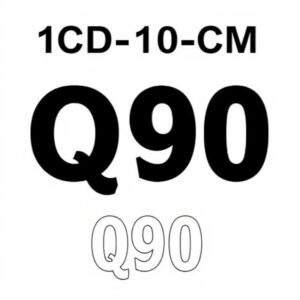
ICD-10-CM Code Q90
Chapter 1: The Framework of Disease Classification – A Primer on the ICD-10-CM
Before we can fully appreciate the significance of code Q90, we must first understand the system in which it resides. The ICD-10-CM is not merely a list of diseases; it is a meticulously organized, hierarchical structure designed for clarity, specificity, and global utility.
What is the ICD-10-CM?
The ICD-10-CM is the American clinical modification of the World Health Organization’s (WHO) International Statistical Classification of Diseases and Related Health Problems, Tenth Revision (ICD-10). While the WHO version is used for international mortality statistics and general epidemiology, the CM version is adapted for use in the United States to capture greater detail needed for morbidity (disease and injury) classification, particularly in clinical and outpatient settings. It is the standard mandated for use by all healthcare providers and organizations in the U.S. for diagnostic coding.
The Purpose and Global Impact of Disease Classification
The ICD system serves several critical functions:
-
Epidemiology and Public Health: It allows for the tracking of disease prevalence and incidence, identifying outbreaks, monitoring health trends, and allocating public health resources effectively. By analyzing codes like Q90, health officials can track the birth prevalence of Down syndrome and its association with factors like maternal age.
-
Clinical Care and Treatment: It provides a common language for healthcare providers to communicate a patient’s condition clearly and unambiguously in medical records, referrals, and consultations.
-
Billing and Reimbursement: In the U.S. and many other countries, ICD-10-CM codes are directly linked to reimbursement. Insurance companies require specific diagnostic codes to justify and pay for medical services, procedures, and hospital stays.
-
Research: Clinical trials, outcome studies, and genetic research rely on accurate disease classification to enroll appropriate participants and analyze data.
Navigating the ICD-10-CM Structure: Chapters, Blocks, and Codes
The ICD-10-CM is divided into 22 chapters, based primarily on etiology (cause) and anatomical site. Codes are alphanumeric, beginning with a letter followed by numbers. The structure is as follows:
-
Chapters: Broad categories (e.g., Chapter I: Certain Infectious and Parasitic Diseases; Chapter XVII: Congenital Malformations, Deformations, and Chromosomal Abnormalities).
-
Blocks: Categories within chapters (e.g., within Chapter XVII, there is a block for “Chromosomal abnormalities, not elsewhere classified” (Q90-Q99)).
-
Codes: The specific identifiers for diseases. Code Q90 sits within this chromosomal abnormalities block.
This structured hierarchy ensures that every known disease and health condition has a specific “address” within the system.
Chapter 2: Delving into Chapter 17 – Congenital Malformations, Deformations, and Chromosomal Abnormalities (Q00-Q99)
Code Q90 is nestled within Chapter 17 of the ICD-10-CM, a chapter dedicated to conditions present at birth, though they may not be diagnosed until later in life. These are not infectious diseases or acquired injuries; they are intrinsic alterations in development.
The Scope of Congenital Conditions
Chapter 17 covers a wide spectrum, including:
-
Congenital Malformations (Q00-Q89): Structural defects arising from abnormal embryonic or fetal development (e.g., cleft lip (Q36), spina bifida (Q05)).
-
Chromosomal Abnormalities (Q90-Q99): Conditions caused by an abnormality in chromosome number or structure, such as Down syndrome (Q90), Edwards syndrome (Q91.0), Patau syndrome (Q91.4), and Turner syndrome (Q96).
A key principle in coding for this chapter is that these codes are used throughout the life of the patient. Unlike an acute illness like pneumonia, which resolves, a congenital or chromosomal condition is a permanent part of the individual’s health profile.
The Role of Genetic Counseling and Prenatal Diagnosis
The conditions in Chapter 17 are often the focus of genetic counseling. For code Q90, this is particularly relevant. Genetic counselors work with families to explain the diagnosis, discuss the genetic mechanisms (e.g., nondisjunction vs. translocation), outline associated health risks, and provide recurrence risk estimates for future pregnancies. This process is integral to the holistic management of conditions classified under Q90.
Chapter 3: The Specifics of Code Q90 – Down Syndrome
Here we arrive at the core of our discussion. ICD-10-CM code Q90 is formally titled “Down syndrome.” However, the code is not monolithic; it is subdivided to reflect the underlying genetic heterogeneity of the condition.
Code Q90: A Formal Definition
The code classifies the condition historically known as mongolism or trisomy 21, which is characterized by a variable degree of intellectual disability, typical facial dysmorphism (a flat face, upward-slanting eyes, a short neck), and other distinctive physical features, and is caused by trisomy of all or a critical portion of chromosome 21.
The Clinical Subcategories: Q90.0, Q90.1, Q90.2, Q90.9
The specificity of ICD-10-CM is demonstrated in its breakdown of Q90:
-
Q90.0 – Trisomy 21, nonmosaicism (meiotic nondisjunction): This is the most common subtype, accounting for approximately 95% of cases. It is caused by a complete failure of chromosome separation (nondisjunction) during the formation of a parent’s gamete (egg or sperm). The resulting embryo has three copies of chromosome 21 in every cell of its body. This code is used when a standard karyotype has confirmed the presence of trisomy 21 in all analyzed cells.
-
Q90.1 – Trisomy 21, mosaicism (mitotic nondisjunction): This rare form accounts for about 1-2% of cases. It occurs when nondisjunction happens not in the gamete, but during one of the early cell divisions of the embryo after fertilization. This results in an individual with a mixture of two different cell lines: some cells with the typical 46 chromosomes, and others with 47 chromosomes due to trisomy 21. The physical features and intellectual abilities in mosaic Down syndrome can be milder, depending on the proportion and distribution of trisomic cells.
-
Q90.2 – Trisomy 21, translocation: This type accounts for about 3-4% of cases. In translocation Down syndrome, there are still three copies of the genetic material from chromosome 21, but the extra chromosome is not free-standing; it is attached or “trans-located” to another chromosome, often chromosome 14, 21, or 22. The total chromosome count may be 46, but the presence of the extra genetic material from chromosome 21 causes the features of Down syndrome. Crucially, this form can be inherited from a parent who is a balanced translocation carrier—a person with 45 chromosomes, including the translocated one, but no extra genetic material and thus no symptoms.
-
Q90.9 – Down syndrome, unspecified: This code is used when a clinical diagnosis of Down syndrome has been made, but the specific genetic subtype has not been determined by cytogenetic studies. This is a temporary code until a karyotype analysis provides a definitive classification.
Subtypes of Down Syndrome as Classified under ICD-10-CM Code Q90
| ICD-10-CM Code | Subtype Name | Genetic Mechanism | Approximate Frequency | Key Characteristics |
|---|---|---|---|---|
| Q90.0 | Trisomy 21, nonmosaicism | Meiotic Nondisjunction | ~95% | Extra chromosome 21 in every cell; most common form. |
| Q90.1 | Trisomy 21, mosaicism | Mitotic Nondisjunction | ~1-2% | Mixture of cells with 46 and 47 chromosomes; phenotype can be variable. |
| Q90.2 | Trisomy 21, translocation | Robertsonian Translocation | ~3-4% | Extra chromosome 21 material attached to another chromosome; can be inherited. |
| Q90.9 | Down syndrome, unspecified | Unknown/Unspecified | Used temporarily | Clinical diagnosis made, awaiting karyotype confirmation. |
Chapter 4: The Genetic Basis of Down Syndrome – From Karyotype to Clinical Presentation
To understand why the subcategories of Q90 matter, we must delve into the fundamental genetics.
The Human Karyotype: A Blueprint of Life
A karyotype is a visual representation of an individual’s chromosomes, arranged in pairs from largest to smallest. A typical human karyotype consists of 46 chromosomes: 22 pairs of autosomes and 1 pair of sex chromosomes (XX for female, XY for male). The analysis of a karyotype is the gold standard for diagnosing chromosomal conditions like Down syndrome.
Nondisjunction: The Mechanism of Trisomy 21 (Q90.0)
Nondisjunction is the failure of chromosomes to separate properly during cell division (meiosis). In the case of Q90.0, this happens during the formation of an egg or sperm. If a gamete ends up with two copies of chromosome 21 instead of one, and it combines with a normal gamete from the other parent (with one copy), the resulting zygote will have three copies—trisomy 21. Advanced maternal age is the most significant risk factor for this type of error, as eggs are held in a suspended state for decades, during which time the machinery for chromosome separation can become more prone to failure.
Robertsonian Translocation: An Inherited Risk (Q90.2)
A Robertsonian translocation occurs when the long arms of two acrocentric chromosomes (chromosomes 13, 14, 15, 21, 22) fuse at the centromere, and the short arms are lost. An individual with a balanced Robertsonian translocation involving chromosome 21 has 45 chromosomes but is phenotypically normal because they have no significant loss or gain of genetic material. However, they can produce unbalanced gametes. If a gamete carrying the derivative chromosome (with the attached chromosome 21) is passed on, along with a normal chromosome 21 from the other parent, the child will have translocation Down syndrome (Q90.2). This is the only form of Down syndrome with a significant recurrence risk in families.
Mosaicism: A Spectrum of Cellular Involvement (Q90.1)
Mosaicism arises from a nondisjunction event during the early mitotic divisions of the zygote. If one cell in a two-cell embryo undergoes nondisjunction, it and all its progeny will have 47 chromosomes, while the other cell line and its progeny will have 46. The resulting individual is a mosaic. The clinical presentation is highly variable and depends on the timing of the event and the proportion and distribution of trisomy 21 cells in various tissues. Some individuals with mosaic Down syndrome may have very subtle features and a higher cognitive ability than is typical in nonmosaic trisomy 21.
Chapter 5: The Clinical Phenotype – Recognizing the Signs and Symptoms of Down Syndrome
The extra genetic material from chromosome 21 leads to an overexpression of hundreds of genes, which in turn disrupts typical developmental pathways, resulting in a recognizable pattern of physical and cognitive characteristics.
Characteristic Facial Features and Physical Stigmata
While each individual is unique, common physical signs include:
-
Brachycephaly: A relatively short, broad head.
-
Upward Slanting Palpebral Fissures: The eyes appear to slant upwards.
-
Epicanthal Folds: A fold of skin on the upper eyelid covering the inner corner of the eye.
-
Flat Nasal Bridge: The bridge of the nose appears flattened.
-
Protruding Tongue: A tendency for the tongue to protrude, often due to a relatively small mouth and/or decreased muscle tone.
-
Single Transverse Palmar Crease (Simian Crease): A single crease across the palm.
-
Brachydactyly: Short fingers and toes.
-
A Gap Between the First and Second Toes: Often accompanied by a plantar crease running up the sole.
-
Hypotonia: Profoundly low muscle tone, which is noticeable in infancy (“floppy baby”) and can affect motor development.
Growth and Developmental Milestones
Children with Down syndrome typically have a slower growth pattern and are often shorter in stature than their peers. They also experience global developmental delays, reaching milestones like sitting, crawling, walking, and talking later than children with typical development.
Intellectual and Cognitive Profiles
Intellectual disability is a universal feature, but its degree is highly variable, typically falling in the mild to moderate range. The cognitive profile is often uneven; expressive language skills may be more delayed than receptive language skills, and visual learning is often a relative strength compared to auditory processing.
The Importance of Early Intervention
Due to neuroplasticity in early childhood, early intervention services are critical. These include physical therapy to address hypotonia and improve motor skills, occupational therapy to assist with fine motor skills and sensory integration, and speech-language therapy to support communication development. These services, often coordinated through state-based programs, can dramatically improve long-term outcomes and functional abilities.
Chapter 6: Beyond the Karyotype – Common Associated Health Conditions
The management of an individual with a Q90 diagnosis extends far beyond the chromosomal diagnosis itself. A significant part of clinical care involves surveillance and management of associated health conditions, which are common due to the systemic effects of trisomy 21.
Cardiovascular System: The Prevalence of Congenital Heart Defects
Approximately 40-50% of infants with Down syndrome are born with a congenital heart defect. The most common are:
-
Atrioventricular Septal Defect (AVSD)
-
Ventricular Septal Defect (VSD)
-
Atrial Septal Defect (ASD)
-
Patent Ductus Arteriosus (PDA)
Echocardiography is a standard part of the neonatal evaluation for a child with Down syndrome. Many of these defects require surgical repair in infancy.
Gastrointestinal Tract: From Duodenal Atresia to Celiac Disease
GI anomalies occur in about 5-10% of cases. Duodenal atresia (a blockage in the first part of the small intestine) is a classic finding, often diagnosed prenatally by ultrasound. Other issues include Hirschsprung’s disease (absence of nerve cells in the colon), tracheoesophageal fistula, and an increased prevalence of celiac disease.
Endocrine System: Thyroid Dysfunction and the Risk of Diabetes
Thyroid disease, particularly hypothyroidism (underactive thyroid), is very common, affecting up to 30% of individuals. It can be congenital or acquired. Regular screening with thyroid function tests is essential throughout life. There is also an increased risk for type 1 diabetes.
Sensory Systems: Vision and Hearing Impairments
-
Vision: Refractive errors (nearsightedness, farsightedness), strabismus (crossed eyes), nystagmus (involuntary eye movements), and cataracts are common. Regular ophthalmologic evaluations are necessary.
-
Hearing: Conductive hearing loss due to chronic middle ear effusions (fluid buildup) is extremely common. Sensorineural hearing loss can also occur. Regular audiologic assessments are a cornerstone of care from infancy.
Musculoskeletal System: Atlantoaxial Instability and Hypotonia
-
Atlantoaxial Instability (AAI): This is an increased mobility between the first and second cervical vertebrae (C1 and C2). It is present in about 10-20% of individuals. Most are asymptomatic, but in a small minority, it can lead to spinal cord compression. Screening with neck X-rays is recommended, and precautions are advised for certain sports activities.
-
Hypotonia: Low muscle tone affects posture, gait, and joint stability, contributing to the increased risk of orthopedic issues.
Hematological Concerns: Transient Myeloproliferative Disorder and Leukemia Risk
Newborns with Down syndrome may have a transient, pre-leukemic condition called Transient Myeloproliferative Disorder (TMD), characterized by elevated white blood cells. It usually resolves spontaneously but requires monitoring. Most significantly, the risk of leukemia is 10-20 times higher than in the typical population, with Acute Megakaryoblastic Leukemia (AMKL) being particularly associated with Down syndrome.
Neurological and Psychiatric Co-morbidities
Seizure disorders are more common. In adulthood, there is a very strong association with Alzheimer’s disease. By age 40, nearly all individuals with Down syndrome have the amyloid plaques and neurofibrillary tangles characteristic of Alzheimer’s, and a significant proportion will develop clinical dementia. There is also an increased prevalence of autism spectrum disorder, ADHD, and depression.
Chapter 7: The Diagnostic Journey – From Prenatal Screening to Postnatal Confirmation
The path to a Q90 diagnosis can begin prenatally or after birth, involving a series of steps with varying levels of certainty.
Prenatal Screening Tests: Nuchal Translucency and Serum Markers
These are non-invasive tests that estimate the risk of a fetus having Down syndrome. They do not provide a diagnosis.
-
First Trimester Combined Test: Combines a ultrasound measurement of nuchal translucency (fluid at the back of the fetal neck) with maternal blood tests (PAPP-A and beta-hCG).
-
Second Trimester Quad Screen: Measures four substances in maternal blood (AFP, hCG, uE3, Inhibin A).
-
Integrated/Sequential Screening: Combines results from the first and second trimesters for a more accurate risk assessment.
Prenatal Diagnostic Tests: Chorionic Villus Sampling and Amniocentesis
These are invasive procedures that obtain fetal cells for chromosomal analysis (karyotyping) and provide a definitive diagnosis.
-
Chorionic Villus Sampling (CVS): Performed at 10-13 weeks gestation, involves taking a sample of placental tissue.
-
Amniocentesis: Performed at 15-20 weeks gestation, involves withdrawing a small amount of amniotic fluid.
Non-Invasive Prenatal Testing (NIPT): A Revolution in Screening
NIPT, also called cell-free DNA screening, analyzes small fragments of fetal DNA circulating in the maternal blood. It is a highly sensitive and specific screening test for trisomy 21, with detection rates over 99%. Because it is a screening test, a positive NIPT result must be confirmed by a diagnostic test like CVS or amniocentesis before a definitive diagnosis is made.
Postnatal Diagnosis: The Role of the Clinical Geneticist and Karyotype Analysis
After birth, a diagnosis is often suspected based on the characteristic physical features. The diagnosis is confirmed by obtaining a blood sample from the infant and performing a karyotype. This analysis will not only confirm the diagnosis of Down syndrome but will also specify the genetic subtype (Q90.0, Q90.1, or Q90.2), which has critical implications for genetic counseling regarding recurrence risk.
Chapter 8: A Multidisciplinary Lifespan Approach to Management and Care
Managing the health of a person with Down syndrome requires a coordinated, proactive, and lifelong effort from a team of specialists working in partnership with the individual and their family.
The Role of the Pediatrician and Developmental Pediatrician
The primary care pediatrician is the central coordinator of care, ensuring that all recommended screenings and specialist visits occur. A developmental pediatrician provides specialized expertise in managing developmental and behavioral issues.
Cardiology and Surgical Interventions
As discussed, a pediatric cardiologist is essential for diagnosing and managing congenital heart defects, often requiring life-saving surgery in infancy. Pediatric surgeons also manage GI anomalies like duodenal atresia.
Speech, Occupational, and Physical Therapy
These therapies are the bedrock of functional improvement. PT addresses gross motor delays and hypotonia, OT focuses on fine motor skills and activities of daily living, and SLP supports feeding, oral motor skills, and communication (both verbal and non-verbal).
Educational Support and Inclusive Learning Environments
Under laws like the Individuals with Disabilities Education Act (IDEA), children with Down syndrome are entitled to an Individualized Education Program (IEP). This legal document outlines specific educational goals and the support services (e.g., a paraprofessional, speech therapy) needed to achieve them in the least restrictive environment, which is often an inclusive classroom.
Transition to Adulthood: Vocational Training and Independent Living
As adolescents with Down syndrome age, the focus shifts to preparing for adulthood. This includes vocational training, supported employment, teaching skills for independent or semi-independent living, and social and sexual education.
Geriatric Care in Down Syndrome: Addressing Accelerated Aging and Alzheimer’s Disease
With improved healthcare, the life expectancy for individuals with Down syndrome has dramatically increased from 25 years in the 1980s to over 60 years today. This has brought new challenges, primarily the early onset of Alzheimer’s disease. Geriatric care for this population involves monitoring for cognitive decline, managing age-related health issues, and providing support for caregivers.
Chapter 9: The Societal and Ethical Landscape
The story of Q90 is incomplete without considering its place in society and the ethical questions it raises.
The Evolution of Societal Perceptions and Stigma
Historically, individuals with Down syndrome were institutionalized and marginalized. Thanks to the advocacy of families and organizations, along with greater inclusion in schools and communities, perceptions have shifted dramatically. The “See the Ability” and “More Alike Than Different” campaigns emphasize the person, not the diagnosis. However, stigma and misconceptions still persist.
The Role of Advocacy and Support Organizations
Organizations like the National Down Syndrome Society (NDSS), the National Down Syndrome Congress (NDSC), and Global Down Syndrome Foundation provide invaluable resources, fund research, advocate for public policy, and create community for individuals and families.
Ethical Considerations in Prenatal Testing and Diagnosis
The widespread availability of highly accurate non-invasive prenatal screening (NIPT) has raised complex ethical questions. While it provides valuable information for preparation, it also leads to a high rate of pregnancy termination following a diagnosis. This sparks debates about disability rights, selective reproduction, and the message it sends about the value of lives of people with disabilities. These are deeply personal decisions that families must make within their own ethical and moral frameworks.
Conclusion: Integrating Knowledge for a Holistic Understanding
ICD-10-CM code Q90 is a precise medical identifier for a condition rooted in a specific chromosomal anomaly.
The clinical reality of Down syndrome encompasses a wide spectrum of associated health conditions, necessitating vigilant, multidisciplinary medical care from infancy through old age.
Ultimately, beyond the code and the clinical management, lies the human dimension—a life of potential, growth, and connection, deserving of dignity, support, and full societal inclusion.
Frequently Asked Questions (FAQs)
1. What is the life expectancy for a person with Down syndrome today?
Life expectancy has increased dramatically and now averages 50-60 years, with many individuals living into their 60s and 70s. This improvement is due to better medical care, especially corrective heart surgery, and greater social inclusion.
2. Can people with Down syndrome have children?
Fertility in individuals with Down syndrome is affected differently by sex. Males with Down syndrome are almost always infertile due to impaired sperm development. Females with Down syndrome have reduced fertility, but pregnancy is possible. There is approximately a 50% chance that a child born to a woman with Down syndrome will also have Down syndrome or another developmental disability.
3. Is Down syndrome inherited?
In the vast majority of cases (95%, Q90.0), it is not inherited but occurs from a random error in cell division. The translocation type (Q90.2), which accounts for about 3-4% of cases, can be inherited from a parent who carries a balanced translocation. Genetic counseling is crucial in these families to assess recurrence risks.
4. What are the “Q90 codes” used for in a hospital or clinic?
These codes are used for:
-
Medical Billing: To justify and get reimbursement for medical services, therapies, and specialist visits.
-
Medical Records: To provide a standardized, clear diagnosis in the patient’s chart.
-
Research and Epidemiology: To track the prevalence of Down syndrome and study associated health outcomes on a population level.
5. How can I best support a new parent whose child has been diagnosed with Down syndrome?
Offer congratulations on the birth of their baby, just as you would for any newborn. Acknowledge their mix of emotions and offer practical help (meals, errands). Provide reassurance about the future and connect them with local and national support organizations (like the NDSS) and other families who have a child with Down syndrome. Most importantly, see their child as a baby first, with a unique personality and potential.
Additional Resources
-
National Down Syndrome Society (NDSS): https://ndss.org – A leading human rights organization for all individuals with Down syndrome.
-
National Down Syndrome Congress (NDSC): https://ndsccenter.org – Provides information, advocacy, and support concerning all aspects of life for individuals with Down syndrome.
-
Global Down Syndrome Foundation: https://globaldownsyndrome.org – Dedicated to significantly improving the lives of people with Down syndrome through research, medical care, education, and advocacy.
-
American Academy of Pediatrics (AAP): Health Care Information for Families of Children with Down Syndrome – A comprehensive clinical report that guides healthcare maintenance.
-
The John Langdon Down Foundation / Museo Soumaya: For historical context on Dr. John Langdon Down, who first systematically described the condition in 1866.
Date: October 23, 2025
Author: Dr. Evelyn Reed, MD, PhD, Medical Geneticist
Disclaimer: The information contained in this article is for educational and informational purposes only and is not intended as a substitute for professional medical advice, diagnosis, or treatment. Always seek the advice of your physician or other qualified health provider with any questions you may have regarding a medical condition. The author and publisher are not liable for any losses or damages resulting from the use of this information.