A patient sits across from you, their posture slumped, their voice barely above a murmur. “Doctor,” they say, “I just feel weak.” This simple, four-word statement is one of the most common, yet most diagnostically challenging, presentations in all of medicine. It is a universal human experience, a sensation that can signify anything from a transient viral infection to the earliest whisper of a life-limiting neurodegenerative disease. For the healthcare provider, it is the beginning of a detective story. For the medical coder, it represents a critical juncture—a point where clinical acumen must meet the rigorous demands of precise classification.
This article delves deep into the world of ICD-10-CM code R53.1, “Weakness, Unspecified.” Far from being a mere administrative label, this code sits at the intersection of clinical medicine, patient communication, and healthcare economics. It is a placeholder for uncertainty, a temporary flag raised when the underlying cause of a patient’s debilitation remains shrouded. Our journey will explore the anatomy of this code, the profound importance of moving beyond it, and the collaborative dance between clinicians and coders that is essential for accurate patient care and a functional healthcare system. We will unravel the complex tapestry of conditions that can manifest as weakness, examine the financial and compliance implications of its use, and look toward the future of how we classify such subjective yet crippling symptoms. By the end, the term “weakness” will no longer seem simple, but will be understood for what it truly is: a complex, multifaceted symptom demanding respect, investigation, and precision.
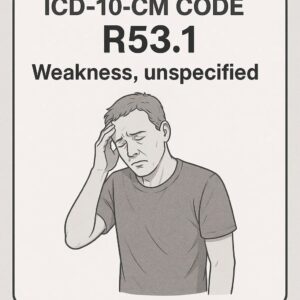
ICD-10-CM Code R53.1 Weakness Unspecified
Chapter 1: Demystifying ICD-10-CM Code R53.1 – The Nuts and Bolts
Before we can appreciate the clinical nuances of weakness, we must first understand the tool used to classify it. ICD-10-CM Code R53.1 is not a random assignment; it is part of a highly structured, logical system designed to capture the entirety of human disease and injury.
Code Structure and Official Description
The code itself is elegantly simple:
-
R53.1 – Weakness, Unspecified
It belongs to a larger family of codes within the ICD-10-CM system. The “R” chapter is dedicated to Symptoms, Signs, and Abnormal Clinical and Laboratory Findings, Not Elsewhere Classified (NEC). This chapter is the repository for patient complaints and observable phenomena that are not, in and of themselves, a definitive diagnosis.
-
Category R53: Malaise and fatigue
-
Subcategory R53.8: Other malaise and fatigue (which includes conditions like asthenia NOS)
-
Code R53.1: Weakness, Unspecified
The official ICD-10-CM coding guidelines provide the definitive description for R53.1. It is used when a patient presents with a generalized feeling of weakness, loss of strength, or a lack of energy, and after a reasonable initial workup, no specific underlying cause has been identified. The key term is “unspecified.” This indicates that the documentation provided does not allow for a more precise code.
The Code in Context: The R00-R99 Chapter
Chapter 18 (R00-R99) of the ICD-10-CM manual serves a vital purpose. It allows for the coding of encounters when:
-
A more precise diagnosis cannot be determined at the time of the encounter.
-
Signs or symptoms point to two or more possible conditions and the provider is in the process of differential diagnosis.
-
A patient has a terminal diagnosis and the underlying cause of a symptom is not further specified.
-
A symptom is so vague or transient that a specific diagnosis is not warranted.
R53.1 fits squarely into the first and second scenarios. It is the code of choice for the initial visit where weakness is the chief complaint and the diagnostic journey is just beginning.
Exclusions and Their Critical Importance
Perhaps the most crucial aspect of understanding R53.1 is knowing when not to use it. The ICD-10-CM system includes “Excludes1” and “Excludes2” notes to prevent coding errors and ensure specificity.
Excludes1 for R53.1:
-
Age-related weakness (R54)
-
Debility (R54)
-
Exhaustion and fatigue (due to):
-
Combat (Z65.5)
-
Excessive exertion (T73.3)
-
Exposure (T73.2)
-
Heat (T67.-)
-
Nervousness (R45.0)
-
Senile asthenia (R54)
-
-
Fatigue (during):
-
Pregnancy (O26.8-)
-
-
Senile asthenia (R54)
-
Weakness, generalized, following cerebrovascular disease (I69.9-)
An Excludes1 note means “NOT CODED HERE.” If the patient’s weakness is explicitly documented as being due to one of these causes, you must use the more specific code. For example, if a 78-year-old patient is documented as having “senile asthenia,” you must code R54, not R53.1. Similarly, if a patient’s weakness is a known sequela of a past stroke, you would code from the I69.9- category.
Excludes2 for R53.1:
-
Asthenia NOS (R53.8)
-
Malaise (R53.81)
An Excludes2 note means “not included here,” but both codes can be used if the patient has both conditions. This highlights the subtle but important distinction between “weakness” (R53.1) and “asthenia” (R53.8), which is a feeling of generalized body weakness and loss of energy, often used synonymously with fatigue.
Chapter 2: The Clinical Conundrum – Weakness as a Symptom, Not a Diagnosis
To effectively code for weakness, one must first understand its clinical nature. Weakness is a subjective sensation reported by the patient, and it is the clinician’s task to translate this subjective complaint into objective findings and a potential diagnosis.
Defining “Weakness” in Medical Terms
In a medical context, “weakness” can be parsed into two distinct, though sometimes overlapping, concepts:
-
True Motor Weakness (Paresis or Paralysis): This is an objective, measurable loss of muscle power. It is often neurological in origin and can be localized to a specific nerve, spinal cord level, or region of the brain. A patient with a stroke may have true weakness in their left arm and leg. This is quantified using scales like the Medical Research Council (MRC) scale for muscle strength (0-5).
-
Perceived Weakness or Asthenia: This is the more common presentation of code R53.1. The patient feels weak, tired, and without energy, but on physical examination, their muscle strength is normal. They struggle to perform activities of daily living not because of a failure of the neuromuscular system, but because of a pervasive lack of energy or drive. This is often systemic in nature.
Differentiating Weakness from Fatigue, Malaise, and Asthenia
Clinicians and coders must navigate a lexicon of similar terms. While often used interchangeably by patients, they have distinct meanings:
-
Weakness (R53.1): A focus on loss of physical strength.
-
Fatigue (R53.83): An overwhelming sense of tiredness, lack of energy, and feeling of exhaustion. It is more about a depletion of mental and physical reserves than a loss of strength per se.
-
Malaise (R53.81): A general feeling of discomfort, illness, or being “out of sorts.” It is a more non-specific feeling of unwellness.
-
Asthenia (R53.8): As noted, often synonymous with generalized weakness and fatigue, implying a debilitated state.
A patient might say, “I’m weak,” but the clinician’s documentation might clarify this as “the patient reports profound fatigue and malaise.” This would direct the coder away from R53.1 and toward R53.81 or R53.83.
The Diagnostic Challenge: A Symptom with a Thousand Faces
The differential diagnosis for generalized weakness is vast, spanning nearly every organ system and medical specialty. The following table categorizes the most common etiologies.
Differential Diagnosis of Generalized Weakness
| Category | Examples of Specific Conditions | Potential ICD-10-CM Codes (if diagnosed) |
|---|---|---|
| Infectious | Influenza, HIV, Mononucleosis, Hepatitis, Tuberculosis, COVID-19, Chronic infections | J10.1, B20, B27.90, B19.9, A15.9, U07.1 |
| Endocrine/Metabolic | Hypothyroidism, Hyperthyroidism, Diabetes Mellitus (uncontrolled), Adrenal Insufficiency (Addison’s), Cushing’s Syndrome, Electrolyte Imbalances | E03.9, E05.90, E11.9, E27.1, E24.9, E87.8 |
| Cardiovascular | Congestive Heart Failure, Arrhythmias, Coronary Artery Disease, Anemia | I50.9, I49.9, I25.10, D64.9 |
| Respiratory | Chronic Obstructive Pulmonary Disease (COPD), Asthma, Obstructive Sleep Apnea | J44.9, J45.909, G47.33 |
| Renal | Chronic Kidney Disease, Electrolyte disturbances from renal failure | N18.9 |
| Gastrointestinal | Malabsorption (Celiac Disease, IBD), Chronic Liver Disease | K90.0, K51.90, K76.9 |
| Neurological | Multiple Sclerosis, Myasthenia Gravis, Parkinson’s Disease, Post-Stroke Sequelae | G35, G70.00, G20, I69.399 |
| Rheumatological | Rheumatoid Arthritis, Lupus, Fibromyalgia | M06.9, M32.9, M79.7 |
| Psychiatric | Major Depressive Disorder, Generalized Anxiety Disorder, Somatization Disorder | F32.9, F41.1, F45.0 |
| Medication/Drug-Related | Side effects of beta-blockers, chemotherapies, opioids, statins, polypharmacy | T45.9X5A, etc. (Code for adverse effect) |
| Nutritional | Vitamin B12 Deficiency, Vitamin D Deficiency, Malnutrition | E53.8, E55.9, E46 |
| Oncologic | Any malignancy, especially with cachexia | C80.1 (Malignant neoplasm of unknown primary site), R64 (Cachexia) |
| Other | Chronic Fatigue Syndrome, Deconditioning, Sarcopenia | G93.3, R53.8, M62.84 |
This table illustrates why R53.1 is often an initial code. It represents the starting point of a diagnostic odyssey that may lead to one of hundreds of more specific codes.
Chapter 3: The Imperative of Specificity – Moving Beyond R53.1
The use of “unspecified” codes is often viewed negatively, and for good reason. In the era of value-based care and data-driven medicine, specificity is paramount.
Why “Unspecified” is a Last Resort
Using R53.1 as a final diagnosis is clinically and administratively inadequate for several reasons:
-
Poor Patient Care: It does not guide treatment. Treating “weakness” is impossible; treating hypothyroidism, anemia, or depression is specific and effective.
-
Inaccurate Data: Population health data reliant on unspecified codes is flawed. It becomes impossible to track the true prevalence of diseases or allocate resources effectively.
-
Reimbursement Issues: Payers often view unspecified codes as indicative of insufficient workup or poor documentation, leading to claim denials or down-coding.
-
Compliance Risk: A pattern of using unspecified codes can trigger audits and raise questions about the medical necessity of services provided.
The goal for every encounter where weakness is the chief complaint should be to replace R53.1 with a more definitive code by the end of the diagnostic process.
A Systematic Approach to Etiological Investigation
A thorough evaluation of weakness requires a systematic approach. The clinician’s workup is the primary engine that drives the coder toward specificity.
-
Comprehensive History: This is the most important step. Key questions include:
-
Onset (acute vs. chronic)?
-
Progression (stable, worsening, improving)?
-
Constant or intermittent?
-
Associated symptoms (fever, weight loss, pain, shortness of breath)?
-
Impact on activities of daily living?
-
Psychosocial stressors?
-
Detailed review of all medications and supplements.
-
-
Physical Examination: A full examination is crucial, with special attention to:
-
Vital signs (fever, tachycardia, hypotension).
-
Signs of chronic disease (pallor, jaundice, lymphadenopathy).
-
Cardiopulmonary examination.
-
Neurological examination, including a proper motor strength assessment.
-
Musculoskeletal examination for tenderness or joint swelling.
-
-
Diagnostic Testing: Guided by history and physical, testing may include:
-
Basic Labs: Complete Blood Count (CBC), Comprehensive Metabolic Panel (CMP), Thyroid-Stimulating Hormone (TSH), Urinalysis.
-
Inflammatory Markers: Erythrocyte Sedimentation Rate (ESR), C-Reactive Protein (CRP).
-
Infectious Workup: As indicated.
-
Imaging: Chest X-ray, Echocardiogram, CT/MRI if neurological cause is suspected.
-
Specialized Tests: Vitamin levels, cortisol levels, autoimmune panels, etc.
-
Case Studies: From Vague Complaint to Definitive Diagnosis
Case Study 1: The Overlooked Thyroid
-
Presentation: A 45-year-old female presents with a 6-month history of progressive weakness, fatigue, weight gain, and cold intolerance. The provider documents “generalized weakness.”
-
Initial (Incorrect) Coding: R53.1
-
The Process: A review of systems uncovers the classic symptoms of hypothyroidism. A TSH is ordered and returns markedly elevated.
-
Final Diagnosis: Hypothyroidism
-
Final (Correct) Coding: E03.9
Case Study 2: The Cardiac Red Flag
-
Presentation: A 70-year-old male with a history of hypertension reports “weakness” and shortness of breath when walking to his mailbox. The note simply states “weakness.”
-
Initial (Incorrect) Coding: R53.1
-
The Process: The coder, noting the associated dyspnea and the patient’s age and history, queries the provider. The provider clarifies that the weakness is exertional and related to suspected heart failure. An echocardiogram confirms reduced ejection fraction.
-
Final Diagnosis: Systolic Congestive Heart Failure
-
Final (Correct) Coding: I50.21
Case Study 3: The Psychiatric Component
-
Presentation: A 28-year-old student reports “feeling weak and tired all the time,” with poor concentration and anhedonia for the past 3 months. The provider documents “asthenia and weakness.”
-
Initial Coding: Could be R53.1 or R53.8.
-
The Process: A more detailed history reveals sleep disturbance, feelings of worthlessness, and a loss of interest in social activities. The provider makes a clinical diagnosis.
-
Final Diagnosis: Major Depressive Disorder, single episode, moderate.
-
Final (Correct) Coding: F32.1
Chapter 4: The Documentation Dance – A Partnership Between Clinician and Coder
Accurate coding is impossible without accurate documentation. The medical record is the sole source of truth for the coder, who was not present during the patient encounter.
What Physicians Need to Document
To move beyond R53.1, clinicians should strive for documentation that is:
-
Specific: Instead of “weakness,” use “proximal muscle weakness,” “exertional weakness,” or “generalized fatigue and asthenia.”
-
Etiological: Link the symptom to a cause, if known or suspected. “Weakness likely secondary to uncontrolled diabetes.” “Asthenia, probably due to depressive episode.”
-
Quantifiable: Note the severity and impact. “Weakness severe enough that patient can no longer climb stairs.” “Fatigue rates 8/10 on a severity scale.”
-
Contextual: Include the timing, modifying factors, and associated symptoms.
The Coder’s Responsibility: Querying for Clarity
When documentation is ambiguous or lacking, the coder has a professional and ethical obligation to query the provider. A query is a formal request for clarification. It should be:
-
Respectful and Non-leading: “Can you please clarify the etiology of the patient’s weakness?” not “Is the weakness due to anemia?”
-
Based on Clinical Indicators: The query should point to evidence in the record that supports a more specific code. “The lab work shows a hemoglobin of 8.2 g/dL. Would you attribute the patient’s weakness to this anemia?”
-
Documented in the Record: The query and response become a permanent part of the health record.
Examples of Strong vs. Weak Documentation
Weak Documentation:
-
“Patient here for weakness. Continue meds. RTC 3 months.”
-
Coding: R53.1. This is insufficient and would likely be denied.
Strong Documentation:
-
“Patient is a 65-year-old male with PMH of COPD who presents for evaluation of progressive generalized weakness and fatigue over the past 2 months. He reports increased shortness of breath and a productive cough. On exam, he is using accessory muscles to breathe, and has diffuse wheezing. Assessment: Acute exacerbation of COPD, likely contributing to his generalized weakness and functional decline.”
-
Coding: J44.1 (COPD with acute exacerbation). The weakness is acknowledged as a symptom of the primary, coded condition.
Chapter 5: The Financial and Compliance Implications of Miscoding
The accurate use of R53.1 is not just an academic exercise; it has direct and significant consequences for healthcare organizations.
Impact on Reimbursement and Denials
Medical billing is driven by codes. They determine the Diagnosis-Related Group (DRG) for inpatients and support the medical necessity of Evaluation and Management (E/M) services for outpatients.
-
DRG Assignment: In an inpatient setting, a principal diagnosis of R53.1 would likely map to a low-severity, low-reimbursement DRG. If the true principal diagnosis is, for example, “Septic Shock” (R65.21), the reimbursement would be substantially higher and more accurately reflect the resources used.
-
Medical Necessity Denials: For outpatient visits and procedures, payers require that the diagnosis code justifies the service. A code for “weakness, unspecified” may not be deemed sufficient to justify an extensive laboratory workup or a specialist referral, leading to claim denials. A more specific code like “iron deficiency anemia” (D50.9) clearly supports the medical necessity of a CBC and iron studies.
Audits and Compliance Risks
Government auditors (like those from the CMS Recovery Audit Contractor program) and private payers actively look for patterns of “unspecified” code usage. A high rate of R53.1 can be a red flag, suggesting:
-
Lack of Medical Necessity: That the provider did not do enough to investigate the cause of the symptom.
-
Upcoding: Using an unspecified code when a more specific, but potentially lower-paying, code is available.
-
Poor Documentation Practices.
The financial penalties for non-compliance can be severe, including recoupment of payments, fines, and even exclusion from federal healthcare programs.
The Role of R53.1 in Hierarchical Condition Categories (HCCs)
HCCs are used by Medicare Advantage and other risk-adjusted payment models to predict future healthcare costs for patients. Each HCC has a risk score. Patients with more severe and chronic conditions have higher risk scores, leading to higher capitated payments to their health plans.
R53.1 is not an HCC. It does not map to any risk-adjustment model because “weakness” itself is not a chronic condition that predicts high costs. However, many of the conditions that cause weakness, such as Heart Failure (HCC 85), Severe Hematological Disorders (HCC 49), or Diabetes with Complications (HCC 19), are major HCCs. Failing to code the specific HCC-bearing condition means the health plan is not adequately compensated for the true complexity and cost of caring for that patient. This represents a significant loss of revenue over time.
Chapter 6: Weakness Across the Lifespan – Pediatric, Adult, and Geriatric Considerations
The etiology and approach to weakness vary dramatically depending on the patient’s age.
Weakness in the Pediatric Population
Weakness in a child is always a cause for concern and requires a different differential. Common causes include:
-
Infections: Viral illnesses are the most common cause.
-
Nutritional Deficiencies: Iron deficiency anemia is prevalent.
-
Neuromuscular Disorders: Duchenne Muscular Dystrophy often presents in early childhood with progressive proximal weakness (e.g., difficulty climbing stairs). Code: G71.0
-
Rare Genetic or Metabolic Disorders.
Documentation must be precise. “The 5-year-old male presents with difficulty rising from the floor (Gowers’ sign) and frequent falls” points directly to a neuromuscular etiology, far beyond R53.1.
Weakness in Adults: The Breadth of Possibilities
As seen in Table 1, the differential for adults is vast, spanning psychiatric, endocrine, autoimmune, and oncologic causes. The focus is often on lifestyle, occupational exposures, and the onset of chronic diseases.
Weakness in the Elderly: Frailty and Sarcopenia
In geriatric medicine, weakness takes on a specific and critical meaning. It is a core component of frailty, a clinical syndrome characterized by decreased reserve and resistance to stressors.
-
Sarcopenia (M62.84): This is the age-related, progressive loss of muscle mass and strength. It is a specific, coded diagnosis that is a major contributor to weakness, falls, and loss of independence in the elderly.
-
Frailty Syndrome: While not a single ICD-10 code, it is identified by criteria including unintentional weight loss, self-reported exhaustion, weakness (measured by grip strength), slow walking speed, and low physical activity.
In this population, using R53.1 for an elderly patient with clear signs of sarcopenia or frailty is a missed opportunity. Code M62.84 for sarcopenia, if documented, or R54 for age-related debility if that is the provider’s assessment. This more accurately captures the patient’s vulnerability and healthcare needs.
Chapter 7: Beyond the Body – The Psychological Dimensions of Weakness
The mind and body are inextricably linked, and psychological distress is a potent cause of physical symptoms, a phenomenon known as somatization.
The Mind-Body Connection: Depression and Anxiety
Major Depressive Disorder (F32.-) and Generalized Anxiety Disorder (F41.1) are among the most common causes of chronic fatigue and perceived weakness. The neurovegetative symptoms of depression (fatigue, low energy, psychomotor retardation) can be indistinguishable from medical causes of weakness. Acknowledging and coding the psychiatric diagnosis is crucial, as it directs treatment toward psychotherapy and/or antidepressants, which can be highly effective.
Chronic Fatigue Syndrome and Myalgic Encephalomyelitis
CFS/ME (G93.3) is a complex, debilitating disorder characterized by extreme fatigue that is not improved by rest and is worsened by physical or mental activity (a phenomenon known as post-exertional malaise). It is a specific diagnosis with strict diagnostic criteria. When a patient meets these criteria, it is essential to code G93.3 instead of R53.1, as it validates the patient’s experience and guides management toward pacing and energy conservation strategies, rather than futile encouragement to “exercise more.”
The Role of Stress and Burnout
While “burnout” itself is coded as Z73.0, chronic, unmanaged stress can lead to a state of adrenal dysregulation (often mislabeled as “adrenal fatigue,” which is not a recognized medical diagnosis) that manifests as profound weakness and exhaustion. The link to psychosocial factors (Z codes) can provide a more holistic picture of the patient’s health status.
Chapter 8: The Future of Symptom Coding – A Look Ahead
The world of medical classification is not static. The ongoing transition to ICD-11 and advances in technology promise to change how we approach symptoms like weakness.
ICD-11 and the Evolution of Symptom Classification
ICD-11, which is gradually being adopted globally, offers a more refined structure. The code for weakness is MG27.0 “Weakness.” While similar to R53.1, ICD-11’s foundation allows for more complex clustering of symptoms and etiologies through its “post-coordination” feature. This could allow a provider to link weakness to a suspected cause even before a definitive diagnosis is made, creating a more nuanced and accurate clinical picture from the outset.
The Role of Artificial Intelligence in Diagnostic Support
AI and machine learning algorithms are being developed to assist in the diagnostic process. By analyzing a patient’s entire electronic health record—including history, medications, lab results, and narrative notes—AI can identify patterns and suggest likely diagnoses for a presenting symptom like weakness. This can help clinicians narrow the differential more quickly and accurately, thereby reducing the time a patient remains stuck with an “unspecified” code.
Conclusion: The Power of Precision in a World of Uncertainty
The journey through the landscape of ICD-10-CM code R53.1 reveals a fundamental truth in modern healthcare: precision is the cornerstone of quality. What begins as a patient’s simple complaint of “weakness” unfolds into a complex narrative requiring clinical expertise, meticulous documentation, and accurate coding. Using R53.1 as a permanent label is a disservice to the patient, the provider, and the system at large. It is a temporary code, a signpost at the beginning of a diagnostic path that should lead to clarity, effective treatment, and data integrity. The relentless pursuit of specificity in diagnosing and coding weakness is not merely an administrative task; it is an ethical imperative that lies at the very heart of patient-centered care.
Frequently Asked Questions (FAQs)
Q1: Can I use R53.1 as a primary diagnosis for a hospital admission?
A: It is highly discouraged and likely to result in a denial. A hospital admission requires a principal diagnosis that justifies the intensity of service. “Weakness, unspecified” does not meet this standard. The admission should be based on the condition causing the weakness (e.g., Sepsis, Acute CHF Exacerbation, Severe Anemia) once it is identified.
Q2: What is the difference between R53.1 and R54 (Age-related debility)?
A: R53.1 is generalized weakness of unspecified cause in any age group. R54 is explicitly for debility and weakness that is attributed to the aging process itself, often synonymous with “senile asthenia.” It should only be used when the provider has documented the weakness as being directly due to advanced age.
Q3: My physician documented “fatigue and weakness.” Which code should I use?
A: This depends on the context and emphasis. If the note suggests the fatigue is the primary issue, R53.83 (Other fatigue) may be more appropriate. If weakness is the focus, R53.1 could be used. However, this is an ideal scenario for a query to the provider to clarify the primary symptom or to see if a more definitive etiology has been identified.
Q4: How long can a patient be coded with R53.1?
A: There is no official time limit. However, if a patient is seen repeatedly for the same complaint of weakness without any further workup or refinement of the diagnosis, it becomes a compliance risk. Payers expect that after one or two visits, a reasonable investigation would have been conducted to pinpoint a cause. Persistent use of R53.1 signals a stalled diagnostic process.
Q5: A patient with a known history of Multiple Sclerosis (MS) presents for a follow-up and reports increased weakness. Do I still use R53.1?
A: No. In this case, the weakness is a documented symptom of the patient’s underlying chronic neurological condition. You should code the MS (G35) as the primary diagnosis. The weakness is an integral part of the disease and does not require a separate code unless it is being specifically addressed as the primary reason for the encounter in a way that is distinct from the routine management of MS.
Additional Resources
-
The Official ICD-10-CM Guidelines: https://www.cms.gov/medicare/coding/icd10 – The definitive source for coding rules and conventions.
-
CDC ICD-10-CM Page: https://www.cdc.gov/nchs/icd/icd-10-cm.htm – Provides updates, index, and tabular list.
-
American Health Information Management Association (AHIMA): https://www.ahima.org/ – A leading professional organization for medical coders, offering resources, education, and best practices on clinical documentation integrity.
-
American Academy of Professional Coders (AAPC): https://www.aapc.com/ – Another major organization for coders, providing certification, training, and industry news.
-
UpToDate or DynaMed: Evidence-based clinical decision support resources that can help clinicians with the differential diagnosis and workup of weakness.
Disclaimer: This article is for informational purposes only and is intended for healthcare professionals, medical coders, and students in the field. It is not a substitute for professional medical advice, diagnosis, or treatment. The coding information presented is based on the guidelines available up to the date of publication and is subject to change. Always consult the most current, official ICD-10-CM coding manuals, payer-specific guidelines, and a qualified physician for definitive medical and coding decisions. The author and publisher are not responsible for any errors, omissions, or consequences resulting from the use of this information.
Date: November 02, 2025
Author: Dr. Evelyn Reed, MD, MPH, CIC