In the vast, intricate world of healthcare, where lives are saved and stories are written in the language of medicine, there exists a parallel universe of codes. These alphanumeric sequences, like ICD-10-C20, are the unsung heroes of modern medicine. To the uninitiated, “C20” may appear as a cold, impersonal designation—a mere entry in a database or a line on a medical bill. But for clinicians, medical coders, researchers, and patients, this code carries immense weight. It tells a story of diagnosis, of a challenging journey, of complex treatment decisions, and of hope. It is the key that unlocks critical resources for patient care, fuels groundbreaking research into cancer trends, and ensures the financial viability of healthcare institutions. This article delves deep into the world of ICD-10 code C20, “Malignant Neoplasm of the Rectum,” moving beyond its textbook definition to explore its profound clinical, administrative, and human significance. We will unravel the anatomy it represents, the disease it signifies, the treatments it sets in motion, and the intricate system it operates within. This is more than a guide to a code; it is a comprehensive exploration of a critical aspect of oncology and healthcare management.
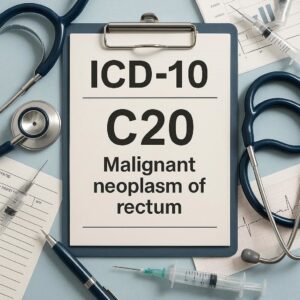
ICD-10 Code C20
2. Decoding ICD-10-CM: Understanding the System
Before we can fully appreciate code C20, we must understand the system that gives it context and meaning.
What is ICD-10-CM?
The International Classification of Diseases, Tenth Revision, Clinical Modification (ICD-10-CM) is the standard system used in the United States to classify and code all diagnoses, symptoms, and procedures recorded in conjunction with hospital care. Maintained by the Centers for Disease Control and Prevention (CDC) and the National Center for Health Statistics (NCHS), it is a critical tool for:
-
Morbidity and Mortality Reporting: Tracking the incidence and prevalence of diseases.
-
Billing and Reimbursement: Providing the codes necessary for healthcare providers to get paid by insurance companies, Medicare, and Medicaid.
-
Epidemiological Research: Enabling researchers to study disease patterns, risk factors, and outcomes across populations.
-
Quality Management: Helping healthcare organizations monitor the quality and effectiveness of care.
ICD-10-CM is a significant evolution from its predecessor, ICD-9-CM, offering a much greater level of detail and specificity.
The Structure of an ICD-10 Code
ICD-10 codes are alphanumeric and can be anywhere from three to seven characters long. Each character provides specific information.
-
Chapter: The first character is a letter, which corresponds to a chapter based on disease type or body system. The letter “C” is designated for “Malignant Neoplasms.”
-
Category: The first three characters (the letter followed by two numbers) form the category. Code C20 is the category for “Malignant neoplasm of rectum.”
-
Subcategory and Specificity: Characters four through seven provide increasing levels of detail. They can indicate:
-
Anatomical Site: More precise location within an organ.
-
Etiology: The cause of the condition.
-
Severity: The extent or severity of the condition.
-
Episode of Care: Whether it’s an initial encounter, subsequent encounter, or sequela (a condition resulting from the disease).
-
For code C20, it is important to note that it is a three-character code. Unlike many other ICD-10 codes, C20 does not have any further subclassifications. This lack of inherent specificity is a crucial point we will explore later.
3. A Deep Dive into Code C20: Malignant Neoplasm of the Rectum
Precise Definition and Anatomical Boundaries
ICD-10-CM code C20 precisely describes a malignant (cancerous) tumor originating in the rectum. Anatomically, the rectum is the final segment of the large intestine, approximately 12 centimeters (4.7 inches) long, beginning at the end of the sigmoid colon and terminating at the anal canal. It serves as a temporary storage site for feces before elimination.
The exact boundary between the sigmoid colon and the rectum, and the rectum and the anus, can be defined in several ways (anatomically, surgically, endoscopically). For coding purposes, the general rule is:
-
If a tumor is located within 15 cm from the anal verge (as measured during a colonoscopy), it is typically considered rectal.
-
Tumors above this point are generally classified as sigmoid colon cancer (C18.7).
This distinction is critical because rectal cancer and colon cancer, while often grouped together as “colorectal cancer,” have different treatment approaches, particularly regarding the use of radiation therapy, due to the rectum’s fixed location in the pelvis.
What C20 Includes and Excludes
The ICD-10-CM manual includes specific notes to guide proper code application.
-
C20 Includes: Malignant carcinoid tumors of the rectum and malignant neuroendocrine tumors of the rectum. These are specific, less common types of rectal cancers.
-
Excludes1: This note indicates that the excluded code should not be used at the same time as C20. For C20, this is:
-
C26.0 – Malignant neoplasm of intestinal tract, part unspecified. This is used only when the medical record documentation is so vague that it is impossible to determine if the cancer is in the colon or rectum.
-
-
Excludes2: This note means that the condition represented by the excluded code is not part of the condition represented by the C20 code, but the patient may have both conditions. A common Excludes2 for neoplasms is codes for personal history of cancer. For example, a patient with a history of rectal cancer that has been cured would be coded with Z85.01 (Personal history of malignant neoplasm of rectum), not C20. Code C20 is for active disease.
The Critical Importance of Specificity: Why C20 is Often a Starting Point
As a three-character code, C20 lacks the detail that ICD-10-CM is designed to capture. In clinical practice, a diagnosis is never just “rectal cancer.” It is characterized by its histology (cell type), stage, and genetic markers. Therefore, while C20 is the foundational code, it is almost always used in conjunction with other codes from Chapter 2 of ICD-10-CM (Neoplasms) to provide a complete picture.
For instance, a coder would also assign a code from the range C00-D49 to specify the behavior (e.g., primary malignant, secondary malignant, carcinoma in situ) and morphology (cell type). This is typically done using codes from the ICD-10-CM Table of Neoplasms, which cross-references anatomical sites with behavioral descriptors.
Example: A patient is diagnosed with a primary adenocarcinoma of the rectum.
-
The primary code would be C20.
-
The coder would also reference the Table of Neoplasms. Under “Rectum,” they would find the code for “Malignant Primary,” which is C20.
-
The morphology (adenocarcinoma) is often captured in the pathology report and may be coded separately, but the primary diagnosis is C20.
The real specificity for treatment and prognosis comes from the cancer staging, which is documented in the patient’s chart but is not directly part of the ICD-10 code C20 itself.
4. The Clinical Picture: Understanding Rectal Cancer
What is Rectal Cancer? The Pathophysiology
Rectal cancer, like most cancers, begins when healthy cells in the rectal lining develop mutations in their DNA. These mutations cause the cells to grow and divide uncontrollably, forming a mass called a tumor. Over time, these cancerous cells can invade nearby tissues and, through a process called metastasis, spread to distant parts of the body (e.g., liver, lungs).
The vast majority (over 95%) of rectal cancers are adenocarcinomas, meaning they start in the glandular cells that produce mucus in the lining of the rectum. Other, rarer types include:
-
Carcinoid tumors
-
Gastrointestinal stromal tumors (GISTS)
-
Lymphomas
-
Sarcomas
A key precursor to rectal adenocarcinoma is the adenomatous polyp, or adenoma. These are benign growths that can, over many years, transform into cancer. This slow progression through the polyp-cancer sequence provides a critical opportunity for prevention and early detection through screening colonoscopies, during which polyps can be removed.
Signs and Symptoms: When to Suspect a Problem
The symptoms of rectal cancer can be subtle and are often mistaken for more common conditions like hemorrhoids. This is why awareness is crucial. Common signs and symptoms include:
-
A Change in Bowel Habits: This is one of the most common symptoms. It can include diarrhea, constipation, or a feeling that the bowel does not empty completely (tenesmus).
-
Rectal Bleeding: Blood in the stool, which may appear bright red or very dark (maroon-colored).
-
Abdominal Discomfort: Persistent cramps, gas, or pain.
-
Narrow Stools: A change in stool caliber, often described as “pencil-thin.”
-
Unexplained Weight Loss: Significant weight loss without trying.
-
Weakness or Fatigue: Often due to anemia caused by chronic, slow bleeding.
-
Pain: A sensation of pain or a lump in the anal or rectal area.
It is vital to consult a healthcare provider if any of these symptoms persist for more than a few weeks.
Risk Factors and Prevention Strategies
While the exact cause of rectal cancer is not always clear, several factors can increase an individual’s risk.
Non-Modifiable Risk Factors:
-
Age: The risk increases significantly after age 50, though incidence is rising in younger populations.
-
Personal History of Colorectal Polyps or Cancer: A person who has had adenomatous polyps or colorectal cancer is at higher risk for another.
-
Inflammatory Bowel Disease (IBD): Chronic conditions like ulcerative colitis and Crohn’s disease increase risk.
-
Family History: Having a first-degree relative (parent, sibling, child) with colorectal cancer increases risk, especially if they were diagnosed at a young age.
-
Inherited Syndromes: About 5-10% of cases are linked to inherited gene mutations, such as Lynch syndrome (Hereditary Nonpolyposis Colorectal Cancer or HNPCC) and Familial Adenomatous Polyposis (FAP).
Modifiable Risk Factors and Prevention:
-
Diet: A diet high in red and processed meats and low in fruits, vegetables, and whole fibers is associated with higher risk.
-
Physical Inactivity: A sedentary lifestyle increases risk.
-
Obesity: Being overweight or obese increases the risk of developing and dying from rectal cancer.
-
Smoking and Heavy Alcohol Use: Both are well-established risk factors.
Prevention strategies include adopting a healthy lifestyle and, most importantly, participating in recommended screening programs.
5. The Diagnostic Journey: From Symptom to Diagnosis
The path to a diagnosis coded as C20 involves a systematic process.
Patient History and Physical Examination (Including Digital Rectal Exam)
The process begins with a detailed discussion of symptoms, medical history, and family history. A physical exam will include a Digital Rectal Exam (DRE), where a physician inserts a gloved, lubricated finger into the rectum to feel for any abnormalities, such as lumps or hard areas.
Diagnostic Procedures: Colonoscopy, Biopsy, and Imaging (CT, MRI, PET)
If rectal cancer is suspected, the following steps are taken:
-
Colonoscopy: This is the gold standard. A long, flexible tube with a camera on the end (a colonoscope) is used to examine the entire colon and rectum. If a suspicious area is found, the physician can pass instruments through the colonoscope to perform a biopsy (remove a small tissue sample).
-
Biopsy: The tissue sample is examined under a microscope by a pathologist. This is the only definitive way to diagnose cancer. The pathology report will confirm the presence of cancer and identify the cell type (e.g., adenocarcinoma).
-
Imaging Studies: Once cancer is confirmed, imaging is used to determine the extent (stage) of the disease.
-
CT Scan of Chest/Abdomen/Pelvis: To check for spread to lymph nodes, liver, lungs, or other organs.
-
Pelvic MRI: This is particularly important for rectal cancer. It provides high-resolution images of the rectal wall and surrounding structures, helping to determine the depth of tumor invasion (T-stage) and involvement of nearby lymph nodes (N-stage). This information is crucial for planning surgery and radiation.
-
Transrectal Ultrasound (TRUS): Sometimes used to assess how deeply the tumor has invaded the rectal wall.
-
PET Scan: May be used in certain situations to detect metastatic disease that isn’t visible on other scans.
-
The Role of Tumor Markers (CEA)
The blood level of Carcinoembryonic Antigen (CEA) may be measured. CEA is a protein that can be elevated in people with colorectal cancer. It is not reliable for screening or initial diagnosis, as it can be elevated in non-cancerous conditions. However, it is very useful for monitoring response to treatment and detecting recurrence after treatment.
6. Staging Rectal Cancer: The TNM System and Its Implications
Staging is the process of determining how far the cancer has spread. It is the single most important factor in determining prognosis and selecting treatment. The universally accepted system for rectal cancer is the American Joint Committee on Cancer (AJCC) TNM Staging System, now in its 9th Edition.
The Tumor (T) Category: Depth of Invasion
This describes how deeply the primary tumor has grown into the wall of the rectum.
-
Tis: Carcinoma in situ; cancer cells are only in the mucosa (the innermost layer).
-
T1: Tumor invades the submucosa.
-
T2: Tumor invades the muscularis propria (the thick muscle layer).
-
T3: Tumor invades through the muscularis propria into the perirectal fat.
-
T4a: Tumor penetrates the visceral peritoneum (the lining of the abdominal cavity).
-
T4b: Tumor directly invades or is attached to other organs or structures.
The Node (N) Category: Lymphatic Spread
This indicates whether the cancer has spread to regional lymph nodes.
-
N0: No regional lymph node metastasis.
-
N1a: Cancer found in 1 regional lymph node.
-
N1b: Cancer found in 2-3 regional lymph nodes.
-
N1c: Tumor deposits found in the fat near the lymph nodes, but not in the nodes themselves.
-
N2a: Cancer found in 4-6 regional lymph nodes.
-
N2b: Cancer found in 7 or more regional lymph nodes.
The Metastasis (M) Category: Distant Spread
This shows if the cancer has metastasized to distant organs.
-
M0: No distant metastasis.
-
M1a: Cancer has spread to one distant organ or set of distant lymph nodes.
-
M1b: Cancer has spread to more than one distant organ.
-
M1c: Cancer has spread to the peritoneal surface.
Stage Grouping: Combining T, N, and M for Prognosis
The T, N, and M categories are combined to assign an overall stage, from 0 to IV. Stage 0 is the earliest; Stage IV is the most advanced, indicating metastatic disease.
7. Treatment Modalities: A Multidisciplinary Approach
The treatment of rectal cancer is complex and requires a multidisciplinary team (MDT) including colorectal surgeons, medical oncologists, radiation oncologists, radiologists, pathologists, and specialized nurses. The treatment plan is tailored to the individual’s cancer stage, overall health, and personal preferences.
Surgery: The Cornerstone of Curative Treatment
For non-metastatic rectal cancer, surgery to remove the tumor is the primary curative treatment. The type of operation depends on the tumor’s size, location, and stage.
-
Local Excision: For very early-stage (T1, N0) tumors, a minimally invasive procedure like Transanal Endoscopic Microsurgery (TEM) or Transanal Minimally Invasive Surgery (TAMIS) may be performed. The tumor is removed through the anus without an abdominal incision.
-
Low Anterior Resection (LAR): For tumors in the upper and middle rectum. The surgeon removes the cancerous portion of the rectum and then reconnects the colon to the remaining rectum or upper anal canal, preserving the anal sphincter and allowing for relatively normal bowel function. This is often called a sphincter-sparing procedure. A temporary ileostomy (diverting the stool into a bag on the abdomen) may be created to allow the connection (anastomosis) to heal.
-
Abdominoperineal Resection (APR): For tumors very low in the rectum, close to the sphincter muscles. This procedure involves removing the rectum, anus, and surrounding sphincter muscles. The surgeon creates a permanent colostomy, where the end of the colon is brought through the abdominal wall to create a stoma, and stool is collected in an external pouch.
-
Total Mesorectal Excision (TME): This is not a type of surgery but a critical surgical technique used during both LAR and APR. It involves removing the rectum along with its surrounding fatty tissue and lymph nodes (the mesorectum) in one complete package. This meticulous technique has dramatically reduced local recurrence rates.
Radiation Therapy: Neoadjuvant and Adjuvant Roles
Radiation therapy uses high-energy beams to kill cancer cells. For rectal cancer, it is often used before surgery (neoadjuvant therapy), particularly for Stage II and III cancers. Pre-operative radiation, usually given concurrently with chemotherapy (chemoradiation), has several advantages:
-
Shrinks the tumor, making it easier to remove surgically.
-
Reduces the risk of the cancer returning in the pelvis (local recurrence).
-
Is often better tolerated before surgery than after.
In some cases, radiation may be given after surgery (adjuvant therapy), but this is less common.
Chemotherapy: Systemic Treatment Options
Chemotherapy uses drugs to destroy cancer cells throughout the body. It can be used at different times:
-
Neoadjuvant Chemotherapy (with radiation): As part of chemoradiation before surgery.
-
Adjuvant Chemotherapy: After surgery, to eliminate any remaining microscopic cancer cells and reduce the risk of recurrence. A common regimen is FOLFOX (folinic acid, fluorouracil, and oxaliplatin).
-
For Metastatic Disease: Chemotherapy is the primary treatment for Stage IV cancer, with the goal of controlling growth, relieving symptoms, and prolonging life.
Targeted Therapy and Immunotherapy: Personalized Medicine
These are newer classes of drugs that target specific abnormalities within cancer cells or harness the body’s immune system to fight cancer.
-
Targeted Therapies: Drugs like bevacizumab (Avastin) target the blood vessels that feed tumors (anti-angiogenesis). Drugs like cetuximab (Erbitux) target the EGFR protein on cancer cells. Their use depends on the tumor’s genetic makeup (biomarkers).
-
Immunotherapy: Drugs called immune checkpoint inhibitors (e.g., pembrolizumab) can be very effective for the small subset of rectal cancers that are mismatch repair deficient (dMMR) or have high microsatellite instability (MSI-H).
8. The Role of ICD-10-C20 in Healthcare Administration
While clinicians focus on treating the disease, code C20 plays a vital role in the administrative machinery that supports patient care.
Medical Billing and Reimbursement: The Financial Backbone
This is the most immediate use of C20. When a patient receives care for rectal cancer—whether it’s a surgeon’s consult, a chemotherapy infusion, or a hospital stay—the provider must submit a claim to the insurance company. This claim includes ICD-10 codes that justify the medical necessity of the services rendered. Code C20 is the primary diagnosis code that tells the payer, “This service was for the treatment of active rectal cancer.” Without this accurate code, claims will be denied, and the healthcare provider will not be reimbursed, threatening their ability to operate.
Epidemiological Research and Public Health Tracking
On a population level, aggregated and anonymized data containing code C20 are invaluable for public health. Researchers and government agencies like the CDC and the National Cancer Institute use this data to:
-
Track the incidence (number of new cases) and prevalence (total number of existing cases) of rectal cancer over time.
-
Identify trends, such as the concerning rise of colorectal cancer in younger adults.
-
Study geographic variations and potential environmental risk factors.
-
Assess the effectiveness of public health initiatives, such as screening campaigns.
Quality Assurance and Clinical Outcomes Measurement
Hospitals and health systems use coded data for internal quality improvement. By analyzing data on patients coded with C20, they can answer critical questions:
-
What is our hospital’s surgical success rate for rectal cancer?
-
What is our rate of post-operative complications?
-
How do our patient outcomes (e.g., survival rates, recurrence rates) compare to national benchmarks?
-
Are we adhering to national treatment guidelines?
This data-driven approach helps ensure that patients receive high-quality, evidence-based care.
9. Coding in Practice: Common Scenarios and Challenges
Applying code C20 correctly requires careful attention to the medical record.
Initial Diagnosis vs. Subsequent Encounter
ICD-10-CM uses a 7th character extension to indicate the encounter type. For code C20, the extensions are:
-
C20.0 – Initial encounter: Used for the first time the patient is receiving active treatment for this condition (e.g., diagnosis, first round of chemo, surgery).
-
C20.1 – Subsequent encounter: Used for routine monitoring and continuing active treatment after the initial phase (e.g., follow-up chemotherapy cycles, management of complications).
-
C20.2 – Sequela: Used for conditions that arise as a direct consequence of the cancer or its treatment, after the active phase of the cancer has ended (e.g., chronic neuropathy from chemotherapy, colostomy status).
Coding for Complications and Comorbidities
Patients with rectal cancer often have other conditions that need to be coded. For example:
-
K94.03 – Colostomy complication
-
D64.9 – Anemia
-
R19.5 – Other fecal abnormalities (e.g., change in bowel habits)
Coding these conditions paints a complete picture of the patient’s health status and can impact reimbursement through systems like MS-DRGs (Medicare Severity-Diagnosis Related Groups).
The Transition from C20 to Z85.01: Personal History of Malignant Neoplasm of the Rectum
A critical coding rule is that code C20 is used only for active disease. Once a patient has completed curative treatment (e.g., surgery, chemo, radiation) and is in remission with no evidence of disease (NED), the code for active cancer is no longer used. The appropriate code becomes Z85.01 – Personal history of malignant neoplasm of rectum.
This code is used for surveillance encounters, such as follow-up colonoscopies or imaging scans, to check for recurrence. Using the correct code is essential; using C20 for a patient who is cured would misrepresent their health status and could lead to issues with insurance and life insurance.
10. The Future: ICD-11 and Beyond
The World Health Organization (WHO) has already released the 11th Revision of the ICD (ICD-11), which will eventually be adopted by member countries, including the U.S. (as ICD-11-CM). ICD-11 offers a more modern, digital-friendly structure and allows for greater clinical detail. While the fundamental concept of coding for rectal cancer will remain, the specific code will change, likely offering more granularity to capture stage, biomarker status, and treatment response directly within the code itself, further enhancing its utility for clinical care and research.
11. Conclusion: The Significance of a Single Code
ICD-10 code C20, “Malignant neoplasm of rectum,” is far more than a bureaucratic label. It is a precise clinical diagnosis that triggers a sophisticated, multidisciplinary treatment pathway. It is the linchpin of a complex financial system that funds vital patient care. It is a essential data point that fuels public health research and quality improvement. Understanding C20 means appreciating the profound intersection of clinical medicine, health information management, and epidemiology—all dedicated to improving outcomes for patients facing a diagnosis of rectal cancer.
12. Frequently Asked Questions (FAQs)
Q1: What is the difference between ICD-10 code C20 and code C19?
A1: Code C19 is for “Malignant neoplasm of rectosigmoid junction.” This is a very specific anatomical area where the sigmoid colon joins the rectum. The distinction is important for surgeons and radiation oncologists. If the medical documentation specifies the tumor is in the rectosigmoid junction, C19 is used. If it is clearly in the rectum, C20 is used.
Q2: If a patient’s rectal cancer has spread to the liver, is C20 still the primary code?
A2: Yes, in most cases. The primary malignancy (the origin of the cancer) is still coded first. Therefore, C20 would be the first-listed code. The secondary (metastatic) site in the liver would be coded with C78.7 (Secondary malignant neoplasm of liver).
Q3: Why is a pelvic MRI so important for rectal cancer staging?
A3: A pelvic MRI provides exceptional detail of the soft tissues in the pelvis. It allows radiologists to accurately determine the T-stage (how deep the tumor has grown through the rectal wall) and the N-stage (whether nearby lymph nodes are involved). This information is critical for the multidisciplinary team to decide whether a patient needs chemoradiation before surgery and to help the surgeon plan the optimal surgical approach.
Q4: Can rectal cancer be prevented?
A4: While not all cases can be prevented, the risk can be significantly reduced through lifestyle changes (healthy diet, exercise, avoiding smoking and heavy alcohol use) and, most importantly, regular screening. Screening colonoscopy can find and remove precancerous polyps before they turn into cancer.
Q5: What does “5-year survival rate” mean for rectal cancer?
A5: It is a statistic that indicates the percentage of people with a certain stage of cancer who are alive five years after their diagnosis. It is a relative measure used to discuss prognosis. It’s important to remember that these are averages based on large groups of people; an individual’s prognosis depends on their specific cancer characteristics, overall health, and response to treatment. Survival rates have improved significantly over time.
13. Additional Resources
-
American Cancer Society (ACS): Provides extensive patient-friendly information on colorectal cancer, including details on diagnosis, treatment, and support. www.cancer.org
-
National Cancer Institute (NCI): A comprehensive source for evidence-based information on cancer types, clinical trials, and research. www.cancer.gov
-
American Society of Clinical Oncology (ASCO): Cancer.Net is ASCO’s patient information website, offering oncologist-approved information. www.cancer.net
-
Colorectal Cancer Alliance: A leading patient advocacy organization offering support, education, and awareness campaigns. www.ccalliance.org
-
Centers for Disease Control and Prevention (CDC) – ICD-10: The official CDC page for ICD-10-CM. www.cdc.gov/nchs/icd/icd-10-cm.htm
Disclaimer: This article is for informational purposes only and is not a substitute for professional medical advice, diagnosis, or treatment. Always seek the advice of your physician or other qualified health provider with any questions you may have regarding a medical condition. Never disregard professional medical advice or delay in seeking it because of something you have read in this article. The author and publisher are not responsible for any errors or omissions or for any consequences from the application of the information presented.
Date: September 24, 2025
Author: The Medical Content Team