Bronchiolitis is a common lower respiratory tract infection affecting infants and young children, primarily caused by viral pathogens such as respiratory syncytial virus (RSV). Proper diagnosis and accurate medical coding are essential for effective treatment, insurance billing, and epidemiological tracking. The ICD-10-CM (International Classification of Diseases, 10th Revision, Clinical Modification) provides specific codes for bronchiolitis, ensuring precise documentation in healthcare settings.
This comprehensive guide explores bronchiolitis in detail, including its causes, symptoms, diagnostic criteria, treatment options, and the correct ICD-10 codes for accurate medical billing and record-keeping.
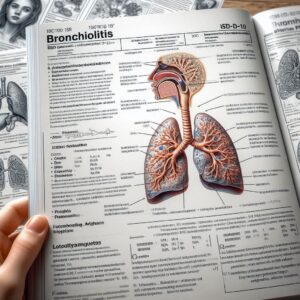
ICD-10 Code for Bronchiolitis
What is Bronchiolitis?
Bronchiolitis is an acute inflammatory condition of the bronchioles—the smallest air passages in the lungs. It predominantly affects infants and children under two years old, with peak incidence occurring between 3 to 6 months of age. The condition leads to swelling, mucus buildup, and airway obstruction, resulting in breathing difficulties.
Key Characteristics:
-
Viral Origin: Most cases (70-80%) are caused by RSV (respiratory syncytial virus).
-
Seasonal Variation: More prevalent in winter and early spring.
-
Highly Contagious: Spreads through respiratory droplets.
Causes and Risk Factors of Bronchiolitis
Common Viral Pathogens:
| Virus | Percentage of Cases |
|---|---|
| Respiratory Syncytial Virus (RSV) | 70-80% |
| Human Metapneumovirus (hMPV) | 5-10% |
| Rhinovirus | 10-15% |
| Adenovirus | <5% |
| Parainfluenza Virus | <5% |
Risk Factors:
-
Age (under 12 months)
-
Premature birth
-
Chronic lung disease (e.g., bronchopulmonary dysplasia)
-
Congenital heart disease
-
Exposure to tobacco smoke
-
Daycare attendance
Symptoms and Clinical Presentation
Bronchiolitis typically begins with mild upper respiratory symptoms before progressing to lower respiratory involvement.
Early Symptoms:
-
Runny nose
-
Nasal congestion
-
Mild cough
-
Low-grade fever
Progressive Symptoms:
-
Wheezing
-
Rapid or labored breathing (tachypnea)
-
Retractions (chest wall indrawing)
-
Hypoxia (low oxygen levels)
-
Poor feeding and dehydration
Severe cases may require hospitalization due to respiratory distress.
Diagnosis of Bronchiolitis
Diagnosis is primarily clinical, based on:
-
Patient history (age, symptom progression)
-
Physical examination (wheezing, crackles, retractions)
-
Pulse oximetry (to assess oxygen saturation)
Additional Tests (if needed):
-
Nasopharyngeal swab (RSV PCR test)
-
Chest X-ray (to rule out pneumonia)
-
Blood tests (rarely needed unless severe)
ICD-10 Coding for Bronchiolitis
Accurate ICD-10 coding ensures proper documentation and billing. Below are the relevant codes:
| ICD-10 Code | Description |
|---|---|
| J21.0 | Acute bronchiolitis due to RSV |
| J21.1 | Acute bronchiolitis due to human metapneumovirus |
| J21.8 | Acute bronchiolitis due to other specified organisms |
| J21.9 | Acute bronchiolitis, unspecified |
Coding Guidelines:
-
Use J21.0 if RSV is confirmed.
-
J21.9 is used when the causative agent is unknown.
-
Always verify documentation for specificity.
Treatment and Management
Supportive Care (Primary Approach):
-
Hydration (oral or IV fluids)
-
Nasal suctioning (for congestion relief)
-
Oxygen therapy (if SpO₂ < 90%)
Medications (Limited Role):
-
Bronchodilators (albuterol trial, though not always effective)
-
Hypertonic saline nebulization (in severe cases)
-
Antibiotics (only if bacterial co-infection is suspected)
Hospitalization Criteria:
-
Severe respiratory distress
-
Oxygen requirement
-
Inability to feed
Prevention Strategies
-
Palivizumab (Synagis) – RSV prophylaxis for high-risk infants
-
Hand hygiene – Reduces viral transmission
-
Avoiding smoke exposure – Decreases respiratory irritation
-
Breastfeeding – Enhances immune protection
Prognosis and Complications
Most cases resolve within 1-2 weeks, but complications may include:
-
Respiratory failure (requiring mechanical ventilation)
-
Secondary bacterial infections (e.g., pneumonia)
-
Recurrent wheezing (linked to future asthma risk)
FAQs on Bronchiolitis and ICD-10 Coding
1. What is the most common ICD-10 code for bronchiolitis?
-
J21.9 (unspecified) is frequently used when the exact virus is unknown.
2. When should J21.0 be used?
-
Only when RSV is laboratory-confirmed.
3. Can bronchiolitis be coded with asthma?
-
No, bronchiolitis and asthma are distinct conditions. Use J45.9 for asthma.
4. Is bronchiolitis the same as bronchitis?
-
No, bronchitis affects larger airways, while bronchiolitis impacts smaller bronchioles.
5. What is the mortality rate of bronchiolitis?
-
Very low (<1%) in healthy infants but higher in premature or immunocompromised children.
Conclusion
Bronchiolitis is a leading cause of infant hospitalization, primarily caused by RSV. Accurate ICD-10 coding (J21.0-J21.9) ensures proper treatment and billing. Supportive care remains the mainstay of management, with prevention strategies like palivizumab reducing severe cases. Early recognition and appropriate coding improve patient outcomes and healthcare efficiency.